

Glad to Bring Baseball Back to Gladstone
May 9, 2013
By Geoff Kimmerly
Second Half editor
Blake Ballard looked out at the snow covering Gladstone last month and figured it would never melt. When he and his teammates finally played in their first tournament of the season April 20, the temperature couldn’t have broken 30 degrees.
It’s the annual plight of a high school baseball player. And Ballard and teammates are glad to enjoy it for the first time – as members of Gladstone’s first high school baseball team since 1959.
The Braves made their re-debut last month thanks to a full community effort that included deft advising from the eventual coach, creative thinking by the administration and school board and enthusiastic fundraising by parents and supporters – none of which is lost on a group of athletes who are off to a 10-3 start heading into Thursday’s doubleheader against Escanaba.
“Once we figured out it was going to happen, we were excited. Kids started practicing a lot,” said Ballard, one of the team’s two seniors. “It’s going to be pretty sweet later on. Whoever didn’t (play) will regret it.”
Gladstone has roughly 5,000 residents, and baseball has remained a staple of the community over the last half century – just not as the high school level.
Children grow up playing in the local little league and on travel teams, and then graduate to American Legion ball when they are older. But for any number of reasons – including weather-related difficulties in scheduling, low interest or lack of facilities – only 19 Upper Peninsula MHSAA high schools offer baseball.
At Gladstone, boys instead played and can continue to choose from track and field, golf and tennis during the spring. Ballard, for example, was a golfer before getting his chance on the diamond this year.
A football and basketball player too, he often was asked why his school didn't play baseball – and really had no idea how to answer.
Community members had campaigned for baseball in the past, said athletic director Matt Houle. He’s worked at Gladstone for more than 30 years, and has seen four or five strong pushes over the last decade alone.
But those efforts faced two challenges. The first was funding – all programs at Gladstone previously were funded by the school, but baseball if added would have to raise its own money. And the school also wanted to make sure to continue complying with Title IX, which meant finding more opportunities for female students as well if a baseball team was added for the boys. (Gladstone already has a softball program, and it’s one of the state’s best of the last decade with two MHSAA titles and a runner-up finish last season in Division 3.)
Enter former Escanaba baseball coach Don Lauscher.
He and two others keyed a similar effort that led to Escanaba High School creating a baseball program in 2002, and he also assisted Marquette when it added baseball four seasons ago. He had coached Gladstone Legion teams in 2005 and 2006 and Escanaba's varsity to a 130-27 record from 2007-11, but wasn't looking to become coach of a new program – he just hoped to lend his knowledge on getting it started.
Rallying the community was the easy part. And to keep with Title IX, Gladstone added self-funded co-ed swimming and bowling programs.
Supporters convinced the school board they could fund the program – and already have the team two years ahead on its expected financial obligations thanks to special events but also additional donations from local foundations and independently by other members of the community.
“Our community has always been supportive of our athletic teams. And being a town looked upon as a strong baseball/softball program, it was inevitable it would happen,” Houle said.
“People kept coming up and saying, ‘Congratulations Coach. We’re really behind you,’” Lauscher said of a recent breakfast fundraiser. “It’s amazing.”
The community is getting its money’s worth.
Ironically, an uncle of Lauscher's wife played on that 1959 Gladstone team. That didn't play into his taking over as coach, but he had other reasons.
Perhaps most of all, Lauscher missed teaching the game. He's coached it at just about every youth level and attended clinics as far away as Georgia and Louisiana, and enjoys passing on what he's learned. And life events fell into play to allow the opportunity to be assisted by his son Kurt and nephew B.J.; both played at Grand Rapids Community College and Kurt also pitched at Central Michigan University.
Again, because of the summer programs, Lauscher didn’t start completely from scratch. A core group including Ballard, juniors Christian Groleau, Christian Tackman, Sam Pouliot and sophomore Justin Jurek gave the Braves a quality pitching staff and some high school-comparable experience. Still, the team didn't have a catcher when practice began and fundamentals have been the focus as the coaches bring everyone up to speed.
As a whole, the 14-player roster has caught on quickly.
“Seeing the things these kids didn't know to where they are now, I’m very surprised where they are now,” Don Lauscher said.
The team plays at its local Legion field, which has lights and is only about a quarter-mile from the school. The Braves hosted their first “Parents Night” last week and truly are inclusive of the full student body with Lucas LaCosse joining Ballard as the seniors, followed by five juniors, four sophomores and two freshmen.
Gladstone’s other spring sports haven’t lost out much, if at all. The track and field team has 41 athletes and the golf team has 16; the tennis team is down to 11, but graduated a large senior class last season.
More Upper Peninsula schools are talking about adding baseball and softball, Houle said; Hancock softball played its first games ever Wednesday. Schools looking to get a program together would be wise to follow Gladstone’s road map.
“There is so much enthusiasm for it right now,” Houle said. “Just being at the diamond around kids I know so well, to see in their faces the excitement ... I’m very honored. There’s a great sense of pride among these kids.”
After the team's first four dates were canceled, Ballard threw the first game of Gladstone High's modern history.
“It was weird. (But) everyone liked it," he said. "It seemed like a big difference, playing for our school now."
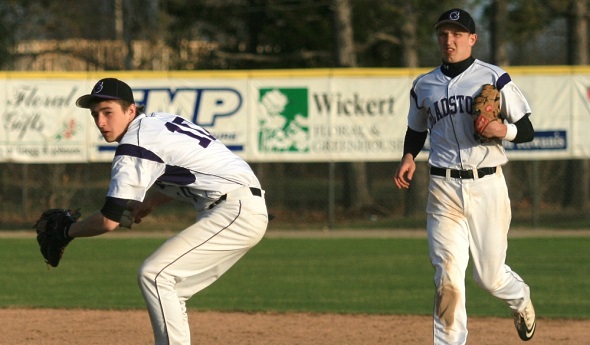
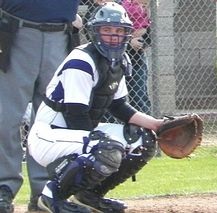
PHOTOS: (Top) Christian Tackman (10) prepares to throw to first base while shortstop Blake Ballard follows behind during a game this spring. (Middle) Gladstone catcher Justin Jurek looks toward the dugout for a signal. (Photos courtesy of Lori Jurek).
Senior-Powered Spring Lake Answering Anticipation, Pursuing High Expectations
By
Dean Holzwarth
Special for MHSAA.com
April 29, 2026
SPRING LAKE – The time is now for the Spring Lake baseball team.
 With the return of 11 veteran seniors, the Lakers entered this spring with lofty expectations and an eye on an extended postseason run.
Anticipation has come to fruition in the form of a state ranking and a nearly perfect start.
“Our motto is we are going to worry about next year next year, and we are going to do all we can this year,” Lakers fourth-year coach Bill Core said. “We knew we were going to have a big experienced group coming back, and that's just how the roster folded out. We have a lot of experience, a lot of returners and pretty high expectations.”
Spring Lake, which finished as Division 2 runner-up in 2024 and won a conference title last year for the first time since 2014, is off to an impressive 13-1 start (9-0 in the Ottawa-Kent Conference Black) and has climbed to No. 7 in the latest coaches poll.
Core said the vast number of returners, which includes five players who will play in college next year, has paid early dividends.
“I think that’s been a big difference,” he said. “We’ve played some younger teams that were breaking in sophomores or juniors or new kids, and our guys were ready to go right from the start. It’s been an advantage early on.”
Senior starting pitchers Oliver Smies and Maddux Kipling believe the strong bond among the senior class has been a major factor in the torrid start.
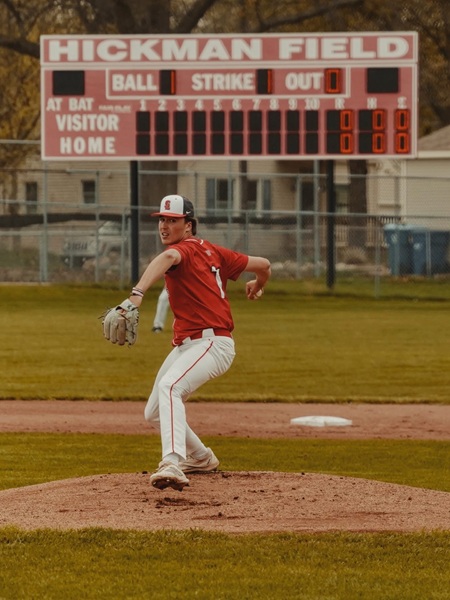 “I think something that’s really important about this team is our team chemistry and the amount of seniors we have on the team,” Smies said. “That alone allows us to have a ton of experience, and I think that's a big reason why we are off to such a hot start. We have been playing good team baseball and complementary baseball with good defense and good offense.”
Added Kipling: “We genuinely like being around each other, and every day we show up ready to get a little better. Our team has a real gritty and energetic identity, and I think that shows in how we compete and support each other.”
Kipling and Smies have been dominant on the mound this season. They haven’t allowed an earned run while combining for 80 strikeouts. Kipling earned a second-team all-state accolade as a junior and is headed to Michigan State next year. Smies will play at Calvin University.
“It starts with our pitching,” Core said. “Any time you are going to make a run, it starts with your pitching and we are pretty lucky, especially with our top two.”
Offensively, the Lakers possess a balanced lineup and boast a .330 batting average.
Senior Owen Smies, who will join his twin brother at Calvin, is hitting a team-best .432 with 13 RBIs. Seniors Alex Strauss (Adrian College) and Max Feltner (Muskegon Community College) are both batting .333 and have combined to score 25 runs.
As a team, Spring Lake has produced eight shutouts and nine wins by run differential.
“We got off to a good start, but we are going to play a lot better competition,” Core said. “This is a good week for us because we play Northview and state-ranked East Grand Rapids. We just picked them up, so we were excited to fill in the week with those two schools.”
Spring Lake is 62-6 over its last 68 games and trying to remain focused on each game as it attempts to erase the disappointment of last year’s early exit from the postseason.
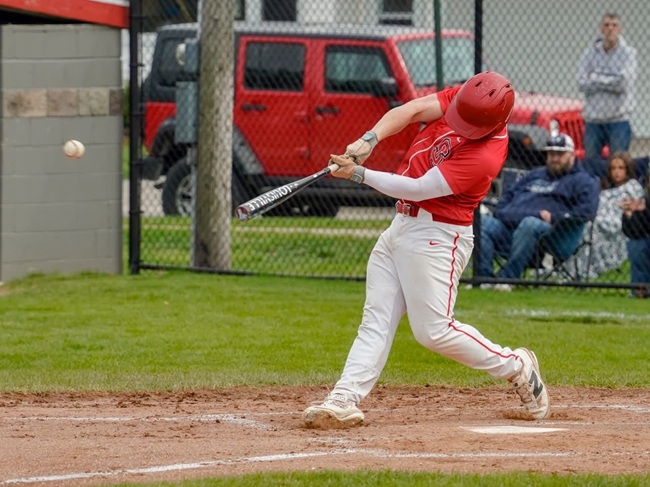 Despite winning 30 games, the Lakers suffered a 3-2 loss to Grand Rapids West Catholic in District play.
“I think there is some motivation there from that loss,” Oliver Smies said. “And I think that loss last year taught us that any team can beat any team, so you have to play your best baseball every single game no matter the opponent.”
Core said last year hasn’t been discussed, but believes it still sits in the back of his players’ minds.
“I think they think about that, but we've had quite a few mercies to start the season, and I said to them that when we get to the tournament it's going to be a one-run game and we are going to have to do the little things to make a difference because we are not going to win 14-0 all the time,” he explained. “We try to keep everyone in the moment.”
Kipling isn’t dwelling on the past – or looking too far ahead.
“As a group we’ve done a great job staying focused on the present and not getting caught up in the past or worrying too much about the future,” Kipling said. “My dad has always told me to focus on what you can control because putting energy into things you can’t control is a waste.
"That mindset has stuck with me, especially on the field. I try to live by ‘one pitch at a time,’ and because of that I haven’t really spent time thinking about last year’s loss. That’s behind us, and we’re just focused on what we can do right now.”
 Dean Holzwarth has covered primarily high school sports for Grand Rapids-based WOOD-TV for five years after serving at the Grand Rapids Press and MLive for 16 years along with shorter stints at the Ionia Sentinel and WZZM. Contact him at [email protected] with story ideas for Allegan, Kent and Ottawa counties.
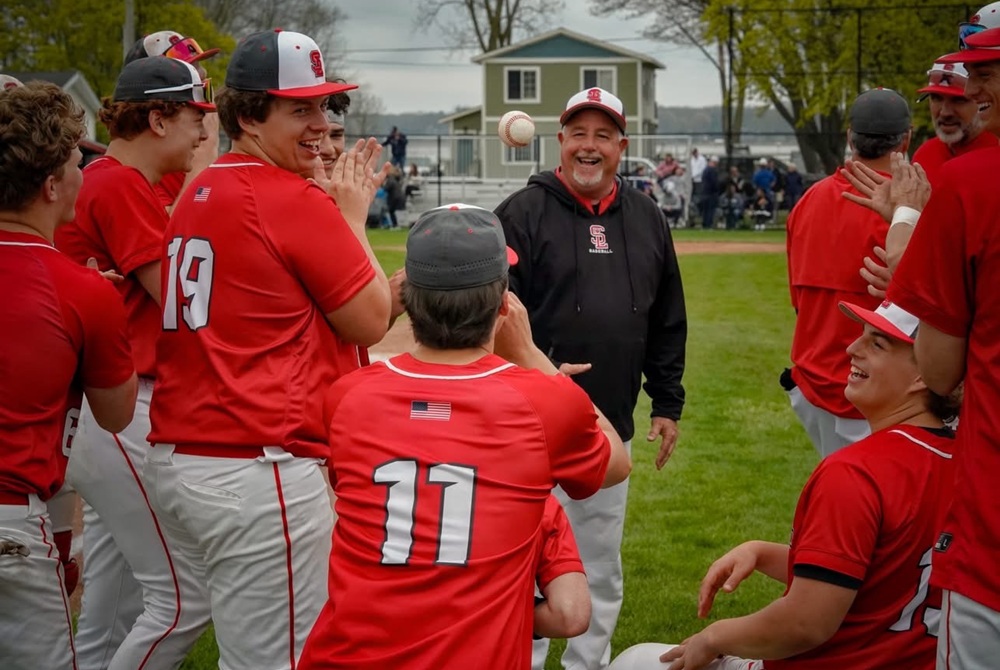
PHOTOS (Top) Spring Lake baseball coach Bill Core tosses Maddux Kipling his home run ball after a win over Fruitport. (Middle) Kipling pitching at Spring Lake's Hickman Field. (Below) Senior Oliver Smies connects with a pitch. (Photos by Trevor McCue/Grand Haven Tribune.)