

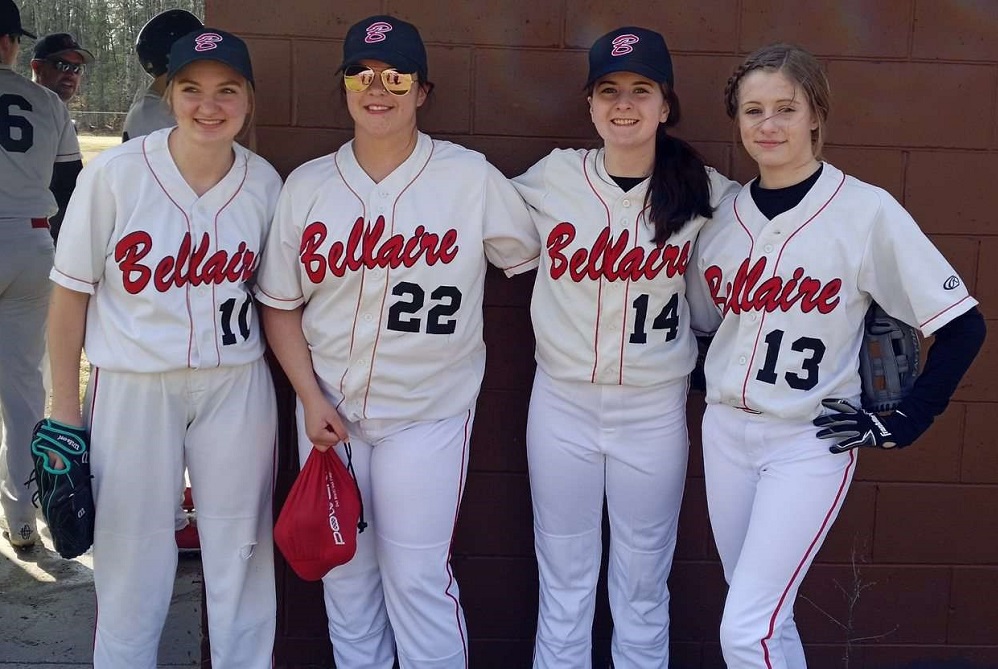
Low Numbers Lead Softball Foursome to Bolster Bellaire Baseball
By
Tom Spencer
Special for MHSAA.com
April 22, 2022
Things were pretty straight forward last spring for Bella Huffman, Karysn Fischer, Alex Dawson and Brooklynn Clark.
 Huffman played third base the Bellaire Eagles. Fisher was a designated hitter and outfielder. Dawson regularly played outfield and catcher, and Clark handled second base.
Huffman is senior now. Fisher is a junior. Dawson and Clark are sophomores. They were playing for the Eagles softball team. Today, they are members of the Eagles baseball team. Small numbers forced the cancellation of girls softball for this spring.
Hesitant, maybe at first, the four student-athletes made the leap to baseball.
“This is a slightly unique situation, and I am very proud of the girls for stepping out of their comfort zone to help the baseball team,” said Brad Fischer, Bellaire’s athletic director. “Unfortunately, the numbers were just not there to support a softball team.
“When we had to make the tough call to cancel our softball season, we told the girls that they are more than welcome to join the baseball team – and we are happy that a few chose to do so.”
The girls played their first game Thursday at Pellston for first-year coach Chris Bearup after a handful of games were lost to spring weather complications. All four got playing time.
The girls, and athletic director, credited the coaches for the smooth transition to the baseball field.
“Coach Bearup has done a great job of getting the girls comfortable and making sure they know they are part of the team and have every opportunity that the boys do,” said Fischer, also Karsyn’s father. “His leadership has been tremendous.
“We are fortunate to have him.”
The girls started to become very comfortable with baseball during a meeting after the first practice with Bearup and assistant coach Al Balko.
 “They were worried about the boys picking on us and treating us like … we weren’t going to be as good as them,” recalled Clark of the post-practice meeting. “Now they’re being more incorporative.
“They are really trying to make us feel we’re at home, and that we’re welcome,” she continued. “They’re giving us a chance to try everything.”
Huffman has dabbled with pitching, and that may work out. It may be a battery with Dawson in the catching position.
“We all got to practice (pitching),” Karysn said. “Alex was in her catching gear, and we pitched.
“Bella was pretty good at it naturally.”
The girls were confident going into Thursday’s season opener. Their eyes are now opened wider as a result, and they are better prepared to compete as they head to Central Lake on Monday. Huffman, Dawson and Clark all got their first at bats out of the way.
“It was a little nerve racking,” Huffman said.
Dawson was in the starting line-up for the first game. She experienced running the 90-foot bases, after being used to the 60-foot base distances in softball.
“You run your little heart out,” she said. “I didn’t make it there, but I ran."
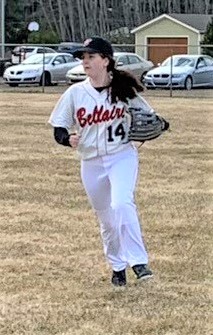 Bellaire lost 9-1 and 11-0 to Pellston, which had already played two games this year.
The girls are coming into baseball with slightly different expectations for themselves as individual players. All plan to try working harder than the boys.
“I went into this season with high expectations for myself because I knew as a girl on the baseball team I had to work harder than any of the boys to try to prove how good I am or how good I am possibly going to be,” Clark noted. “I think speaking for all the girls, we do.”
Numbers also are low for the baseball team. There are 14 on the roster. The tough result of no softball may have saved the baseball season.
And the senior boys are down to their last swing for a District championship. The boys in the Class of 2022 have yet to win a District in any sport. Cole Robinson is among the seniors seeking that first title.
Robinson had his sophomore baseball season cancelled by the pandemic. His football teams saw limited success. The Eagles boys basketball team made substantial improvements especially this past season, but lost its District opener.
Robinson has carried on since losing his father and coach Brock Robinson in April 2020. His dad served as the assistant baseball coach and head football coach for the Eagles before his unexpected death at the age of 54.
The girls would have been cheering for him to get his first District title. But now they plan to help him win one with their play on the diamond.
“We love Cole,” together they exclaimed.
 Tom Spencer is a longtime MHSAA-registered basketball and soccer official, and former softball and baseball official, and he also has coached in the northern Lower Peninsula area. He previously has written for the Saginaw News, Bay County Sports Page and Midland Daily News. He can be reached at [email protected] with story ideas for Manistee, Wexford, Missaukee, Roscommon, Ogemaw, Iosco, Alcona, Oscoda, Crawford, Kalkaska, Grand Traverse, Benzie, Leelanau, Antrim, Otsego, Montmorency, Alpena, Presque Isle, Cheboygan, Charlevoix and Emmet counties.
PHOTOS (Top) A foursome of past Bellaire softball players, from left Alex Dawson, Bella Huffman, Karsyn Fischer and Brooklynn Clark, take a photo during their baseball debuts this week. (Middle) Brooklynn Clark stands in at the plate against Pellston. (Below) Karysn Fischer plays right field for the Eagles. (Top photo by Julie Clark, action photos by Kendall Fischer.)
Still 'Loose' Swan Valley Loaded Again As Well
By
Paul Costanzo
Special for MHSAA.com
April 3, 2019
Mitch Jebb and his teammates on the Saginaw Swan Valley baseball team had plenty of fun a year ago as they made their run to the MHSAA Division 2 Final.
 The young Vikings surprised plenty of people with their runner-up finish, and a crucial part of that was how loose the team played. Even with a larger target now on their back, don’t expect them to tighten up.
“If you come to one of our games, we’re always loose,” said Jebb, a junior shortstop who earned all-state first-team honors as a sophomore. “We’re just out there having fun, and why would you play baseball if you’re not having fun? That’s how we look at things – play your game, but have fun doing it. This year, we’re probably more loose than we were last year.”
Swan Valley is still plenty young, with a roster comprised mostly of juniors and sophomores, but another deep postseason run wouldn’t come as a surprise to anyone. The Vikings were ranked No. 6 in Division 2 in the Michigan High School Baseball Coaches Association preseason rankings, and they opened the season Tuesday with a pair of mercy-rule victories (13-0 and 11-0, both in five innings) at Chesaning.
“I think we surprised quite a few people because we were so young and they had never heard of us before,” Swan Valley coach Craig Leddy said. “They were just playing and winning, and they were loose. That’s not going to happen this year. People have us on the radar.”
The runner-up finish is likely the biggest reason the Vikings are on the radar, but it also doesn’t hurt to have three players on the roster who have committed to Big Ten baseball programs – none of whom are seniors.
Jebb and classmate Brian Ross, a 6-foot-8 pitcher, have committed to Michigan State, while sophomore Avery Goldensoph, a 6-foot-2 pitcher, is committed to Michigan. Goldensoph, a first-team all-state selection as a freshman, opened the season by throwing a no-hitter against Chesaning.
“I knew the group coming, and we have some more kids coming next year as sophomores, so I’m excited about what we have,” said Leddy, who was a longtime assistant before taking over the Swan Valley program a year ago. “This is a special group that’s played a lot of travel ball, and that’s huge.”
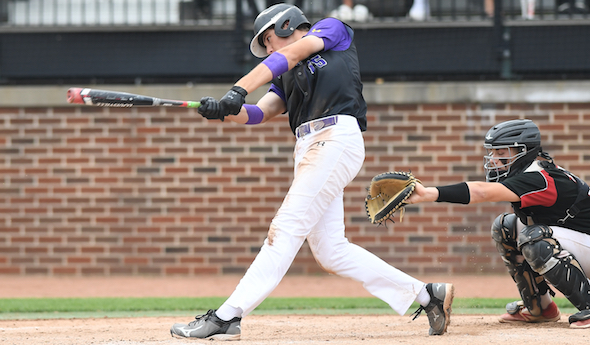
 There’s plenty of quality depth to go along with those stars, both in the lineup and the pitching rotation. Junior infielder Victor Mancini had 46 RBI through the team’s first 42 games a year ago, while junior catcher Easton Goldensoph had nine doubles and 26 RBI. Senior pitcher Conner Sika was the team leader in earned-run average, coming in at 0.51 while striking out 53 and allowing 26 hits and nine walks in 54 2/3 innings. He was superb on opening night, allowing just one hit in his shutout victory against Chesaning.
“I think we can do it this year,” Avery Goldensoph said of making another deep run. “We’ve got me, Brian and Conner Sika who pitched (in the opening series), he’s really good. Our lineup put up 13 runs and 11 runs, that’s a great start.”
With a tough Tri-Valley Conference Central schedule ahead, the games figure to get more difficult. But the Vikings view that challenge as a good way to prepare for the postseason, and invite the daily pressure playing in that league brings.
Because even as they try to avoid it, the pressure of greater expectations is a reality they have to face.
“I think we have a really good team, in my opinion,” Ross said. “Last year we were kind of going after everybody, and now we’re being looked at like they want us. So I would say it’s a little more pressure, but it’s nothing we can’t handle.”
The best way to handle any pressure that may seep in? By going back to what worked so well a year ago – staying loose. That starts with the coaching staff.
“We’re a little more relaxed; we’re not screaming and hollering,” Leddy said about his staff, which includes assistants Mark Jebb and David Finzel, as well as pitching coaches Chris and Nick Sarmiento. “I remember what it was like when I was a young kid; the last thing you wanted was a coach kicking you in the (behind) all the time. You want someone encouraging you to be a better person and a better ballplayer. I’m blessed to have some great coaches on staff that know a lot about baseball and care about the kids.”
The attitude of the coaches has certainly gotten through to the players.
“What happens, happens, right?” Mitch Jebb said. “If we win, we win. The goal is to win, but it’s not like Coach is saying, ‘You better win a state championship.’ We’re all playing the game we love, and it’s fun. It’s fun playing. If we can win, we want to win – you always want to win. But the overall picture is to go out there and play your game and have fun.”
 Paul Costanzo served as a sportswriter at The Port Huron Times Herald from 2006-15, including three years as lead sportswriter, and prior to that as sports editor at the Hillsdale Daily News from 2005-06. He can be reached at [email protected] with story ideas for Genesee, Lapeer, St. Clair, Sanilac, Huron, Tuscola, Saginaw, Bay, Arenac, Midland and Gladwin counties.
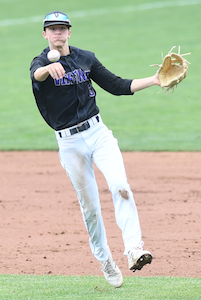
PHOTOS: (Top) Swan Valley’s Victor Mancini drives a pitch during last season’s Division 2 championship game against Stevensville Lakeshore. (Middle) Shortstop Mitch Jebb fires a throw to first.