

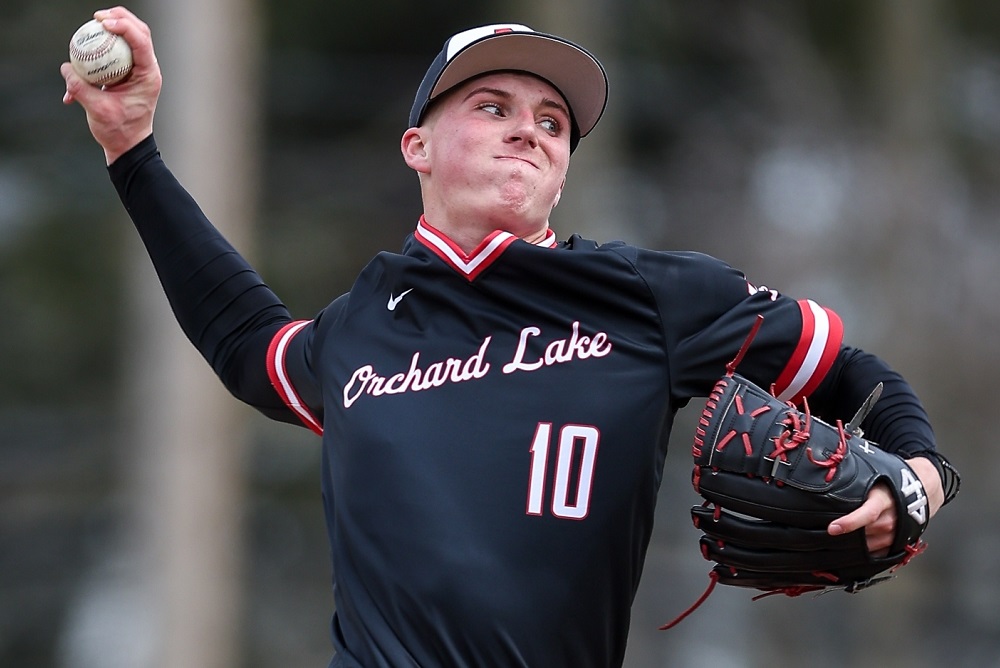
Performance of the Week: Orchard Lake St. Mary's Brock Porter
June 1, 2022
 Brock Porter ♦ Orchard Lake St. Mary’s
Baseball ♦ Senior
One of Michigan’s most highly-regarded baseball talents in years, Porter continued his dominating senior season May 20 with his fourth no-hitter of the spring – this time in a 4-0 win over Detroit Catholic Central in the Catholic High School League Bishop semifinals at Comerica Park. He struck out 16 hitters, upping his season total to 87 with only 17 walks over 42 innings. He’s 6-0 and has allowed only one earned run – and three total – this season.
Porter grew up playing baseball and football, and downhill ski racing, before turning his full athletic attention to the diamond. He has signed to continue his baseball career at Clemson University, and he also is expected to be a first-round selection in July’s Major League Baseball draft. Porter threw a 12-strikeout six-hitter in last season’s Semifinal against New Boston Huron as the Eaglets went on to win the Division 2 championship, and St. Mary’s is up to 37-0 this season and has won 59 straight games. Porter also is a member of the MHSAA Student Advisory Council.
Follow the MHSAA on TikTok.

Second Half’s "Performance of the Week" features are powered by MI Student Aid, a part of the Office of Postsecondary Financial Planning located within the Michigan Department of Treasury. MI Student Aid encourages students to pursue postsecondary education by providing access to student financial resources and information. MI Student Aid administers the state’s 529 college savings programs (MET/MESP), as well as scholarship and grant programs that help make college Accessible, Affordable and Attainable for you. Connect with MI Student Aid at www.michigan.gov/mistudentaid and find more information on Facebook and Twitter @mistudentaid.
2021-22 Honorees
May 20: Brady Schultz, Menominee track & field - Report
May 13: Robert Burns, Flint Powers Catholic golf - Report
May 6: Bo Lockwood, Hartland lacrosse - Report
April 28: Nonah Waldron, Oak Park track & field - Report
April 21: Theryn Hallock, Grand Rapids Forest Hills Central soccer - Report
April 14: Kaitlyn Pallozzi, Farmington Hills Mercy softball - Report
April 7: Mason Docks, Williamston basketball - Report
March 24: Mya Petticord, Ypsilanti Arbor Prep basketball - Report
March 16: Charley Bayer, East Grand Rapids diving - Report
March 9: Ja'Marcus Smith, Detroit Mumford wrestling - Report
March 2: David Schaberg, Holt bowling - Report
Feb. 24: Adelaide McRoberts, Kingsford swimming - Report
Feb. 17: Christopher Kavanaugh, Petoskey hockey - Report
Feb. 10: Ira Jenkins, Whitehall wrestling - Report
Feb. 3: Emma Stewart, Salem gymnastics - Report
Jan. 28: Tyler Ray, Pinckney swimming - Report
Jan. 21: Elle Craven, Traverse City Central skiing - Report
Jan. 14: Nevaeh Williams, Mount Clemens basketball - Report
Dec. 2: Lucas Dunn, Chelsea football - Report
Nov. 25: Riley Nugent, Plainwell swimming - Report
Nov. 18: Harper Murray, Ann Arbor Skyline volleyball - Report
Nov. 11: Abby VanderKooi, Muskegon Western Michigan Christian cross country - Report
Nov. 4: Arianne Olson, Holland West Ottawa cross country - Report
Oct. 28: Jack Guggemos, Okemos soccer - Report
Oct. 21: Sachiv Kumar, Northville tennis - Report
Oct. 14: Kate Brody, Grand Blanc golf - Report
Oct. 7: Lilly Nelson, Negaunee tennis - Report
Sept. 30: Stella Chapman, Ann Arbor Pioneer swimming - Report
Sept. 23: Riley Hough, Hartland cross country - Report
Sept. 16: Josie Bloom, Pontiac Notre Dame Prep volleyball - Report
(Photos courtesy of the Porter family.)
Senior-Powered Spring Lake Answering Anticipation, Pursuing High Expectations
By
Dean Holzwarth
Special for MHSAA.com
April 29, 2026
SPRING LAKE – The time is now for the Spring Lake baseball team.
 With the return of 11 veteran seniors, the Lakers entered this spring with lofty expectations and an eye on an extended postseason run.
Anticipation has come to fruition in the form of a state ranking and a nearly perfect start.
“Our motto is we are going to worry about next year next year, and we are going to do all we can this year,” Lakers fourth-year coach Bill Core said. “We knew we were going to have a big experienced group coming back, and that's just how the roster folded out. We have a lot of experience, a lot of returners and pretty high expectations.”
Spring Lake, which finished as Division 2 runner-up in 2024 and won a conference title last year for the first time since 2014, is off to an impressive 13-1 start (9-0 in the Ottawa-Kent Conference Black) and has climbed to No. 7 in the latest coaches poll.
Core said the vast number of returners, which includes five players who will play in college next year, has paid early dividends.
“I think that’s been a big difference,” he said. “We’ve played some younger teams that were breaking in sophomores or juniors or new kids, and our guys were ready to go right from the start. It’s been an advantage early on.”
Senior starting pitchers Oliver Smies and Maddux Kipling believe the strong bond among the senior class has been a major factor in the torrid start.
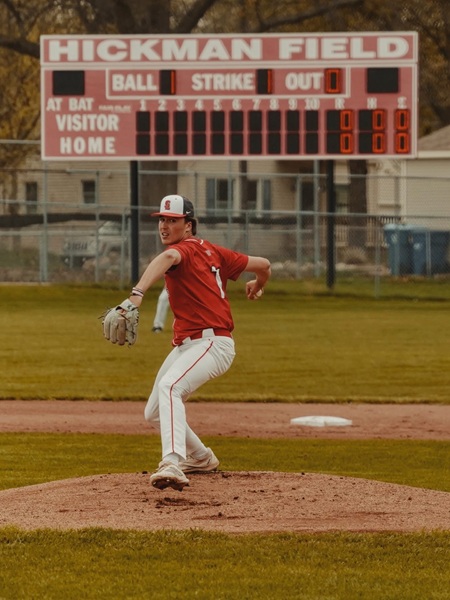 “I think something that’s really important about this team is our team chemistry and the amount of seniors we have on the team,” Smies said. “That alone allows us to have a ton of experience, and I think that's a big reason why we are off to such a hot start. We have been playing good team baseball and complementary baseball with good defense and good offense.”
Added Kipling: “We genuinely like being around each other, and every day we show up ready to get a little better. Our team has a real gritty and energetic identity, and I think that shows in how we compete and support each other.”
Kipling and Smies have been dominant on the mound this season. They haven’t allowed an earned run while combining for 80 strikeouts. Kipling earned a second-team all-state accolade as a junior and is headed to Michigan State next year. Smies will play at Calvin University.
“It starts with our pitching,” Core said. “Any time you are going to make a run, it starts with your pitching and we are pretty lucky, especially with our top two.”
Offensively, the Lakers possess a balanced lineup and boast a .330 batting average.
Senior Owen Smies, who will join his twin brother at Calvin, is hitting a team-best .432 with 13 RBIs. Seniors Alex Strauss (Adrian College) and Max Feltner (Muskegon Community College) are both batting .333 and have combined to score 25 runs.
As a team, Spring Lake has produced eight shutouts and nine wins by run differential.
“We got off to a good start, but we are going to play a lot better competition,” Core said. “This is a good week for us because we play Northview and state-ranked East Grand Rapids. We just picked them up, so we were excited to fill in the week with those two schools.”
Spring Lake is 62-6 over its last 68 games and trying to remain focused on each game as it attempts to erase the disappointment of last year’s early exit from the postseason.
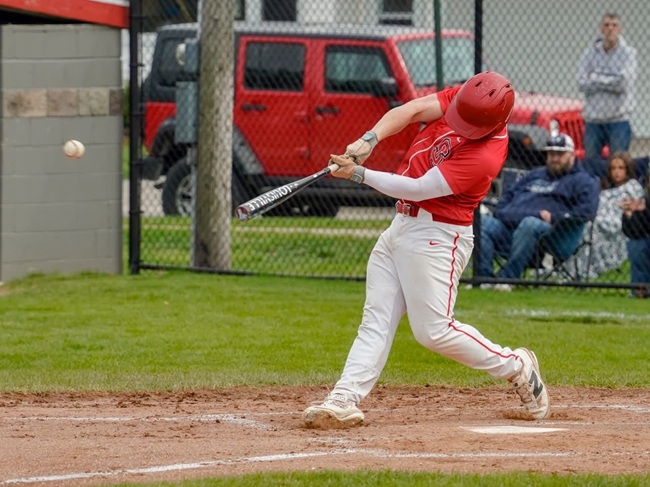 Despite winning 30 games, the Lakers suffered a 3-2 loss to Grand Rapids West Catholic in District play.
“I think there is some motivation there from that loss,” Oliver Smies said. “And I think that loss last year taught us that any team can beat any team, so you have to play your best baseball every single game no matter the opponent.”
Core said last year hasn’t been discussed, but believes it still sits in the back of his players’ minds.
“I think they think about that, but we've had quite a few mercies to start the season, and I said to them that when we get to the tournament it's going to be a one-run game and we are going to have to do the little things to make a difference because we are not going to win 14-0 all the time,” he explained. “We try to keep everyone in the moment.”
Kipling isn’t dwelling on the past – or looking too far ahead.
“As a group we’ve done a great job staying focused on the present and not getting caught up in the past or worrying too much about the future,” Kipling said. “My dad has always told me to focus on what you can control because putting energy into things you can’t control is a waste.
"That mindset has stuck with me, especially on the field. I try to live by ‘one pitch at a time,’ and because of that I haven’t really spent time thinking about last year’s loss. That’s behind us, and we’re just focused on what we can do right now.”
 Dean Holzwarth has covered primarily high school sports for Grand Rapids-based WOOD-TV for five years after serving at the Grand Rapids Press and MLive for 16 years along with shorter stints at the Ionia Sentinel and WZZM. Contact him at [email protected] with story ideas for Allegan, Kent and Ottawa counties.
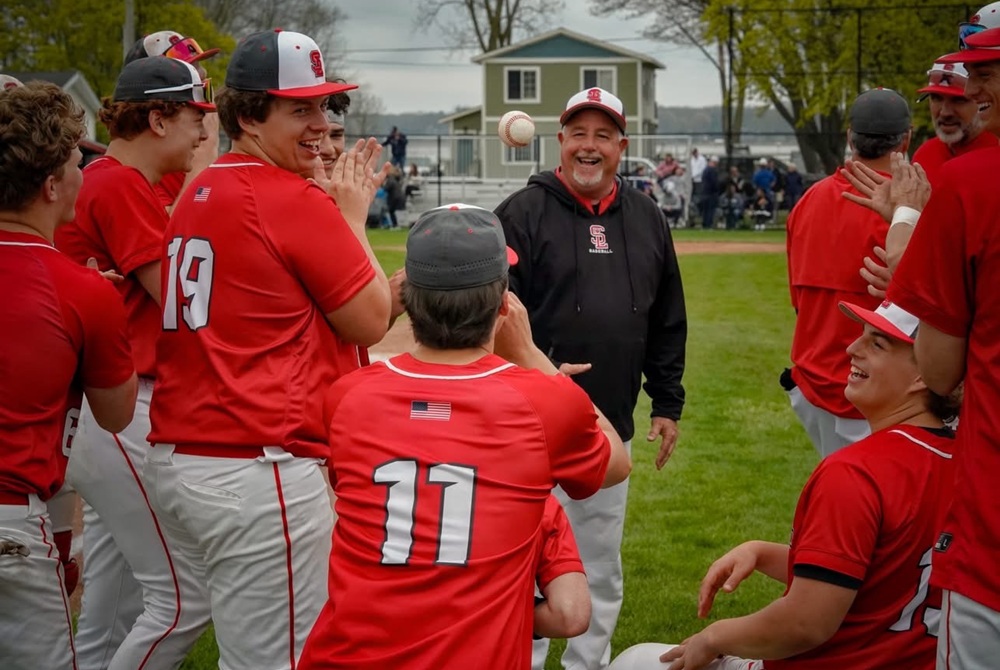
PHOTOS (Top) Spring Lake baseball coach Bill Core tosses Maddux Kipling his home run ball after a win over Fruitport. (Middle) Kipling pitching at Spring Lake's Hickman Field. (Below) Senior Oliver Smies connects with a pitch. (Photos by Trevor McCue/Grand Haven Tribune.)