

Jackson Remembers, Honors Hoops Hero
By
Chip Mundy
Special for Second Half
December 8, 2016
By Chip Mundy
Special for Second Half
JACKSON – More than 30 years ago, Gary Thompkins moved away from Jackson after his high school days. But he never really left home.
 He thought about leaving the sun and warmth of his Arizona home and coming back to Jackson, hopefully to coach the basketball team at his alma mater, Jackson High School. His son Zeke wanted to play at the same school as his father, and Gary's dream job was to coach the Vikings.
While the coaching move wasn't in the cards at that time, Thompkins did return this summer to host a youth basketball camp at the old gym at his high school. He hoped it would become an annual event, and he planned to return again this month when his number would be retired.
On Sept. 3, less than a month after the camp and just 12 days shy of his 51st birthday, Thompkins died of a massive heart attack in Phoenix.
“It's just how life works,” said Jack Fairly, athletic director at Jackson. “He came home and ran that camp and a few weeks later he has a heart attack. Immediately you wish you would have retired his number sooner, but how do you know?
“It's a learning thing, too. Don't wait sometimes to tell people what you want them to know.”
The shocking news traveled through Jackson and his Thompkins’ friends like a lightning bolt. At his service in Jackson, one speaker said, “Growing up, we knew about Tony Dungy. We knew who the best football player was to come out of Jackson, but he was older than us and we didn't know him that well. When it came to basketball, we had Gary. Gary was our Tony Dungy.”
It seemed most everyone agreed, and in 2002, the Jackson Citizen Patriot named Thompkins the best high school basketball player in Jackson County history.
“He's the best player I ever coached, and it's not even close,” said Andy Sheridan, who coached Thompkins in high school.
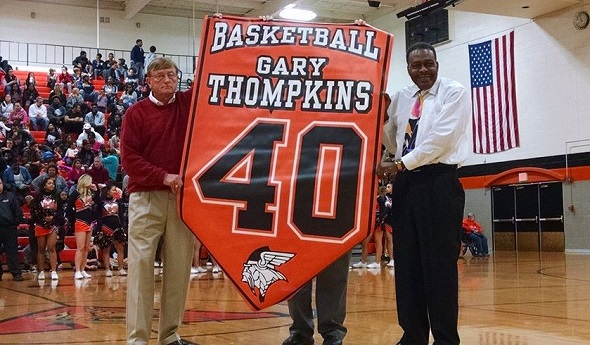
Tuesday night, Jackson High School fulfilled its plan to retire Gary's No. 40 in a heartwarming, emotional ceremony. Gary's father, Bobby Thompkins, and Sheridan were on the court to reveal the banner as Gary joined his father and Regina Pierce as the only Jackson High School basketball players to have their numbers retired.
Following in Dad's basketball shoes
In the 1960s, Bobby Thompkins was the top basketball player in Jackson, and up until Tuesday night, he was the only male basketball player to have his number retired at Jackson High – a school that won Class A titles in 1948 and 1955.
“Bobby really pushed Gary and worked with him,” Sheridan said. “Bobby really wanted him to play, and that was a good thing.
“The thing is, though, if a kid doesn't want to play, he isn't going to play. I've had kids who had talent but didn't have the desire. Gary wanted to play all the time. If I could have opened that gym up 24 hours a day, he would have been in there 24 hours a day.”
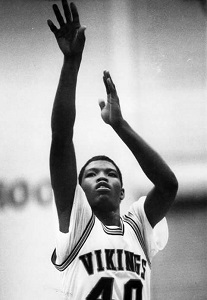 Bobby Thompkins was an inside player, and Gary was a point guard who could do it all. There were not many similarities.
“Gary could go out and shoot it from 15, 20, 25 feet, and I was anywhere from 14 to 15 feet in, so I always played inside while Gary was outside,” Bobby Thompkins said. “But that was one of the things that Andy and I talked about as he grew up.
“It was to his advantage and his future for him to be able to handle the ball and play outside, and that is the way Andy coached him.”
It could not have been easy playing basketball in Jackson with the last name of Thompkins. But Gary embraced it. He was proud of his father but wanted to be better. He played with a swagger and had a flair for the dramatic. He was good, and he knew it. But off the court, he came off as just another guy.
“In 1984, his senior year, I was just back out of college, and I was substitute teaching,” Fairly said. “He gave me the time of day, and I was like some guy he didn't need to know. He was everything to us. He was our Mr. Basketball.
“The impressive thing is that he took the time to talk to me and get to know me. He shook my hand and introduced himself to me and made me part of what was going on with him just by being polite. Not every great star does that, and I think that spoke volumes about his character. So you root for a guy like that.”
Having Sheridan as his coach was a perfect match, too. Sheridan and Bobby Thompkins had been teammates on some fine basketball teams at Spring Arbor College and maintained their friendship throughout the years. Gary attended Jackson Catholic Middle School, but when it came time to choose a high school, he went to a public school for one important reason.
“Bobby called me and said, 'If you're going to be the coach, Gary is going to be at Jackson High,'” Sheridan said.
In Gary's senior season, Jackson won a Class A District title and won a game in the Regional tournament for the first time since 1969 before losing in the Regional Final. Thompkins left Jackson High with several impressive accomplishments: He finished second in the voting for Mr. Basketball – the highest finish ever for a Jackson County player – and was a two-time Class A all-state first-team selection and a four-year varsity player.
In the annual state high school all-star game that year, Gary was voted the Most Valuable Player. On Father's Day.
Thompkins established school records for career points (1,543), rebounds (801), assists (582) and steals (218). Those records still stand. He could do it all on both ends of the court.
He was heavily recruited by former University of Michigan coach Johnny Orr and played for Orr at Iowa State, where he teamed with another Michigan high school star – Flint Northwestern’s Jeff Grayer – and helped the Cyclones return to the NCAA Tournament for just the second time since 1944.
Perhaps the highlight was Iowa State's 72-69 second-round victory over Michigan in 1986 – a game that Orr called “my biggest victory.”
In four seasons at Iowa State, Thompkins had 900 points and 600 assists. He lived up to the hype.
Always living the game
After giving pro basketball a shot, Thompkins settled into a coaching and teaching role. He was a special-needs instructor and basketball coach at Greenway High School in Phoenix, and he was fondly known as “Coach G.”
Basketball wasn't his only focus, but it always was a passion.
“Gary was a great player, and he actually lived the game,” Sheridan said. “All the way through his coaching, he would call me so many times and tell me how his teams were doing and how his kids were doing. He really lived the game. He really did. Basketball was his thing.”
Not surprisingly, Thompkins' two step-sons are gifted in basketball. His oldest step-son, Sammy Barnes-Thompkins, played as a freshman last season at Boston College before transferring to Odessa College in Texas this winter to get more playing time.
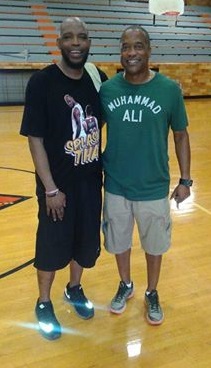 The younger step-son is Zeke Thompkins, a freshman at Greenway High School in Phoenix who already is catching the eye of college coaches. And it is Zeke who had a dream to one day play basketball at Jackson High – his father's school.
A few years ago, Thompkins considered moving back to Jackson to coach the Vikings and give Zeke the chance to play there. Although the job likely would have been his had he wanted, things didn't match up. But it remained a dream.
“What they did in Arizona was make him a permanent sub, and being that he was a permanent sub, he automatically could coach and support his family,” Bobby Thompkins said. “That was one of the pieces that I think was missing in regards to coming home, but he wanted his kids to play here and wanted to coach here.”
It was with a ton of pride that Gary returned to Jackson on Aug. 13 to hold a shooting camp at Jackson High School. It was interesting that instead of holding the camp in the current gym – the one in which he played – he wanted the camp to be held at the cozy old gym that housed the two MHSAA championship teams and is filled with character.
It was his way of giving back and staying in touch with his old school. He had hoped to make it an annual event that would grow in size each year.
“It was a hot day, and Gary did a great job with the kids for us,” said Dan Crowley, Jackson High boys basketball coach. “He was very gracious to everybody.
“He was looking forward to coming back for the first game when his number was retired.”
Instead, the ceremony went on without Gary. It was heartbreaking and uplifting at the same time, especially for his family.
“The way in which I’m dealing with it is that it's an opportunity to do something for a young man who was successful,” Bobby Thompkins said. “I have to thank the school district and also thank Andy and Jack, who also have promoted this, and at the same time, this might give an opportunity for others to have the opportunity to have their numbers retired. It would be great for their families.
“Also, it's a positive reinforcement for our community, giving honor and respect that is needed for those who were successful.”
Gary Thompkins left a legacy in Jackson as versatile as his playing skills. He was fierce and confident on the court. He was nice and gracious off it. And he possessed a tremendous love for his family, his sport and his high school that stayed with him until his final days.
He packed a ton of living into his nearly 51 years. It would have been a surprise if he hadn't.
 Chip Mundy served as sports editor at the Brooklyn Exponent and Albion Recorder from 1980-86, and then as a reporter and later copy editor at the Jackson Citizen-Patriot from 1986-2011. He also co-authored Michigan Sports Trivia. E-mail him at [email protected] with story ideas for Jackson, Washtenaw, Hillsdale, Lenawee and Monroe counties.
PHOTOS: (Top) Former Jackson coach Andy Sheridan (left) and Bobby Thompkins hold up the banner signifying the retirement of Gary Thompkins’ number during Tuesday’s ceremony. (Middle) Gary Thompkins, during his high school career with the Vikings. (Below) Gary Thompkins, left, with former high school teammate and current NCAA Division I college official Earl Walton during Thompkins’ camp at Jackson High in September. (Top photo by Laura Quinn; middle photo courtesy of the Jackson Citizen Patriot.)
Breslin Bound: Boys Report Week 7
January 22, 2018
By Geoff Kimmerly
Second Half editor
Last week was unkind to many who had enjoyed perfect runs through most of the first half of this boys basketball season.
 We started last Monday with 34 unbeaten teams – and ended with only 22, as five of 10 in Class D and three of seven in Class A were among those to suffer first defeats.
Of course, the best teams rarely make it through an entire season unscathed – and often that’s a good thing. Five of eight teams on this week’s “Watch List” below have lost at least once and a couple have three defeats – but are still making major impressions as we roll along toward March.
Breslin Bound is powered by MI Student Aid and based on results and schedules posted for each school at MHSAA.com. To offer corrections or fill in scores we’re missing, email me at [email protected].
Week in Review
The countdown of last week’s five most intriguing results:
1. Detroit Renaissance 60, Detroit Cass Tech 57 – More on Renaissance’s surge below, but this one announced it as Cass Tech had been in the talk as the best in Class A.
2. Kalamazoo Central 55, Mattawan 47 – The Maroon Giants are quietly off to another strong first half, sitting alone in first in the Southwestern Michigan Athletic Conference East after handing Mattawan its first loss of the season.
3. Maple City Glen Lake 54, Frankfort 45 – The Lakers had quite a week, handing Frankfort its first loss to move into a three-way tie atop the Northwest Conference before defeating Lake Michigan Conference leader Traverse City St. Francis two days later.
4. Rochester 71, Berkley 55 – Rochester moved into first place alone in the Oakland Activities Association Blue while handing Berkley its first loss overall.
5. Buckley 62, Manton 60 – These teams went a combined 47-6 last season in both making it to the Breslin Center; they are a combined 13-6 with high aspirations again this winter.
Watch List
With an eye toward March, here are two teams in each class making sparks:
CLASS A
Detroit Renaissance (8-3) – The Phoenix finished 6-14 only a season ago, but the rise has been sharp and impressive over the last two months. Right after downing Cass Tech last week, Renaissance also defeated Class B contender Detroit Henry Ford – which beat the Phoenix by three Dec. 19. The three loses this season are by a combined nine points; Renaissance fell early by four to Flint Carman-Ainsworth and then by a basket to Ann Arbor Huron in overtime (those two are 15-3 combined).
Okemos (7-3) – Last week’s 60-55 win over East Lansing requires context; Trojans all-stater Brandon Johns was unable to play, reportedly resting a lingering knee injury. Regardless, the victory pushed the Chiefs into a first-place tie with Grand Ledge in the Capital Area Activities Conference Blue after Okemos finished fourth and 12-9 overall last season. The only losses this winter were to the Comets, DeWitt and Troy Athens (24-6 combined) in December; the Chiefs are 4-0 in 2018.
CLASS B
Coloma (9-0) – A 54-49 overtime win over nonleague foe Kalamazoo Hackett on Saturday didn’t enhance Coloma’s standing atop the Southwestern Athletic Conference Lakeshore, but did further the Comets’ standing as a team to watch statewide (Hackett fell to 9-2). Coloma improved from five wins two seasons ago to 13 and second in the Lakeshore last winter, and it has a one-game lead on Fennville heading into their second meeting this season Friday. The Comets won the first 71-64 on Dec. 8.
Fremont (7-2) – After two seasons winning only six games apiece, Fremont improved to 13-8 last winter and has continued to climb. The Packers have won five straight to rise to first place in the Central State Activities Association Gold despite suffering a loss to third-place Reed City during a 2-2 start. They are perfect this month and started the run with a 54-49 win over second-place Big Rapids.
CLASS C
Capac (9-0) – The Chiefs have nearly guaranteed their first winning season since 2010-11, and are set up to play for more. Coming off an 8-13 finish a year ago, Capac finds itself tied for first in the Blue Water Area Conference with Richmond, and they’ll meet for the first time next week. The Chiefs handed former co-leader Almont its first league loss Friday, 41-35, and have won six games by double digits.
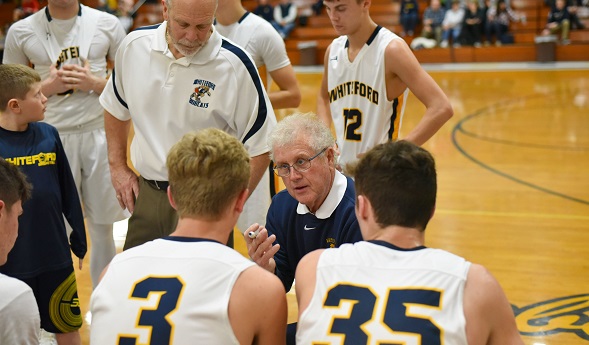
Ottawa Lake Whiteford (7-2) – The Bobcats’ Division 8 championship football success seems to be following into the winter, as they moved into first place alone in the Tri-County Conference with a 63-42 win over Sand Creek on Thursday. Next up is second-place Petersburg-Summerfield, and a victory would be coach John Rice’s 500th. Whiteford’s only losses this winter are to Class A Temperance Bedford and also much larger Toledo Waite.
CLASS D
Ashley (9-1) – The Bears have run off nine straight victories to move into first place in the Mid-State Activities Conference with a matchup against second-place Carson City-Crystal coming up this week. Ashley won nine games total a year ago – and had 19 victories over the last five seasons combined entering this winter. The lone loss was by only three to Portland St. Patrick in its opener.
Bellevue (8-0) – Last season’s 23-2 run – an improvement of five wins from the solid season before – might have been just another step as the Broncos are surging again. The most impressive win may have come Thursday, 45-39 over Camden-Frontier which sent the Redskins to 9-3. The Broncos also beat Class C Carson City-Crystal and Lakeview to win the Central Montcalm Holiday Hoops Tournament, and have a two-win lead in the Southern Central Athletic Association West.
Can't-Miss Contests
Be on the lookout for results of these games coming up:
Tuesday – Grand Rapids Christian (6-2) at East Grand Rapids (9-1) – These two sit together at the top of the Ottawa-Kent Conference Gold after Christian was first and EGR only fifth last season.
Tuesday – Warren DeLaSalle (7-2) at Detroit U-D Jesuit (8-2) – This will be the first of two meetings (at least) between the current co-leaders of the Detroit Catholic League Central.
Tuesday – Grandville Calvin Christian (7-1) at Grand Rapids Covenant Christian (10-2) – Both should be in the Class C statewide mix again after Covenant was runner-up last season and Calvin was runner-up in 2016.
Tuesday – Coloma (9-0) at Kalamazoo Christian (9-0) – The leaders of the SAC Lakeshore and Valley, respectively, have made similar big moves in their divisions with a similar opportunity to gain a little more statewide acclaim.
Thursday – West Bloomfield (5-4) at Clarkston (10-1) – The overall records don’t look close, but West Bloomfield trails the Wolves by just a win in the OAA Red after both made the Class A semifinals last season (and Clarkston won it all).
PHOTO: Ottawa Lake Whiteford coach John Rice provides some pointers for his 7-2 Bobcats. (Photo by Cari Hayes.)