


MHSA(Q&)A: Historian Ron Pesch
April 16, 2012
 When we receive a question on the history of MHSAA athletics that we can't answer on the spot, Muskegon's Ron Pesch is the first person we seek out for help.
Pesch took the reins as Michigan's chief high school sports historian during the mid 1990s after the retirement of legendary MHSAA record book originator Dick Kishpaugh and has contributed to various efforts and publications across the state.
One of his latest projects is the awarding of "retro" Mr. Basketball Awards. The first Hal Schram Mr. Basketball Award was given by the Basketball Coaches Association of Michigan in 1981 to Lansing Eastern's Sam Vincent. Three seasons ago, BCAM -- with research work by Pesch -- began awarding retro winners for the previous decades beginning with the 1920s. This winter, BCAM honored retro winners from 1922, 1932, 1942, 1952, 1962 and 1972.
Click to read more about those winners and the finalists recognized last month. Also, click for links to the previous retro winners. The retro Mr. Basketball project will last seven more seasons. Pesch explains more below.
How did you come up with rewarding a “Retro” Mr. Basketball?
The project came out of a conversation I had with (BCAM executive director) Tom Hursey at the basketball finals back in '99. Together, we hatched an approach honoring the state's past basketball greats. He let me run with it, while he worked on getting a subcommittee launched to make the selection.
How do you dig up all of this nomination info?
Between votes, I work on digging out the details. My initial target list always begins with all-state teams - if, of course they exist. All-tournament teams for the early years also serve as a starting point -- if they exist. Best I can tell, the Detroit Times, the Free Press and the News have all named all-state squads, at various points, back to about 1935. The Associated Press and UPI came to the game much later - somewhere around the early to mid 1960s. I then work on creating a crosstab on the players selected, noting the "teams" on which they were named (Class A 1st team, Dream Team, Class C 3rd team), and try to find quotes detailing their games. The result is really a reflection of the times and the history of newspaper reporting.
In early years, we can struggle to uncover a player’s first name, let alone his class in school. And statistical coverage of a player's abilities was very limited. It's simply the way things were back then. Everyone in town knew King Lewis, or Red Cherry, or Young Jacks. And the final box score only contained points, fouls, substitutions, as they were all you really needed to know about the game. But by visiting the state library in Lansing, and looking at a cross-section of newspapers, you can usually dig out what you need.
Do you collect from other sources as well?
Another source is high school yearbooks. Some resources have started to emerge online. I also tap into the MHSAA site and make contact with ADs around the state, asking for their assistance on digging out details - especially class in school. Like the current program, only "seniors" are considered for the award. Mid-year graduates can create a challenge, but the rule currently in place is a player is considered a nominee in the year in which he was last eligible for the state tournament. In other words, if you graduated in January or February of 1943, you would be considered for the 1942 ballot. It appears that a similar approach was used in selecting all-state teams.
|
Year |
Player |
High School |
Age |
Height |
Weight |
Year |
DFP |
DN |
DT |
AP |
UPI |
Tourney |
|
1971 A-1 G. |
Frank Tanana, Jr. (C) |
Detroit Catholic Central |
17 |
6-3 |
170 |
Sr. |
A1 |
A1 |
A1 |
A1 |
||
|
1971 A-1 C |
Tom McGill |
Flint Northern |
17 |
6-3 |
190 |
Sr. |
A1 |
DM |
A1 |
A1 |
||
|
1971 A-1 F. |
Lindsay Hairston |
Detroit Kettering |
17 |
6-9 |
203 |
Sr. |
A1 |
DM |
A1 |
A1 |
||
|
1971 A-1 F. |
Campy Russell |
Pontiac Central |
18 |
6-7 |
190 |
Sr. |
A1 |
DM |
A1 |
A1 |
That cross-tab table will help establish a list of nominees. A consensus first-team pick is an obvious candidate. When only a single all-state team is available, I'll do what I can to look up all-conference teams or all-area teams from around the state to see who else might be considered. While life after high school is not a considered when trying to pick a winner, a player who emerges as a star in college or in the pros may emerge as a candidate when you see his details in a local paper.
Bios are assembled from the newspaper reports, detailing as much as we can find on high school player's career. I'll tap into a variety of resources including old team histories when available. When needed, I'll toss out request to reporters, old and new, around the state. Local librarians and historians are another wonderful resource.
How does voting work?
Between sessions of the Boys Finals, the committee assembles to hash out a final ballot, and to make a selection. I don't vote, but I may guide the conversation and provide any additional details when needed, reminding members that we're focusing on their high school careers. The process is certainly imperfect. But the committee approach prevents the process from becoming a popularity contest. These guys have the benefit of watching many of the players play. And, like the current Mr. Basketball program, they sometimes surprise. But that's what makes it fun. And, of course, stirs the pot. It gets people talking about the history of basketball in this state.
Is there a theme to MHSAA basketball that has remained constant over the years?
For me the greatest thing about the basketball tournament is that it assembles a wide range of folks who want to see players they've heard about in action. And the process, for the most part, hasn't change since the 1920s. While the style of the game has changed, winning a title is much the same as it was back when our great-grandfathers played: You gotta get through the tournament. And only four trophies are awarded.
These guys were the "Magic" of their day. I'm hoping we never forget that.
Breslin Bound: 2025-26 Boys Quarterfinal Preview
By
Geoff Kimmerly
MHSAA.com senior editor
March 10, 2026
One. More. Win.
That’s all that’s needed as 32 boys basketball teams take the floor tonight for Quarterfinals across the state and with a trip to East Lansing and Breslin Center on the line.

Below are quick glances at all 16 matchups. Games tip off at 7 p.m. unless noted. Details on tickets, brackets and more can be found on the Boys Basketball page. To watch all 16 games online, visit the NFHS Network.
“Breslin Bound” is powered by MI Student Aid and based on results and schedules posted for each school at MHSAA.com. (Abbreviations below denote ppg - points per game, rpg - rebounds per game and apg - assists per game.)
Week in Review
The countdown of last week’s five most intriguing results:
1. Grand Rapids Northview 52, East Kentwood 50 Cam Ryans drilled a buzzer-beating 3-pointer to send Grand Rapids Northview (22-4) past East Kentwood (22-3) in a Division 1 Regional Final.
2. Harbor Beach 64, International Academy of Flint 62 (2 OT) Harbor Beach (23-3) won its first Regional title, edging IAF (19-5) in Division 4.
3. Colon 49, Battle Creek St. Philip 40 The Magi (22-4) also clinched their first Regional title, in Division 4, by adding to two regular-season wins over St. Philip (16-9).
4. Onsted 42, Ecorse 40 Onsted (24-2) clinched its first Regional title since 1983, advancing in Division 3 with a close win over Ecorse (19-6).
5. Onekama 46, Traverse City Christian 40 Onekama (17-10) handed Traverse City Christian (25-1) its only loss in a Division 4 Regional Final.
Quarterfinals at a Glance
DIVISION 1
Rockford (22-3) vs. Grand Rapids Northview (22-4) at Hudsonville
These two met Jan. 31 at the 2K26 Showcase, with Rockford winning 48-45. Senior 6-foot-6 forward Jake Bascom is a tough matchup averaging 17.7 points and 7.1 rebounds per game. But so is Northview senior guard Cam Ryans, a Mr. Basketball Award finalist averaging 24.2 points, 7.6 rebounds and 3.3 assists per contest.
Auburn Hills Avondale (25-1) vs. Roseville (19-6) at Detroit Mercy
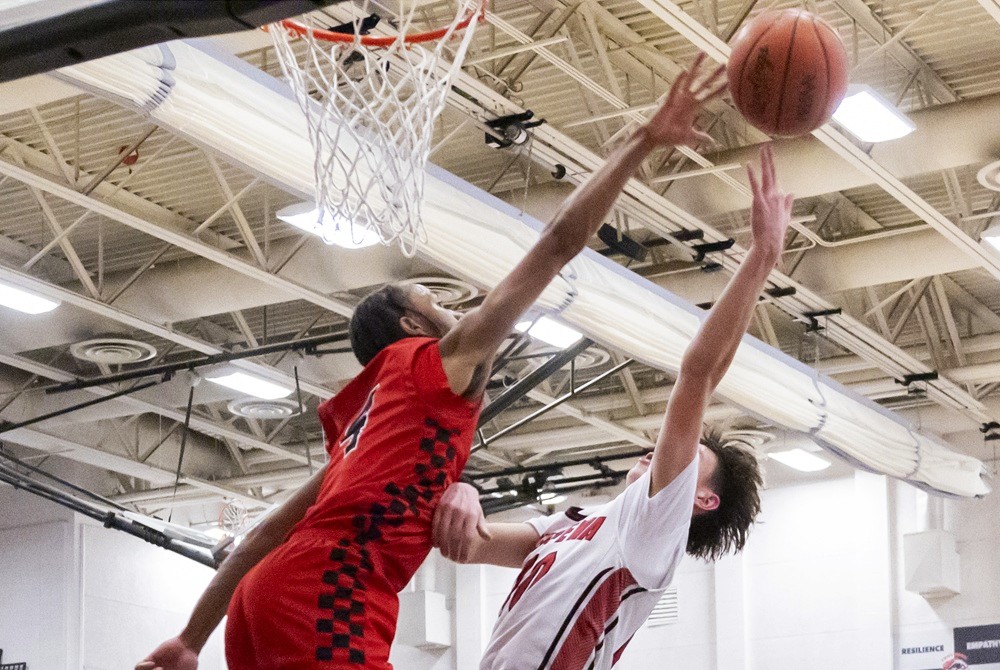
Avondale is coming off its first Regional title since 2002 with senior forward Jakobe Liford (15.2 ppg, 7.5 rpg) leading three players averaging double-digit scoring. Roseville last won a Regional in 2019 and returns to the season’s final week with junior guard Terrell Owens (17.3 ppg, 3.5 apg, 3.9 spg) setting the pace.
East Lansing (25-1) vs. Ann Arbor Pioneer (21-4) at Lansing Eastern’s Don Johnson Fieldhouse
Reigning Division 1 champion East Lansing celebrated senior guard KJ Torbert winning the Mr. Basketball Award on Monday, and he’s an especially impressive shooter making 52 percent of his shots from the floor – including 39 percent of his 3-point tries – on the way to averaging 25 points per game. Pioneer is back at the Quarterfinals for the first time since 2007, with senior guard Jordan Harrison a potent scorer (18.1 ppg) and distributor (3.9 apg).
Wayne Memorial (23-3) vs. Bloomfield Hills Brother Rice (21-5) at Detroit Mercy, 5:30 p.m.
The Zebras are also playing for a return trip to Breslin after finishing Division 1 runner-up a year ago, and they’re also led by a Mr. Basketball Award finalist in senior guard Jaylohn Allen (23.3 ppg, 6.0 apg). Brother Rice won its second Regional title over the last three seasons, keyed by a high-powered backcourt of senior Greg Grays (14.9 ppg) and freshman Jordan McDaniel (19.3 ppg).
DIVISION 2
Ludington (24-2) vs. Freeland (23-3) at Mount Pleasant
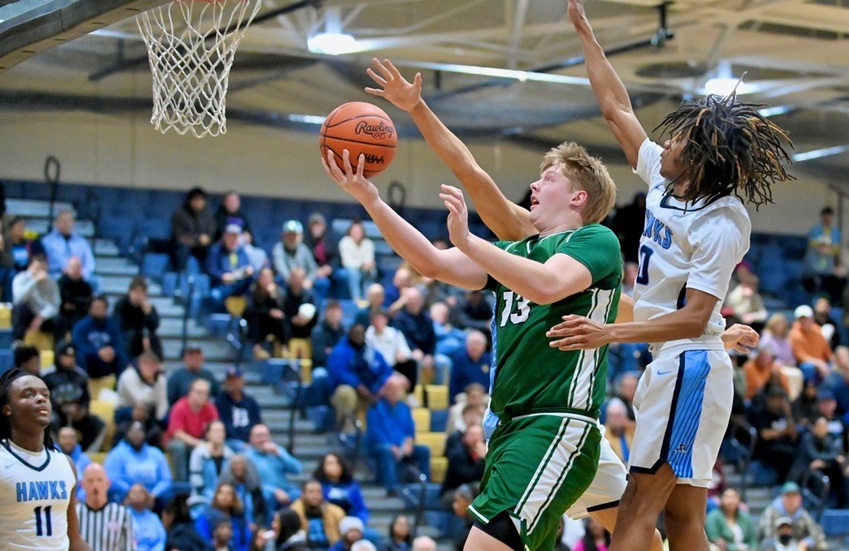
Junior guard Taj Williams (18.8 ppg) and senior forward Cameron Gunsell (18.2 ppg) have led Ludington to the Quarterfinals for the first time since 2017, as the Orioles advanced with a Regional Final win over 2025 semifinalist Kingsford. Freeland has won nine straight games to reach the Quarterfinals for the second consecutive year. Senior guard Wilson Huckeby is making almost 39 percent of his 3-pointers, drilling 81 this season while averaging 18.9 points per game.
Chelsea (20-5) vs. Romulus Summit Academy North (25-1) at Ypsilanti Lincoln, 5:30 p.m.
Summit is one win away from returning to Breslin after finishing Division 2 runner-up a year ago, its only loss to an Ohio opponent and with three players averaging double-digit points per game led by senior guard Jordan Fuller at 15.4. Chelsea has won nine of its last 10 games, with a big one over Lansing Sexton (23-3) in a Regional Final. Freshman Drew Cabana is averaging 21.8 points per game and senior Buck Allen adds 17.4 – and both have made at least 50 3-pointers.
Detroit University Prep (16-9) vs. Detroit Country Day (19-7) at Detroit Renaissance
University Prep has won nine of its last 10 games and edged reigning champion Warren Lincoln by two points in their Regional Final to reach this week. Senior guards Chris Byrd and Maurice Jackson are a 6-5 tandem averaging 19.6 and 14.6 ppg, respectively. Country Day has made a jump from 11-12 a year ago, winning nine of its last 10 games with junior guard Christian Cast (20.9 ppg) and 6-6 junior forward Isaiah Moreno (16.5) setting the pace.
Grand Rapids Catholic Central (20-6) vs. Hudsonville Unity Christian (23-3) at Hamilton
Grand Rapids Catholic Central is playing in its third-straight Quarterfinal and reached the Semifinals a year ago, and can turn to senior guards BB Watkins (14.4 ppg) and Jordan McCoy (15.5 ppg) for scoring punch. Unity Christian has won 19 of its last 20 games, its only defeat during that time against Freeland, and has five players averaging between 7-12 ppg topped by senior guard Brogan Sherd (12.2), who also has made 61 3-pointers.
DIVISION 3
Arts & Technology Academy of Pontiac (17-3) vs. Harbor Beach (23-3) at St. Clair County Community College
ATAP is a game away from a Breslin return as well after finishing Division 3 runner-up last season, and the Lions will take on a first-time Regional champ in Harbor Beach. Sophomore point guard Lewis Lovejoy paced last year’s ATAP run and leads again at 26.5 points and 7.6 assists per game. Senior guard Benson Harper leads three Harbor Beach players scoring in double digits at 17.3 ppg, and he and senior forward Skiler Krus (13.2 ppg) were also among stars on the Pirates’ Division 8 football championship team.
Menominee (22-4) vs. Beal City (24-2) at Boyne City
After a year away, Menominee is playing in its second Quarterfinal in three seasons and third over the last five – in part thanks to avenging a regular-season loss to 2025 semifinalist Ishpeming Westwood in their Regional Semifinal. Senior forward Tanner Theuerkauf quarterbacked the Division 7 football championship team and leads at 17.8 ppg, with senior guard Darren Butler at 15.2. Beal City is playing in its first Quarterfinal since 2013 and has reached 20 wins three straight seasons. Junior guard Cuyler Smith (15 ppg) leads three players averaging at least 11 points per game.
Flint New Standard Academy (20-4) vs. Onsted (24-2) at Ypsilanti Lincoln
New Standard is playing in its second-straight Quarterfinal and with its only losses this season to teams that all reached Regional Finals. Sophomore guard AJ Smith (12.4 ppg) and senior guard Jeffery Turner (12.0) lead four players averaging at least 10 ppg. As noted above, Onsted is back in the season’s final week for the first time in more than four decades, and after just missing with some very strong teams over the last 10 years. Mason Chesser (13.9 ppg) leads four averaging at least nine points per game who have helped the Wildcats push through.
Pewamo-Westphalia (24-2) vs. Schoolcraft (16-10) at Kalamazoo Loy Norrix
These two have met two other times in Quarterfinals this decade, with P-W advancing last season with a 50-45 victory. The Pirates have been regulars at this stage with this their fourth Quarterfinal over the last five seasons. Grady Eklund sets the pace for P-W at 20.7 points and 3.5 assists per game. Senior 6-10 forward Jimmy Miller leads three Schoolcraft players scoring at least 15 ppg with 19.3, plus nine rebounds per contest, and junior guard Kodee Bienz (15.1 ppg) has drilled 68 3-pointers.
DIVISION 4
Dollar Bay (23-2) vs. Pickford (25-0) at Gladstone
These two guarantee at least one Upper Peninsula team will be heading downstate, with Pickford making the attempt after losing a Quarterfinal last year by two points and Dollar Bay seeking its first Breslin trip since 2018. Gunner Bennin averages 19.1 points, 7.4 rebounds, 3.7 steals and 3.5 assists per game for the Panthers. Senior forward Liam Tourtillott (20.2 ppg, 73 3-pointers) and junior guard Baron Colbert (16.9 ppg) are strong perimeter options for Dollar Bay.
Detroit Douglass (19-7) vs. Waterford Our Lady of the Lakes (19-6) at West Bloomfield, 6 p.m.
Douglass has made its run after tying for second in a Detroit Public School League Blue filled at the top with Division 1 teams, and defeated 2025 semifinalist Allen Park Inter-City Baptist in a Regional Semifinal last week. Freshman guard Damani Oliver averages 22.5 ppg and senior guard Jeremiah Thurman adds 16.1. Our Lady started this season 2-4 but has surged since the start of January, with senior center Jack Miller (12.4 ppg, 7.2 rpg) and senior forward Latane Ware (11.3 ppg) pacing a balanced attack.
Colon (22-4) vs. Concord (22-4) at Portage Northern
As noted above, Colon is coming off its first Regional title, and the Magi also defeated league rival Mendon (22-2) in a District Final. Seniors forwards Dalton Williams (22.1 ppg) and Quincy Blair (17.7) lead four players averaging double-digit scoring. Concord is coming off its first Regional title since 1990 and has celebrated senior guard Jett Smith and senior forward Connor Stevens both reaching 1,000 career points this winter.
Onekama (17-10) vs. Wyoming Tri-unity Christian (24-1) at Big Rapids
Onekama stunned previously-undefeated Traverse City Christian with a 46-40 Regional Final win to advance to the season’s final week for the first time since 1997, and the Portagers now get to take on the reigning Division 4 champion Defenders. Center Luke Bradford sets the pace at 15 ppg and is one of three senior starters. Tri-unity has replaced four starters from last season’s title winner, with the lone returner junior center Cody Osbun leading at 12.4 points, 7.8 rebounds and 3.2 assists per game.
MHSAA.com's weekly “Breslin Bound” reports are powered by MI Student Aid, a division within the Department of Lifelong Education, Advancement, and Potential (MiLEAP). MI Student Aid encourages students to pursue postsecondary education by providing access to student financial resources and information. MI Student Aid administers the state’s scholarship and grant programs that help make college Accessible, Affordable and Attainable for you. Click to connect with MI Student Aid and find more information on Facebook and X @mistudentaid.
PHOTOS (Top) Roseville’s Terrell Owens (4) blocks a shot during his team’s 71-68 overtime win over Clinton Township Chippewa Valley in last week’s Regional Semifinal. (Middle) Freeland’s Tristan Comer (13) scoops a shot during the Falcons’ Regional Final win over Flint Hamady. (Roseville/Chippewa Valley photo by Adam Sheehan. Freeland/Hamady photo by Terry Lyons.)