

'Retro' Award Rewards 1st Hoops Legends
January 4, 2017
By Ron Pesch
Special for Second Half
Before the start of the MHSAA’s 2009 Boys Basketball finals, Basketball Coaches Association of Michigan director Tom Hursey stopped by my seat at Michigan State University’s Breslin Center to say hello.
Our chat would alter a decade of my Michigan winters.
Somewhere between hello and goodbye, our chat included conversation on one of my favorite BCAM ventures. In 1981, the Michigan High School Basketball Coaches Association, as BCAM was once known, named its first “Mr. Basketball.” I was two years out of high school when Lansing Eastern’s Sam Vincent edged Eric Turner of Flint Central for that first award. Designed to honor the state’s top senior, the award was named in honor of Detroit Free Press writer Hal Schram. “The Swami,” as he was nicknamed, Schram began covering high school sports for the newspaper in 1945.
The 2009 selection was 6-foot-9 Derrick Nix of Detroit Pershing. I mentioned my affinity for the Mr. Basketball program to Tom, but stated that I always thought it a crime that the award didn’t start years earlier, at least when Michigan hoop fans became infatuated with a kid nicknamed “Magic.”
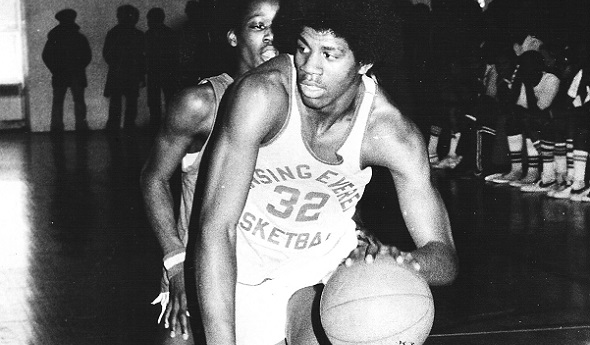
Earvin Johnson prepped at Lansing Everett and was the talk of the state in basketball circles before becoming a household name during his time at Michigan State and with the Los Angeles Lakers. Earlier this year, ESPN named Johnson the greatest point guard to ever play the game. Tom noted that “Magic” was really the inspiration for the “Mr. Basketball” award.
Then I posed a question to Tom.
What about creating a “new” award, designed to honor those greats from the past?
As my hobby of researching the history of high school sports in Michigan and beyond had grown over the years, I’d found the Great Lakes state had always produced shining stars on the basketball court. The crime was that the “Mr. Basketball” award hadn’t been launched many years before.
Harry Kipke, was perhaps the state’s first true basketball star. He won 12 varsity letters at Lansing Central and guided the basketball team to the semifinal round of the state tournament in 1920 as a senior, before heading to the University of Michigan where he earned letters in football, basketball and baseball. After stops at the University of Missouri and Michigan State, Kipke would serve as Michigan’s football coach, guiding the Wolverines to two national gridiron championships.
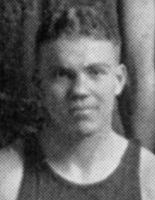 As a junior, the basketball antics of Grand Rapids Union’s Royal “Red” Cherry captured the state’s attention when he led Union to the state basketball championship. Considered the best all-around player of the tournament, Cherry led the team to a second consecutive title as a senior. He, too, attended Michigan, earning laurels on the basketball court and the baseball diamond.
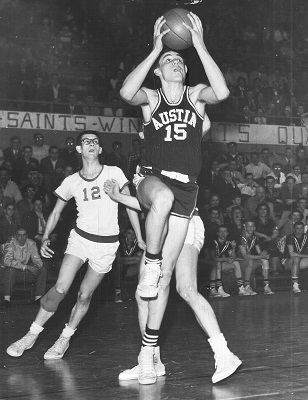
Many other legends of the hardcourt populated Michigan’s past: Saginaw’s Ernie Thompson; the Burton brothers, M.C. and Ed, of Muskegon Heights; Detroit Pershing’s Ralph Simpson and Spencer Haywood; Dave DeBusschere of Detroit Austin Catholic; Willie Betts and Blanche Martin of River Rouge; Ron Kramer of East Detroit; Benton Harbor’s Chet Walker and L.C. Bowen.
After a few weeks of research, discussion and thought, Tom agreed, and over the next several months the framework for the “Retro Mr. Basketball” project was developed
The idea was to try and mimic the current model. Only seniors, and their high school basketball careers, should be considered. While any “senior” player would be eligible, a ballot of the state’s elite would comprise the candidates for the award. Like their modern-day equivalents, where the events of life that would follow high school graduation had yet to occur, post-high school life would be disregarded as much as possible for “Retro” candidates.
Finally, the program would follow a 10-year arc, kicking off in the spring of 2010. This December marks my eighth year of research tied to the mission. Two more will follow.
Since the Schram “Mr. Basketball” award began in 1981, the “Retro” award would honor basketball players from the years 1920 through 1980. That first year, a ballot comprised of players from the years that ended in zero - 1920, 1930, 1940, 1950, 1960, 1970 and 1980 – was created. A senior for each year would be named the winner of the “Retro” award. That meant with the selection of “Mr. Basketball” and the six “Retro” winners for the years 1929, 1939, 1949, 1959, 1969 and 1979, scheduled for the spring of 2019, BCAM would be able to point to a combined list of Mr. Basketballs totaling 100 of the state’s finest.
To identify each year’s award winner, a committee of veteran BCAM members was formed to study a ballot of candidates and select a winner.
Technology, combined with scanning old-fashioned reels of microfilm, has helped with research of potential candidates. In those very early years, personal statistics were rarely kept. Rather, an assessment of a player’s skills, tied to the position he played, often served as a means to identify an area’s top athletes. Tournament play was often the only time an athlete’s abilities were on display to a larger audience. Scouring newspaper articles for all-tournament teams and yearbooks for additional details and years of study helped uncover the state’s top senior players. Understanding the game and its evolution was important. The center jump after each basket emphasized the importance of a tall, skilled center in those games played before the winter of 1938-39.
Beginning in 1935, all-state teams began to appear in state newspapers. Eventually, the Detroit Free Press, the Detroit Times, the Detroit News, The Associated Press and even United Press International became involved in identifying the state’s top basketball players and naming all-state squads. Much work is involved in parsing the 15,811 names (not including honorable mentions) found in those lists. When duplicates are removed, the names of 8,430 prep players remain spread over the 61 years that mark the “Retro” field of possible candidates.
Research to identify seniors, players named by multiple media outlets, and mini biographies are compiled for the top players. The field of candidates is then narrowed to 10 or fewer. Over state championship weekend, the ballots are brought to the BCAM committee for discussion, and finalists are named for each year. Finally, one player is named for each eligible season.
Like the modern day award, the selection may create some controversy. Some amazing ballplayers have landed on the finalist list, but were denied the Hal Schram Mr. Basketball award: Traverse City’s Dan Majerle, Roy Marble of Flint Beecher, Detroit Southwestern’s Jalen Rose, Detroit Northern’s Derrick Coleman and Draymond Green of Saginaw are among a few.
 The same applies to the “Retro” list. Fennville’s Richie Jordan, Robert “Bubbles” Hawkins from Detroit Pershing, Dennis Bankey of Detroit St. Thomas, Bill Chmielewski of Detroit Redeemer, Highland Park’s Terry Duerod and Detroit Kettering’s Lindsay Hairston all have been honored on the finalist lists, but fell short of the top prize.
In many cases, Michigan was loaded with prep talent – it’s tough to name Roy Marble Mr. Basketball when Flint Northwestern’s Glen Rice was on the same ballot, or Rose the state’s best when Country Day’s Chris Webber was another candidate. While the “Fennville Flash” amazed the state with his eye-popping statistics in 1965, Bowen led Benton Harbor to back-to-back Class A titles. Named an all-state basketball player as a junior, Hairston grew an inch and improved his game as a senior, but Pontiac Central’s “Campy” Russell dominated headlines that season, and was the “Retro” Mr. Basketball selection for 1971.
In some cases, it’s a challenge to look at the final balloting results without judging selections based on future basketball success. That certainly is the case with 2008. That season, Michigan’s Mr. Basketball award went to 6-foot guard Brad Redford, who posted incredible back-to-back high school seasons at Frankenmuth. Runner-up to the award that year was Saginaw’s Green. Considering Green’s success in the NBA, that’s hard for many to believe.
While the debates may never be settled, the beauty of Schram and “Retro” Mr. Basketball balloting can be found in the argument. With those disputes, people recall, research and learn about Michigan’s incredible prep basketball past.
The remaining three years of the “Retro” project will include many more legends of Michigan High School basketball, including, among others, DeBusschere, Walker, Haywood and Simpson.
This season, that “Magic” kid will be one of the names among the mix. Forty years after high school graduation, will he earn the honor that eluded him in high school, only because the honor didn’t yet exist?
 Ron Pesch has taken an active role in researching the history of MHSAA events since 1985 and began writing for MHSAA Finals programs in 1986, adding additional features and "flashbacks" in 1992. He inherited the title of MHSAA historian from the late Dick Kishpaugh following the 1993-94 school year, and resides in Muskegon. Contact him at [email protected] with ideas for historical articles.
PHOTOS: (Top) Lansing Everett’s Earvin Johnson drives around a defender during his celebrated high school career. (Middle) Grand Rapids Union’s Royal “Red” Cherry. (Below) Detroit Austin Catholic’s Dave DeBusschere drives to the hoop as an opponent gets in position to rebound. (Photos from MHSAA and Ron Pesch historical files.)
Inspired by Dad, Southland Sons Give Shores Hoops 2nd-Generation Boost
By
Tom Kendra
Special for MHSAA.com
March 3, 2021
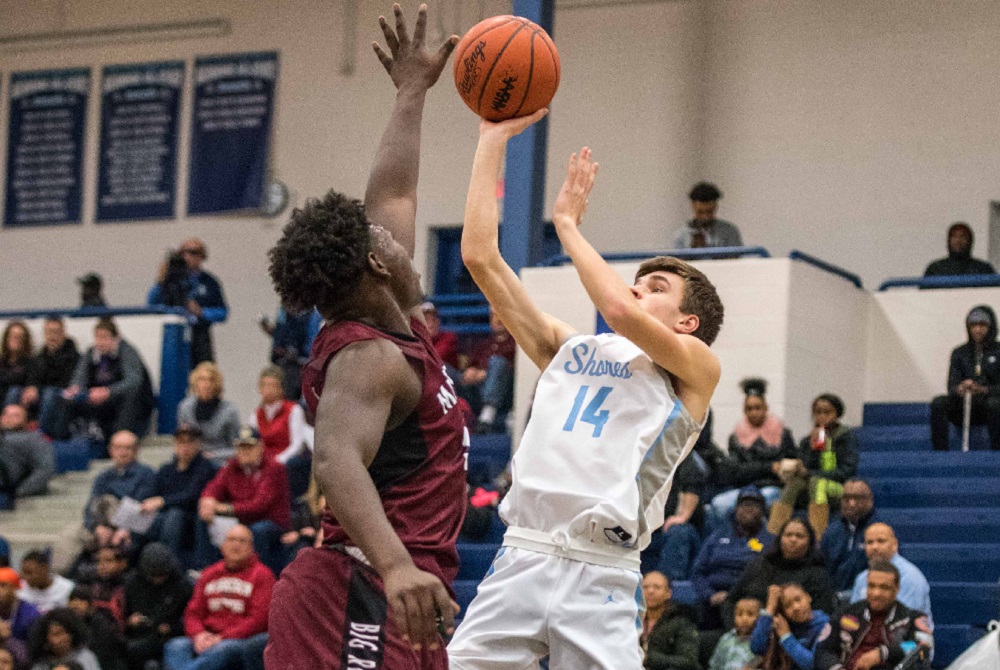
Drew and Jake Southland now have to help their struggling father onto the basketball court at Mona Shores.
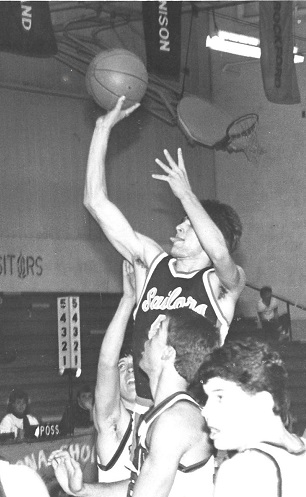
 But they know it wasn’t too long ago that Scot Southland was carrying the load for the Sailors’ basketball program.
“People tell me all the time about how good he was,” Drew Southland said of his father, the all-time leading scorer in Mona Shores basketball history with 1,113 career points, who is now battling an even tougher opponent in multiple sclerosis.
“I try to live up to it. He is such an inspiration, with his positive attitude. I try not to complain about anything in my life, that’s for sure.”
Drew, a 6-foot-1 senior, and his team are having a difficult season so far, losing eight in a row before bolting out to a 38-6 halftime lead Tuesday and then cruising to a 64-41 win over visiting Grand Rapids Union. Drew scored a game-high 20 points for the Sailors (2-8).
Jake, a sophomore who is the same height as his brother at 6-1, is the leading scorer and rebounder for the Shores junior varsity, which evened its record at 5-5 on Tuesday, also with a win over GR Union. He scored a season-high 35 points in a loss against Whitehall on Feb. 20.
Win or lose, the Southland boys are always there for their dad, who turned 50 in January. Scot made first-team all-conference in the Ottawa-Kent Conference Red as both a junior and senior, graduating in 1989. He was also a two-time Muskegon Chronicle All-Area selection and averaged better than 20 points per game his senior year.
The first signs of his MS showed up during college, but the symptoms of the progressive nerve disease have become more pronounced in recent years, preventing him from working and even walking on his own. Drew and Jake are always there to help him in and out of his wheelchair and into the family’s van.
“I don’t mind it one bit,” said Jake. “I know he would be taking care of me if it was the other way around. My dad is so good to me and so supportive in everything, so helping him around is really the least I can do.”
Family affair
The Southland family is a fixture at all of Mona Shores’ home games.
Scot is always there at the end of the bleachers on the baseline, with his high school sweetheart and wife, Steffanie, close by his side. Other regulars, when tickets are available with COVID-19 restrictions, are his daughter Mason, his mother Joanne Southland and his mother-in-law Mary Golin.
 Joanne has been going to games at Mona Shores for years as her three boys – Ted, Kip and Scot – worked their way through the system. Kip was a standout basketball player, but his best sport was baseball, as he went on to start at shortstop for Central Michigan University during the mid-1980s and later played in the San Francisco Giants farm system.
Scot started some varsity football games at quarterback, but of the three Southland boys, he was the one who left the biggest mark on the hardcourt.
He was a three-year varsity starter at a time when sophomores rarely started on the varsity, especially at a Class A school. As a junior, he led the Sailors to 13 wins and a rare District championship. As a senior, he became the first Mona Shores basketball player to score 1,000 points – a milestone that the humble, quiet standout wasn’t even cognizant of until after the fact.
“He is out there to set the best example he can,” then-Mona Shores coach John Adams told The Muskegon Chronicle in 1989 about Scot, his senior captain. “He is the All-American, apple pie kid. He’s the perfect role model for the program.”
The strong athletic genes run deep in the family, tracing back to Scot’s maternal grandfather Pete Petroskey, a welterweight boxer who won more than 180 professional fights. Petroskey went on to train some of the best boxers to ever come out of Muskegon, including Kenny Lane and Phil Baldwin, and was inducted into the Muskegon Area Sports Hall of Fame in 2002.
Scot’s athletic achievements continued after high school, as he led the Muskegon Community College basketball team to a runner-up finish at the junior college national tournament in 1990. He later walked on to the University of Arizona football team and made the roster as a backup quarterback.
Scot did some coaching when his kids were younger, but his disease has prevented him from coaching in recent years. He is now the No. 1 fan and encourager for Drew and Jake, as well as Mason, who is having a good year for the Mona Shores eighth-grade girls basketball team.
“The Southland family is very special to Mona Shores basketball,” explained Mona Shores varsity coach Brad Kurth, who missed two games after the death of his mother but returned to guide the Sailors to victory Tuesday night. “Drew and Jake are everything that you can ask for as a coach. They just compete. They go out and give you everything that they have.”
Different perspective
The Mona Shores athletic program has changed drastically since the late 1980s when Scot Southland was leading the Sailors in football and basketball.
Back then, the Sailors struggled to win any games on the football field, but were highly competitive with the likes of Muskegon and Grand Haven in basketball. Now, the Sailors rarely lose a football game and basketball has been looking up at those aforementioned programs over the past 10 years.
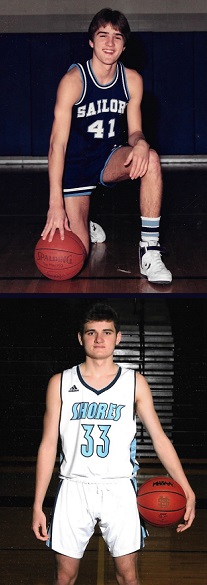 Perhaps no single player has been more affected by the unsettled basketball program as Drew, who has had a different varsity head coach in each of his four years at the high school – as the program has had six head coaches over the past eight years.
“It’s been hard with the different coaches, but I hate making excuses,” said Drew, one of just four seniors on the Shores roster. “We can play much better than we have.”
Through it all, Drew has worked tirelessly to improve his game, waking up early to come in and shoot almost every morning, and still hopes to play college basketball.
Jake, who plays wide receiver and defensive back for the Shores football team and was moved up to the varsity for the team’s recent Division 2 championship run, hopes to be part of a basketball resurgence at Shores over the next two years.
The Sailors have plenty of height and youth on their front line in juniors Donovan Russell (6-8) and Ethan Krueger (6-6) and sophomore Parker Swartz (6-4). With Jake and many other talented players set to move up to the varsity full-time next year, he is hoping to engineer a basketball breakthrough – much like his father did during his junior year of high school.
Jake turned some heads when he got moved up to the varsity for Saturday’s game against Wyoming. In less than two minutes of action, he scored five points and grabbed two rebounds.
“Drew and Jake just love to be out on the basketball court,” said Mona Shores junior varsity coach Tyler VanBergen. “The love that their dad has for the game flows through the whole family.”
Love for the game of basketball, along with humility and a strong work ethic, are not the only gifts Scot has given to his children.
Watching their father handle his illness with grace and a positive attitude – while never wallowing in self-pity or taking his frustrations out on them – has given all three of them a perspective on life which most kids their age simply don’t have.
“I’ve learned from watching him that life isn’t fair,” Jake said. “I mean, I would love to be able to play 1-on-1 against him, but instead we have to do other things. We watch a lot of movies together and talk about them. Doing that with him has really given me a passion for movies, and I’d love to work in film or directing someday.”
 Tom Kendra worked 23 years at The Muskegon Chronicle, including five as assistant sports editor and the final six as sports editor through 2011. E-mail him at [email protected] with story ideas for Muskegon, Oceana, Mason, Lake, Oceola, Mecosta and Newaygo counties.
PHOTOS: (Top) Muskegon Mona Shores’ Drew Southland works to get up a shot during a game against Muskegon last season. (Middle) Scot Southland was a standout for Mona Shores before graduating in 1989. (Below) Scot, as a member of the Sailors, and younger son Jake who is playing this season on junior varsity. (Top photo courtesy of Local Sports Journal; additional photos courtesy of Southland family.)