


SAC Sound-off: The Sixth Man
February 14, 2012
It's double overtime and your legs are exhausted. The score is tied with 10 seconds left. Your team needs that key play to win the game. It’s do-or-die, and all the while there are fans screaming so loud your ears are ringing.
I don’t know about you, but most athletes get a much-needed boost in adrenaline when they hear this. I know I have.
Crowd noise plays a huge factor in deciding the outcome of the game. It doesn’t necessarily have to be that “double-overtime buzzer-beater” moment. Steady cheering throughout the game can help a team gain momentum and push through while the other team is near exhaustion.
Once in a while, when I’m playing, I’ll glance up at the crowd. Just to see the excitement on their faces gives me the extra drive. They are there to watch you. YOU are the showcase, the main event, the entertainment.
The MHSAA Student Advisory Council has been featuring the best student sections in the state with our “Battle of the Fans” contest. The fan bases for some of the schools in Michigan is incredible. They all have one goal – help their team to victory.
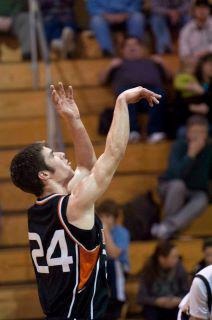 I attend Rudyard High School in the Upper Peninsula. I come from a small area, and the population is much smaller than many communities down-state. Life is a little slower up here, but the townspeople all have one thing we can do to get away from everyday stress – go to the big game.
Whether it be Friday night football, or District Finals in basketball, you can expect to see Main Street empty and the school parking lot full of cars.
One game I will always remember for lots of fans and noise was our basketball Quarterfinal in 2010. I was a sophomore, brought up to varsity toward the end of the regular season. I had gotten more playing time in the playoffs and got to play some solid minutes in the Quarterfinal. We ended up losing the game, but the atmosphere was exhilarating. To step on the court, and look up and witness 3,000 fans going absolutely nuts gave me an experience I will never forget. Keep in mind, Rudyard’s population is a whopping 500 people.
For me, there are those certain fans for whom you always want to perform well. I am always working hard to impress my grandparents. They live more than 100 miles away and still manage to attend a good portion of my games. They always have been supportive, and I always try my best to win for them and for my team.
Then there are the young ones who look up to you. Just this year, my basketball coaches started a youth basketball camp, and every Saturday we open the gym and kids as young as 3-years-old get their chance to be like us. They bounce the ball with the biggest smiles on their faces, and we know that they are always watching us on and off the court – and always learning from us.
I once had a young boy ask me, “Can you slam dunk it during a game for me this year?” He had been attending camp every Saturday and watched some of our practices. Just knowing how much of an influence we have on the youth of our town makes me want to be even better, and work even harder.
Young or old, sold-out house or not, fans always will be essential in supplying the home team advantage and deciding the outcome of the game. And they’ve left me with more sports-related memories than just those made on the court.
Tyler Wilson, Rudyard senior
- Sports: Football, basketball, baseball
- Non-sports activities: Student Council, band, drama, National Honor Society
- Favorite class: AP government
- Must-see TV: "Pardon The Interruption"
- One shining moment: When we made the football playoffs this year after starting the season 2-3.
- What's next: I plan on attending college and playing a sport. I’m not exactly sure where, but I have been narrowing it down. I plan on studying pre-med.
- My favorite part of game day is: ... spending time with teammates. Sometimes we will have a team breakfast on game day. We’ll get together during lunch at school, etc. Just the feeling you get when you walk around the halls wearing a jersey or being dressed up.
PHOTO courtesy of Tyler Wilson.

3rd-Year Standouts Have Howell Rolling
January 9, 2018
By Tim Robinson
Special for Second Half
For the best players on Howell’s boys and girls basketball teams, the third year has been the charm.
 Those players, Josh Palo and Lexie Miller, have combined talent and experience with confidence while leading their teams to fast starts this winter.
Palo is averaging 26 points per game for the boys, who are 5-1, while Miller is averaging 25 for the girls, who are 7-1.
Both are in their third full season on the varsity; Palo is a junior while Miller is a senior.
They also have this in common: Both would much rather talk about their team’s accomplishments.
“It’s all about the team,” said Miller, who has signed with Wayne State University. “I think we have improvements to make, but we’ve been watching film and can do better. I think we’ll get there if we keep working hard.”
Miller is part of a Highlanders team which features four seniors, including Miller, who have spent three full seasons on the varsity. They have been playing together for years.
Miller, who is 5-foot-6, also qualified for the MHSAA Division 1 cross country meet as a freshman before turning her attention to basketball fulltime. Her speed allows her to blow by defenders. She’s not afraid to put up 3s, nor is she afraid to drive to the basket.
But Howell girls coach Tim Olszewski said it’s her competitiveness and drive that help make her first among equals, and confidence that has made her a leader.
“(Two years ago) we had Erin Honkala, who would call team meetings and say, ‘Listen, this is exactly how things are going to go,’” Olszewski said. “Last year, as juniors, none of them wanted to grab the reins and do that. This year, we’ve got great senior leadership, with Lexie at the forefront of that. She will say something, and because of the way she conducts herself out on the court, you have to listen.”
Palo, a 6-2 junior, plays both guard positions for the Highlanders and does whatever is needed on defense.
“He’s kind of a jack-of-all-trades,” Howell boys coach Nick Simon says. “We do a lot of switching (on defense) and a lot of different things and he’ll play where needed on defense. He’s guarded the other team’s point guard in a couple of games, and he’s guarded the other team’s center a few times. He’s very knowledgeable about the game, and he understands how to play it. That allows him to guard guys down low and out on the perimeter.”
Palo scored 33 points in an overtime win at Linden in the Highlanders’ season opener, displaying the first results of a busy summer.
“I put in a lot of work over the summer,” he said. “I was always in the gym. Kip (teammate Kip French) has a little gym at his house with a shooting machine, and I was out there shooting every day this summer. That’s why I think I’m doing so much better this year. I have more confidence this year, knowing what I can do, when I can score and when I can get my looks.”
Simon led Howell’s boys to a Class A Quarterfinals four seasons ago. That run included the first time Howell had won a District title in nearly 20 years. The Highlanders have gotten to the Regionals the last two seasons, and Palo says he thinks his team can go farther.
“I really do,” he said. “We’ve got a good group of guys here, and we’re all bought in on what we’ve got to do. We’re going hard in practice every day, trying to get better. Everyone gets their role pretty well, and we always go into games confident. We never think we’re the underdog. We can always pull one out if we need to.”
Howell plays in the Kensington Lakes Activities Association, where boys and girls play at alternate sites on the same night.
As a result, neither Palo nor Miller has seen the other play often – but the rare impressions are lasting ones.
“Josh is really shifty,” Miller said, emphasizing the last word as a compliment. “His moves are really good. He finishes really well. I’m really impressed, honestly.”
“She’s real fast,” Palo said. “She can dribble pretty well. She could spot up and hit some 3s for us.”
Both will have opportunities to see the other play in the postseason. But as of now, they have their own dreams and team goals for which they are striving.
“It’s interesting to have a guy who’s had a breakout year and get him back for another year,” Simon said of Palo. “Traditionally, you see guys peak as seniors, and that’s when they come out of their shell. For a guy who’s in his third year on varsity (as a junior), I think that’s a huge advantage. You’re able to get him out of that shell a little earlier.”
Miller, while being the leading scorer on the Howell girls team, is far from the only offensive threat. Opponents who key on Miller learn that, to their dismay. By the time they adjust, often, Miller makes them pay at a key moment.
“She lives for the big moment,” Olszewski says. “She wants the ball in her hands. She’s definitely an ice-in-the-veins kind of kid, and I would have no problem giving her the ball in any situation at the end of a game.”
Palo and Miller both look to stand out in a team concept, and that drive could well determine the final destination for both teams this winter.
PHOTOS: (Left) Howell’s Josh Palo pushes the ball upcourt during a practice this winter. (Right) Lexie Miller works on her shooting; she’s averaging 25 points per game. (Photos by Tim Robinson.)