

Soodsma Reaches 700 Boys Hoops Coaching Wins as Unity Launches Another Title Pursuit
By
Dean Holzwarth
Special for MHSAA.com
February 26, 2026
HUDSONVILLE – Hudsonville Unity Christian boys basketball coach Scott Soodsma has been a fixture on the sidelines for more than 40 years.
 And while he’s known as a man of faith, a fierce competitor and a coach who pours everything he has into his players, he’s most commonly known as the coach with the blue towel.
“I’ve had the same blue towel for 34 years at Unity, and it’s had holes in it and been sewed up a few times,” the 66-year-old Soodsma said. “It’s been around for a long time.”
The blue towel has been with Soodsma at every game, except for the first game this season against Grandville Calvin Christian.
“I had no idea where it was,” said Soodsma, who retired from teaching last year. “I stuck it in an old diaper bag and thought I would remember that I put it in there, but I didn’t. Luckily, my wife found it. I’ve never not had it except for that first game this year.”
The comfort of having a towel with him during games started during his first season (1983-84) at James Valley Christian, located in Huron, South Dakota.
It has been a lasting presence ever since, although the colors have changed.
“I had a pink towel when I coached girls at Unity, a yellow one at James Valley, and a maroon towel at McBain Northern Michigan Christian,” he said. “I don’t know, it’s just something I started having with me and I’ve had my wife run home from games when I've already been there and forgot it.
“I've sent her back home to get it because I didn’t want to coach without it. It’s been the thing I've been known for, for a long time.”
 Soodsma had it with him when he earned his 700th career win as a boys coach in a 69-28 victory over Zeeland West on Feb. 12.
He currently is fifth on the list of winningest coaches in MHSAA boys basketball history with a 688-258 record coaching at Northern Michigan Christian and Unity.
“It’s really amazing, and I've been very blessed to be able to go the length I have gone,” Soodsma said. “There were times when I thought I was done and I was dumb enough to do girls for five years at the same time and I did one season when the girls and boys were together.
“I’ve had a lot of texts and calls from kids after the 700 wins went out in the public and those are things that make it all worthwhile, to hear the comments and the thank-yous for what you did and the part you played in their life. More valuable than that, wanting to be part of their journey and their faith as well has been a big deciding factor in why I've stayed in it.”
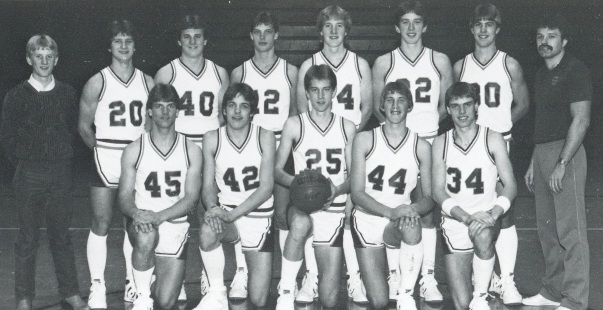
Soodsma, who has won over 800 games combined as a boys and girls coach, led McBain Northern Michigan Christian to the Class D boys title in 1987. He won the Division 2 championship at Unity in 2019.
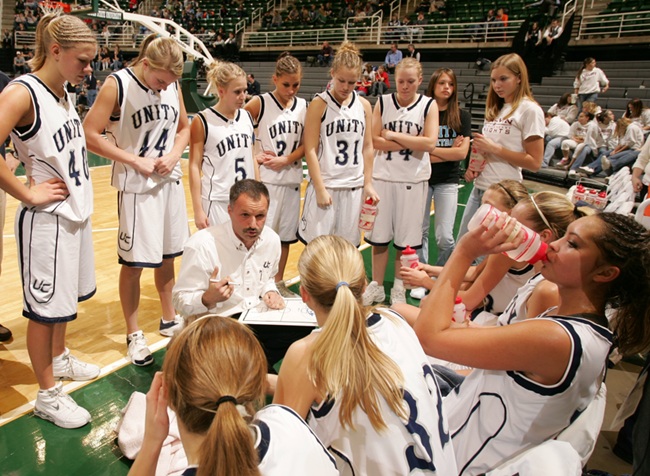
He also coached Unity’s girls to the Class B crown in 2006.
“I still love it,” he said. “I love the kids and I love the competition, but over the years, most people don't realize it, but I have mellowed a lot and I think I’m in it for the right reasons because I enjoy the kids. I want to be a factor in their life, not only from a basketball perspective, but from a Christian perspective and a faith perspective. It means a lot more to me now at my age than when I was 35-40. It’s not about wins and losses anymore.”
Unity Christian senior Kyler Berguis said Soodsma has had a profound impact on his life.
In my three years of having him as my coach I’ve never had someone motivate me more to accomplish a goal we both love so much, and that is winning,” he said. “He’s an amazing motivator, always pushing kids to be their very best every single time he steps on the court, whether that is in practice, games or shootarounds, it doesn't matter.
“You will never not feel the energy that Coach brings to the court, and the crazy thing is he’s been doing it forever. He not only has pushed me in basketball but most importantly he pushes the players off the court in how to be a man of God.”
Past Crusaders standout Gabe Newhof, currently a senior at Division I James Madison in Virginia, said Soodsma’s compassion for his players runs deep.
 “Coach has had an incredible impact on my development as a young man,” Newhof said. “Through the mountains and valleys of my life, he has been there for me. When I suffered an awful broken leg, he came and visited me at my house to let me know he cared.
“During my successes in college he has always been a voice of encouragement. I am so glad to have had a coach like him who truly cares about me on a much deeper level than just a player.”
Soodsma has guided this year’s squad to an Ottawa-Kent Conference Black title, which included going a perfect 12-0 in league play, and a 20-3 overall record after Wednesday night’s Division 2 District Semifinal win over host Wyoming Godwin Heights.
The Crusaders’ losses were to state-ranked Rockford, Hudsonville and Freeland. Unity hopes for a deep postseason run but has been hampered recently by sickness and without a couple of its top players.
“This has been a special group,” said Soodsma, who boasts seven seniors. “The one thing we pride ourselves on at Unity is getting better as the year progresses, and I could really see the kids stepping up.
“We knew we had some good kids coming back, but I didn’t think we were playing exceptionally well in December or early January. But in the middle of the month, I started to see some kids really take some huge strides in a lot of ways. The kids have done a great job of coming together as a team, and it’s definitely shown. We’ve been playing some of the best ball we have all year.”
Soodsma has been asked frequently over the past few years when he is going to step away from coaching and retire.
He said he takes each season one at a time, but as he gets older he doesn’t want to miss out on moments with his grandkids, who are scattered through the country.
“I evaluate after every year, and I will evaluate again after this season, but this could be it,” Soodsma said. “I always like to wait till the end of the season before I make any rash decisions.
“I have family all over the United States in Seattle, Denver and South Dakota, so I really want to spend some quality time with my grandkids before they get too old."
 Dean Holzwarth has covered primarily high school sports for Grand Rapids-based WOOD-TV for five years after serving at the Grand Rapids Press and MLive for 16 years along with shorter stints at the Ionia Sentinel and WZZM. Contact him at [email protected] with story ideas for Allegan, Kent and Ottawa counties.
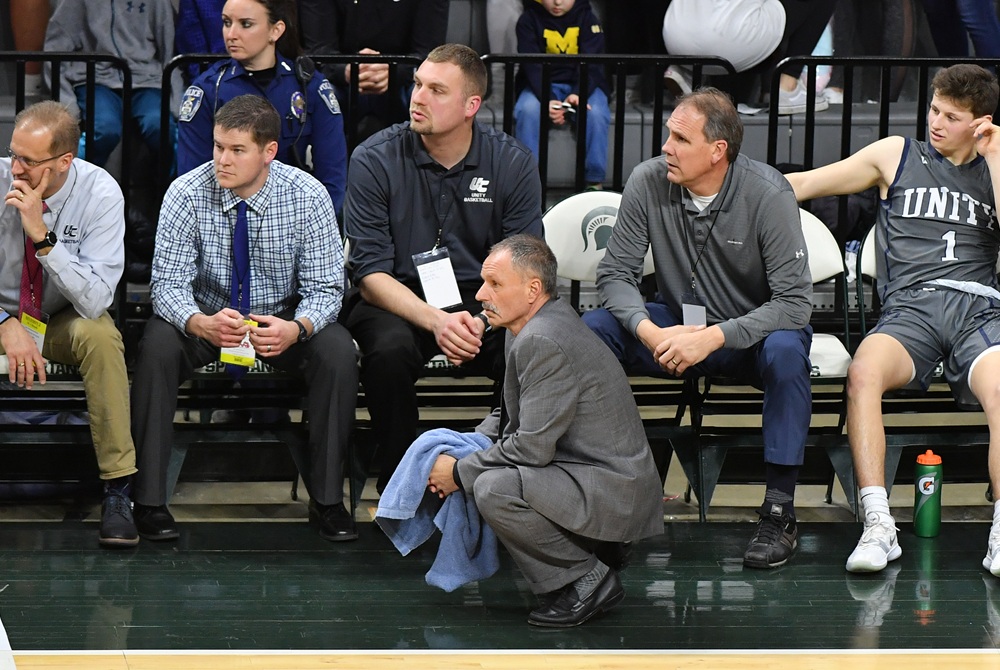
PHOTOS (Top) Unity Christian boys basketball coach Scott Soodsma, kneeling, confers with his staff during his team’s 2019 Division 2 Boys Semifinal win over Ludington. (Middle) Soodsma, far right, stands for a photo with his 1987 Northern Michigan Christian Class D boys basketball champion. (Below) Soodsma maps out strategy during a break in the 2006 Division 2 Girls Basketball Final. (MHSAA file photos.)
Breslin Bound: Boys Report Week 1
December 4, 2018
By Geoff Kimmerly
Second Half editor
Boys basketball is back and a bit earlier than usual this winter.
 But the trails to Breslin Center already are being blazed as we head into first full week of December and second week of this season.
We’ll again begin every week with a “Breslin Bound” look at the most significant results from the week that was, a look at a pair of teams in every division that are making noise and then a quick glance at games to watch in the week to come. (Changes to keep in mind this season – in addition to the boys season starting and ending a week before the girls, the tournament is now organized by Divisions, 1-4, instead of the traditional Class A-B-C-D.)
Breslin Bound is powered by MI Student Aid and based on results and schedules posted for each school at MHSAA.com. To offer corrections or fill in scores we’re missing, email me at [email protected].
Week in Review
The countdown of last week’s five most intriguing results:
1. Benton Harbor 67, Dowagiac 66 – The reigning Class B champion held on in a rematch of last season’s Regional Final, which saw Dowagiac’s season end at 17-6.
2. Detroit Martin Luther King 54, River Rouge 51 – Hopes are high for both of these programs, as River Rouge made the Class B Semifinals a year ago and King was a Regional finalist in Class A; they now play in Divisions 2 and 1, respectively.
3. Grand Rapids Christian 60, Wyoming Godwin Heights 59 – These two likely will be ranked among the best in Division 2 when Associated Press polls begin, and the Eagles own the upper hand after avenging last season’s four-point loss.
4. Sterling Heights Stevenson 59, Clarkston 53 – The Wolves graduated a ton and saw one of the state’s winningest coaches retire after back-to-back MHSAA titles, but beating the reigning Class A champion to start the season still had to be huge for the Titans.
5. Ypsilanti Lincoln 80, Ann Arbor Huron 69 – Last season, Lincoln lost by 20 to Huron, which finished 16-6. But the Railsplitters enjoyed the upper hand this time in the high school debut of freshman sensation Emoni Bates.
Watch List
With an eye toward March, here are two teams in each division making sparks:
DIVISION 1
• Marquette (2-0) – The Redmen started the season with a statement, downing Brighton 63-58 in overtime on the first day of the Petoskey Tip-Off Classic and then coming back the next day to beat the host 53-31. Marquette was 15-6 a year ago after opening with a 17-point loss to the Northmen, who went on to finish 19-3.
• Portage Northern (2-0) – The Huskies finished 6-16 last season, with a pair of regular-season losses to Southwestern Michigan Athletic Conference West champion St. Joseph. Perhaps an upset of the Bears in the District opener was a sign of things to come; Northern downed Coloma (18-3 last season) in its opener 71-66 and then St. Joseph 61-48.
DIVISION 2
• Clare (2-0) – The reigning Jack Pine Conference runner-up looks to chase Sanford Meridian again after opening with a 58-56 win over Beal City and then taking a league win 53-48 over Roscommon. Clare reached its District Final last season, when it finished 19-4.
• Essexville Garber (2-0) – After closing last season with five defeats in their final seven games to finish 11-11, the Dukes are roaring into this winter. They started by avenging last winter’s loss to Saginaw Nouvel with a 61-53 win and then outlasted neighbor Bay City John Glenn 44-42.
DIVISION 3
• Ironwood (2-0) – The Red Devils, coming off a 12-9 finish last winter, edged Bessemer 54-52 in the opener and won more comfortably against Bayfield (Wis.), 71-58, to close the week. Both games had notable highlights – the first was won on a halfcourt shot, while the second saw Griffen Revoyr score 45 points (as reported by The Upbeat).
• Sanford Meridian – The reigning Jack Pine Conference champion opened with a 58-49 win over Division 1 Saginaw Heritage, and then started league play with an 81-21 victory over Gladwin. The Mustangs were 21-4 a year ago and reached the Class C Quarterfinals.
DIVISION 4
• Brimley (2-0) – The Bays are rallying right away after last season’s 20-4 finish and run to the Class D Regional Finals. They started last week by avenging that Regional championship game loss with a 71-49 win over Cedarville, and continued with an 81-49 victory over DeTour. That first win could make Brimley the team to beat in the Eastern U.P. Athletic Conference after finishing second to Cedarville a year ago.
• Engadine (2-0) – The Eagles have improved from two to 12 to 15 wins over the last three seasons, and they’re off to the right start as they try to build on last winter’s 15-6 finish. Engadine scored big in a couple of opening week wins, beating Rock Mid-Peninsula 89-50 and Newberry 91-73. The Eagles also play in the EUPAC.
Can't-Miss Contests
Be on the lookout for results of these games coming up:
Friday – Dansville (1-0) at Pewamo-Westphalia (0-0) – The Central Michigan Athletic Conference is loaded with small-school contenders, and Dansville is a popular pick to go far in Division 3 – and beat the Pirates by a point in a Class Regional Semifinal when these two last met.
Friday – Iron Mountain (2-0) at Calumet (2-0) – These two both were league champions last season and are off to fast starts again; when they last met nine months ago the Mountaineers emerged with a 56-44 win and Class C Regional title.
Friday – St. Joseph (1-1) at Stevensville Lakeshore (2-0) – These two finished first and second, respectively, in the SMAC West last season with the Bears winning their games by five and 13.
Friday – River Rouge (1-1) at West Bloomfield (1-0) – The Lakers stumbled to finish last winter but could be back in the mix and show it by avenging last season’s two-point overtime loss to the Panthers.
Saturday – Holland West Ottawa (1-0) at Grand Rapids Catholic Central (0-0) – Last season’s Class A runner-up faces the runner-up from Class B in the 7 p.m. game of GRCC’s Winter Breakout.
Second Half’s weekly “Breslin Bound” reports are powered by MI Student Aid, a part of the Student Financial Services Bureau located within the Michigan Department of Treasury. MI Student Aid encourages students to pursue postsecondary education by providing access to student financial resources and information, including various student financial assistance programs to help make college more affordable for Michigan students. MI Student Aid administers the state’s 529 savings programs (MET/MESP) and eight additional aid programs within its Student Scholarships and Grants division. Click for more information and connect with MI Student Aid on Facebook and Twitter @mistudentaid.
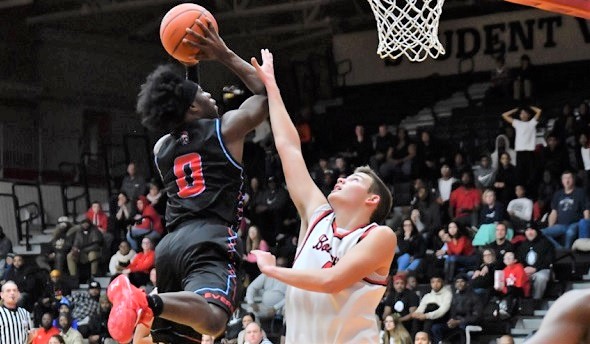
PHOTO: Lansing Everett and Shamar Howard (0) kicked off this season with a big road win last week at Grand Blanc. (Photo by Terry Lyons.)