

Menken Giving Back Through Coaching, Telling Story of Donor's Life-Saving Gift
By
Pam Shebest
Special for MHSAA.com
November 17, 2026
KALAMAZOO — In 2017, Andrew Nicholson was a 19-year-old senior at Holly High School.
 Roy Menken was a 52-year-old bowler who was dying of Alpha-1 antitrypsin deficiency, a fatal lung disease.
The two had never met, but through tragedy, the teen saved Menken’s life.
Menken, an assistant bowling coach at Kalamazoo Central, was given about six months to live when he got a call at 5:45 a.m. on May 24, 2017, from University of Michigan Health.
After waiting for 27 months, Menken was finally getting a new pair of lungs.
“Normally they give you about four hours to get to U of M,” Menken said. “In my case, Andrew’s lungs didn’t match anyone else in the U of M program, so I was the only one called.”
With his wife driving “like a mad person,” they made it to the medical center in Ann Arbor in less than two hours.
Preparing for the surgery, he said, he felt “a little scared, because you never know. Actually, I felt sad for the person who had passed. We were told that it was a young man, and he was involved in an accident.”

The teen was killed the day before in a welding accident.
Working in a junk yard, he was asked to weld some 55-gallon drums, which, unknown to him, still had some lacquer thinner in them.
“A week before I showed my son how to weld,” said Keith Nicholson, Andrew’s dad. “He made an eighth-inch weld and it burned through and blew up. Broke his neck, broke his forearm, broke his shoulder, broke his whole left side of his body, crushed his head.”
Fortunately for Menken, when the teen got his driver’s license at age 16, he checked the donor box.
“The day my ex-wife took him to get his driver’s license, she was standing there next to him and he said, ‘Donor, what’s that mean?’” Keith Nicholson said. “She said if you die, they can take your organs and help other people.
“Andrew shrugged his shoulders and said, ‘Well, they’re not going to do any good for me.’”
Those organs not only helped Menken, but saved four other lives, were life-changing for 12 more people (bones, etc.) and life-altering for another 33 (skin, science, etc.)
Menken sent a letter to Gift of Life Michigan through the hospital, hoping it would be forwarded to the donor’s family. The family answered, beginning a life-long friendship.
Keith Nicholson said he responded because “I was more curious making sure everything was all right. I’m really happy. I couldn’t ask for a better recipient.”
They have not only become “family,” but on the two-year anniversary of the transplant, Keith Nicholson went to Kalamazoo from Trenton to pick up the classic 1959 Impala that Menken started restoring before the surgery but could no longer finish.
Nicholson completed work on the car and said Andrew would have done it himself if he’d had a chance.
“The only thing I ever said to Roy (about the transplant) was when we were out in the shop welding on the car, he tried to sneak out there (to help)," Nicholson recalled.
And that question was a stark reminder.
“I stopped welding, looked at him and said, ‘Is this what you think of my son’s gift to you?’”
Living a full life
Fueled by healthy new lungs, Menken wasted no time getting back into sports.
The transplant was in May 2017, and by that September he was playing golf. He started bowling in November.
When he walked into Continental Lanes that first day, he saw his son, Donald, who was working there.
“You could just see the emotion on his face,” Menken said. “So was (manager) Dave Fawley and my other son, Perry.
“I slowly got back into the leagues that January and haven’t quit bowling since except when COVID hit.”
Bowling at least five days a week is no problem for Menken. The hardest part, he said, is wearing a mask when he is around people, something transplant recipients are supposed to do.
The mask hasn’t interfered with his game. He’s shot a couple of 300 games since then.
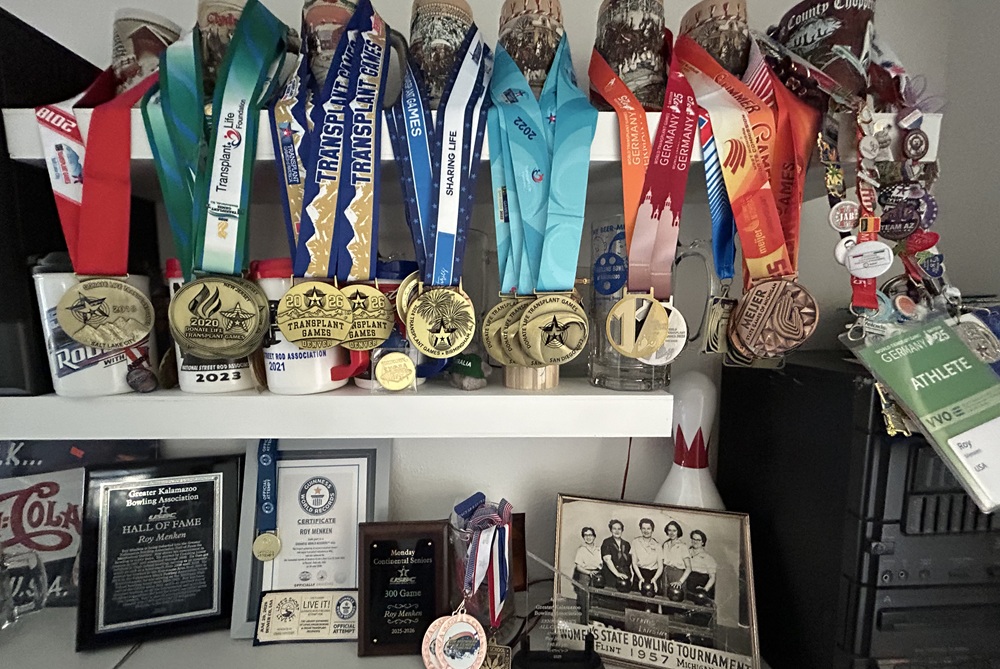
Menken also competes in Transplant Games of America and World Transplant Games. Several of his 12 gold medals came from both tournaments, including a mixed doubles gold in the U.S. Games with Becky Sheets from Charlotte, who was six months out from a heart transplant.
Traveling is no problem for Menken and his wife, Jan. The World Games, held every two years, move from country to country. Last year they were in Dresden, Germany, and next year will be in Belgium.
Menken still has to travel to Ann Arbor for checkups every three months and gets weekly infusions of Prolastin (an enzyme his liver doesn’t release) at home.

He is also in chronic rejection and relapsed twice before rebounding, which he attributes to how active he is and the 12 morning pills and 16 evening pills he takes each day.
As a teen, Menken was diagnosed with sports-induced asthma and began using inhalers.
He said doctors never really discovered that he had Alpha-1 until one day in 2013, while he was working as a building operator for Kalamazoo County and had trouble catching his breath.
“They sent me to their doctor, and he said do you realize you are disabled?” recounted Menken, who refused to believe it.
It was not until he went to Ann Arbor for tests that he was diagnosed with end-stage lung disease and given two years to live.
He and his wife “left U of M and we were both in shock,” he said.
After returning home, he was put on two liters of oxygen and could no longer work at his job. Once he got the call for surgery, Menken said he was more afraid that something would happen to cancel the surgery than he was of dying.
The operation lasted 14 hours and when he woke the next day, he wasn’t scared but knew the operation was a success when he saw “my wife and her Aunt Marcia Godisak, who was also one of my respiratory nurses, just the looks on their faces, even though I couldn’t speak because I was still on a ventilator.”
Coaching a passion
Menken coached bowling at Portage Northern for 10 years, then started at Galesburg-Augusta until COVID-19 shut down the program. He has helped coach at Kalamazoo Central the past two years and spends time talking to clubs and schools about his journey and organ donations.
He is also in charge of the Saturday morning junior bowling leagues at Continental.
“He brings a lot of bowling knowledge that I don’t have,” K-Central head coach Krys Briggs said. “I have not had the experience, so I find people I know that are definitely more knowledgeable than I am.

“The kids love him.”
The coach also said she passed around an article about Menken’s transplant journey for the bowlers who did not know about it.
“Personally. it makes me want to work on my health and make sure that I’m healthy just so that I don’t have to go through that,” said junior bowler Kaeden Lutzka, who heard Menken speak during one of his classes. “If I stay healthy and someone needs my organs, I can be a donor since I’m a donor on my license.”
Menken said the feeling of survivor’s guilt still haunts him.
“We honor Andrew every day,” he said.
Keith Nicholson said, “The biggest misinterpretation, and I know people say it because it’s the most common, but it’s not that we lost a son. I know where he went. I know what happened. He was just an amazing kid. He touched a lot of people’s hearts.
“Roy had less than six months to live. I’m happy for him.”

Pam Shebest served as a sportswriter at the Kalamazoo Gazette from 1985-2009 after 11 years part-time with the Gazette while teaching French and English at White Pigeon High School. She can be reached at [email protected] with story ideas for Calhoun, Kalamazoo and Van Buren counties.
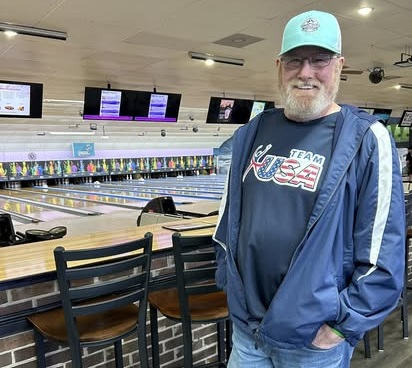
PHOTOS (Top) Roy Menken’s collection of bowling awards includes several medals earned competing in national and world games for bowlers who have received organ transplants. (2) Andrew Nicholson, as an organ donor, provided lungs that have extended Menken’s life. (3) Menken, at a bowling center, is an assistant coach for Kalamazoo Central. (4) Menken rolls for a spare during tournament play. (5) Kalamazoo Central head bowling coach Krys Briggs and junior Kaeden Lutzka. (Menken, Nicholson and awards photos courtesy of Roy Menken. Headshots by Pam Shebest.)
Lessons Passed Down the Coaching Tree
By
Geoff Kimmerly
MHSAA.com senior editor
July 18, 2013
Lessons, like legends, are meant to be passed from generation to generation.
And just as parents hand them down to their children who then do the same, coaches teach athletes the best of what they learned as athletes themselves. Some of those athletes then become coaches as well, and in turn, educate a next group of teenagers growing up in part through their participation in sports.
As we begin to turn our eyes toward another school year beginning next month, here are a few favorite lessons taught by four recent participants of the MHSAA’s Coaches Advancement Program – with back stories on how they learned those lessons themselves and explanations of why passing them on continues to be important.
We are family
Steve Brooks
Ypsilanti boys basketball
Bio: Brooks led the Ypsilanti High School program the last 10 seasons, guiding the Phoenix last winter to its first Regional championship since 1981. He has been selected as the first boys basketball coach for the newly-formed Ypsilanti Community Schools, a merger of the former Ypsilanti and Willow Run districts. Previously, he coached three seasons at Inkster and also led that program to the Quarterfinals.
Lesson learned: Brooks was in fourth grade when he and a friend happened to ride their bike past Flint Northern’s football practice field during one of coach Fred Crawford’s training sessions. The noise and excitement and especially the defensive coaches yelling first caught the kids’ attention; Brooks and his friend ended up watching through the fence until Crawford approached and asked if they’d like a closer look. “He said, ‘Hey, you’re going to be a Viking one day, aren’t ya?’ It was so simple. But it made an impression on me as a young man, the pride and tradition of going there,” Brooks said.
Brooks’ family later moved to a neighborhood in Flint Northwestern’s district. But when the school boundary was redrawn before his junior year – and he had his choice of staying or attending Northern – Brooks remembered saying he would be a Viking one day and made the switch. Building togetherness remains a major focus of Brooks’ Ypsilanti program today, 49 years after Crawford first invited him into Northern’s football family.
Lesson taught: “At any time, our players can come in and talk about personal things and feel like they can let stuff out and it won’t go further than the people it’s entrusted to,” Brooks said. Making a connection to players begins early through his middle school coaches and remains key to building that familial trust.
It’s a philosophy that goes to Brooks’ core. “When you’re starting to coach nephews and younger brothers of players you’ve had, it’s that same type of feeling and promoting of family,” Brooks said.
Do the right thing
Heather Prentice
Portage Northern competitive cheer
Bio: Prentice has coached Portage Northern the last eight seasons and guided the 2007 and 2008 teams to the MHSAA Finals. Total, she’s coached cheer since 1986, including previous tenures at Climax-Scotts and Laingsburg.
Lesson learned: Prentice learned more from what she felt her high school experience lacked. She loved cheering – but decided as a coach to take an active role in the lives of her athletes. “I’ve matured the older I’ve gotten, and I think what’s become more important the older I’ve gotten is putting more of the focus on what I want my kids to leave with,” Prentice said.
“I’m not a parent, and I’m a person in their lives for a very short time,” she added. “But it’s a very significant period in life, and I try to carry myself as I would want them to remember me.”
Lesson taught: To that end, Prentice focuses on mixing plenty of fun with the hard work and lessons she teaches. Integrity ranks high on that list.
She’ll point out during workouts that if an athlete does 23 jumping jacks instead of 25, only that girl will know. But cutting corners, if it continues, tends to catch up with a person.
The payoff is finding out those lessons have paid off.
“The great thing about coaching for so long is you get letters or emails back from kids; ‘I thought of you today when I was disciplining my 3-year-old child,’ things like that. Or, ‘I went in for a job interview and they asked for one of my qualities. And I said I have integrity. I do have integrity, and you taught me that.’ Those are the cool moments,” Prentice said. “They really did hear me; they did hear what I am saying.
Accept responsibility
Duane Enderle
Birch Run girls and boys soccer
Bio: Enderle has coached Birch Run’s girls program since its start, and this spring led the Panthers girls to the District Final for the second time during the program’s six-season history. He also coached the boys for four seasons before taking the last two off, but will return to their sideline this fall.
Lesson learned: Enderle was a sophomore starter on his South Hagerstown, Md., team during one of the first seasons under eventual longtime coach Mike Tesla. At one point that season, Enderle didn’t make a Saturday practice – and during the next Monday’s game never left the bench.
“I learned at an early age it doesn’t matter how good you are. There’s always a consequence,” Enderle said.
Lesson taught: He’s noticed the last few seasons, both on the high school and club soccer fields, a growing number of players unable to control their emotions. “They get yellow cards and come out of a game for 10 minutes, and if it’s one of the good players it ends up hurting the team,” Enderle said.
He said this year’s Birch Run team saw a different side of him as he pushed accountability a little bit harder. It’s a lesson that doesn’t lose significance, even as athletes change over the years and push boundaries in different ways.
“That’s the biggest thing I try to pass on to them, their own self-responsibility and accounting for all of their actions,” Enderle said. “Everything they do always has consequences.”
One for all
Kim Crum
Mattawan girls lacrosse
Bio: Crum is a 2002 Mattawan graduate and played three seasons for the highly-successful softball program led by coach Alicia Smith. Crum just finished her third season coaching the school’s girls lacrosse team after previously coaching the Kalamazoo United team for three seasons.
Lesson learned: Being part of a team is a full commitment to those teammates, something Crum works to instill in her players each spring. She learned that in part as an athlete under Smith – who last season led Mattawan to its second MHSAA championship in three seasons. “With a group of teenage girls, a group of any teenagers for that matter, they form cliques and opinions of people before they get (on a team),” Crum said. “When we were on that team, there were people that didn’t agree, didn’t get along. But when we set foot in practice, for a game, we were part of a team and it didn’t matter what happened outside of there during the day. I try to tell the kids that now.”
Lesson taught: Instead of finishing practices with “1-2-3-Wildcats,” the team’s mascot, Mattawan closes with “1-2-3-Family!” Crum’s emphasis on “team commitment” also has grown through working with her assistant Matt Stephens, the school’s football coach during the fall.
Playing a high school sport often means seeing those coaches and teammates as much or more than family during that three or fourth-month span. Some of Crum’s lacrosse players have played together in the past or together on other sports teams. But she and Stephens are quick to remind them that each team, each season, is a new group with new dynamics to learn.
“Every time we do something, we look at it as how it affects the group,” Crum said. “We have to figure out how each other work. ... Be patient. By the end, we’ll figure things out.”
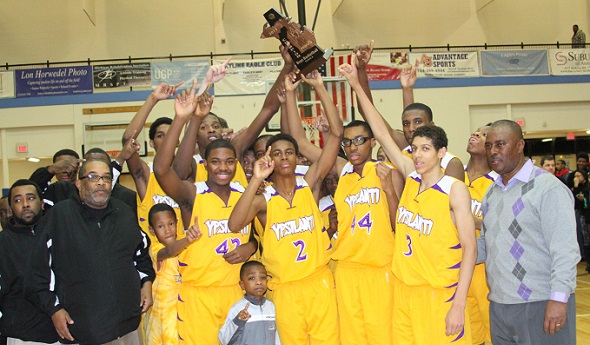
PHOTO: Ypsilanti boys basketball coach Steve Brooks (far right) celebrates with his team this March after leading the Phoenix to its first Regional title since 1981. (Photo courtesy of Randy Castro, Ann Arbor Journal.)