

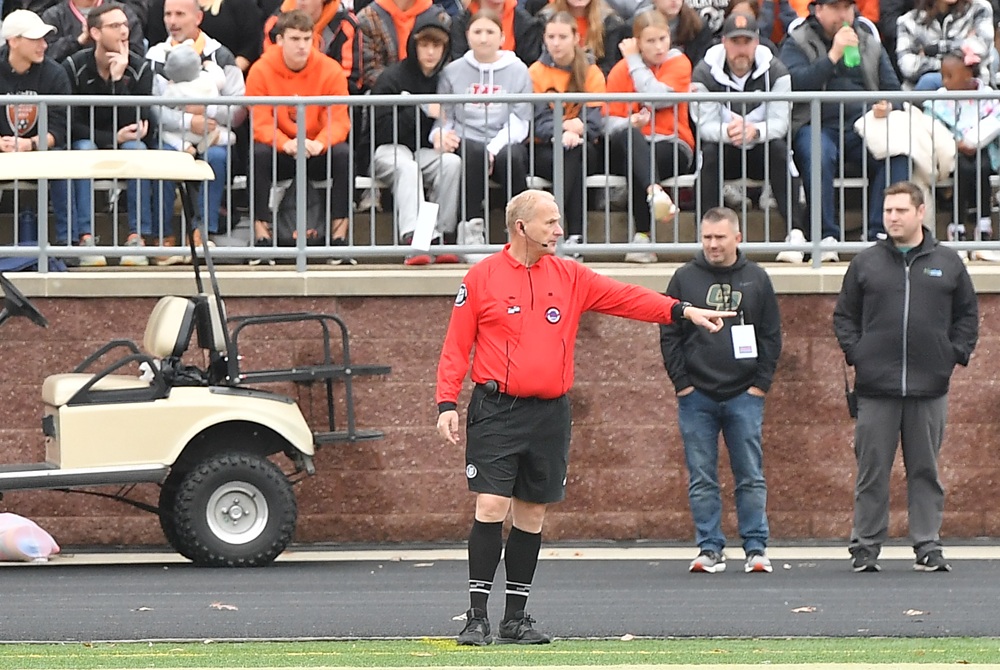
Be the Referee: Soccer Foul After Shot on Goal
By
Paige Winne
MHSAA Director of Brand Management
September 2, 2026
Be The Referee is a series of short messages designed to help educate people on the rules of different sports, to help them better understand the art of officiating, and to recruit officials.
Below is this week's segment – Soccer Foul After Shot on Goal - Listen
We’re on the soccer field today, and the home team has the ball and is on the attack.
The ball makes it around to a forward from the home team, who is on-side and within the penalty area. His shot just misses – going wide for a goal kick.
However, just after the ball crossed the goalline, a player from the away team tackles the home team forward with excessive force.
What’s the call?
Because excessive force was used, it’s a red card for the away team player, which is an automatic ejection. But because it happened after the ball crossed the goalline and not at the time of the shot, it’s still a goal kick for the away team, not a penalty kick for the home team.
Previous 2026-27 editions
Aug. 25: Fumble Out of Bounds - Listen
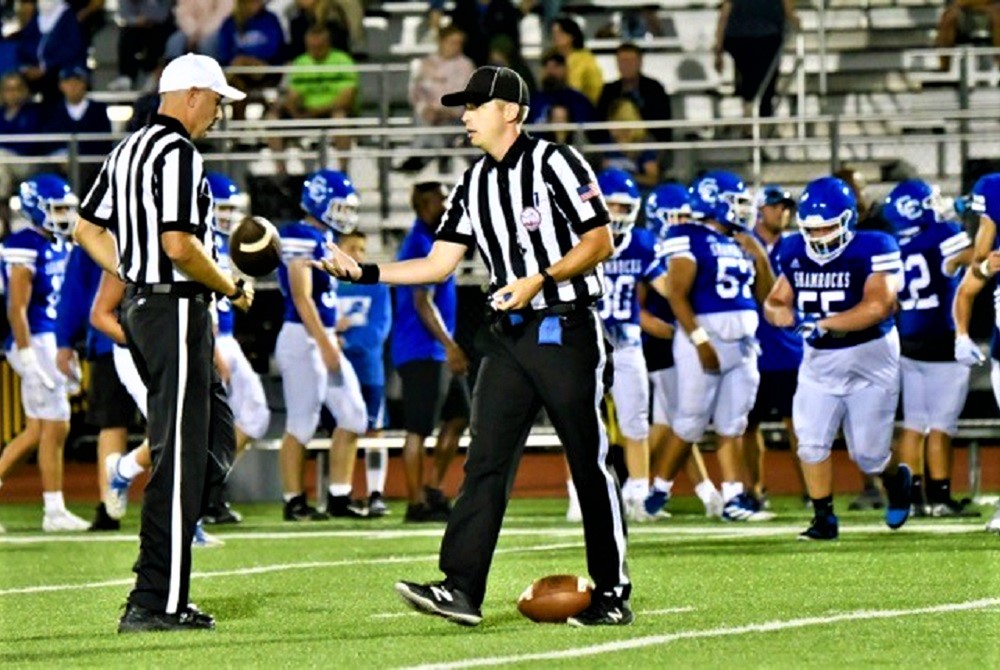
Be the Referee: Intentional Grounding
By
Geoff Kimmerly
MHSAA.com senior editor
September 9, 2021
This week, MHSAA assistant director Brent Rice explains football intentional grounding at the high school level.
Be The Referee is a series of short messages designed to help educate people on the rules of different sports, to help them better understand the art of officiating, and to recruit officials.
Below is this week's segment – Intentional Grounding – Listen
A quarterback is under heavy pressure and immediately throws the ball away. International grounding, right? Maybe. And maybe not.
What goes into an official deciding if grounding has occurred?
First, there is no such thing as a “tackle box” in high school football as it pertains to grounding. A quarterback scrambling outside of the tackle box who throws the ball away could still be penalized for grounding – even if it reaches the line of scrimmage.
Any pass can be penalized for grounding if there is no receiver in the immediate area. Behind the line, inside the tackle box – none of that matters – it only matters if there’s a potential receiver nearby. If there is – no grounding. If there’s not – there will be a flag on the field.
Previous editions
Sept. 2: Pass Interference – Listen
Aug. 26: Protocols and Mechanics – Listen