

Roscommon Star Keeper Home Again, Providing Expertise as TC West Team Doctor
By
Tom Spencer
Special for MHSAA.com
November 20, 2026
Jason Carmien was coaching Traverse City West when he first saw Grant Carey on the pitch two decades ago as a star goalkeeper for Roscommon High School and his travel soccer team.
 West and Roscommon both reached the MHSAA Finals in 2006. West won 1-0 over Livonia Stevenson in Division 1, and Roscommon fell 6-4 to Richmond in Division 3.
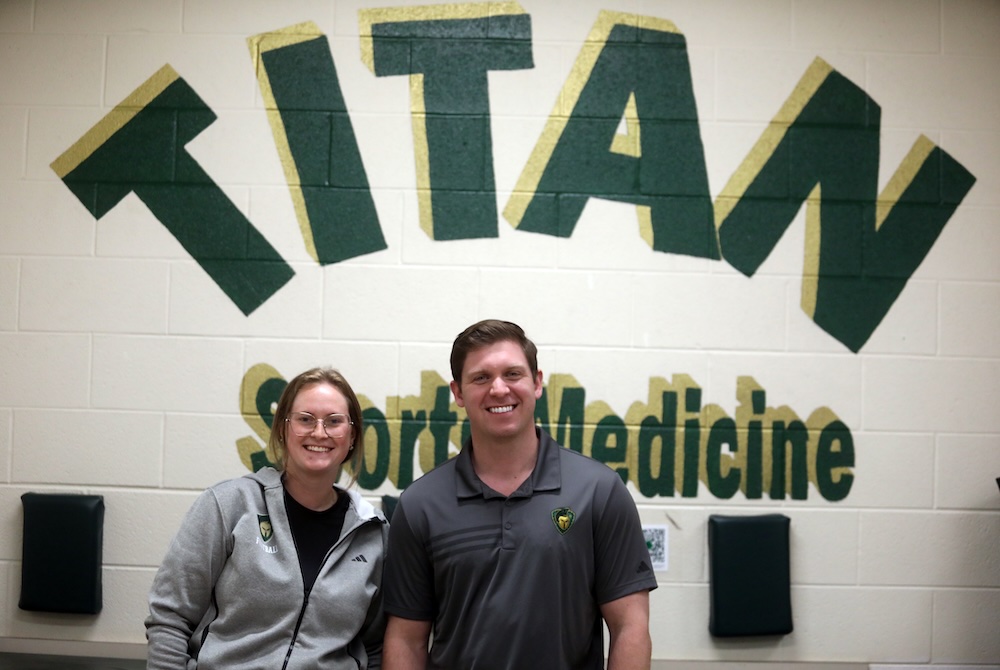
Today, Carmien and Carey are on the same team. Carmien is the Traverse City West athletic director, and Carey is the Titans’ first-year team physician.
They’ve seen a lot of changes in high school sports since they crossed paths initially nearly 20 years ago. And all for the better, they say, especially in player safety when it comes to returning to play from head injuries.
“Concussion protocols certainly weren't a thing in the late 90s when I began coaching at West. … The evolution of care for our student athletes and how we address these types of injuries has been a key step in student safety,” said Carmien. “Munson (Medical Center) has been a key partner in developing our baseline concussion testing and protocols over the years. Grant was a great soccer player at Roscommon, and I would imagine he didn't have the support in place like we do today for athletes and these types of injuries.”
Carey was on the sidelines for all West football game this fall and provided support for certified athletic trainer Mikayla Scholts as she took care of soccer, golf, tennis, volleyball and cross country athletes. They’re now moving into wrestling, swimming & diving, bowling, hockey, skiing and basketball as winter sports commence.
West administration was happy to have Carey come on board along with Scholts, who is also in her first year with the Titans.
“Tom O'Hagen worked with West students for many years and had tons of professional experience with the Philadelphia pro teams like the Eagles and Phillies,” Carmien said of the medical support West has received over the years. “Having Dr. Carey step in has been seamless. Mikayla and Grant have been a big value add for us as our students and families get top level care. We have been lucky to have folks like John McDougall, Anthony Cillufo, Taylor Chaulk in the past and now Mikayla Scholts.”
The services of Scholts and Carey are provided through a partnership with Munson orthopedic and sports medicine and Mary Free Bed. They’re providing medical services, offering advanced treatment options, specialized surgical expertise and rehabilitation services.
Carey, who went on to play soccer for Kalamazoo College before med school, was happy to have the opportunity to return to Northern Michigan and be around high school sports again. He came home with extensive professional sports team physician experiences. He earned his medical degree from the University of Michigan and completed his orthopedic surgery residency at the renowned Hospital for Special Surgery in New York City, where he worked with the New York Giants, New York Mets and New York Knicks. He then completed advanced fellowship training in sports medicine, shoulder and elbow surgery at OrthoCarolina in Charlotte, N.C. During his fellowship, he served as an associate team physician for the Carolina Panthers, Charlotte FC, and the Charlotte Knights, a minor league professional baseball team.
“Now we're in Traverse City, and I’m covering West,” he said, recalling memories of his NorthStorm club teammates playing for the Titans. “It's this crazy full circle moment of life, seeing totally different environments of sports medicine, from all over the country, and then now I'm back to where I played club soccer and it's kind of just turned out to be a dream come true. I didn't grow up in Traverse City but a lot of my athletics took place here. It was so much fun.”
Carey believes treatments of professional athletes’ injuries has led to improvements for high school athletes.
“I think what kind of led the charge on that front is the NFL, truthfully,” Carey said. “Now if a kid comes to the sideline and Mikala evaluates them, and they any symptoms at all, it’s now concussion protocol. The timer starts and once you stop having symptoms, it's one week mandatory out before a return. Concussions aren't necessarily something I routinely treat, but I do see them a lot. But what's nice is Munson has a ton of neurologists that we can get them plugged into.”
Carey works closely on a daily basis with Scholts.
“We text every day and we talk on the phone about all the kids so it’s better coordination of care,” Carey said. “It’s Mikayla that I would consider the captain of the whole show on the sideline.”
If surgery of any sort is necessary, the team physician can help navigate the way through the health system for the athlete and his or her family.
“I view my role as I'm there for support and expertise if they need it, but really where the partnership kind of provides value is access for the kids,” Carey said. “We have streamlined their ability to get into clinic to see us even with same-day appointments. If there's a football game on a Friday and a kid gets hurt, they're first on my schedule on Monday. And we have ways that we streamline their ability to get imaging done. We want to get the kids in, get them diagnosed, and come up with a game plan so they can get back on the fields.”
Carey, who also collaborates to facilitate services for athletes with Northern MI Hand Surgery, was thrilled to report no surgeries were needed resulting from injury to West athletes this fall.
“We do our best to mimic what the DI college and professional athletes get,” Carey said. “Ideally world class care essentially immediately.”
In addition to concussion protocols coming into place in high school sports, Carey has seen an increase in anterior cruciate ligament (ACL) injuries. Research is connecting the increase to kids playing one high school sport year-round.
“What seems to continue popping up is playing one sport from a really young age,” Carey said. “They don't play any other sport, starting in elementary school, and it seems to have a pretty strong relationship of ACL ruptures.”
High schools providing strength and conditioning coaching is helping to prevent ACL and all kinds of other injuries though, Carey is quick to note.
“Maybe it's because I went to a small school, but now schools have a strength and conditioning coach,” Carey pointed out as a change from his playing days. “It is awesome they have guidance in the weight room for all the teams all week. If single sports specialization is a bad thing, I think the focus on strength and conditioning is huge to keep the kids healthy.”

Tom Spencer is a longtime MHSAA-registered basketball and soccer official, and former softball and baseball official, and he also has coached in the northern Lower Peninsula area. He previously has written for the Saginaw News, Bay County Sports Page and Midland Daily News. He can be reached at [email protected] with story ideas for Manistee, Wexford, Missaukee, Roscommon, Ogemaw, Iosco, Alcona, Oscoda, Crawford, Kalkaska, Grand Traverse, Benzie, Leelanau, Antrim, Otsego, Montmorency, Alpena, Presque Isle, Cheboygan, Charlevoix and Emmet counties.
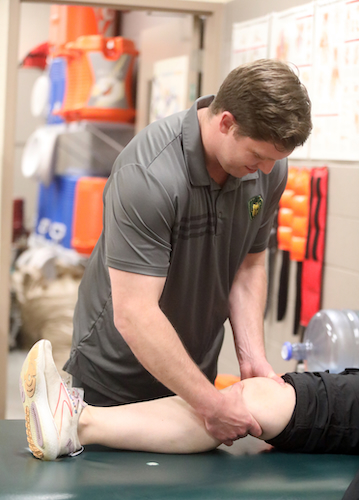
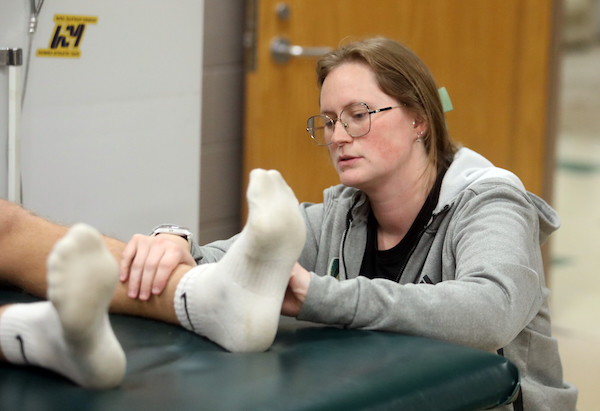
PHOTOS (Top) Traverse City West certified athletic trainer Mikayla Scholts, left, and Dr. Grant Carey stand for a photo together in the school’s athletic training room. (Middle) Carey examines an athlete’s knee in the training room. (Below) Scholts examines an athlete’s foot. (Photos by James Cook/Traverse City Record-Eagle.)
Add Rest Days to Your Workout Routine
June 2, 2020

Henry Ford Health System
Whether you're new to exercise or a seasoned enthusiast, it's tempting to adopt an all-go, no-quit attitude. This is especially common when you're are trying to achieve a fitness goal. Maybe you want to run a 5K, or maybe you have 10 pounds you want to shed before going on vacation.
"Whatever the driver, it's important to remember that scheduling time for rest and rejuvenation is a critical component of any workout regimen," says James Moeller, M.D., a sports medicine specialist at Henry Ford Health System.
Building in Rest Days
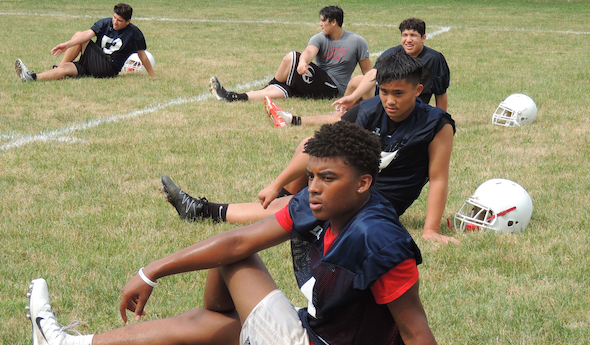
From high-intensity interval training (HIIT) and spin to barre and Zumba, popular workouts increasingly push exercisers to go faster, longer, stronger. This prolonged physical stress can lead to overuse injuries, such as stress fractures, muscle strains and joint pain. Excessive exercise can also lead to hormonal changes, disrupted sleep patterns, decreased immunity and mood swings.
“Working out, especially resistance training, breaks tissues down, causing microscopic damage,” Dr. Moeller says. "Rest days allow your muscles time to rebuild."
So how much rest do you really need? There isn't a one-size-fits-all prescription. Factors like your age, fitness level, the intensity of your workout and the amount of training you do weekly will impact the amount of recovery time you need. But there are some basic guidelines for rest days:
1. Go easy: Rest is a relative term. "It's not just sitting on the couch with an iced tea," says Dr. Moeller. "You may still be exercising on 'rest' days, but at a lower intensity." Maybe you go for a brisk walk or ride your bike to work. Take a yoga class or do some dynamic stretching. The key is to make sure you're not overworking the same body parts.
2. Get sufficient sleep: Sleep is a key component of muscle repair and rebuilding. During sleep, your body’s production of growth hormone increases. Not getting quality shuteye thwarts your body's production of growth hormone and can impact your performance.
3. Give overtaxed muscles a break: You don't need to skip the gym on specific days each week, but you do need to rotate which body parts you're working. The general rule is to give muscles 48 hours to recover after a workout. So it's a good idea to take two to three days off before working the same muscle groups again.
4. Stay hydrated: Make sure to restore lost fluids before, during and after a workout. Dehydration can lead to overheating, headaches and muscle fatigue, among other ailments. You don’t need a sports drink; water is best. "Sports drinks aren't required unless you're getting into very high intensity activity, or exercising for more than one hour at a time," Dr. Moeller says.
5. Pay attention to your body: A lot of people try to work out through pain and fatigue. If there's a heaviness to your movements, or if you feel like your muscles are not responding appropriately to the stress you're providing, take a time out. "It's really about learning to read your body's signals," says Dr. Moeller.
Health authorities and news headlines widely publicize the health benefits of exercise — and the consequences of inactivity. The American Heart Association recommends that adults get at least 150 minutes of moderate-intensity exercise per week, plus strength training two or three days per week. Less discussed are the negative effects of not allowing your body sufficient time to rest.
Getting sufficient rest between workouts is just as important as participating in regular exercise. "Both are part of the total process required to build strength, endurance and muscle mass," Dr. Moeller says.
Want to learn more? Henry Ford Health System sports medicine experts are treating the whole athlete, in a whole new way. From nutrition to neurology, and from injury prevention to treatment of sports-related conditions, they can give your athlete a unique game plan.
Visit henryford.com/sports or call (313) 972-4216 for an appointment within 24 business hours.