

Roscommon Star Keeper Home Again, Providing Expertise as TC West Team Doctor
By
Tom Spencer
Special for MHSAA.com
November 20, 2026
Jason Carmien was coaching Traverse City West when he first saw Grant Carey on the pitch two decades ago as a star goalkeeper for Roscommon High School and his travel soccer team.
 West and Roscommon both reached the MHSAA Finals in 2006. West won 1-0 over Livonia Stevenson in Division 1, and Roscommon fell 6-4 to Richmond in Division 3.
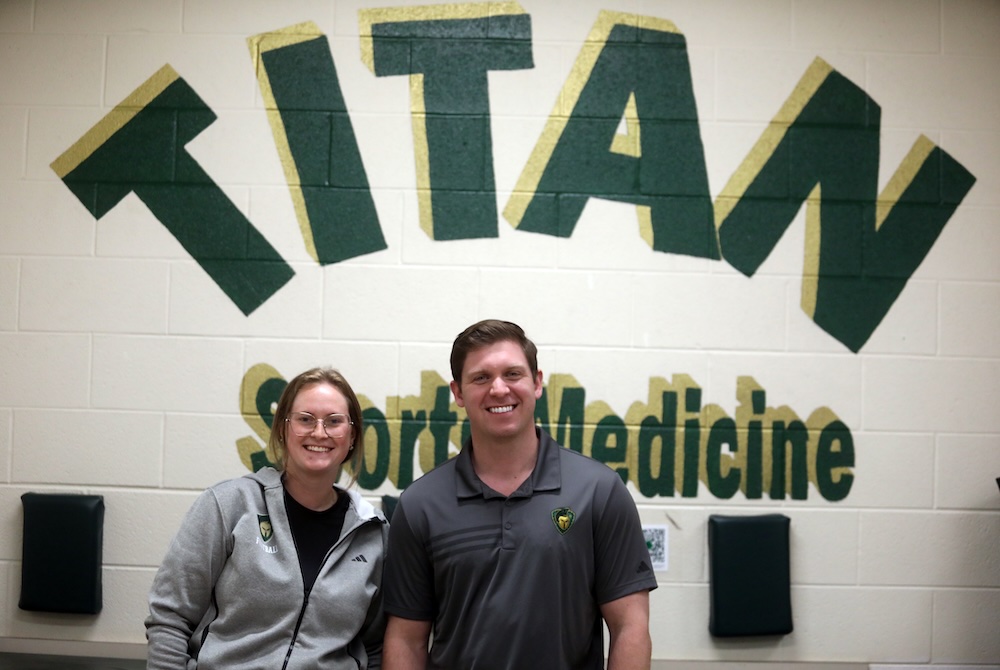
Today, Carmien and Carey are on the same team. Carmien is the Traverse City West athletic director, and Carey is the Titans’ first-year team physician.
They’ve seen a lot of changes in high school sports since they crossed paths initially nearly 20 years ago. And all for the better, they say, especially in player safety when it comes to returning to play from head injuries.
“Concussion protocols certainly weren't a thing in the late 90s when I began coaching at West. … The evolution of care for our student athletes and how we address these types of injuries has been a key step in student safety,” said Carmien. “Munson (Medical Center) has been a key partner in developing our baseline concussion testing and protocols over the years. Grant was a great soccer player at Roscommon, and I would imagine he didn't have the support in place like we do today for athletes and these types of injuries.”
Carey was on the sidelines for all West football game this fall and provided support for certified athletic trainer Mikayla Scholts as she took care of soccer, golf, tennis, volleyball and cross country athletes. They’re now moving into wrestling, swimming & diving, bowling, hockey, skiing and basketball as winter sports commence.
West administration was happy to have Carey come on board along with Scholts, who is also in her first year with the Titans.
“Tom O'Hagen worked with West students for many years and had tons of professional experience with the Philadelphia pro teams like the Eagles and Phillies,” Carmien said of the medical support West has received over the years. “Having Dr. Carey step in has been seamless. Mikayla and Grant have been a big value add for us as our students and families get top level care. We have been lucky to have folks like John McDougall, Anthony Cillufo, Taylor Chaulk in the past and now Mikayla Scholts.”
The services of Scholts and Carey are provided through a partnership with Munson orthopedic and sports medicine and Mary Free Bed. They’re providing medical services, offering advanced treatment options, specialized surgical expertise and rehabilitation services.
Carey, who went on to play soccer for Kalamazoo College before med school, was happy to have the opportunity to return to Northern Michigan and be around high school sports again. He came home with extensive professional sports team physician experiences. He earned his medical degree from the University of Michigan and completed his orthopedic surgery residency at the renowned Hospital for Special Surgery in New York City, where he worked with the New York Giants, New York Mets and New York Knicks. He then completed advanced fellowship training in sports medicine, shoulder and elbow surgery at OrthoCarolina in Charlotte, N.C. During his fellowship, he served as an associate team physician for the Carolina Panthers, Charlotte FC, and the Charlotte Knights, a minor league professional baseball team.
“Now we're in Traverse City, and I’m covering West,” he said, recalling memories of his NorthStorm club teammates playing for the Titans. “It's this crazy full circle moment of life, seeing totally different environments of sports medicine, from all over the country, and then now I'm back to where I played club soccer and it's kind of just turned out to be a dream come true. I didn't grow up in Traverse City but a lot of my athletics took place here. It was so much fun.”
Carey believes treatments of professional athletes’ injuries has led to improvements for high school athletes.
“I think what kind of led the charge on that front is the NFL, truthfully,” Carey said. “Now if a kid comes to the sideline and Mikala evaluates them, and they any symptoms at all, it’s now concussion protocol. The timer starts and once you stop having symptoms, it's one week mandatory out before a return. Concussions aren't necessarily something I routinely treat, but I do see them a lot. But what's nice is Munson has a ton of neurologists that we can get them plugged into.”
Carey works closely on a daily basis with Scholts.
“We text every day and we talk on the phone about all the kids so it’s better coordination of care,” Carey said. “It’s Mikayla that I would consider the captain of the whole show on the sideline.”
If surgery of any sort is necessary, the team physician can help navigate the way through the health system for the athlete and his or her family.
“I view my role as I'm there for support and expertise if they need it, but really where the partnership kind of provides value is access for the kids,” Carey said. “We have streamlined their ability to get into clinic to see us even with same-day appointments. If there's a football game on a Friday and a kid gets hurt, they're first on my schedule on Monday. And we have ways that we streamline their ability to get imaging done. We want to get the kids in, get them diagnosed, and come up with a game plan so they can get back on the fields.”
Carey, who also collaborates to facilitate services for athletes with Northern MI Hand Surgery, was thrilled to report no surgeries were needed resulting from injury to West athletes this fall.
“We do our best to mimic what the DI college and professional athletes get,” Carey said. “Ideally world class care essentially immediately.”
In addition to concussion protocols coming into place in high school sports, Carey has seen an increase in anterior cruciate ligament (ACL) injuries. Research is connecting the increase to kids playing one high school sport year-round.
“What seems to continue popping up is playing one sport from a really young age,” Carey said. “They don't play any other sport, starting in elementary school, and it seems to have a pretty strong relationship of ACL ruptures.”
High schools providing strength and conditioning coaching is helping to prevent ACL and all kinds of other injuries though, Carey is quick to note.
“Maybe it's because I went to a small school, but now schools have a strength and conditioning coach,” Carey pointed out as a change from his playing days. “It is awesome they have guidance in the weight room for all the teams all week. If single sports specialization is a bad thing, I think the focus on strength and conditioning is huge to keep the kids healthy.”

Tom Spencer is a longtime MHSAA-registered basketball and soccer official, and former softball and baseball official, and he also has coached in the northern Lower Peninsula area. He previously has written for the Saginaw News, Bay County Sports Page and Midland Daily News. He can be reached at [email protected] with story ideas for Manistee, Wexford, Missaukee, Roscommon, Ogemaw, Iosco, Alcona, Oscoda, Crawford, Kalkaska, Grand Traverse, Benzie, Leelanau, Antrim, Otsego, Montmorency, Alpena, Presque Isle, Cheboygan, Charlevoix and Emmet counties.
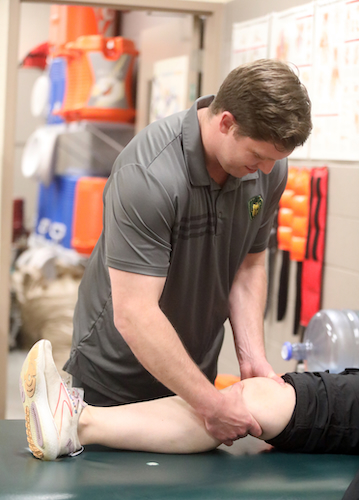
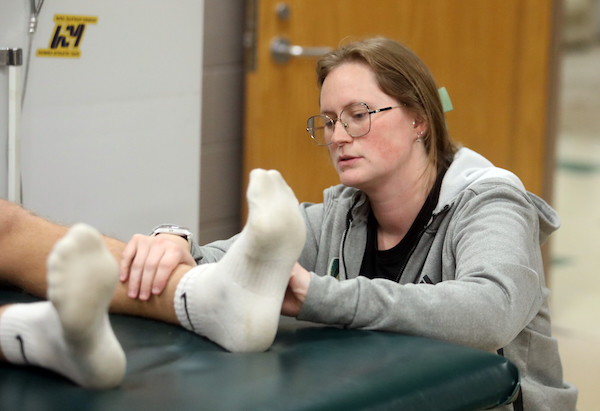
PHOTOS (Top) Traverse City West certified athletic trainer Mikayla Scholts, left, and Dr. Grant Carey stand for a photo together in the school’s athletic training room. (Middle) Carey examines an athlete’s knee in the training room. (Below) Scholts examines an athlete’s foot. (Photos by James Cook/Traverse City Record-Eagle.)
Capac Standout Delivers 3-Letter Fall
November 14, 2013
By Geoff Kimmerly
Second Half editor
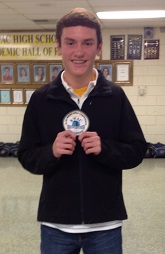
The Blue Water Area Conference, on the eastern side of the Thumb, created this fall a patch it will award to athletes who letter in three sports during a school year.
Winning a high school letter always has been a notable accomplishment. Earning two is a sign of a well-rounded athlete. And in these days of single-sport specialization, we celebrate those who continue to play three at the varsity level.
Then there’s the rare – if not unique – case of Capac junior Nick Geliske.
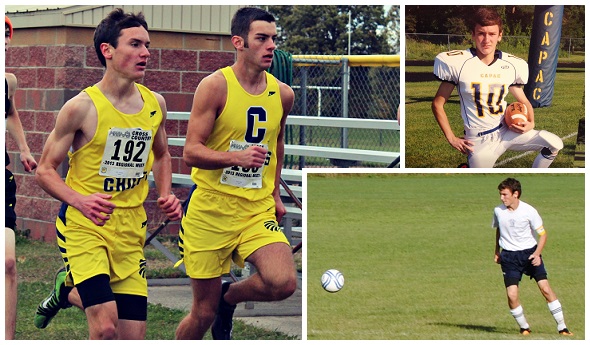
Earlier this week, he became the first to win the newly-minted BWAC award – after just one season. He finished his fall as an all-league midfielder for the soccer team, an all-league honorable mention cross country runner and the fulltime kicker for the football squad.
“I wasn’t sure how it would work out when I decided to go into it. I wanted to do all of them, but a year ago I wouldn’t have seen myself doing this,” Geliske said. “I was just hoping to help my teams this year.
"I’ve got bigger expectations for myself next year.”
Three-sport letterwinners are not a rarity in Geliske’s hometown. Despite an enrollment of 100 fewer students than all but one of the other schools in its eight-team conference, Capac has the most who play a sport every season. The Chiefs had 41 three-sport athletes during 2012-13, athletic director Arnie VandeMark said, and 33 athletes who earned letters in three sports played as part of the BWAC – 24 more three-sport athletes than the league school with the next-highest total.
Playing two sports during the same season, while uncommon, also occurs from time to time when an athlete can handle the added load and coaches can work out a flexible schedule. But VandeMark never had seen an athlete do what Geliske accomplished this fall – not to mention the success he had in the process. Geliske just kept finding ways to compete – and contribute to Chiefs teams alongside his friends.
He has been a starter on the soccer team for three seasons and captain these last two, and that’s his primary sport. A midfielder, he led the team with five assists this fall to go with three goals as Capac – in its eighth season as a program – set a wins record in finishing 11-8.
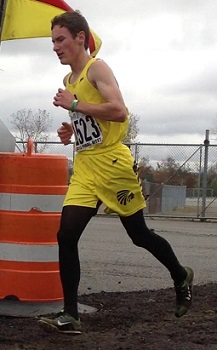
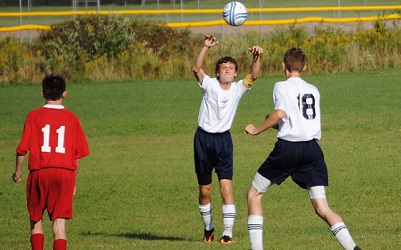 Geliske decided to double in cross country this season at the urging of a few friends on that team. Great move on their part, as Geliske ended up the team’s regular second- fastest finisher. He took sixth at his Regional (in 17:52) and was part of the lineup that made the Lower Peninsula Division 3 Final at Michigan International Speedway.
But before practice for either of those sports began, Geliske had another request from his best friend on the football team. Capac needed a kicker. Geliske loves football but never had played at the high school level and never had kicked. No matter – two hours before the first practice he decided to give it a try, showed up and won the job.
“Nick was a huge part of our team qualifying for team states. He set an example for others to follow being a very busy athlete in soccer and football,” Capac boys cross country coach Tim Gross said. “He would show up for practice and set the standard for everyone else to follow. He was not only a great athlete, but a very organized person.”
On schedule
Geliske also holds a 3.85 grade-point average – after earning a 4.0 during the first quarter of this school year – and is involved with Capac’s student council and chapters of the National Honors Society and Business Professionals of America.
Pulling off the above plus participating on three athletic teams takes heavy doses organization and discipline both. Thankfully, the sports schedules just happened to fall into place.
 First-year soccer coach Jerry Parisot needed to hold his practices at 6 p.m., leaving the afternoon for Geliske’s other pursuits. Geliske ran with the cross country team from 3-4 p.m. and kicked with the football team until 5 before catching a quick meal and heading to the soccer field.
On cross country meet days, Geliske would run and usually make it back in time for soccer practice. On soccer game days, he’d kick with the football team right after school before switching uniforms.
The biggest challenge came on Friday, Oct 25, when Geliske ran in the cross country team’s Regional at Algonac – an hour trip south of Capac – then had to drive nearly two hours back north for a football game at Sandusky. He made it two minutes before kickoff.
But amid jumping through those hoops, Geliske continued to make academics a priority with study time from 8-10 p.m. most weeknights.
“Usually, for football I’d just talk to my coach and could schedule around because I’m the kicker, and I have awesome coaches. For soccer, my dad is the assistant coach so that worked out pretty well, and the varsity coach coached me at younger levels. And for cross country, he was an awesome guy too. They knew I’d be busy all the time,” Geliske said.
“My mom wasn’t so sure about (three sports), but she said as long as I keep my grades up I can play all of those sports. I gave myself studying time; I didn't want to let my teams or myself down.”
Before the season began, Geliske brought Gross a schedule detailing where he’d be every day over the next three months. Gross credits Geliske's parents for his runner's discipline, and Nick also credits Mom and Dad with instilling that trait – and a lot more.
Cracking the code
Geliske was so competitive as a kid, sometimes he’d get a little out of control and his parents would have to calm him down. That intensity hasn't faded much – “Even during pick-up games and stuff, people get mad that I’m so competitive,” he said. “I don’t like losing ... (but) I have to tone it down a little bit.”
“He's 200 percent competitive,” Parisot said. “It’s not really about winning or losing. It's more about trying as hard as you can.”
 That streak was ingrained by his father Barry Geliske, who along with coaching soccer and serving on the school board works on the chain gang for home football games and is “the most competitive and passionate guy about sports,” Nick said.
His athletic side? Geliske believes that comes from his mom Sandra. And then, matter-of-factly, he reveals a family line that backs his theory pretty well.
Among second cousins is former Marquette University basketball standout Travis Diener, who beginning in 2005 played for three NBA teams and now plays professionally in Italy. Sandra Geliske’s maiden name is Thome – as in Jim Thome, another cousin, and a likely future Hall of Famer who hit 612 home runs during a Major League Baseball career stretching two decades.
There’s another cousin, former NFL tight end Dave Casper, who made five Pro Bowls for the Oakland Raiders during the late 1970s. A great uncle named Ronald Jackson played seven seasons of pro baseball with the Chicago White Sox and Boston Red Sox from 1954-60.
Geliske will begin basketball practice Monday and plans to play baseball and run track this spring before coming back for all six sports as a senior. VandeMark has had an athlete finish high school with 13 letters – but Geliske hopes to graduate with 15.
That leads to another significant question – how will Geliske display them?
Like at most schools, some Capac athletes wear traditional letter jackets. They receive an actual letter for their first, then a series of pins and medals for each additional year on a varsity team.
Geliske’s mom wants instead to frame the awards. If that’s the decision, Geliske is looking for something sizable – and he’s got to fit that BWAC patch now as well.
It's been a fall full of other accolades too. He made the all-league soccer team and earned an all-league cross country award, and was part of an academic all-state team in the latter as well. But he’s got much higher expectations for fall 2014 since he’ll be settled into his balancing act. And no way does that include picking a favorite.
“I can’t imagine it for myself. I’ve been playing these sports my whole life,” Geliske said. “Sometimes someone might be really good in that (one) sport and stay with it, but I say doing more sports is better. It keeps you active. I just love competing, and that’s the big thing about it.”
PHOTOS: (Top) Capac’s Nick Geliske lettered as part of the school’s cross country, boys soccer and football teams this fall. (Middle) Geliske throws a ball in during a soccer game and turns a corner during a race this season. (Below) Geliske poses with his Blue Water Area Conference three-letter patch after becoming the first to earn the award. (Photos courtesy of Capac athletic department and Geliske family.)