

Michigan Boys Take the Swimming Plunge
November 30, 2018
By Ron Pesch
Special for Second Half
It was late March. Dressed in his black silk swimsuit adorned with an orange letter “J,” James Dingman stood 18 inches above the waterline, perched on a spring-less board. In 60 seconds it would be over.
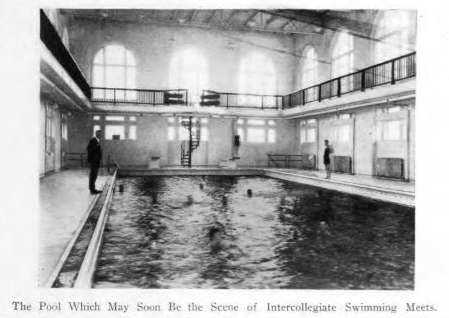
With his arms outstretched into an inverted “V,” he dove face first into the 90-foot swimming pool. The tank, 30 feet wide, and located on the campus of Michigan Agricultural College (now Michigan State University), was the largest of its kind in the Midwest and measured 15 feet longer than a standard competitive pool.
“The aim of all plungers should be to leap as high into the air as possible and as far out as an open jack-knife will carry,” wrote Tom J. Clemens in the 1919-20 edition of the Wilson Athletic Library Official Swimming Guide, the bible of instruction and rules for swimming, diving, water games and lifesaving. “Nearly all plungers dive too flatly,” added the coach of the Detroit Y.M.C.A. swimming team. “A plunge is only as good as the dive.”
How long Dingman remained under water or at what distance he surfaced is not recorded. According to Clemens, a dive might bring the body to within six inches of the bottom of the pool. The best plungers remain under water as long as possible, angling upward at 40 degrees just as the force of the dive is spent. Record holders would surface 40 to 50 feet out into the water.
Upon surfacing, as per the rules of the event, Dingman glided along the surface, without the aid of propulsion from his arms or legs, for a measured distance of 63 feet. The mark fell two feet short of his performance in the prelims. Still, it was the best of the day and earned him a first place finish at the 1925 team state swimming championships.
 While its origins are unclear, the plunge for distance dates back to at least 1865. In 1904, it appeared as an Olympic diving event, and then disappeared from the games. By the 1920s, it was rapidly losing popularity. The plunge appeared only twice in the Michigan high school state title meets. The first time was in 1924 in what was Michigan’s first swimming and diving championships. Sanctioned by the Michigan Interscholastic Athletic Association (MIAA), the immediate predecessor to the modern-day Michigan High School Athletic Association (MHSAA), a total of nine teams – Northern, Northwestern and Southeastern, all of Detroit; Highland Park, Ann Arbor, Jackson, Lansing, Battle Creek Lakeview and Flint Central – took part in the event.
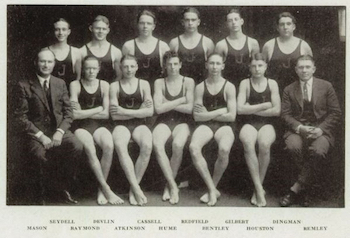
The 1925 championships was the first run by the MHSAA. Also staged at the M.A.C. pool, it featured a 10th team – Detroit Cass Tech. Dingman’s performance, combined with teammate Dick Seydell’s surprising first-place finish in the fancy diving competition and Jack Redfield’s second in the 100-yard freestyle, helped Jackson High School earn an unexpected runner-up finish in only its second year of competition.
Following the actions of the NCAA, the state association removed the plunge from the schedule of competition prior the 1926 championship meet.
Fancy diving and my plunge into uncharted waters
My ‘job” as MHSAA historian, (which is really just a fascination with prep sports history) has always been to fill in holes that surface when I, the various members of the MHSAA staff or the state’s television, radio or newspaper media, seek answers to a question. I’m a detail guy, who earned my living as a business analyst compiling, normalizing and studying data. I love diving deeper into information, completing lists and unearthing stories to tell.
From the first trophy awarded by the MHSAA in 1925, and then for the next 20 years, the state’s 35 team swimming championships never strayed beyond the borders of four Michigan counties: Wayne, Washtenaw, Calhoun and Jackson. Two of those counties, Washtenaw and Calhoun, accounted for 24 of those 35 titles.
Within those borders, only eight schools claimed titles during those two decades, with two schools combining for 18 of those awarded championships.
Detroit dominates
The Detroit area dominated statewide competition in the earliest days. The metro area boasted many of the state’s finest high schools, offering students, male and female, a wide array of athletic facilities and opportunities. During the 1920s, the schools dominated across a variety of sports, including swimming where Detroit Northwestern, Detroit Northern and Highland Park battled for annual city, state and, often, mid-west supremacy.
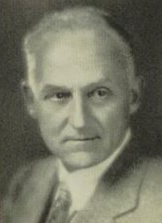 From 1925-1927, Detroit Northwestern, coached by Bert Maris, won the MHSAA’s Open Class swimming competitions, featuring all schools regardless of enrollment. A former coach at University of Michigan and Notre Dame, Maris accepted the position of athletic director at the newly-opened Northwestern High School in 1914, and stayed for 28 seasons before retiring in 1942. Like many mentors from the era, he coached multiple sports, winning state titles in basketball, track, and swimming. Over the years he worked with an amazing number of athletes, including football legend Knute Rockne and track stars Eddie Tolan and Willis Ward. Maris’ teams actually won four swimming titles in a row, as Northwestern topped Jackson in that 1924 MIAA prep championship. That meet featured eight events. Besides the plunge, and fancy diving, it included the 50, 100 and 220-yard freestyles, the 50-yard breaststroke, the 50-yard backstroke, and the 120-yard relay.
The 1925 meet, in which Dingman competed, included the same events and added the 300-yard medley relay, comprised of the 60-yard backstroke, 60-yard freestyle, 60-yard breaststroke and 120-yard free. While Northwestern repeated as team champion, Gurdon Guile of Flint Central “was the star of the meet, with a first in the 100-yard freestyle and a second in the 50-yard freestyle.”
OPEN CLASS
|
Year |
Champion (Coach) |
Runner-Up |
|
1925 |
Detroit Northwestern (Bert Maris) |
Jackson |
|
1926 |
Detroit Northwestern (Bert Maris) |
Highland Park |
|
1927 |
Detroit Northwestern (Bert Maris) |
Highland Park |
|
1928 |
Highland Park (Grant Withey) |
Detroit Northern |
The 1926 championships featured 10 Michigan high schools, including Belding, a newcomer to state swimming circles. Horace Craig, later a star swimmer at Michigan State, trimmed eight seconds from the 220 freestyle record in leading Northwestern to its third straight title in 1926. He again topped the mark in the preliminaries in 1927 as Northwestern posted 57 points, outdistancing runner-up Highland Park by 34.
In 1928, Highland Park jumped to the forefront, qualifying 10 of 26 swimmers in preliminary competition – more than twice the number of any other school – then unseated the four-time champions in the finals to win the competition. The Polar Bears topped six state meet records (including Craig’s 220 freestyle mark) along the way. Then, led by Louis Lemak and Bob Klintworth, future swimmers at the University of Michigan, Highland Park repeated as champion in 1929 when MHSAA competition was split into Class A for the state’s largest schools based on enrollment and Class B-C-D to handle all other schools with swim programs in the state. Roosevelt High, one of two high schools in Ypsilanti, grabbed the Class B-C-D crown, with East Grand Rapids finishing second.
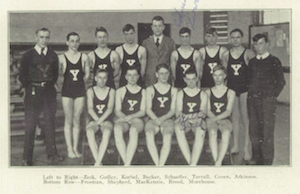 In the spring of 1930, Central High School in Ypsilanti eked past East Grand Rapids by a single point to top a field of seven schools competing for Class B-C-D honors. It was the first of four straight titles for Ypsilanti Central and their coach, James Schaffer, over a five-year span. (In 1932, the Indians finished runners-up to River Rouge. Rouge, in turn, finished second to Ypsilanti in 1931, 1933 and 1934).
Detroit Northwestern returned to the pedestal in 1930, earning another title against a field of 14, this time with Leo S. Maas as coach. It would be the last swimming title awarded to a Detroit Public League school.
With the arrival of the 1930-31 school year, Detroit public schools withdrew from state interscholastic competition, to focus only on intramural contests between other Detroit city schools. Vaughn S. Blanchard, who took charge as Director of Health and Physical Education for the Detroit Public Schools in 1929, cited in the decision his belief that there was an unhealthy overemphasis on competitive athletics. The voluntary exile would last for the next 30 years and recast competition within Michigan prep athletics.
Maas’ teams would continue to dominate Detroit swimming, winning 7 of 9 City League championships. In September of 1938, he joined the staff of Wayne University as swimming coach, leading the Tartars to national prominence in the 1940s. He spent 20 years at the school, renamed Wayne State University in 1956.
Battle Creek Takes Charge
Charles McCaffree, Jr. was born in South Dakota and learned to love swimming at the YMCA pool in Sioux City. He followed his brother to the University of Michigan, earning three varsity letters under internationally-known swimming coach Matt Mann. Following college graduation in 1930, McCaffree was hired at Battle Creek Central as swimming coach in 1931. For the next six years, 1931-1936, his Bearcats teams won Michigan swimming titles. All were in Class A, with the exception of the 1935 tournament, when, because of the Great Depression, only a single title was awarded. A total of 139 swimmers from 14 teams competed in the state’s 12th annual meet, held at the intramural pool at the University of Michigan.
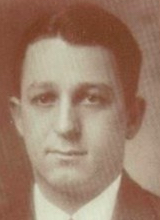 The MHSAA returned to two class championships in the spring of 1936. Ypsilanti Roosevelt returned to the winners’ circle, besting Ypsilanti Central by two points, 38 to 36, while winning four first places in the eight-event meet.
In September 1936, McCaffree returned to U-M to take over the Wolverines program while Coach Mann attended to his seriously ill father in Leeds, England. McCaffree’s teams at Battle Creek had won 53 dual meets and lost only three. He helped build the district’s junior high swim program and turned out 14 prep All-Americans, (including Dobson “Dobbie” Burton, captain of Michigan’s 1941 NCAA championship swim team and later, a very successful swim coach at Evanston Township High School in Illinois). With Mann’s return to the helm at Michigan in February 1937, McCaffree accepted the head swimming coaching position at Iowa State, where his teams won four Big Eight Conference Championships.
In 1942, “Coach Mac” was hired by Michigan State athletic director Ralph Young to head the Spartans swim team. For the next 28 years, he guided the team as head coach, winning eight straight Central Collegiate Conference championships prior to State’s entry into the Big Ten. In 1957, he led MSU to its first Big Ten swimming title. Before retiring as coach in 1969, “his student-athletes earned All-American honors 322 times, won 34 Big Ten titles, and claimed 22 NCAA titles. Six individuals qualified for the Olympics.” In 1979, the university named the pools within the Intramural-West Building in his honor.
CLASS A
|
Year |
Champion (Coach) |
Runner-Up |
|
1929 |
Highland Park (Grant Withey) |
Detroit Northern |
|
1930 |
Detroit Northwestern (Leo. S. Maas) |
Detroit Northern |
|
1931 |
Battle Creek Central (Charles McCaffree) |
Lansing Central |
|
1932 |
Battle Creek Central (Charles McCaffree) |
Kalamazoo Central |
|
1933 |
Battle Creek Central (Charles McCaffree) |
Lansing Central |
|
1934 |
Battle Creek Central (Charles McCaffree) |
Lansing Central |
OPEN CLASS
|
Year |
Champion (Coach) |
Runner-Up |
|
1935 |
Battle Creek Central (Charles McCaffree) |
Dearborn Fordson |
CLASS B-C-D
|
Year |
Champion (Coach) |
Runner-Up |
|
1929 |
Ypsilanti Roosevelt (Howard Farnslow) |
East Grand Rapids |
|
1930 |
Ypsilanti (James Schaffer) |
East Grand Rapids |
|
1931 |
Ypsilanti (James Schaffer) |
River Rouge |
|
1932 |
River Rouge (Benny Goodell) |
Ypsilanti |
|
1933 |
Ypsilanti (James Schaffer) |
River Rouge |
|
1934 |
Ypsilanti (James Schaffer) |
River Rouge |
Ypsilanti, Jackson emerge
McCaffree’s replacement at Battle Creek, John Vydareny, led the Bearcats to a seventh consecutive title in 1937. The city of Ypsilanti retained control of the Class-B-C-D title, as Ypsilanti Central dethroned Roosevelt High 71-54. It was the first of three consecutive by Central High and coach James Schaffer.
“More than 200 high school swimming stars churned the Michigan State college pool today as they warmed up for trials in the 15th annual Michigan High School Athletic association championship swim,” noted The Associated Press in 1938 pre-event coverage.
 A broadcast, featuring a running account of the meet, was recorded in East Lansing that Saturday and brought to Battle Creek for an 11:00 p.m. broadcast on radio station WELL-AM. Designed to give listeners “the pool’s edge atmosphere of the meet,” the program was replayed on Sunday evening “to give those who did not attend, and those who retired too early to hear the Saturday night program.”
Jackson, which lost the Five-A league title to Battle Creek, emerged as the Class A winner. Both schools brought 22 to the event.
“Jackson dethroned the Bearcats…in the Michigan State college natatorium and the difference between an eighth successive crown and runner-up position … was disqualification of the Battle Creek Medley relay team in the preliminaries. The Bearcat medley trio finished a full half lap in front of the field … in record time … but it was ruled out …”
Jackson finished with 39 points, followed by Battle Creek with 32. The Vikings would repeat as Class A champions in both 1939 and 1940. Coach Elwood Watson’s swimmers would pick up a fourth title in 1942. Battle Creek Central added three additional titles to their total with wins in 1941, 1943 and 1944. Because of World War II restrictions, only 13 schools entered the Class A meet and five competed in Class B-C-D in 1943, while 14 schools participated in the Class A meet in 1944 at Michigan State, and six schools chased honors in the Class B-C-D competition at the University of Michigan.
With the absence of Detroit schools during the 14-year span, 1931 through 1944, a member of the 5-A League – comprised of Battle Creek, Jackson, Ann Arbor, Lansing Eastern and Lansing Central – controlled Michigan’s Class A swim title during that time. On nine occasions during that period, the 5-A also placed the state runner-up.
I n Class B-C-D, Ann Arbor University High emerged as a swimming power, finishing as runner-up to Ypsilanti Central in both 1938 and 1939. Guided by University of Michigan assistant swimming coach Harvey Muller, the Cubs ended the city of Ypsilanti’s grip on the smaller school title in 1940.
“University High’s crack free-style quartet of Bill Koch, Earl Bryant, Jim Gordy and Max Tobias nosed out Central in the final relay to overcome a 43-42 lead which Ypsilanti held prior to the event.”
With the win, “the Ann Arbor tankers scored 52 points, one more than Central … It was Central’s first defeat in the state meet in the last four years.”
Ypsilanti Central topped Roosevelt in the 1941 state meet, this time under the guidance of coach Christy Wilson. University High won the first of five straight titles, with Muller as coach in 1942 and the legendary Matt Mann guiding the team from 1943 to 1946. Among the winners in 1943 was Matt Mann, Jr., who clipped five seconds off the meet’s 200-yard freestyle record. He would later be named a four-time All-American at Michigan and compete on the university’s 1948 national championship swim team. Following graduation, Mann, Jr. coached swimming and diving at Lansing Sexton High School.
Times Change
Post World War II saw many changes to society, cities, and, within competitive swimming, new record setters and coaching legends emerged. In 1980, a separate boys tournament was added to the MHSAA menu for Michigan’s Upper Peninsula. The grouping of schools moved from classes to divisions in 2003, and in 2008, a third division was added.
Today, ownership of MHSAA boys swimming & diving titles has geographically traveled a bit farther, but still to only 12 of Michigan’s 68 Lower Peninsula counties.
 Ron Pesch has taken an active role in researching the history of MHSAA events since 1985 and began writing for MHSAA Finals programs in 1986, adding additional features and "flashbacks" in 1992. He inherited the title of MHSAA historian from the late Dick Kishpaugh following the 1993-94 school year, and resides in Muskegon. Contact him at [email protected] with ideas for historical articles.
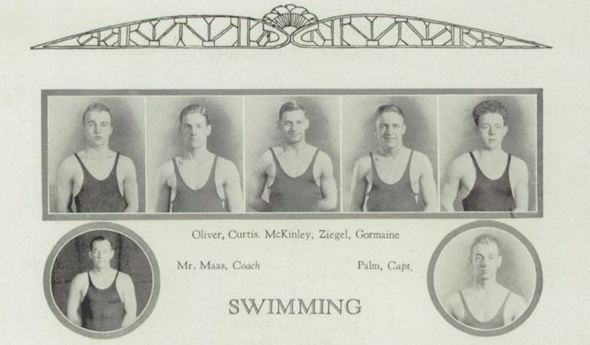
PHOTOS: (Top) The 1930 Detroit Northwestern team was among early state swimming powers. (2) Jackson's 1925 team also was an early force in the sport. (3) Bert Maris. (4) The 1930 Ypsilanti team. (5) Charles McCaffree, Jr. (6) The Michigan Agricultural College pool, in 1921. (7) The 1940 Jackson team. (Photos collected by Ron Pesch.)
Preview: Racers Seek to Double Up Again, Team Races Could See Another 1st-Time Champ
By
Geoff Kimmerly
MHSAA.com senior editor
March 12, 2026
An impressive sixsome could dominate championship lists – and storylines – at this weekend’s MHSAA Lower Peninsula Boys Swimming & Diving Finals.
Six swimmers will attempt to win multiple races for the second year in a row, and Otsego senior Liam Smith will pursue a third-straight two-title day as he looks to add to his career haul of five individual championships.
Last season’s Finals also saw a first-time team title winner, and could see one or more again this weekend. Annual contenders Ann Arbor Pioneer and Saline are expected to continue their season-long battle in Division 1, and Bloomfield Hills Cranbrook Kingswood is pursuing a fourth-straight championship in Division 3 but is ranked behind two potential first-time winners. The Division 2 team race includes two possible first-timers among the top three contenders as well.
Preliminaries at all three Finals sites begin at noon Friday, with Saturday championship events starting at noon as well. Both days of all three meets will be streamed live and viewable with subscription on the NFHS Network. For information on purchasing tickets, plus psych sheets, dive orders and more, visit the Boys Swimming & Diving page – and see below for a glance at several team and individual contenders to follow.
Division 1 at Oakland University
Reigning champion: Saline
2025 runner-up: Ann Arbor Pioneer
2026 top-ranked: 1. Ann Arbor Pioneer, 2. Saline, 3. Northville.
Saline broke Pioneer’s four-year hold on the championship last season with its first since 2013, and those two are expected to contend for the top spot again – with Pioneer the winner of both their regular-season dual and their Southeastern Conference Red championship meet this winter. Saline has all three relays and nine individual qualifiers seeded to score (among the top 16) this weekend, plus three strong divers competing, while Pioneer has all three relays and 11 individuals seeded to score and a diving contender as well. Northville finished runner-up most recently in 2022 and placed third last season, and will attempt to break into the top two with a solid group of all three relays and nine individuals seeded to score and a strong diver as well.
Issac Adanin, Saline junior: After winning the 100-yard breaststroke and 200 individual medley last season, he’s seeded second in both races in 56.13 and 1:50.72, respectively.
Benjamin Bricker, Troy senior: The top seed in the 200 freestyle (1:38.53) and third seed in the 100 backstroke (49.84) didn’t swim at the Finals last season but was a top-eight placer in both races as a sophomore in 2024.
Samuel Campbell, Milford senior: He’s seeded first in the backstroke (48.62) and fourth in the 200 freestyle (1:40.69) after finishing second in the backstroke and third in the 200 a year ago.
Charles Knoepp, Ann Arbor Pioneer junior: He’s looking to improve on last season’s third place in the 500 freestyle and seventh in the IM, seeded first in the 500 (4:28.21) and fifth in the 200 free (1:41.56) this time.
Trae Lewis, West Bloomfield senior: He’s the top seed in the IM (1:50.01) and second seed in the backstroke (49.60) as he heads to his first Finals, adding to a decorated club career.
Oliver Ottenwess, Grandville senior: The top seed in the butterfly (49.53) and second seed in the 200 free (1:39.62) after finishing third in the butterfly and fourth in the backstroke last year.
Baylor Perkins, Grand Blanc senior: He could make a big jump after finishing sixth in the breaststroke and 10th in the 50 freestyle last year, seeded seventh in the 50 this time and first in the breaststroke (55.59).
Brady Stenson, Northville senior: The reigning champion in the 200 freestyle and runner-up in the 500 is seeded second in the 500 (4:32.71) and third in the 200 (1:39.66) this time.
Camren Turowski, Detroit Catholic Central junior: He’ll be looking to add to individual championships in the 50 and 100 freestyles from last season and two relay titles from 2024, seeded first in the 50 (20.45) and 100 (44.58) this weekend.
Ann Arbor Pioneer 400 freestyle relay: An expected group of Knoepp, senior Edwards Zhang, junior Isak Woods and freshman Gavin Martens enters with a top-seeded time of 3:02.88 – with the all-Finals record 3:02.06 swam by Bloomfield Hills Broth Rice in 2014.
Joseph Rosales, Saline junior: He finished 16th in Division 1 diving a year ago but won his Regional last week with a Division 1-best 460.60.
Division 2 at Eastern Michigan University
Reigning champion: Detroit U-D Jesuit
2025 runner-up: Byron Center
2026 top-ranked: 1. Byron Center, 2. Detroit U-D Jesuit, 3. Portage Central.
Both Jesuit and Byron Center earned their highest places at a Finals last season, and the rankings say they’ll switch spots but maintain top-two finishes. Byron Center has all three relays and 16 individual seeded to score – including four top seeds – plus three divers competing. Reigning champion Jesuit has all three relays seeded among the top four in their events, 20 individuals seeded to score, and a diver competing. Portage Central is seeking its first top-two Finals finish and expected to rise significantly from 12th a year ago, with all three relays and 11 individuals seeded to score.
Anthony Kopinski, Dexter junior: He’s seeded first in the backstroke (51.46) and third in the butterfly (51.08) after finishing 10th in backstroke and seventh in the 200 freestyle in 2025.
Charlie McCuiston, Detroit U-D Jesuit junior: He won the 100 freestyle and swam on the championship 400 free relay last season, and could add to that haul seeded first in the 100 (45.25) and 200 freestyles (1:39.93) and swimming on the top-seeded 400 free relay (3:09.89).
Carter Nelson, Byron Center senior: The top seed in the 500 (4:36.46) finished sixth in that race and 12th in the 200 freestyle a year ago.
Ryder Nichols, Byron Center junior: He finished second in the breaststroke and also swam the IM last season and returns this weekend seeded first in the breaststroke (56.11), ninth in the IM and expected to swim on the top-seeded 200 medley relay (1:33.21).
Elliot Rijnovean, Birmingham Seaholm senior: He’s won the backstroke, butterfly and swam on the champion 200 medley relay the last two seasons, and enters his last Finals seeded first in the butterfly (50.60) and third in the 50 (21.44).
Joshua Webert, Livonia Churchill senior: He finished 12th in both the IM and butterfly last season, but is expected to move up substantially seeded first in the IM (1:54.76) and fourth in the butterfly (51.43) this weekend.
Lucas Witham, Grand Rapids Forest Hills Central senior: The top seed in the 50 (21.11) and fourth seed in the 100 freestyle (46.68) finished second in the 50 and fourth in the 100 last season.
William Blind, Portage Northern senior: The reigning Division 2 diving champion posted the highest score for all Division 2 Regionals last week at 492.20.
Division 3 at Holland Aquatic Center
Reigning champion: Bloomfield Hills Cranbrook Kingswood
2025 runner-up: Holland Christian
2026 top-ranked: 1. Holland Christian, 2. Spring Lake, 3. DeWitt.
Cranbrook has won the last three Division 3 championships but enters this weekend ranked No. 4, although the Cranes will pursue a four-peat with three relays top-seeded and nine individual qualifiers also seeded to score. Holland Christian is seeking to claim its first team title since winning Division 3 back-to-back in 2018 and 2019, and has finished runner-up three of the last five seasons. The Maroons have all three relays and 10 individuals seeded to score, plus two divers competing. Spring Lake and DeWitt both are seeking their first top-two Finals finish, Spring Lake entering with all three relays and 10 individuals seeded to score and DeWitt with all three relays and seven individuals seeded among the top 16, plus two divers competing.
AJ Farner, Bloomfield Hills Cranbrook Kingswood senior: The reigning champion in the backstroke and 200 free also has been part of four relay titles and enters this weekend seeded first in the breaststroke (57.17), sixth in the 200 and slated to swim on two top-seeded relays.
Sam Harper, Plainwell senior: He won the 500 and finished second in the 200 free last year and returns as the top seed in both at 4:40.01 and 1:41.99, respectively.
Jack Higgins, Detroit Country Day senior: He’s seeking repeats in the 50 and 100 freestyles seeded second in both at 21.53 and 47.51, respectively.
Kade Opsal, Adrian senior: After finishing second in the backstroke and tying for second in the 50 last year, he is seeded first in both in 50.10 and 20.98, respectively.
Jake Shoemaker, Holland Christian junior: He’s seeded first in the 100 freestyle (46.37) and second in the 200 (1:42.92) after finishing third in the 100 and third as well in the backstroke last season.
Liam Smith, Otsego senior: He’s won three straight championships in the butterfly and the last two in the IM, and enters his last Finals seeded first in both in 48.57 and 1:50.52, respectively.
Charlie DeHaan, Holland Christian junior: He finished third in diving last season but could give his team a repeat winner (Parker Schut) following graduated teammate after posting the top score at any Division 3 Regional last week by more than 60 points at 480.40.
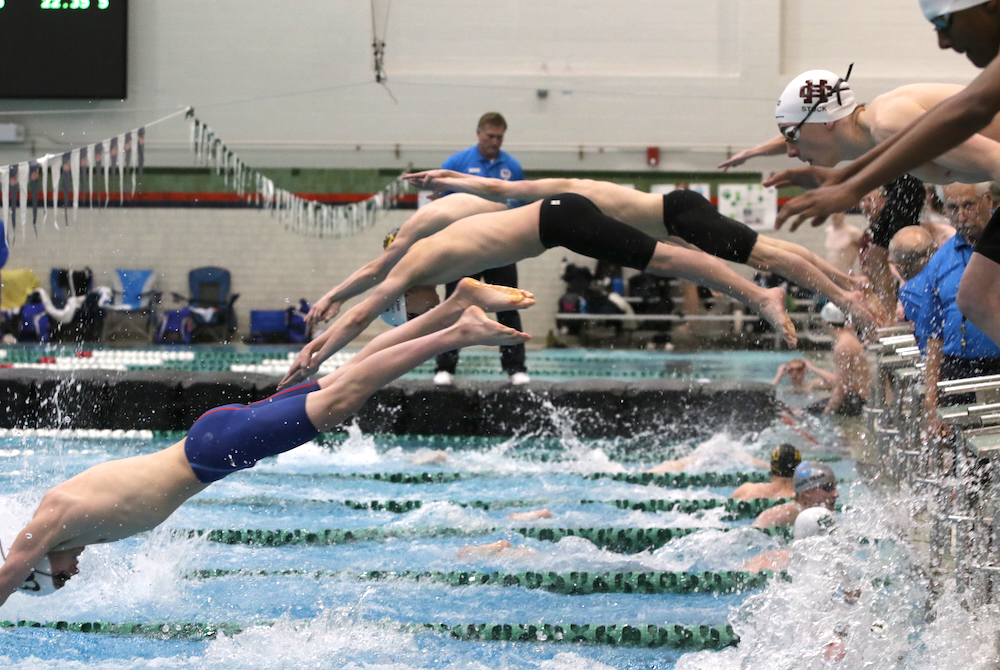
PHOTO Swimmers launch during a race at the 2025 Lower Peninsula Division 3 Final. (Click for more from High School Sports Scene.)