

Armada's Fredette Receives NFHS Honor
January 16, 2020
By Geoff Kimmerly
Second Half editor
Longtime Armada tennis coach David Fredette has been named one of 23 National Coaches of the Year for 2018-19 by the National Federation of State High School Associations (NHFS) Coaches Association.
Fredette was selected first at the state level and then from among the eight sections that make up the NFHS – Michigan is part of Section 4 with Illinois, Indiana, Iowa and Wisconsin.
The following brief bio includes an excerpt from Fredette’s coaching philosophy, which nominees were asked to submit after being identified as candidates for the awards.
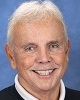 David Fredette began Armada’s tennis program in 1966 and coached the boys team through the 2018 season. He led more than half his teams over the years to the MHSAA Finals, and 17 to top-10 finishes at the championship meet – including four straight from 2009-12. He also was a major contributor during the early days of the Michigan High School Tennis Coaches Association, and began serving on its board in 1982. Four times he was selected MHSTeCA state Coach of the Year: in Class C-D in 1982, Class B in 1992, and as one of two selections in Division 4 in both 1998 and 2018. Fredette was inducted into the MHSTeCA Hall of Fame in 1988. Armada’s tennis courts are named for him.
Fredette played tennis at Dowagiac High School and then Benton Harbor Community College. He also coached basketball and football during his time at Armada.
“Athletics give students a chance to become student-athletes, which means athletics teach athletes discipline, a strong work ethic, and cooperation with others. Athletics teach athletes how to not only compete, but how to handle both winning and losing. … I know that students who play sports upon graduation are more prepared to face the challenges that life presents them. While I always expected my players to work hard, I wanted my athletes to enjoy the experiences on and off the courts. My former players tell me how much they enjoyed competing, but also how much fun they had on the trips we went on together, whether it was to play top competition across the state of Michigan or on the Florida trips I took my boys teams on over Easter vacation from 1989 through 2001 to practice and bond as a team. Athletes learn how to compete, but they also gain friendships that last a lifetime, if only in their memories.”
Four more Michigan coaches earned honors in Section 4. Brighton girls swimming & diving coach Jason Black led the Bulldogs to a Lower Peninsula Division 1 Finals runner-up finish in Fall 2018, its best placing in program history. Dexter boys swimming & diving coach Michael McHugh was selected for the second-straight year as a Section 4 winner after leading his team to its fourth-straight Lower Peninsula Division 2 championship last winter. Battle Creek St. Philip volleyball coach Vicky Groat at one point guided the Tigers to nine Class D championships in 10 seasons from 2005-14 and is the sixth-winningest coach in MHSAA volleyball history with a record of 1,154-262-93. Bloomfield Hills Academy of the Sacred Heart co-coach Judy Hehs helped lead that program to its second-straight Lower Peninsula Division 4 championship this past fall, its sixth title in eight seasons, in her final tournament before retirement. She previously was named NFHS Coaches Association National Coach of the Year for girls tennis in 2016.
The NFHS has been recognizing coaches through an awards program since 1982. Winners of NFHS awards must be active coaches during the year for which they receive their award.
Preview: Title Streaks On The Line
October 16, 2014
By Geoff Kimmerly
Second Half editor
Four of the most impressive winning streaks in any MHSAA sport are on the line at this weekend’s Lower Peninsula Boys Tennis Finals.
Ann Arbor Greenhills is playing for its seventh straight championship in Division 4. Midland Dow has won five straight in Division 2. And Ann Arbor Huron and Detroit Country Day are just behind with a three-season title streaks in Divisions 1 and 4, respectively.
Read on for more on the top contenders in all four divisions, plus individuals who enter with high seeds – and expectations. Click for full draws for all four divisions.
LP DIVISION 1 at Midland Tennis Center
Top-ranked: 1. Novi, 2. Troy, 3. Birmingham Brother Rice.
These have ranked among the top three most of the season, with Novi holding the top spot in Division 1 since the first rankings were published Sept. 1. The Wildcats finished runner-up by a point last season to Huron, while Brother Rice was the runner-up to Huron in 2011 and 2012. Neither Novi nor Troy has won an MHSAA team title. Huron is ranked No. 4 but seeded at only one singles flight.
Novi: The Wildcats carry top seeds at five flights including three in singles, and last season’s No. 1 singles champion – Tim Wang – is seeded second at that flight as he plays for the repeat. Koushik Kondapi moved to No. 2 singles after winning the No. 3 title a year ago, and Maxx Anderson – last season’s champion at No. 4 singles – is teaming with Daniel Yu on the top-seeded No. 1 doubles team. All but No. 3 doubles is seeded – with freshman Alex Wen at No. 3 singles another with a top seed.
Troy: Last season’s fourth-place team is seeded at all but No. 1 singles, with second seeds at No. 2 singles with Steve Forman and No. 3 doubles with Adi Das and Anidow Saha. Six flights won Regional championships despite facing stiff competition from a field that included No. 8 Grosse Pointe South and No. 10 Troy Athens.
Brother Rice: The Warriors were third in 2013 but only two points off the lead. Three singles and all four doubles flights are seeded, including two second seeds including halves of championship pairs from a year ago – Brendan Dillon and Joe Paradiso won No. 3 doubles, and Dillon has moved up to No. 2 and Paradiso to No. 1. Returning No. 4 singles runner-up Jack Winkler is seeded second at No. 3.
Ann Arbor Pioneer’s Ian Yi: After winning No. 2 singles last season as a freshman, Yi enters as the third seed at No. 1.
Northville’s Connor Johnston: The No. 1 seed at No. 1 singles, Johnston fell to Wang in straight sets in last season’s championship match but defeated him in last week’s Regional.
Ann Arbor Huron’s Will Brenner and Orion Sang: Last season’s winners at No. 4 doubles are the top-seeded pair this time at No. 2 and one of only two top seeds for the reigning champion.
DIVISION 2 at Kalamazoo College
Top-ranked: 1. Midland Dow, 2. Grand Rapids Forest Hills Central, 3. Grand Rapids Forest Hills Northern.
Dow dominated the field a year ago finishing 13 points ahead of the rest. Forest Hills Central was runner-up twice during Dow's recent run, in 2012 and 2011, and was fourth a year ago as Forest Hills Northern finished third.
Dow: Every flight is seeded, with Nos. 2-4 singles and No. 4 doubles all favored. Varun Shanker, the third seed at No. 1, and Michael Szabo at No. 3 were champions at Nos. 3 and 4, respectively, in 2013. No. 2 singles Colin Angell was on the winning No. 2 doubles team, and No. 4 singles Aditya Middha is only a freshman. No. 1 doubles Daniel Magno was part of the champion at No. 3 in 2013.
Forest Hills Central: Six flights are seeded, but the strength is doubles with all four flights seeded including No. 3 top seeds Humzah Azeem and Ryan Conner – Azeem was part of the winning No. 4 doubles pair last fall. Cooper James, the fourth seed at No. 2 singles, made the semifinals at No. 4 in 2013.
Forest Hills Northern: The Huskies had four flight runners-up a year ago in addition to finishing second as a team. Will Christian was the lone runner-up in singles, at No. 3, and is the fifth seed at No. 2. Ryan Roach and Daiki Adachi were runners-up at No. 3 doubles and are top-seeded at No. 2 after playing the only three-set match of last season’s Division 2 championships. All eight flights are seeded at least fifth.
Portage Central’s Bill Duo: The standout freshman enters his first MHSAA Finals as the second seed at No. 1 singles.
Portage Central’s Ben Orwin: Last season’s No. 1 singles player won a match at the Finals and is the second seed at No. 2 this fall.
Portage Northern’s Steward Sell: After entering last season’s tournament as the fourth seed at No. 1, Sell returns as the top.
Grosse Pointe North’s Nick Cusmano and Mitchell Zacharias: Cusmano is a returning No. 1 doubles player while Zacharias played No. 2 in 2013; together they are the top seed at the top flight.
Portage Central’s Cameron Raedy and Sahil Tandon: The second seed at No. 1 doubles is made up of Raedy, last season’s third seed at No. 3 singles, and a returning No. 1 doubles player in Tandon.
DIVISION 3 at Holly and Fenton
Top-ranked: 1. Detroit Country Day, 2. Bloomfield Hills Cranbrook-Kingswood, 3. East Grand Rapids.
Country Day’s championship in 2013 was one of the most dominating performances in MHSAA tennis history; the Yellowjackets won seven flights and had the runner-up in the eighth. Cranbrook-Kingswood finished fourth last season but is the last team to win the title before Country Day’s recent run. Combined, those two teams have the top two seeds at six flights.
Country Day: All eight flights are seeded first or second, including returning champions at No. 1 doubles Blake Burstein and Damian Runkle and No. 2 doubles Rishabh Nayak and Adam Junn. Noah Karoub is the top seed at No. 1 singles after winning No. 2 last season, and Davis Wong is the second seed at No. 2 after winning No. 4 in 2013. Jakob Gahn is the top seed at No. 3 after also winning that flight last season.
Cranbrook-Kingswood: All eight flights are seeded among the top three at their respective positions, with Colin Petzold and Brandon Kerr the top seed at No. 4 doubles and Marc Sable the top seed at No. 2 singles. Alex Hubers and Steven Meng are the second seed at No. 3 doubles after finishing runner-up at No. 4 last fall, while Nolan Trepeck is part of the second-seeded No. 2 doubles pair after contributing to a runner-up finish at that flight. Freshman Benji Jacobson is the second seed at No. 1 singles at his first MHSAA Finals.
East Grand Rapids: The Pioneers have one of the most accomplished programs in MHSAA history and could make an interesting run again with all eight flights seeded and some experienced players returning. Thomas Bailey and Will Rea finished runners-up at No. 3 doubles in 2013; Bailey is the sixth seed at No. 3 singles and Rea part of the fifth seed at No. 1 doubles. Grant Bailey is the third seed at No. 1 singles after falling to Karoub in the No. 2 championship match.
Grand Rapids Christian’s Max Hartman: The Eagles didn’t make the 2013 Finals, but Hartman also was their No. 1 singles player and won a match at the 2012 tournament.
Holland Christian’s Christian Rhoades: The third seed at No. 2 singles won a match at No. 1 in 2013.
DIVISION 4 at Holland
Top-ranked: 1. Ann Arbor Greenhills, 2. Traverse City St. Francis, 3. Grosse Pointe Woods University Liggett.
Greenhills is seeking its eighth championship in nine seasons and claimed last year’s title in large part by winning all four doubles. St. Francis finished sixth in 2013 but moved up to second in the coaches' second set of rankings this year and has remained in that spot. University Liggett could add a major highlight to its long history of success by breaking Greenhills’ streak, and finished third last season.
Greenhills: The Gryphons are seeded first at six flights and second at the seventh – and the lone player not seeded, No. 1 singles Zach Martell, made the quarterfinals at that flight last season while seeded fifth. Gage Feldeisen is the top seed at No. 3 singles after winning No. 4 in 2013, and six of eight doubles players were part of championship pairs: Sam Talsma and Brandon Johnson at No. 1 doubles (No. 1/No. 4 last year), Isak Akervall and Andy Xie at No. 2 (No. 2/No. 3 last year), Matt Chatas at No. 3 after winning No. 3 last year with Xie, and David Groden at No. 4 after winning that flight last year with Johnson. Nick Sandhu, a doubles champion in 2012 and 2011, is the top seed at No. 2 singles.
St. Francis: Seven seeded flights have the Gladiators looking like the team most likely to push Greenhills. Jack Krcmarik advanced the farthest last season, to the No. 3 singles semifinals, and is the third seed at that flight. Top singles players Gus Danz and Sam Holmes have switched flights after Danz played No. 2 and Holmes No. 1 a year ago.
University Liggett: The Knights also are seeded at seven flights with big points expected from doubles; Casey Scoggin and Thomas Van Pelt are the top seed at No. 3, and Alex Dow and Dave Sekhon are the second seed at No. 2. Dow and Sekhon were flight runners-up last season at No. 4 and No. 3, respectively, and the No. 1 doubles pair is made up of August Bonacci and Jackson Benning – returning runners-up at Nos. 2 and 4.
Grand Rapids West Catholic’s Nick Solarewicz: Last season’s runner-up at No. 1 singles is back as the third seed and only qualifier from his team.
Kalamazoo Hackett’s Teddy Oosterbaan: The No. 2 singles champion in 2013 will take a step up as the fourth seed at No. 1.
Kalamazoo Hackett’s Henry Hedeman: The reigning No. 3 singles champion enters as the second seed this time at No. 2.
Lansing Catholic’s Matt Heeder: The top-seeded player at No. 1 singles is the reigning champion and also will play for the third title for his family (brother Paul won No. 1 singles in 2010).
Otsego’s Luke Ford: The second seed at No. 1 singles won his first match in Division 3 last year before falling to that division’s eventual runner-up.
Kalamazoo Christian’s David Niewoonder and Dean VanElderen: After making the quarterfinals at No. 1 doubles last season despite entering unseeded, this pair comes in this weekend seeded second.
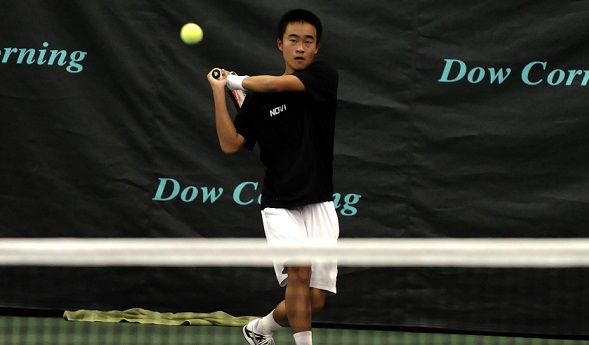
PHOTO: Novi is returning three singles champions from the 2013 LP Division 1 Final, and is favored to win the team title this weekend.