

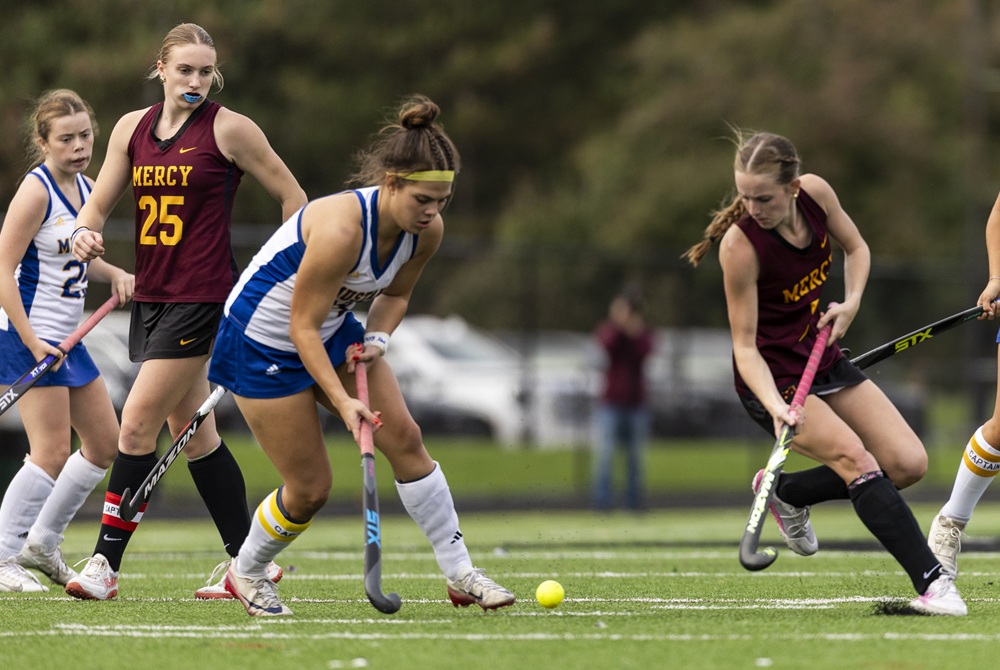
Be the Referee: Field Hockey Substitutions
By
Paige Winne
MHSAA Director of Brand Management
October 27, 2026
Be The Referee is a series of short messages designed to help educate people on the rules of different sports, to help them better understand the art of officiating, and to recruit officials.
Below is this week's segment – Field Hockey Substitutions - Listen
We’re on the pitch today for a field hockey “You Make the Call.”
The white team is awarded a penalty corner. During the penalty corner, a red team substitute enters the field but does not participate in or affect play.
Should the official stop play immediately or allow play to continue?
If you said allow play to continue, you are correct. Since the illegal substitute has not participated in or affected play, stopping play immediately would give the defending team an unfair advantage by interrupting the attacking team's scoring opportunity.
Under NFHS Rule 4-4-3, substitutions are not permitted during a penalty corner, except to replace an ill, injured, suspended or disqualified goalkeeper. Officials must recognize the violation and know when to hold the whistle to allow for advantage.
Previous 2026-27 editions
Oct. 20: Foot Save in Volleyball - Listen
Oct. 13: Soccer Advantage - Listen
Oct. 6: Defensive Holding - Listen
Sept. 29: Minimum Number of Volleyball Players - Listen
Sept 22: Soccer Changes - Listen
Sept: 15: Dead Ball Penalty - Listen
Sept. 8: Libero Ejected - Listen
Sept. 1: Soccer Foul After Shot on Goal - Listen
Aug. 25: Fumble Out of Bounds - Listen
(Photo by KMS Photography.)
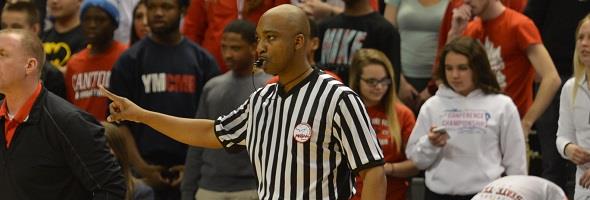
Be the Referee: Calling Intentional Fouls
February 1, 2018
In this week's edition, assistant director Mark Uyl discusses when basketball officials should call an intentional foul.
Be The Referee is a series of short messages designed to help educate people on the rules of different sports, to help them better understand the art of officiating, and to recruit officials.
Below is this week's segment – Calling Intentional Fouls - Listen
At the end of any close basketball game, it’s an accepted part of basketball strategy for the team that’s behind to foul and send the team in the lead to the foul line.
This year there is a point of emphasis nationally dealing with intentional fouls. Intentional fouls should be called whenever a player obviously neutralizes an opponent’s obvious advantage, or when contact occurs with an opponent who is clearly not in the play, or when that contact is not an attempt to play the ball.
Certainly excessive contact remains as one of the types of intentional fouls. A team merely trying to foul on purpose does not make it an intentional foul.
Past editions
January 25: Points at the Edge of the Mat - Listen
January 18: Behavior Warning - Listen
January 11: Ice Hockey Safe & Sound - Listen
January 4: Why No Shot Clock - Listen
December 21: Coaches Responsible for Equipment - Listen
December 14: Mentoring New Officials - Listen
December 7: Dive on the Floor - Listen
November 30: Wrestling Weight Monitoring - Listen
November 23: Ejections - Listen
November 16: Toughest Call - Listen
November 9: Hurdling - Listen
November 2: The Survey Says - Listen
October 26: Helmet Comes Off - Listen
October 19: Goal Line Rules - Listen
October 12: No 1st-Year Fee - Listen
October 5: Athletic Empty Nesters - Listen
September 28: Misunderstood Football Rules: Kicking - Listen
September 21: Preparation for Officials - Listen
September 14: Always Stay Registered - Listen
September 7: Other Football Rules Changes - Listen
August 31: Pop-Up Onside Kicks - Listen
August 24: Blindside Blocks - Listen