

Be the Referee: Field Hockey Substitutions
By
Paige Winne
MHSAA Director of Brand Management
October 27, 2026
Be The Referee is a series of short messages designed to help educate people on the rules of different sports, to help them better understand the art of officiating, and to recruit officials.
Below is this week's segment – Field Hockey Substitutions - Listen
We’re on the pitch today for a field hockey “You Make the Call.”
The white team is awarded a penalty corner. During the penalty corner, a red team substitute enters the field but does not participate in or affect play.
Should the official stop play immediately or allow play to continue?
If you said allow play to continue, you are correct. Since the illegal substitute has not participated in or affected play, stopping play immediately would give the defending team an unfair advantage by interrupting the attacking team's scoring opportunity.
Under NFHS Rule 4-4-3, substitutions are not permitted during a penalty corner, except to replace an ill, injured, suspended or disqualified goalkeeper. Officials must recognize the violation and know when to hold the whistle to allow for advantage.
Previous 2026-27 editions
Oct. 20: Foot Save in Volleyball - Listen
Oct. 13: Soccer Advantage - Listen
Oct. 6: Defensive Holding - Listen
Sept. 29: Minimum Number of Volleyball Players - Listen
Sept 22: Soccer Changes - Listen
Sept: 15: Dead Ball Penalty - Listen
Sept. 8: Libero Ejected - Listen
Sept. 1: Soccer Foul After Shot on Goal - Listen
Aug. 25: Fumble Out of Bounds - Listen
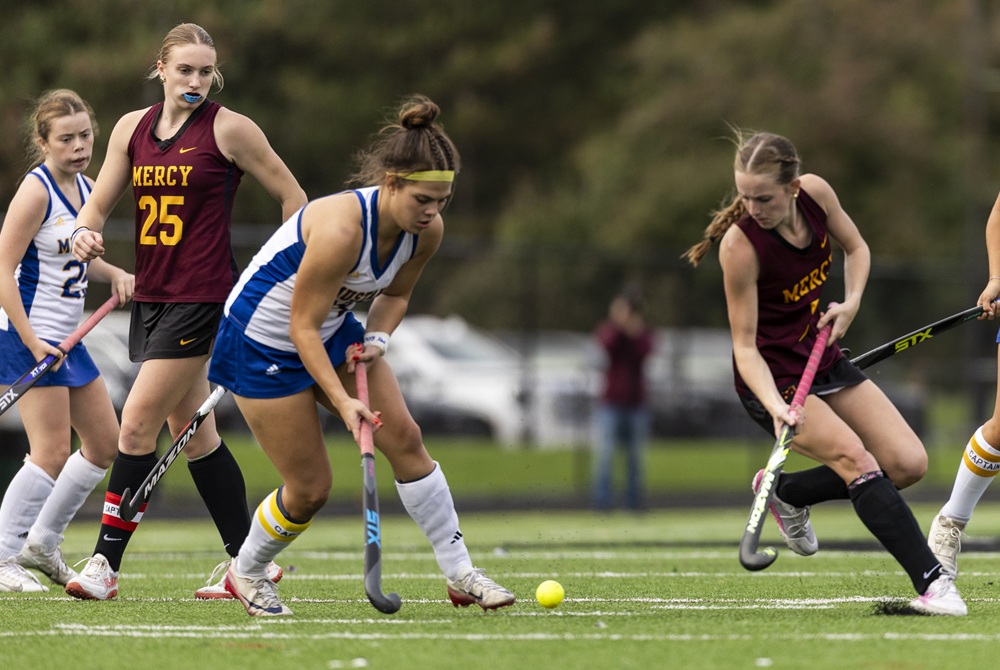
(Photo by KMS Photography.)
Officiating’s High Calling
October 28, 2016
One of the sports world’s better wordsmiths is Referee Magazine publisher Barry Mano. He’s also a fine thinker, as these artful lines demonstrated at the 2016 Officiating Industry Luncheon in San Antonio:
“Let me provide, in all subjectivity, some observations about our environment, about our fellow citizens. We are:
-
“More generous but less forgiving.
-
More open but less discriminating with that openness.
-
More informed but less knowledgeable.
-
More litigious but less willing to abide by the rules.
-
Quick to seek an expert opinion, then just as quick to get a second opinion, one that agrees with ours.”
Barry is president of the National Association of Sports Officials (NASO) which helps contest officials at all levels aspire to be discriminating and knowledgeable adjudicators of fair and healthy competitive athletics.
At a time when the number of registered officials with the Michigan High School Athletic Association has sunk to a 30-year low, Barry’s words are a clarion call to young men and women of character to consider sports officiating as an avocation, or even vocation, that will enrich their lives immensely.