


2016 Week 5 Football Playoff Listing
September 19, 2016
By Geoff Kimmerly
Second Half editor
Here is a list of Michigan High School Athletic Association football playing schools, displaying their win-loss records and playoff averages through the fourth week of the season.
Schools on this list are in enrollment order for 11-player teams, with 8-player teams ordered by playoff average. An asterisk (*) beside a record indicates a team has eight or fewer games scheduled.
Those schools with 11-player teams with six or more wins playing nine-game schedules, or five or more wins playing eight games or fewer, will qualify for the MHSAA Football Playoffs beginning Oct. 28. Schools with 5-4, 4-3 or 4-4 records may qualify if the number of potential qualifiers by win total does not reach the 256 mark. Schools with six or more wins playing nine-game schedules or five or more wins playing eight games or fewer may be subtracted from the field based on playoff average if the number of potential qualifiers exceeds the 256 mark.
Once the 256 qualifying schools are determined, they will be divided by enrollment groups into eight equal divisions of 32 schools, and then drawn into regions of eight teams each and districts of four teams each. Those schools with 8-player teams will be ranked by playoff average at season’s end, and the top 16 programs will be drawn into regions of eight teams each for the playoff in that division, which also begins Oct. 28.
To review a list of all football playoff schools, individual school playoff point details and to report errors, visit the Football page of the MHSAA Website.
The announcement of the qualifiers and first-round pairings for both the 11 and 8-player playoffs will take place at 7 p.m. on Oct. 23 on the Selection Sunday Show on FOX Sports Detroit. The playoff qualifiers and pairings will be posted to the MHSAA Website following the Selection Sunday Show.
11-Player Playoff Listing
1. Utica Eisenhower, 2700, 4-0, 92.000
2. Clarkston, 2683, 3-1, 70.250
3. Grand Blanc, 2628, 4-0, 94.000
4. Howell, 2499, 3-1, 66.500
5. Dearborn Fordson, 2487, 4-0, 94.000
6. Detroit Cass Tech, 2368, 4-0, 70.000
7. Northville, 2325, 3-1, 76.750
8. Brighton, 2142, 3-1, 72.500
9. Detroit Catholic Central, 2128, 4-0, 94.000
10. Macomb L'Anse Creuse North, 1986, 4-0, 90.000
11. Dearborn, 1978, 3-1, 70.500
12. Lapeer, 1932, 3-1, 60.500
13. Saline, 1923, 4-0, 94.667
14. Bloomfield Hills, 1831, 4-0, 92.000
15. White Lake Lakeland, 1822, 4-0, 90.000
16. Grandville, 1810, 4-0, 94.000
17. Hudsonville, 1797, 3-1, 74.750
18. Warren Mott, 1768, 4-0, 90.000
19. Grand Ledge, 1694, 3-1, 68.500
20. Davison, 1668, 4-0, 84.000
21. Rochester Adams, 1666, 3-1, 66.250
22. Romeo, 1641, 3-1, 72.000
23. Walled Lake Northern, 1631, 4-0, 88.000
24. Grosse Pointe South, 1600, 4-0, 92.000
25. Temperance Bedford, 1597, 3-1, 66.750
26. Detroit Western International, 1584, 3-1, 44.750
27. Brownstown Woodhaven, 1579, 3-1, 64.750
28. Detroit East English, 1579, 3-1, 50.500
29. Livonia Churchill, 1578, 3-1, 72.250
30. Traverse City West, 1552, 3-1, 70.750
31. Warren Cousino, 1496, 3-1, 66.250
32. Detroit Martin Luther King, 1487, 4-0, 78.000
33. Detroit U-D Jesuit *, 1482, 3-1, 60.250
34. Jenison, 1481, 3-1, 64.500
35. Traverse City Central, 1394, 4-0, 96.000
36. Midland, 1388, 3-1, 60.500
37. Portage Central, 1388, 3-1, 62.750
38. Walled Lake Western, 1370, 4-0, 92.000
39. Grosse Pointe North, 1367, 3-1, 58.500
40. Battle Creek Lakeview *, 1353, 3-0, 84.000
41. Berkley, 1319, 3-1, 68.500
42. Grand Rapids Forest Hills Central, 1316, 3-1, 68.500
43. Wyandotte Roosevelt, 1311, 3-1, 66.750
44. Port Huron Northern, 1288, 3-1, 52.000
45. Wyoming, 1288, 3-1, 62.750
46. Midland Dow, 1254, 4-0, 84.000
47. Birmingham Brother Rice, 1250, 3-1, 68.400
48. Birmingham Groves, 1248, 4-0, 92.000
49. Muskegon Reeths-Puffer, 1198, 3-1, 58.250
50. Lowell, 1165, 4-0, 92.000
51. Holly, 1164, 3-1, 62.500
52. Farmington Hills Harrison, 1161, 3-1, 66.250
53. Greenville, 1142, 3-1, 70.500
54. Allen Park, 1094, 4-0, 94.000
55. Redford Thurston, 1090, 3-1, 62.500
56. Byron Center, 1070, 3-1, 62.500
57. Muskegon, 1052, 3-1, 66.500
58. Ortonville-Brandon, 1034, 3-1, 56.250
59. Detroit Cody, 1015, 3-1, 48.750
60. Mason, 1009, 3-1, 64.500
61. Zeeland East, 1007, 3-1, 58.750
62. DeWitt, 1002, 3-1, 76.500
63. St. Joseph, 989, 3-1, 68.500
64. Trenton, 969, 4-0, 90.000
65. Linden, 940, 3-1, 60.500
66. Cedar Springs, 936, 3-1, 68.500
67. Niles, 931, 3-1, 57.850
68. Coldwater, 929, 3-1, 66.250
69. Romulus, 929, 4-0, 35.333
70. Grand Rapids Christian, 912, 4-0, 88.800
71. Warren Fitzgerald, 891, 4-0, 80.000
72. New Boston Huron, 886, 3-1, 54.750
73. Battle Creek Harper Creek, 880, 4-0, 74.000
74. Chelsea, 867, 4-0, 84.000
75. Redford Union, 865, 3-1, 50.250
76. Stevensville Lakeshore, 865, 3-1, 70.500
77. Vicksburg, 861, 3-1, 54.750
78. Dearborn Divine Child, 859, 4-0, 78.000
79. Zeeland West, 857, 3-1, 70.750
80. Edwardsburg, 855, 4-0, 74.000
81. Sparta, 834, 3-1, 50.500
82. Fowlerville, 833, 3-1, 56.750
83. Cadillac, 817, 3-1, 62.250
84. Hamilton, 810, 4-0, 82.000
85. Bloomfield Hills Cranbrook Kingswood, 797, 3-1, 50.250
86. Marysville, 794, 4-0, 76.000
87. Detroit Osborn, 786, 3-1, 54.500
88. Milan, 775, 4-0, 78.000
89. Pontiac Notre Dame Prep, 749, 3-1, 72.250
90. River Rouge, 741, 3-1, 56.750
91. Three Rivers, 730, 3-1, 60.000
92. Escanaba, 722, 4-0, 90.000
93. Detroit Mumford, 714, 3-1, 50.500
94. Ludington, 695, 3-1, 46.750
95. Detroit Country Day, 692, 4-0, 70.000
96. Alma, 674, 3-1, 56.750
97. South Haven, 674, 3-1, 58.250
98. Wyoming Kelloggsville, 660, 3-1, 51.417
99. Croswell-Lexington, 659, 3-1, 58.500
100. Lake Fenton, 654, 4-0, 72.000
101. Grosse Ile, 653, 4-0, 84.000
102. Whitehall, 653, 4-0, 66.000
103. Wyoming Godwin Heights, 645, 3-1, 52.917
104. Grand Rapids Catholic Central, 644, 4-0, 84.000
105. Benton Harbor, 643, 4-0, 70.000
106. Corunna, 639, 4-0, 74.000
107. Hudsonville Unity Christian, 629, 4-0, 88.000
108. St. Clair Shores South Lake, 617, 3-1, 64.750
109. Lake Odessa Lakewood, 614, 4-0, 68.000
110. Hancock, 608, 3-1, 38.350
111. Detroit Denby, 593, 3-1, 54.500
112. Muskegon Oakridge, 590, 3-1, 40.750
113. Southfield Bradford, 587, 3-1, 52.500
114. Portland, 579, 4-0, 82.000
115. Remus Chippewa Hills, 577, 4-0, 74.000
116. Richmond, 562, 3-1, 62.750
117. Freeland, 561, 4-0, 84.000
118. Essexville Garber, 550, 3-1, 52.750
119. Algonac, 547, 4-0, 66.000
120. Ida, 546, 4-0, 68.000
121. Carrollton, 543, 3-1, 48.750
122. Kingsford, 543, 3-1, 61.200
123. Olivet, 541, 3-1, 50.750
124. Harper Woods, 540, 3-1, 52.250
125. Frankenmuth, 533, 4-0, 70.000
126. Lansing Catholic, 532, 3-1, 66.750
127. Grant, 520, 3-1, 46.750
128. Kalkaska, 517, 4-0, 60.000
129. Reed City, 496, 4-0, 72.000
130. Grayling, 492, 3-1, 52.750
131. Stockbridge, 482, 3-1, 52.750
132. Grand Rapids West Catholic, 475, 3-1, 46.500
133. Durand, 463, 4-0, 56.000
134. Parchment, 448, 3-1, 38.250
135. Menominee, 439, 4-0, 71.600
136. Ithaca, 426, 4-0, 72.000
137. Clare, 419, 3-1, 50.750
138. Montague, 414, 4-0, 62.000
139. Houghton, 412, 3-1, 38.500
140. Tawas *, 412, 3-1, 40.500
141. Calumet, 406, 3-1, 50.750
142. Morley Stanwood, 404, 3-1, 48.500
143. Negaunee, 400, 4-0, 66.000
144. Warren Michigan Collegiate, 398, 3-1, 56.500
145. Adrian Madison, 397, 3-1, 48.750
146. Charlevoix, 393, 4-0, 54.000
147. Millington, 393, 4-0, 72.000
148. Constantine, 386, 3-1, 48.750
149. Montrose, 386, 3-1, 52.500
150. Byron, 385, 3-1, 46.250
151. Quincy, 381, 4-0, 50.000
152. Watervliet, 380, 3-1, 48.750
153. Maple City Glen Lake, 379, 3-1, 46.750
154. Houghton Lake, 374, 3-1, 48.750
155. Laingsburg, 374, 4-0, 58.000
156. Roscommon, 367, 4-0, 70.000
157. Grass Lake, 363, 4-0, 68.000
158. Kent City, 362, 3-1, 46.500
159. Schoolcraft, 358, 4-0, 58.000
160. Oscoda, 352, 3-1, 44.500
161. Ravenna, 350, 3-1, 46.750
162. Leroy Pine River, 347, 3-1, 52.750
163. Madison Heights Madison, 343, 3-1, 64.500
164. Traverse City St. Francis, 341, 4-0, 70.000
165. Lawton, 333, 4-0, 52.000
166. Clinton, 331, 4-0, 62.000
167. Grand Rapids NorthPointe Christian, 330, 3-1, 40.250
168. Reese, 328, 3-1, 46.750
169. McBain, 326, 3-1, 54.500
170. Riverview Gabriel Richard, 320, 3-1, 50.500
171. Bridgman, 312, 3-1, 42.250
172. Iron Mountain, 302, 3-1, 52.083
173. New Lothrop, 298, 4-0, 58.000
174. Gobles, 289, 4-0, 60.000
175. Saugatuck, 289, 4-0, 0.000
176. Pewamo-Westphalia, 288, 4-0, 62.000
177. Gwinn, 287, 3-1, 42.500
178. Cassopolis, 278, 4-0, 60.667
179. Grosse Pointe Woods University Liggett, 277, 4-0, 62.000
180. Elkton-Pigeon-Bay Port Laker, 274, 4-0, 56.000
181. Carson City-Crystal, 268, 3-1, 34.000
182. Sand Creek, 268, 4-0, 48.000
183. Hudson, 267, 4-0, 66.000
184. Unionville-Sebewaing, 267, 3-1, 10.444
185. Detroit Loyola, 266, 3-1, 52.250
186. East Jordan, 261, 3-1, 34.500
187. Ubly, 260, 4-0, 62.000
188. Springport, 259, 4-0, 52.000
189. Concord, 258, 4-0, 52.000
190. Onekama, 254, 3-1, 30.500
191. Whittemore-Prescott, 251, 3-1, 44.500
192. Royal Oak Shrine Catholic, 249, 3-1, 52.500
193. Saginaw Nouvel, 248, 3-1, 54.750
194. Lincoln Alcona, 245, 3-1, 34.500
195. Evart, 242, 3-1, 44.500
196. Ottawa Lake Whiteford, 242, 4-0, 58.000
197. Breckenridge, 235, 4-0, 48.000
198. St. Joseph Lake Michigan Catholic, 232, 4-0, 50.000
199. Melvindale Academy for Business & Tech, 224, 3-1, 44.250
200. St. Ignace, 219, 3-1, 46.750
201. Norway, 214, 4-0, 41.200
202. Newberry, 212, 4-0, 50.000
203. AuGres-Sims, 206, 3-1, 38.500
204. Saginaw Michigan Lutheran Seminary, 200, 3-1, 48.250
205. Vestaburg, 195, 4-0, 50.000
206. Merrill, 191, 3-1, 32.000
207. Fowler, 185, 3-1, 38.250
208. Frankfort, 171, 4-0, 48.000
209. Gaylord St. Mary, 170, 4-0, 42.000
210. Climax-Scotts, 169, 4-0, 52.000
211. Muskegon Catholic Central, 163, 4-0, 78.000
212. Lake Linden-Hubbell, 157, 4-0, 60.800
213. Colon, 156, 3-1, 34.750
214. Clarkston Everest Collegiate, 115, 4-0, 54.000
8-Player Playoff Listing
1. Powers North Central, 115, 4-0, 48.800
2. Deckerville *, 177, 4-0, 48.000
3. Cedarville, 156, 4-0, 48.000
4. New Haven Merritt Academy, 165, 4-0, 46.000
5. Engadine, 91, 4-0, 44.000
6. Portland St. Patrick, 92, 4-0, 42.667
7. Lawrence, 186, 4-0, 42.000
8. Owendale-Gagetown, 48, 4-0, 42.000
9. Crystal Falls Forest Park, 159, 3-1, 38.750
10. Peck, 143, 3-1, 36.750
11. Rapid River, 116, 3-1, 36.500
12. Wyoming Tri-unity Christian, 168, 4-0, 36.000
13. Camden-Frontier *, 159, 3-0, 34.667
14. Battle Creek St. Philip, 143, 4-0, 34.000
15. Stephenson, 177, 3-1, 31.700
16. Marion, 132, 3-1, 31.167
17. Waldron, 83, 3-1, 29.417
18. Pickford, 149, 3-1, 28.750
19. Hale, 129, 3-1, 28.750
20. Fife Lake Forest Area, 162, 3-1, 27.417
21. Webberville, 178, 3-1, 27.167
22. Posen, 94, 2-2, 21.917
23. Morrice, 168, 2-2, 21.500
24. Mayville, 196, 2-2, 21.250
25. Ontonagon, 126, 2-2, 21.250
26. Flint International Academy, 185, 2-2, 19.500
27. Onaway, 190, 2-2, 17.500
28. Tekonsha, 135, 1-3, 14.583
29. Brethren, 152, 1-3, 13.667
30. Carney-Nadeau *, 140, 1-2, 12.667
31. Caseville, 98, 1-3, 12.000
32. Eben Junction Superior Central, 125, 1-3, 11.917
33. Flint Michigan School for the Deaf *, 47, 1-2, 11.583
34. Baraga, 150, 1-3, 11.417
35. Ewen-Trout Creek, 115, 1-3, 11.250
36. Burr Oak, 72, 1-3, 11.167
37. Bellaire, 133, 1-3, 9.750
38. St. Joseph Michigan Lutheran, 97, 1-3, 9.750
39. Burton Madison Academy, 198, 1-3, 9.500
40. St. Helen Charlton Heston Academy, 137, 1-3, 9.500
41. Carsonville-Port Sanilac, 118, 1-3, 9.500
42. Manistee Catholic Central, 189, 1-3, 9.000
43. Pellston, 169, 0-4, 2.000
44. Covert *, 95, 0-4, 2.000
45. Kinde-North Huron, 157, 0-4, 1.750
46. Litchfield, 85, 0-4, 1.500
47. Akron-Fairgrove, 105, 0-4, 0.750
48. Big Rapids Crossroads Academy, 193, 0-4, 0.500

Football Helped Bond Father & Son, But Fermans Will Meet As Rivals 1 More Time
By
Paul Costanzo
Special for MHSAA.com
September 14, 2022
For about 2½ hours Friday night, Jeremy and Bryce Ferman will be opponents.
 During that time, it will be about North Branch and Almont battling to remain unbeaten on the football field. About getting another win in the Blue Water Area Conference.
It will be a football game they try to treat like any other football game.
But immediately before and immediately after, their dynamic will be a much more familiar one, and one that was strengthened by the sport: father and son.
“I love him more than anything,” said North Branch coach Jeremy Ferman. “Just to see him over there, that part of it right there is special. Just to see how he’s grown up and the person that he is – the young man that he is. But yeah, once kickoff goes, it’s game on. We’re both competitive people. We probably hate losing more than we enjoy winning.”
Bryce Ferman is a senior running back and linebacker at Almont. He’s also a captain.
He grew up on the Almont sidelines, as his dad turned the Raiders into a perennial power. From 2004-15, Jeremy Ferman led Almont to the playoffs eight times, including trips to the Semifinals in 2011 and 2014. The Raiders won five BWAC titles, three District titles and two Regional titles during his time there.
And that success was made more special by the fact Bryce was right there for all of it.
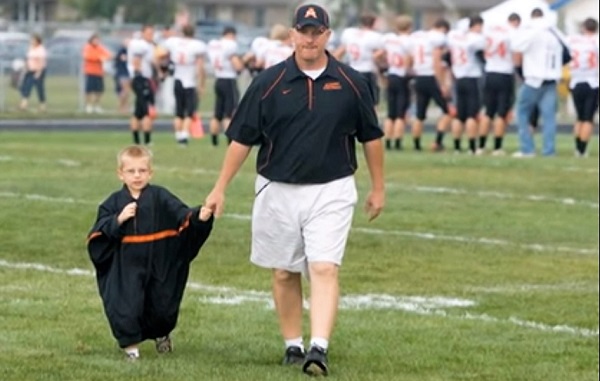
“There’s a picture of him wearing an old headset, and it wasn’t working, but he had it on,” Jeremy Ferman said. “Some reporter took a picture of him and said, ‘Coach Little Ferman making the calls.’ It’s definitely been in his blood.”
As the Fermans were strengthening their father-son bond through football, Bryce also was soaking in lessons of how to be successful on and off the field.
On it, all he knows is winning. Almont has been to the playoffs every year since 2010, including a run to the Division 5 Final in 2019, Bryce’s freshman year.
As a player, he’s won a pair of postseason games – one during his sophomore year when he was called up late in the season, and one as a junior. This year, the Raiders are off to a 3-0 start.
“I learned how a good, sound football team should run,” he said. “I mean, that’s what my whole life has been. I’ve never been around a poorly run or structured team. It’s always just been that every year the playoffs were expected, and that’s how it still is.”
 The greater lesson learned on those sidelines, though, was how to be a leader. It’s something he focused on as he worked to be part of Almont’s leadership team heading into his junior year.
“We had to go through interviews, write letters, all the stuff that really prepares you for jobs and everything,” Bryce said. “What I wrote my letter on is how I saw all these leaders growing up. That’s all I know. That’s all I know how to be.”
Watching his son make the most of those lessons has been a point of pride for Jeremy Ferman.
“To watch him mature, to watch his leadership – as a dad, it’s pretty (darn) special,” he said.
Following his time with Almont, Jeremy Ferman spent a year apiece with Durand and Flint Kearsley before taking over the North Branch program in 2017. Over his first five seasons, Ferman has taken the Broncos to the playoffs four times, including a run to the Regional Final in 2020. Prior to his arrival, the program had three playoff appearances all-time.
“Every year, I expect him to win – I mean, that’s all he does,” Bryce Ferman said. “That’s all he does.”
The benefit of the two now competing in the same conference is that they get to compare notes on other teams. And having grown up around football, Bryce has become quite a student of the game. The two break down film together regularly, and even when their teams or opponents aren’t involved, their viewing experience involves analyzing the action on the field. Jeremy Ferman remarked that he would welcome Bryce on his coaching staff, whenever he’s done playing.
So while this week there will be no talk of strategy, there is normally plenty of it.
“We both played Imlay City already, I played them the week before he did, and he picked my brain a little bit and we watched film together,” Jeremy Ferman said. “I help him out with personnel, and vice versa. He’s helped me out. We talked about Hamtramck (Almont’s Week 2 opponent, which North Branch plays in Week 5), a little bit. … He wants me to be successful, and I want him to be successful, as well.”
The common opponents also give Jeremy Ferman a chance to see his son on film as he’s breaking down other teams.
“I always have my dad hat on, but my coaching hat kind of gets bigger sometimes,” Jeremy Ferman said. “I have a job to do there. But yeah, you’re watching film and he’s playing against them, and I’m peeking. I’m seeing what he’s doing and then I’ll say, ‘Oh crap, that’s right. I’m Dad, but I’m the head coach right now.’”
Friday night’s game won’t be the first time the two have squared off. A year ago, North Branch defeated Almont 20-14 in a hard-fought game.
That doesn’t make this upcoming matchup any easier, of course, but the Fermans are approaching it in the same way.
“I want him to have the best game of his career Friday night, but I want NB to win the game,” Jeremy Ferman said. “That’s the best of both worlds in this situation. … He’s going to run his (tail) off this Friday night, and he’s going to block, and he’s going to be the leader because that’s what is expected of him.”
Added Bryce: “It doesn’t matter who I’m going up against. When we’re out on the field, between the lines, we’re playing football. But from before and after the game, (this week) is a different story. And that’s with a lot of the kids up there, too. I mean, I know a lot of them. But it doesn’t matter when we’re between the lines and we’re playing.”
 Paul Costanzo served as a sportswriter at The Port Huron Times Herald from 2006-15, including three years as lead sportswriter, and prior to that as sports editor at the Hillsdale Daily News from 2005-06. He can be reached at [email protected] with story ideas for Genesee, Lapeer, St. Clair, Sanilac, Huron, Tuscola, Saginaw, Bay, Arenac, Midland and Gladwin counties.
PHOTOS (Top) North Branch coach Jeremy Ferman and Almont junior Bryce Ferman hug after last year’s matchup between their teams. (Middle) Jeremy Ferman, then the coach at Almont, accompanies Bryce across the field about a decade ago. (Photos courtesy of the Ferman family.)