

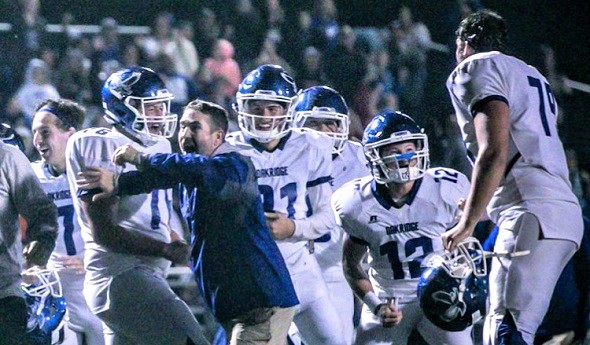
5-0 Oakridge Healing 2018 Heartbreak
October 2, 2019
By Tom Kendra
Special for Second Half
Muskegon Oakridge had an extra reason to celebrate in the rain on Friday night.
 It was about more than just overcoming sloppy conditions and the never-say-die Montague Wildcats in a matchup of No. 1 vs. No. 2 in The Associated Press’ Division 5 rankings. There was more to it than getting a leg up in the West Michigan Conference race with a thrilling 15-13 overtime win.
This was about overcoming two of the most heartbreaking losses imaginable one year ago – and dedicating the win to those who never got a shot at redemption.
“That win was for those seniors from last year,” said Oakridge running back Leroy Quinn, a four-year starter who rushed for both of his team’s touchdowns and a game-high 144 yards, putting him over 4,000 rushing yards for his career. “I love those guys, and I miss them. We all grieved together last year, and now we’re celebrating for them.”
Oakridge led Montague in their 2018 meeting 24-10 with 3:45 remaining, when the Wildcats roared back with two touchdown passes and then a game-winning, 2-point conversion run by Sebastian Archer with no time on the clock for a 25-24 win.
It was the type of gut-wrenching loss which is hard to shake off.
“It’s a helpless feeling,” said Oakridge senior nose guard and offensive tackle Will Scraver. “The only thing you can do is try to forget and focus on the next game.”
Unfortunately, less than one month later, Oakridge would experience an even more bitter defeat. The Eagles’ second loss had finality as it came in the MHSAA District championship game, as they squandered a seemingly safe 35-8 halftime lead in a stunning 40-37 loss to Hudsonville Unity Christian. Adding salt to the wound was having to sit home and watch Unity then roll over its next three opponents en route to the Division 5 championship.
“Sometimes it’s hard to put those losses behind when you have umpteen people coming up to you at the store or the gas station asking you what the heck happened,” said Harger, who is in his ninth year as the Oakridge coach after serving for 16 years under Jack Schugars, the all-time winningest coach in Muskegon-area football history.
“All we can do, as coaches and players, is to learn from our mistakes and to take care of all the little things so that we win those kind of games.”
Oakridge, 5-0 and now No. 1 in Division 5 in the latest Associated Press poll, has been focused and motivated this fall – starting with a tough road test at Belding and most recently with the big revenge win at Montague.
 Oakridge and Montague were scoreless through three quarters and tied, 7-7, after regulation. Quinn scored from three yards out in overtime, then added what proved to be the game-winning 2-point conversion run. Montague answered with a 10-yard pass from Drew Collins to Brennan Schwarz, but Nate Fair and Corey Vanderputte stuffed the 2-point conversion attempt.
Quinn, a 6-foot-1, 233-pound battering ram, has led the way with 465 rushing yards and eight touchdowns. He now has 4,065 career rushing yards, eclipsing David Nelson’s previous school record, and needs five more rushing TDs to pass Jamie Potts for that school mark.
Quinn’s play thus far has been no surprise, but how quickly others have stepped up in the backfield and on the line is the reason why Oakridge is back to No. 1 in the state.
Junior quarterback Ethen Dailey (5-11, 145) has done a solid job managing the Eagles’ offense, and speedy sophomore Vanderputte has emerged as the breakaway threat.
But it was the play of the offensive line, where Fair is the only returning starter, that keyed the win at Montague.
Oakridge, which lined up in a double tight end, full-house backfield look most of the game and threw only two passes (completing none), finished with a 222-70 edge in rushing yards.
“With the tradition out here, there are always new players ready to step up,” said Fair, who also starts at inside linebacker. “We might not have a lot of big names on the line, but we knew we were going to be good.”
Four of the Eagles’ five interior linemen are seniors, with the lone exception sophomore center Derek Driscoll. The guards are seniors Josh Havermans and Jason Pego and the tackles are Fair and Scraver. Starting at tight end are junior Luke Martin and sophomore Ethan Josza.
Harger is not ready to start talking about avenging last year’s playoff loss, as his team still has tough games remaining at North Muskegon in Week 7 and the final two weeks of the regular season at home against Ravenna and first-time opponent Traverse City St. Francis.
Oakridge could also have a couple of new playoff challenges close to home. While the Eagles appear a lock to be in Division 5, they may be joined by resurgent neighbor Muskegon Orchard View (on the bubble of Division 4 and 5) and Montague (on the Division 5 and 6 bubble).
“Our motto this year is: ‘Exceed Expectations’ and, considering the group we lost last year, these guys have done that so far,” said Harger, who is 75-16 and has made the playoffs in each of his first eight years as head coach.
“This is not a real rah-rah group of kids. I think they just love to play football and with the way last year ended, they are thankful for the opportunity to come out and play again.”
 Tom Kendra worked 23 years at The Muskegon Chronicle, including five as assistant sports editor and the final six as sports editor through 2011. E-mail him at [email protected] with story ideas for Muskegon, Oceana, Mason, Lake, Oceola, Mecosta and Newaygo counties.
PHOTOS: (Top) The Oakridge sideline celebrates late in the Eagles' 15-13 overtime win at Montague. (Middle) Oakridge senior Leroy Quinn, who became the school's all-time leading career rusher earlier this season, runs through a big hole into the end zone for a touchdown. (Photos by Tim Reilly.)
1st & Goal: 2026 Week 1 Review
By
Geoff Kimmerly
MHSAA.com senior editor
August 31, 2026
The 2026 Michigan high school football season wasted no time reminding us of the best from a year ago – while hinting as well at what’s potentially to come this fall.
 Two rematches of 2025 MHSAA Finals highlighted the statewide schedule, as Dearborn Divine Child downed Hudsonville Unity Christian again after defeating the Crusaders in last year’s 11-Player Division 4 championship game, and Blanchard Montabella took advantage of another opportunity against Martin, defeating the Clippers after falling to them in 8-Player Division 1 last November.
Those are just two of several results highlighted below as a new season brings as well a new series of “1st & Goal” reports.
Bay & Thumb
HEADLINER Goodrich 10, Frankenmuth 7 Jacob Daggett’s 33-yard field goal with 7:32 remaining was the difference at Michigan Stadium as Goodrich defeated the Eagles by three in their season opener for the second-straight season. The teams were nearly even in total yardage and first downs as well, but the Martians held Frankenmuth scoreless during the second half after the Eagles got on the board first a minute into the second quarter. Click for more from the Saginaw News.
Watch list Cass City 34, Harbor Beach 0 The Red Hawks broke a four-game losing streak against the reigning Division 8 champion Pirates, who hadn’t lost a regular-season game since Week 4 of 2023 and claimed last year’s matchup 42-8.
On the move Grand Blanc 24, Belleville 23 The Bobcats held on with less than a minute to play, stopping the Tigers on a 2-point conversion try to secure the victory. Holly 15, Lapeer 12 Holly is coming off one of its best seasons of late and Lapeer off one of its least successful, but a win over a regular Saginaw Valley League contender is a big deal for the Bronchos regardless. Saginaw Nouvel Catholic Central 25, Allen Park Cabrini 21 The Panthers started with a significant stride as Cabrini reached the Division 8 Semifinals a year ago.
Greater Detroit
HEADLINER Dearborn Divine Child 56, Hudsonville Unity Christian 28 The victor of this rematch of last season’s Division 4 Final was the same, but the margin significantly different after Divine Child won by just a point at Ford Field in November. Drew Sheridan threw five touchdown passes as the Falcons outscored Unity 29-6 during the fourth quarter.
Divine Child domination 💪
No. 10 Divine Child (@DCHS_Football14) came out firing defeating Unity Christian 56-28!
Powered by @CallSam pic.twitter.com/SSKjgEDtYX— STATE CHAMPS! Michigan (@statechampsmich) August 29, 2026
Watch list North Farmington 14, Birmingham Groves 13 The Raiders have reached the playoffs two straight seasons but most recently fell to Groves 36-3 in their 2023 opener – and Groves reached the Division 2 Semifinals the last two years.
On the move Romeo 17, Rochester Adams 10 Adams had defeated Romeo both on opening night and in a Division 1 Regional Final last season, and in their 2024 opener as well. Detroit Central 12, Pontiac Notre Dame Prep 7 Notre Dame Prep is coming off finishing Division 5 runner-up a year ago and kicked off last season with a 55-0 win over the Trail Blazers, who are 1-0 for the first time since 2022 but have strung together 12 straight playoff seasons. Bloomfield Hills Brother Rice 30, Macomb Dakota 20 Brother Rice avenged last season’s 14-10 loss to the Cougars, jumping out to a 17-point halftime lead and holding on in a matchup of top Metro Detroit teams.
Mid-Michigan
HEADLINER Brighton 49, Dexter 7 The Bulldogs avenged last season’s 50-27 opening loss to Dexter, which went on last fall to finish runner-up in Division 2 but also is replacing a pair of record-setting playmakers among a strong group of graduates. Click for more from the Chelsea Sun Times News.
Watch list Middleville Thornapple Kellogg 25, Hastings 16 The Trojans’ broke a five-game opening-night losing streak against Hastings as they look to build on last year’s first playoff appearance this decade.
On the move DeWitt 59, Grand Rapids Kenowa Hills 21 The Panthers showed they’ve got plenty of offense left after last season’s Division 3 title run, and the defense also locked down a Kenowa Hills attack that could put up big numbers this fall. Pewamo-Westphalia 17, North Muskegon 9 The Pirates ran their winning streak against North Muskegon to four, building on last year’s opening-night and Division 7 District Final wins. Lansing Sexton 33, Lansing Everett 0 Sexton ended a two-year opening-night losing streak against the rival Vikings in a matchup of programs that have both reached the playoffs the last three seasons.
Northern Lower Peninsula
HEADLINER Charlevoix 36, East Jordan 30 Charlevoix trailed 22-6 midway through the second quarter before coming all the way back to run its recent winning streak against East Jordan to 11 going back to 2014. Both teams have made the playoffs every season this decade. Click for more from the Petoskey News-Review.
Watch list Alpena 27, Boyne City 8 The Wildcats entered this season with four wins total over the last six seasons and after losing to Boyne City 18-13 in last year’s opener. But they are off and running after downing a Ramblers team that has made the playoffs every season this decade as well.
On the move Kingsley 22, Reed City 0 The reigning Division 6 runner-up Stags added to last year’s season-opening and Regional Final wins over Reed City. Ogemaw Heights 27, Freeland 14 Ogemaw Heights put its best foot forward coming off last season’s Division 5 Semifinals run with an impressive win over a regular Division 4 playoff team in Freeland. Petoskey 35, Croswell-Lexington 8 After just missing making the Division 3 playoffs last season, Petoskey is 1-0 for the fourth-straight thanks to a nice win over another regular playoff qualifier in Croswell-Lexington that’s also looking to get back after missing last fall.
Southeast & Border
HEADLINER Chelsea 29, Harper Woods 20 Chelsea’s Gibby Ichesco ran the first play from scrimmage 72 yards for a touchdown to set the tone as the Bulldogs defeated a Harper Woods team that lost only once last season – in its Division 4 Regional Final to eventual champion Divine Child. Click for more from the Ann Arbor News.
UPSET ALERT🚨
Chelsea ended up on top in their matchup against No. 11 Harper Woods upsetting them 29-20!
Powered by @LawrenceTechU pic.twitter.com/D3NivmqZfU— STATE CHAMPS! Michigan (@statechampsmich) August 28, 2026
Watch list Saline 39, Rockford 12 This wasn’t necessarily a stunner as Saline won last year’s matchup as well, but the margin is notable as the Hornets seek to add to last year’s run to the Division 1 Regional Finals.
On the move Hudson 56, Hanover-Horton 6 The Tigers lost only once last season, in the Division 8 championship game, and this win likely points to good things this fall as the Comets made the Division 7 Regional Finals in 2025. Monroe St. Mary Catholic Central 37, Ottawa Lake Whiteford 28 These two small-school powers met for the first time, and SMCC broke away in part with two kickoff return touchdowns. Clinton 43, Olivet 21 This matchup of annual playoff teams was deadlocked 14-14 at halftime but Clinton pulled away in part by outscoring Olivet 21-7 during the fourth quarter.
Southwest Corridor
HEADLINER St. Joseph 29, Niles 20 These two continued to trade wins for the fourth-straight year, St. Joseph this time avenging its 10-point loss to Niles from a year ago. The Vikings led 14-0 during the second quarter, but Caden LeClear ended up throwing for three touchdowns including two to Nate Schmitt. Click for more from the St. Joseph Herald-Palladium.
Watch list Hartford 60, White Pigeon 0 The numbers alone make this a story; Hartford had been outscored by White Pigeon a combined 108-0 over the last two seasons and didn’t even have a team in 2022 and 2023.
On the move Kalamazoo United 29, Constantine 27 This season opener also was an opener in the Southwestern Athletic Conference and could prove to be one of the most important results in determining the champion this fall. Edwardsburg 55, McBain 20 The Eddies won this opener for the second-straight season as both look to continue playoff streaks and contend for league titles. Paw Paw 13, Big Rapids 7 Paw Paw bounced back from an opening loss to Big Rapids and 0-3 start last year to reach the playoffs and kept things rolling in downing a Cardinals team coming off a Division 4 Regional Finals berth.
Upper Peninsula
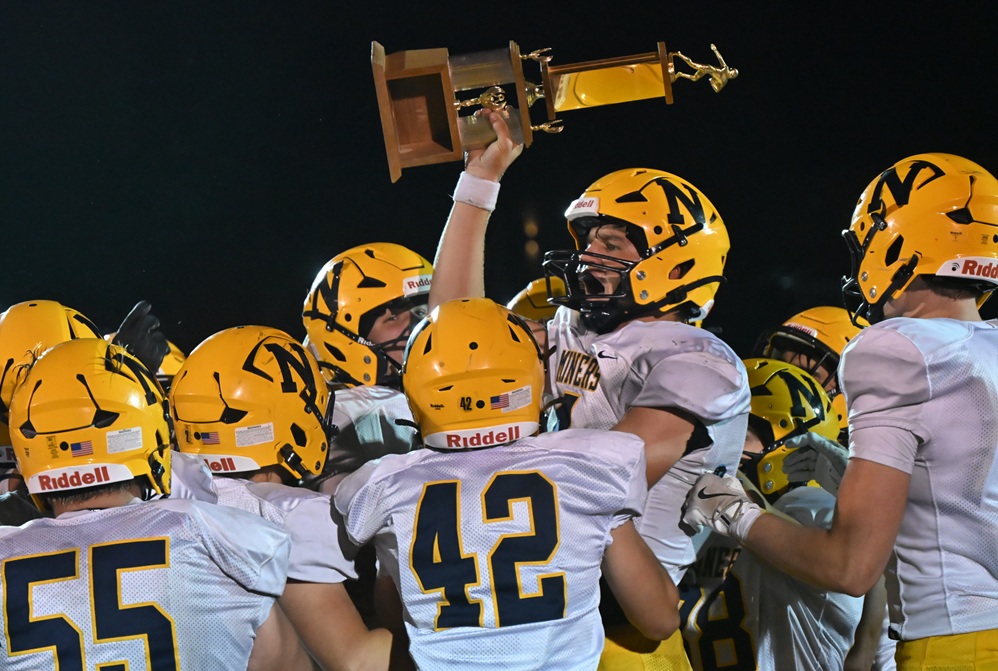
HEADLINER Negaunee 30, Marquette 28 After last season renewing its 130-year rivalry with Marquette with an eight-point win, Negaunee held off a late Sentinels charge this time to extend its all-time lead in the series to 72-60-11. Both are returning playoff teams. Click for more from Upper Michigan’s Source.
Watch list Kingsford 35, Escanaba 16 These are both returning playoff teams as well, and Kingsford avenged its 2025 opening loss to Escanaba with Western Peninsula Athletic Conference Copper play beginning this week.
On the move Calumet 14, Houghton 7 Although Calumet ran its winning streak over the Gremlins to 12, this was a close one and notable after the Copper Kings won the last two meetings by a combined 75-0. L’Anse 54, West Iron County 6 The West-PAC Iron got underway with this one of two league matchups in Week 1 and L’Anse avenging last year’s nine-point league loss. Gladstone 30, Gwinn 6 Gladstone is 1-0 for the first time since 2023, but there’s good news in Gwinn as well as the Modeltowners are back after not playing a year ago.
West Michigan
HEADLINER Grandville 29, Muskegon 28 (OT) Grandville scored first in overtime and Muskegon answered, but the Big Reds faked an extra point to go for the win and the Bulldogs stopped them as these two played to nearly a stalemate for the second-straight year. Grandville also emerged last season with a 44-40 win. Click for more from the Grand Rapids Press.
Watch list East Grand Rapids 27, Lowell 21 After the Red Arrows won big last year, East Grand Rapids stormed back to claim its fourth victory in this series over the last five seasons, with Tripp Hoekstra scoring on a quarterback keeper during the final minute to give the Pioneers their lead.
On the move Byron Center 41, Hudsonville 20 Two of the Grand Rapids area’s best kicked off against each other for the second-straight season, Byron Center avenging a six-point loss from 2025. Grand Rapids West Catholic 48, Grand Rapids Northview 21 The reigning Division 5 champion Falcons lost only once last season, and they avenged that 11-point defeat with this 27-point win. Zeeland West 46, Cedar Springs 20 These two 2025 playoff teams met after two years off, and West built a 10-point halftime lead before pulling away over the final two quarters.
8-Player
HEADLINER Blanchard Montabella 62, Martin 12 After falling to Martin 52-8 in last season’s Division 1 championship game, Montabella started this fall with a statement. The Mustangs didn’t throw a pass but ran for 433 yards with Austin Jensen and Josh Agranbright both rushing for four touchdowns. Click for more from the Mount Pleasant Morning Sun.
Watch list Rudyard 22, Onekama 6 The Bulldogs are seeking their first winning season since 2023 and were off to the right start with this win over a Portagers team coming off two straight trips to the Division 2 Semifinals.
On the move Britton Deerfield 38, Pittsford 20 These two have seen each other on opening night and during the playoffs the last two seasons, and the Patriots are up to 5-0 in those matchups. Morrice 28, Brown City 21 Coming off a season during which its two losses were by a combined eight points, Morrice played another close one but on the winning side against another playoff team from last fall. Grand Rapids Sacred Heart 20, Kingston 16 These two combined to go 18-4 a year ago, and this matchup could pick up even more significance as this season progresses.
MHSAA.com's weekly “1st & Goal” previews and reviews are powered by MI Student Aid, a division within the Department of Lifelong Education, Advancement, and Potential (MiLEAP). MI Student Aid encourages students to pursue postsecondary education by providing access to student financial resources and information. MI Student Aid administers the state’s scholarship and grant programs that help make college Accessible, Affordable and Attainable for you. Click to connect with MI Student Aid and find more information on Facebook and Twitter @mistudentaid.
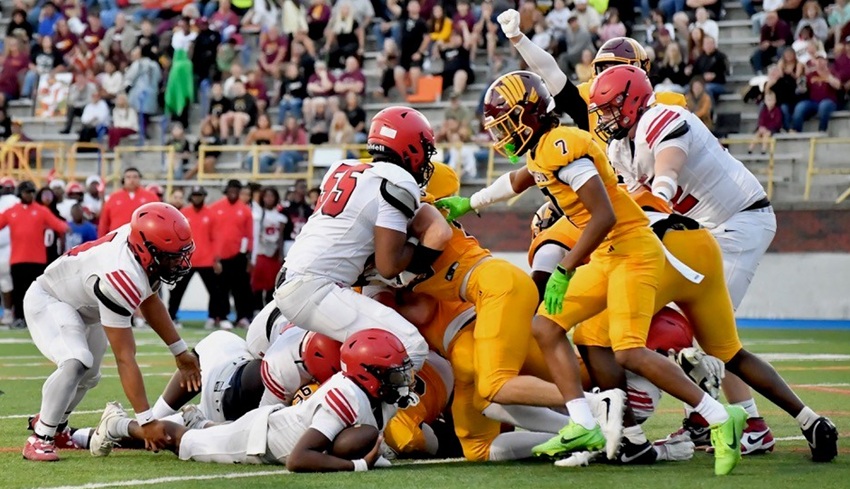
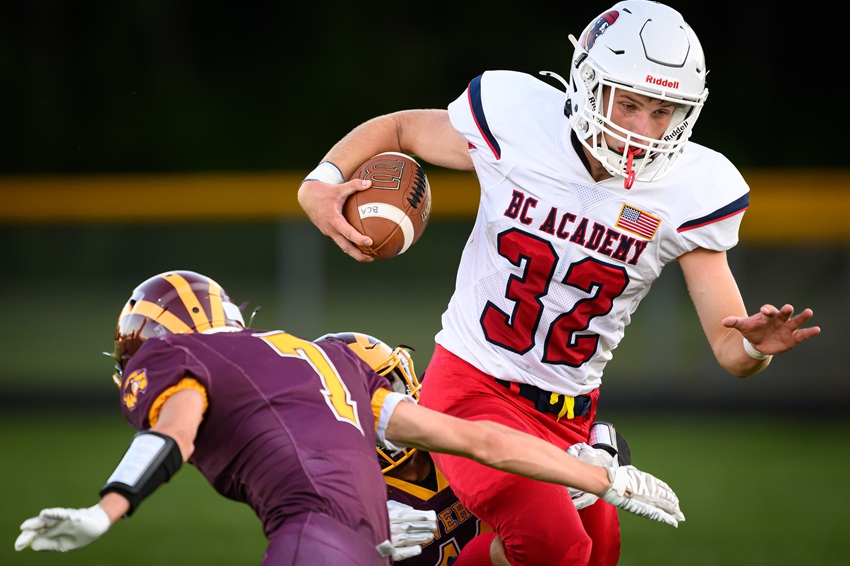
PHOTOS (Top) Negaunee's Kyle Waterman hoists the Jubilee trophy over his head after his team defeated Marquette. (Middle) A Roseville ball carrier stretches for extra yardage during his team’s 28-8 loss to Davison at the Vehicle City Gridiron Classic. (Below) Bay City Academy senior running back Brody Trudell (32) takes on a pair of defenders during his team’s inaugural game on Thursday, a 20-18 loss to Au Gres-Sims. (Negaunee/Marquette photo by Cara Kamps. Davison/Roseville photo by Terry Lyons. Bay City Academy/Au Gres-Sims photo by Kolleth Photo.)