

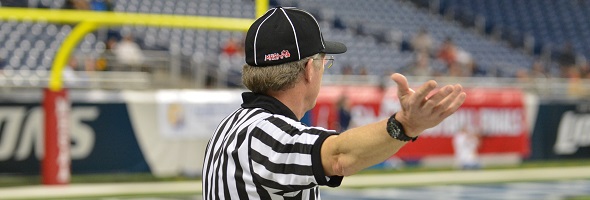
Be the Referee: Automatic 1st Downs
October 29, 2020
This week, MHSAA assistant director Brent Rice explains how high school football rules differ from those at the collegiate and professional levels when it comes to awarding automatic first downs.
Be The Referee is a series of short messages designed to help educate people on the rules of different sports, to help them better understand the art of officiating, and to recruit officials.
Below is this week's segment - Automatic 1st Downs - Listen
Today we are going to talk about one of the biggest rule difference areas in high school football from those rules used in college and pro games, and that deals with automatic first downs.
When watching that college game on Saturday or the pro game on Sunday, all of us know there are several defensive fouls that give the offense an automatic first down. However, under high school rules, the opposite is true most of the time.
The only high school fouls that result in an automatic first down for the offense are the roughing fouls – roughing the passer, the kicker, the holder and the long snapper. Fouls such as defensive pass interference or any other personal foul do not bring an automatic first down under high school rules.
Past editions
10/22: You Make the Call: Illegal Kick - Listen
10/15: Toe the Line on Penalty Kicks - Listen
10/8: Disconcerting Acts - Listen
10/1: Ball Hits Soccer Referee - Listen
9/24: Clocking the Ball from the Shotgun - Listen
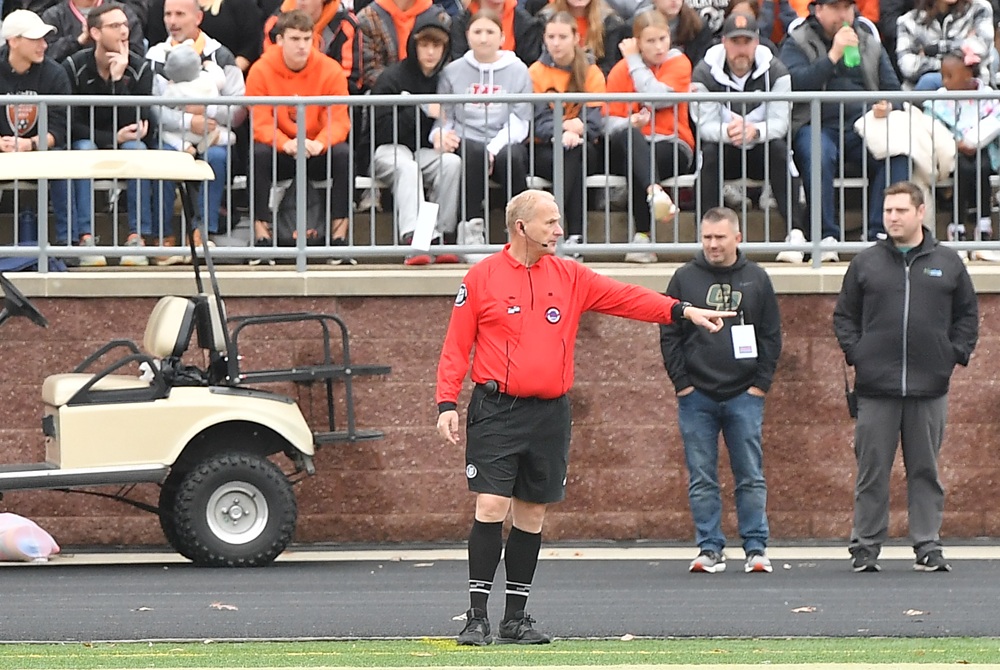
Be the Referee: Soccer Foul After Shot on Goal
By
Paige Winne
MHSAA Marketing & Social Media Coordinator
September 2, 2026
Be The Referee is a series of short messages designed to help educate people on the rules of different sports, to help them better understand the art of officiating, and to recruit officials.
Below is this week's segment – Soccer Foul After Shot on Goal - Listen
We’re on the soccer field today, and the home team has the ball and is on the attack.
The ball makes it around to a forward from the home team, who is on-side and within the penalty area. His shot just misses – going wide for a goal kick.
However, just after the ball crossed the goalline, a player from the away team tackles the home team forward with excessive force.
What’s the call?
Because excessive force was used, it’s a red card for the away team player, which is an automatic ejection. But because it happened after the ball crossed the goalline and not at the time of the shot, it’s still a goal kick for the away team, not a penalty kick for the home team.
Previous 2026-27 editions
Aug. 25: Fumble Out of Bounds - Listen