

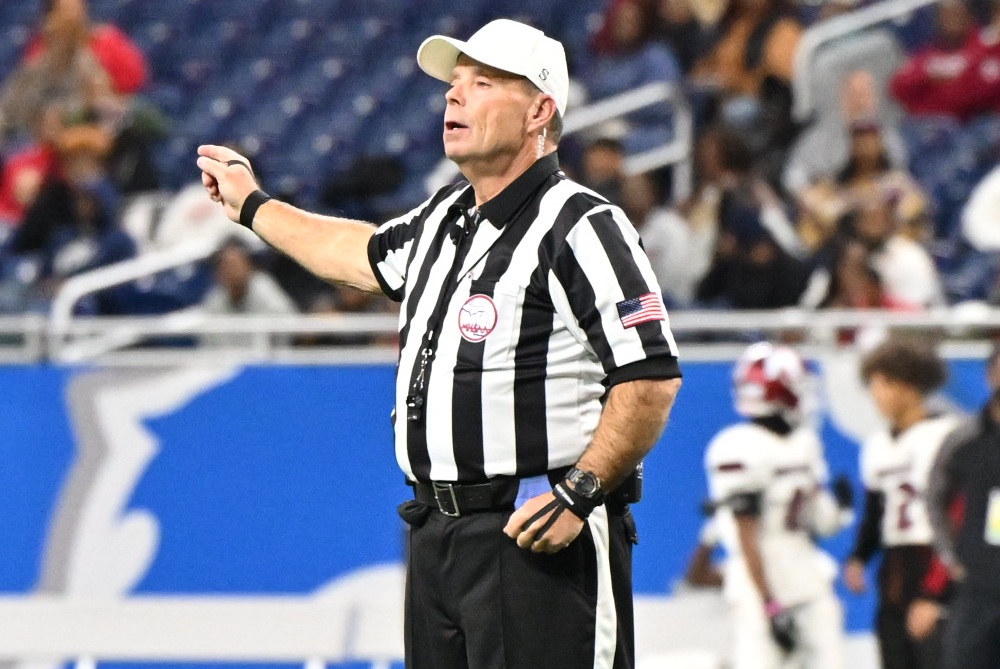
Be the Referee: Defensive Holding
By
Paige Winne
MHSAA Director of Brand Management
October 6, 2026
Be The Referee is a series of short messages designed to help educate people on the rules of different sports, to help them better understand the art of officiating, and to recruit officials.
Below is this week's segment – Defensive Holding - Listen
Team A has the ball on their own 20-yard line and its 4th-and-15. They decide to go for it. The quarterback drops back to pass and is sacked at his 15-yard line, a five-yard loss.
But during the play, Team B – the defense – is flagged for holding an eligible wide receiver.
How is the penalty administered?
- Is it 4th-and-5 from Team A’s 30?
- Is it 4th-and-10 from Team A’s 25?
- Is it 1st-and-10 from Team A’s 30?
- Or is it 1st-and-10 from Team A’s 25?
If you said it is 4th-and-5 from Team A’s 30 – you are correct.
Defensive holding is a 10-yard penalty from the previous spot – which was the 20-yard line. Team A now has possession at the 30, needing to get to the 35 for first down.
Previous 2026-27 editions
Sept. 29: Minimum Number of Volleyball Players - Listen
Sept 22: Soccer Changes - Listen
Sept: 15: Dead Ball Penalty - Listen
Sept. 8: Libero Ejected - Listen
Sept. 1: Soccer Foul After Shot on Goal - Listen
Aug. 25: Fumble Out of Bounds - Listen
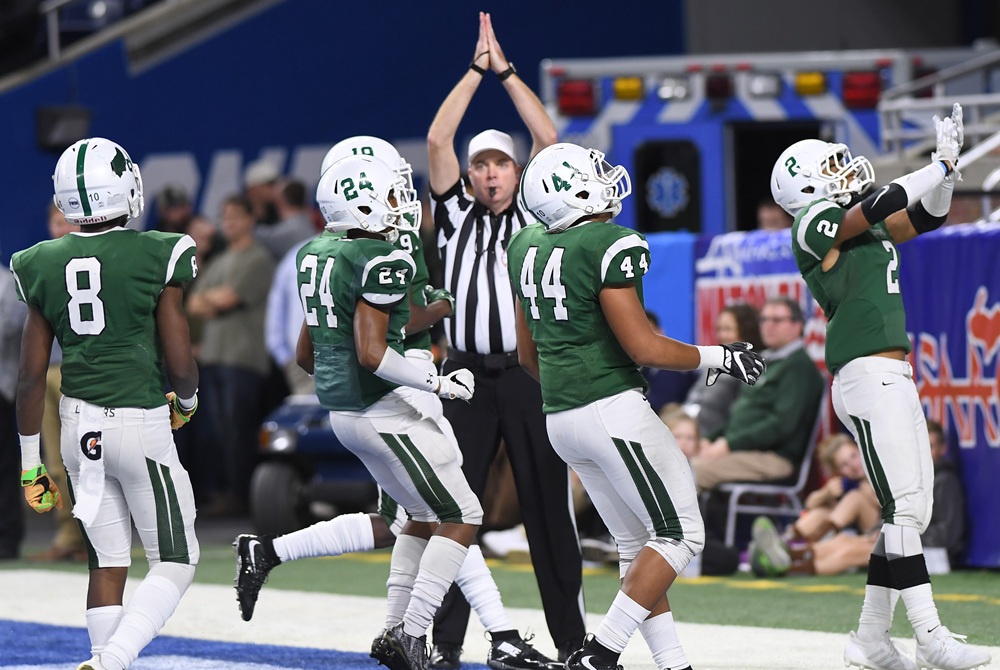
Be the Referee: Safety in Football
By
Paige Winne
MHSAA Director of Brand Management
October 7, 2025
Be The Referee is a series of short messages designed to help educate people on the rules of different sports, to help them better understand the art of officiating, and to recruit officials.
Below is this week's segment – Safety in Football - Listen
We’re on the football field today, and the defense has sacked the quarterback in the offense’s own endzone, resulting in a safety. That’s two points for the defense, but what happens next?
Following a safety, the team that was on offense must kick the ball back to the team that was on defense.
The kicking team can either punt it, or drop kick it, with the line of scrimmage being their own 20-yard line. The kick must occur from within one step of the line of scrimmage. And the receiving team must have all of their players at least 10 yards from the line of scrimmage.
Once it’s kicked, play continues on as normal – much like a punt or kick return. But if a team chooses the drop-kick, they could recover the ball once it travels at least 10 yards.
Previous 2025-26 editions
Sept. 30: Field Hockey Substitution - Listen
Sept 23: Multiple Contacts in Volleyball - Listen
Sept. 16: Soccer Penalty Kick - Listen
Sept. 9: Forward Fumble - Listen
Sept. 2: Field Hockey Basics - Listen
Aug. 26: Golf Ball Bounces Out - Listen