


Be the Referee: Fumble Out of Bounds
By
Paige Winne
MHSAA Director of Brand Management
August 25, 2026
Be The Referee is a series of short messages designed to help educate people on the rules of different sports, to help them better understand the art of officiating, and to recruit officials.
Below is this week's segment – Fumble Out of Bounds - Listen
We are on the football field today, where the offense has the ball on their own 20-yard line. It’s 3rd-and 10. They run a draw play, with the running back gaining nine yards before fumbling at the 29 yard-line.
The fumbled ball goes forward to the 35-yard line before another offensive player recovers. Where should the ball be marked?
Because the ball was recovered in-bounds, it’s first down for the offense at the point of recovery, the 35-yard line.
If the ball had rolled out of bounds at the 35-yard line, before anyone could recover it, it would have been brought back to the spot of the fumble – the 29-yard line – making it 4th-and-1 for the offense.
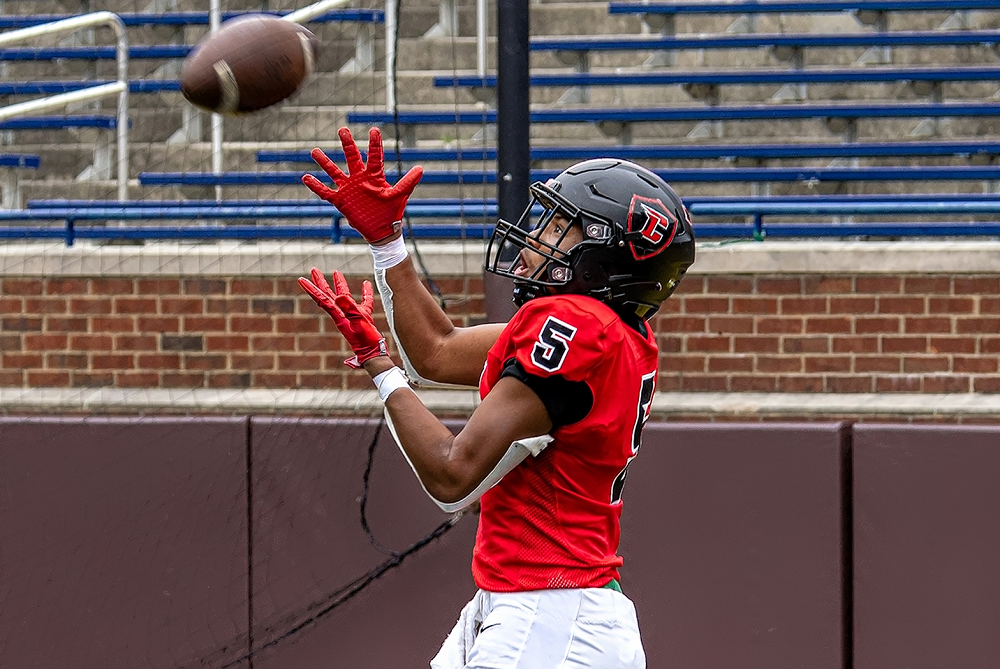
(Photo by Larry Arreguin/Team Arreguin Photos.)
Be the Referee: Football Rules Differences
By
Sam Davis
MHSAA Director of Officials
August 23, 2023
Be The Referee is a series of short messages designed to help educate people on the rules of different sports, to help them better understand the art of officiating, and to recruit officials.
Below is this week's segment – Football Rules Differences - Listen
The first week of the high school football season is always exciting … and sometimes confusing. Here are some – not all – differences between the high school game and what you see on Saturdays and Sundays.
In high school, there is no such thing as an uncatchable ball when judging pass interference. It is a penalty if there is illegal contact, whether the ball is catchable or not.
In overtime, high school teams start with the ball at the 10-year line – not the 25 like in college. And in high school overtime, you are only able to get a first down via penalty. And, at no time is a high school team required to go for two points.
And on extra point plays, if the defense gains possession, the try is over. The defense cannot return the ball for two points.