

Be the Referee: Pass Interference
By
Geoff Kimmerly
MHSAA.com senior editor
September 2, 2021
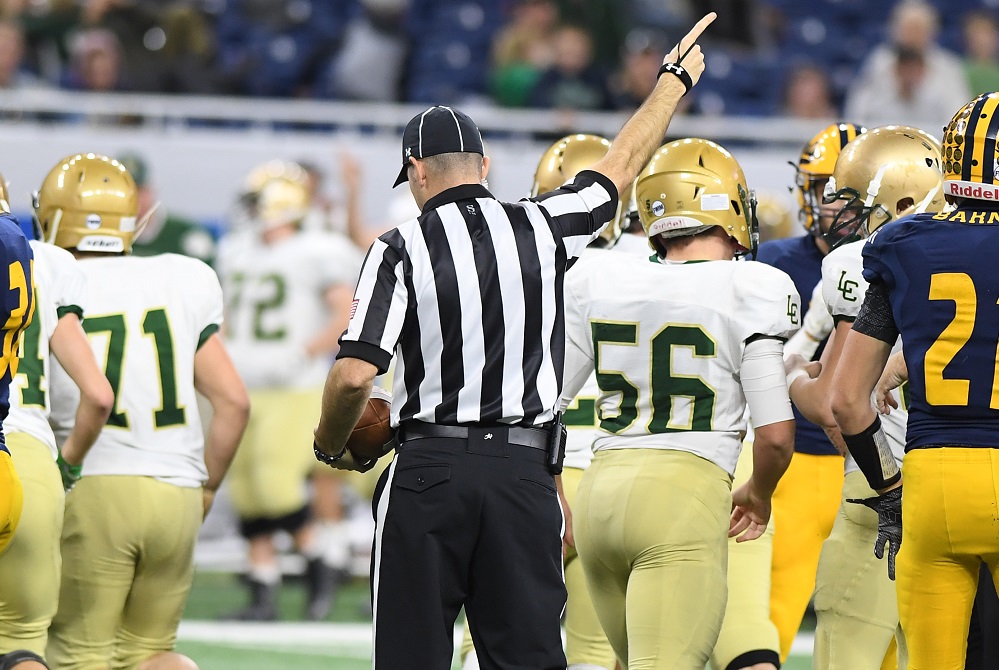
This week, MHSAA officials coordinator Sam Davis explains the differences in high school pass interference rules from those at the college and pro levels.
Be The Referee is a series of short messages designed to help educate people on the rules of different sports, to help them better understand the art of officiating, and to recruit officials.
Below is this week's segment – Pass Interference – Listen
One of the big differences between high school football and the college or pro game is how pass interference is called.
In high school, there is no such thing as an “uncatchable” pass. If there is illegal contact by the defender while the ball is in the air, that’s pass interference, no matter where the pass ultimately ends up.
Also – in high school – a defender can “face guard” as long as no contact is made with the receiver. That is not pass interference, even if the defender does not look back for the ball.
Both of those interpretations differ from the college and pro game. Both (of those) levels have an uncatchable exception, and neither allows for face guarding.
Keep that in mind the next time you think you’ve spotted pass interference at the high school level.
Previous editions
Aug. 26: Protocols and Mechanics – Listen
Longtime Official, Assigner, Association Leader Czech Named 36th Norris Honoree
By
Geoff Kimmerly
MHSAA.com senior editor
April 10, 2026
While a game official’s most recognizable work is done on the field of play, much must be accomplished behind the scenes as well to produce that finished product – and Oak Park’s Robert Czech long has been revered while serving as a game official in four sports, an assigner of officials to work high school and middle school events, and a supporter of his colleagues as co-creator and continuing mentor for one of the state’s largest officials associations.
To celebrate his vast contributions to officiating in Metro Detroit and statewide, Czech will be honored with the 36th Vern L. Norris Leadership in Officiating Award during the MHSAA’s Officials Awards & Alumni Banquet on April 25 in East Lansing.
The Norris Award is presented annually to a veteran official who has been active in a local officials association, has mentored other officials, and has been involved in officials’ education. It is named for Vern L. Norris, who served as executive director of the MHSAA from 1978-86 and was well-respected by officials on the state and national levels. Czech will be honored at Michigan State University’s Kellogg Center along with high school game officials with 20, 30, 40, 45, 50 and 55 years of service.
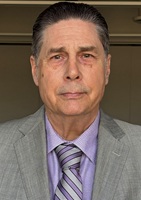 Czech is in his 44th year as an MHSAA-registered official for football, basketball, softball and baseball, and he previously was registered for two years to officiate volleyball as well. He also has assigned officials for more than 35 years, currently doing so for selected sports in the Oakland Activities Association, Lakes Valley Conference, Kensington Lakes Activities Association and Michigan Independent Athletic Conference, and he is a longtime leader with Metro Detroit Athletic Officials (MDAO), an association which counts 650 officials among its membership.
His first games as an official came on the football field in the Detroit Police Athletic League, and from there he followed mentors including past Norris winners Robert Williams and Hugh Jewell into an avocation that has become a life’s work.
“When you’re younger, you can catch a little heat from coaches and players and parents, (and) it’s easy to get down on yourself a little bit – but you just have to stick with it,” said Czech, a retired Detroit police officer. “All the older guys will tell you, hey, it will go away, you’ll be fine and you’ll learn from it, you’ll grow and you’ll feel a lot better. And one good thing about this type of business, or this avocation, you’re running into people from all different walks of life – cops, teachers, insurance people, lawyers, doctors, dentists – there’s all kinds of people who work in this kind of avocation. So you get to see a whole side of life, and that’s good, (with) great relationships and many, many friendships.”
Several of those relationships and friendships also were cultivated with local athletic directors, who approached Czech decades ago requesting help with the time-consuming task of finding officials for their contests. Before assigners, schools contacted individual officials, and individual officials made their own schedules. Czech was among assigning pioneers, and currently places officials on thousands of games every season in the four sports he also officiates.
He also has continued to work on the field at an elite level. He has received 297 MHSAA Tournament assignments over the years, including football, girls and boys basketball playoff games this school year. He’s officiated a combined eight Finals in football and baseball, most recently wearing the white hat for the 2022 11-Player Division 1 Football Final between Belleville and Caledonia.
“Bob Czech personifies leadership in officiating, not only on the field but in the ever-important areas of support, education and recruiting of the next generation of officials,” MHSAA Executive Director Mark Uyl said. “Integrity, fairness, professionalism and commitment are among Bob's qualities referenced by his colleagues, and they also will tell you he is always available to them and always doing his utmost to make sure students receive the best experience.”
Czech graduated from Detroit Benedictine High School in 1974. He earned a bachelor’s degree in criminal justice from University of Detroit Mercy in 1978 and a master’s in political science from Wayne State University in 1983. He has served as a director of the annual Prep Kickoff Classic football series and been active with the Fraternal Order of Police, Friendship Circle of West Bloomfield, Macomb-Oakland Regional Center and March of Dimes. He also has contributed to the Miracle League of Southfield, Forgotten Harvest and City of Oak Park.
Czech received a lifetime achievement award from the Oakland County Athletic Directors Association (OCADA) in 2016 and was inducted into the Catholic High School League (CHSL) Hall of Fame in 2008.
He and his wife Patricia have three adult daughters.
Previous recipients of the Norris Award
1992 – Ted Wilson, East Detroit
1993 – Fred Briggs, Burton
1994 – Joe Brodie, Flat Rock
1995 – Jim Massar, Flint
1996 – Jim Lamoreaux, St. Ignace
1997 – Ken Myllyla, Escanaba
1998 – Blake Hagman, Kalamazoo
1999 – Richard Kalahar, Jackson
2000 – Barb Beckett, Traverse City; Karl Newingham, Bay City
2001 – Herb Lipschultz, Kalamazoo
2002 – Robert Scholie, Hancock
2003 – Ron Nagy, Hazel Park
2004 – Carl Van Heck, Grand Rapids
2005 – Bruce Moss, Alma
2006 – Jeanne Skinner, Grand Rapids
2007 – Terry Wakeley, Grayling
2008 – Will Lynch, Honor
2009 – James Danhoff, Richland
2010 – John Juday Sr., Petoskey
2011 – Robert Williams, Redford
2012 – Lyle Berry, Rockford
2013 – Tom Minter, Okemos
2014 – Hugh R. Jewell, West Bloomfield
2015 – Sam Davis, Lansing
2016 – Linda Hoover, Marshall
2017 – Michael Gentry, Shelby Township
2018 – Jill Baker-Cooley, Big Rapids
2019 – David Buck, St. Joseph
2020 – Hugh Matson, Saginaw
2021 – Lewis Clingman, Grand Rapids
2022 – Pat Hayes, Birmingham
2023 – Chuck D. Walters, Jackson
2024 – Candace Cox, Quincy
2025 – Debby Karabees-Betts, Livonia
High school game officials with 20, 30, 40, 45, 50 and 55 years of service also will be honored at the Officials Awards & Alumni Banquet on April 25. A total of 17 officials with 55 years of service will be honored, as will 32 with 50 years of service, 28 officials with 45 years and 56 officials with 40 years of service. A 30-year award will be presented to 99 officials, and 153 officials with 20 years of experience will be honored.
Also being honored during the Awards & Alumni Banquet is Legacy Program official Owen Rottier, a senior at Grand Ledge High School. He intends to continue his studies toward becoming an emergency medical technician at Lansing Community College after completing multiple courses during his junior and senior years of high school. He already has earned his certified nurse aide (CNA) and patient care technician (PCT) licenses. Rottier has competed in cross country and track & field throughout his high school career and served as team captain of both, and officiated both sports as part of the Legacy Program.
MICHIGAN HIGH SCHOOL ATHLETIC ASSOCIATION
20, 30, 40, 45, 50 & 55-YEAR OFFICIALS
The officials on this list are receiving their 20, 30, 40, 45, 50 and 55-year service awards.
20-YEAR OFFICIALS
Adrian - Cary F. Carrico
Adrian - Casey R. Opsal
Alanson - Dennis C. Hewitt
Albion - Raymond D. Courter
Allegan - Scott T. Jones
Ann Arbor - Richard J. Gilbert
Argyle - Jamie Davison
Auburn Hills - Deborah S. Archer
Augusta - Haig D. Black
Battle Creek - Shikoko H. Cantrell
Bay City - Robert J. Spyhalski
Bay City - Ryan M. Schalk
Bellevue - Paul I. Temple
Belmont - Brian Patterson
Beulah - Roark V. Pargeon
Bloomfield Hills - Kenneth J. Paszkiewicz
Brighton - Shawn P. Waterman
Brownstown - Stephen M. McInchak
Burr Oak - Randy Walls
Burton - Ken W. Carver
Cadillac - James A. Dawson
Caledonia - Amber J. Traves-Sterkenburg
Canton - Michael J. Burke
Canton - Mark A. Collins
Capac - Brent J. Boers
Caro - Brian V. Newcomb
Cassopolis - Brian A. Kuemin
Cedar Springs - Randy J. Thiel
Cement City - Thomas E. Cameron
Channing - Cory M. Roell
Chesterfield - Thomas V. Michno
Clarkston - Yalda P. Peera
Clinton Township - Christopher E. Dalida
Clinton Township - Elizabeth A. Gulick
Coldwater - Scott Heckman
Coloma - Anthony Bertuca
Commerce Township - David R. Eberline
Detroit - Ozzie S. Ashley
DeWitt - Chris B. McNeilly
Dowagiac - Anthony J. Saviano
Durand - Christopher P. Goodrich
Eastpointe - Matthew W. Cowan
Erie - Joshua Sweigert
Farmington Hills - Tia M. Stanley
Fennville - Bruce R. Klosner
Flushing - Linda M. Bishop
Fowlerville - Cynthia L. Champagne
Frankenmuth - Brent A. Shoemate
Frankfort - William C. Henning
Fraser - Shemek P. Pryszczewski
Freeland - Michael R. Williams
Fremont - Brian Peets
Gladwin - Patrick A. Peters
Grand Blanc - Richard E. Brochu
Grand Haven - James R. Corgan
Grand Ledge - DeLee M. Dankenbring
Grand Rapids - Otto N. Brannum
Grand Rapids - Diana G. Dildine
Grand Rapids - Luke C. Griemsman
Grand Rapids - Daniel R. Heitzman
Grand Rapids - Steven D. Lee
Grand Rapids - Terry C. Seely
Grand Rapids - Kevin R. Weber
Grand Rapids - David W. Running
Grandville - George M. Dillard
Grass Lake - Terry J. Sullivan
Grass Lake - Bill T. Walker
Grosse Ile - Denise Smith
Grosse Pointe Woods - Russell Hapanowicz
Hancock - Steve Aho
Harbor Beach - Brian M. Fuller
Hart - Kayla J. Dennert
Hawks - Glenn Budnick
Hermansville - Kevin J. Bellefeuil
Hesperia - Douglas W. Baird
Holland - Anne M. Huizinga
Holland - Jame Phonechanthasone
Hopkins - Chad O. Burch
Hudsonville - Joseph J. Amante
Hudsonville - Kurt L. Berens
Hudsonville - David A. Bott
Imlay City - Allen L. Hibbler
Ionia - Robert S. Sykes
Iron Mountain - Dean A. Lefebvre
Jackson - Craig Dreyer
Jackson - Jeffery D. Oliver
Jackson - Matthew L. Tuttle
Jenison - Steven J. Meyer
Jerome - Chris Zombor
Kalamazoo - Terry L. Fields
Kalamazoo - Robert H. Flach
Kalamazoo - Dennis Keith
Kalamazoo - Alex D. Vigh
Kalamazoo - Jerome C. Jones
Kentwood - Rodney S. Suggs
Kingsford - Lisa J. Harry
Lakeview - Tim G. Rasmussen
Livonia - Aaron J. Rumberger
Livonia - Sean R. Williams
Macomb - Steven A. Livingston
Madison Heights - Tom A. Turczyn
Maple City - Amede A. DeCruydt
Mason - Johanna Andersen
Menominee - Robert J. Villas
Midland - Greg S. Pattinson
Monroe - Christopher T. Westover
Muskegon - Ben Hylland
Muskegon - Scott A. Sikkenga
Muskegon - Donald Snider
Muskegon - Cameron Carr
Onaway - Kymberli A. Wregglesworth
Otisville - Mark D. McDowell
Otsego - Kevin L. Ordway
Parma - Steven T. Walker
Petoskey - Shaun Lamp
Portage - Jeremy Lassiter
Prescott - Anton W. Gersten
Quincy - Michael A. Siegel
Redford - Omar I. Sanders
Rochester Hills - Matt Lewis
Rochester Hills - Derrick A. Roman
Saginaw - Mark A. Kinnett
Sandusky - Nathan E. Rose
South Lyon - John P. Evans
Spring Lake - Paul Richards
St Clair Shores - Michael Billiu
St Joseph - Bruce L. Bittenbender
St Joseph - Kevin P. Boyle
St. Clair Shores - Anthony P. Djurasaj
Sterling Heights - Nicole L. Toth
Sturgis - Brady L. Driver
Swartz Creek - Michael A. McLaughlin
Tecumseh - Brece M. Clark
Tecumseh - John D. Craig
Traverse City - Matthew J. Ameel
Trenton - Steve T. Seward
Troy - Joseph H. Amann
Troy - Paul W. Boehms
Utica - Tom Szynski
Walled Lake - John R. Lyons
Warren - James N. Leshan
Waterford - Richard D. Crouse
Waterford - Deno G. Pappas
Waterford - Robert Trumble
Westland - Jack D. Profitt
Westland - Roger A. Schmittling
White Lake - Michael B. Andrews
Whitehall - Ace J. Covey
Williamston - Giles J. Brereton
Ypsilanti - William M. Nuttall
Ypsilanti - Demetrius L. Owens
Ypsilanti - Steven A. Vinson
Ypsilanti - Ron C. Blevins
30-YEAR OFFICIALS
Acme - Randall S. Smith
Allendale - Brian G. Haraburda
Alpena - Shawn T. Ballor
Ann Arbor - Thomas W. Richards
Bark River - Joseph L. Richer
Bay City - Frank W. Sniecinski
Big Rapids - Timothy J. Leyder
Big Rapids - Gregg S. Sanders
Big Rapids - David A. Scott
Birch Run - Stanley M. Krajkowski
Bowling Green, Ohio - Jim Evans
Boyne Falls - David M. Kruskie
Brimley - Steven C. Wilson
Bronson - Jayne A. Sabaitis
Brown City - Christine J. Lee
Byron Center - Curt A. Stuck
Canton - Andrew B. Calvetti
Chesterfield - Gregory Blick
Clarkston - Craig H. Zinser
Davison - Bryan K. Illig
Dearborn Heights - William J. Stewart
Detroit - Thomas B. Harris
East Tawas - David C. Thunberg
Essexville - James W. Niswander
Fishers, Ind. - Martin K. Spees
Flint - Ronald S. Thomas
Fowlerville - James K. Jonas
Fremont - David C. Steele
Galesburg - Steve C. Pearce
Garden City - Robert E. Phillips
Gaylord - James F. Vanderveer
Grand Blanc - James J. Blakley Jr.
Grand Blanc - Greg D. Hamilton
Grand Haven - Frank E. Roder
Grand Rapids - Wallace L. Campbell
Grandville - John P. Kievit
Greenville - Paul R. Richardson
Hillman - David M. Wcisel Sr.
Holland - Douglas J. Smith
Houghton Lake - Louise C. Hofer
Hudsonville - Daniel N. Hendrickson
Hudsonville - David L. Weick
Inkster - Ed J. Mingo
Jackson - Chris R. Dauterman
Jackson - Willie N. Godfrey Jr.
Jackson - Troy D. Miller
Kawkawlin - James J. Metz
Kentwood - Rebecca L. Cajka
Lathrup Village - Crathman G. Stephens
Lexington - William E. Cayce
Livonia - Paul J. Mardeusz
Marquette - George D. Pond Jr.
Marshall - Rodney S. Dawson
Midland - Richard E. Campbell Jr.
Mount Pleasant - Douglas A. Downhour
Muskegon - Ollie L. Sandifer Jr.
Muskegon - Johnnie F. Tanner Sr.
New Baltimore - Rodriquez A. Lackey
Novi - Charles H. Edwards
Novi - Lonnie C. Erickson
Otsego - Brian W. Bonnell
Owosso - Robert J. Pumford
Peck - Jeff Kosal
Perry - Jake T. Baumgartner
Pinckney - James E. Chapman
Plymouth - Brent D. Albrecht
Quinnesec - Jerry W. Sanders
Redford - Arnold R. Rambus
Romulus - James D. Hinojosa
Romulus - Michael J. Jackson
Roseville - Steven M. Garbarino
Saginaw - Joe F. Schimpf
Saginaw - Monte A. Steward
Saginaw - Roger L. Swanson
Saginaw - Henry Velasquez
Shelby Township - Shana L. Poll
South Lyon - Patrick G. Bracco
Southgate - Byron J. Beattie
St. Joseph - Robert C. Banasik
Stanton - Douglas W. Mascho
Stanton - Edmund F. Phillipson Jr.
Sterling Heights - Robert L. Fort Jr.
Sterling Heights - Bret Turner
Sylvania, Ohio - John F. Blessing
Tecumseh - Jamie D. Mossburg
Trenton - David H. Mossoian
Walker - Wayne R. Bentley
Walker - Jess W. Hollenbeck II
Warren - Stanley L. Wright
Waterford - Michael D. Morgan
Wayland - Thomas J. Hudson
White Lake - Becky L. Lioi
Woodhaven - Frank L. Vilardi
Wyandotte - Allen C. Hall
Wyandotte - Larry J. Martin
Wyandotte - Robert J. Szczechowski
Wyoming - Robert D. Dabakey
Ypsilanti - Daniel L. Cobello
Ypsilanti - Mary F. Gray
40-YEAR OFFICIALS
Ada - Brian J. Todey
Alma - Chris A. Taylor
Alvordton, Ohio - Max A. Smeltzer
Arden - Christopher B. Haack
Auburn - Philip G. Ouillette
Bad Axe - Dale J. Grifka
Bannister - Bryon P. Taylor
Battle Creek - Carl P. Olson
Brighton - Carolyn I. Richards
Byron Center - Curt Johnson
Cheboygan - Matt C. Redmond
Chesterfield - Marty McCabe
Coldwater - Randolph E. Spangler
Fenton - Lisa M. McKenney
Gobles - Steven L. Grybus
Grand Ledge - Todd H. Compton
Grand Rapids - Jeffrey P. Kirchhoff
Grand Rapids - Stephen J. VanHammen
Grawn - Thomas M. Hallead
Grayling - Scott T. Gabriel
Hessel - Joseph E. Baker
Holt - Mark D. Coscarella
Honor - Richard L. Zych
Houghton - William J. O'Connor
Iron Mountain - John E. Hogberg
Iron Mountain - Lawrence J. Ross
Kalamazoo - Charles E. Parker
Kentwood - Susan J. Barthold
Lapeer - Stephen R. Fox
Lathrup Village - Dale K. Harris
Manistique - Charles A. Richey
Marshall - Brad Hall
Menominee - Michael F. Andre
Midland - Donald A. Rose Jr.
Mio - Luke D. Houlton
Munising - Dee Jay Paquette
Myrtle Beach, S.C. - Scott D. Dobie
Owosso - Eugene S. Davis
Pentwater - William C. Bainton
Pentwater - Brett A. Spalding
Pewamo - Bruce G. Nurenberg
Redford - Mark A. Sleboda
Reed City - Sharon R. Lucey
Romulus - Fred M. Waybrant
Saginaw - Luis H. Paredes
Sandusky - Brian P. Jones
Sheridan - Michael T. Myers
Southgate - David J. Weidenbach
Sterling Heights - Armando Melchiorre
Sumner - Rollie L. Carman
Sylvania, Ohio - Daniel J. Miller
Union Pier - Joseph J. Gonzales
Warren - Charles "Tony" Pankowski
Westland - Stephen L. Patterson
Westland - Roger R. Provey Jr.
Whitehall - Dominic E. Pulaski
45-YEAR OFFICIALS
Allen Park - James C. Bales
Battle Creek - David L. Eubank
Blissfield - Christopher L. Bates
Byron Center - Rick S. Hazel
Canton - Jeanne L. Martin
Constantine - Marge Caid
Deerfield - William P. Gomoluch
Evart - Tom W. Adams
Grand Blanc - Curtis L. Williams
Grand Rapids - Thomas D. Shearer
Grand Rapids - Jeffrey A. Wierzbicki
Grosse Pointe Park - Kelvin W. Wise
Ionia - Mike A. Fuller
Iron Mountain - John N. Meyer
Lansing - Michael R. Conlin
Livonia - Brian R. Dinsmore
Madison Heights - Wilford J. Laveirge
Mayville - Clare L. Kreger
Muskegon - Onesiphorus B. Burrel Sr.
New Hudson - Dennis E. Evans
Norton Shores - Randall S. Martinus
Okemos - Michael J. Maisner
Okemos - Lee Rodgers
Plymouth - William R. Baumgart
Rogers City - Roger M. Wenzel
Sterling Heights - Philip J. Lieblang
Wixom - Patrick L. Beagle
Zeeland - Linda S. Schmidt
50-YEAR OFFICIALS
Baraga - James L. Holm
Bowling Green, Ohio - Thomas L. Ford
Cadillac - William J. Allen
Caledonia - George B. Watterson
Fairgrove - Jerry L. Lasceski
Flat Rock - Robert J. Brodie
Freeland - Kim D. Heisler
Gaylord - Tom T. Johnson
Gaylord - Kevin M. Leary
Gladwin - Michael E. Steinkraus
Grand Rapids - Patricia A. Treman
Hancock - John D. Vaara
Hermansville - Robert J. Maule
Highland - Evan H. Lehto
Holland - David W. Smits
Jackson - Ardis Jill Conat
Lansing - Karen L. Yanna
Livonia - Laura J. Alves
Mattawan - William L. Post
McMillan - Cliff J. Fossitt
Michigan Center - Daniel C. Bentschneider
Northville - Edward K. Gabrys
Norton Shores - Duane A. VandenHeuvel
Oconto, Wis. - Peter C. Pericolosi
Portage - Frank S. Gawkowski
Posen - Kenneth Wozniak
Saginaw - John C. Flukes
Saginaw - John E. Oczepek
Swartz Creek - David J. Sutton
Three Rivers - Kim D. Losik
Traverse City - Michael J. Muldowney
Wyoming - Sandra K. Noto
55-YEAR OFFICIALS
Battle Creek - Richard L. Randle
Caro - John H. Amend
Clio - Anthony J. Leonardo
Comstock Park - Riley S. Swinehart
Delton - Gregory W. Nikitas
Grand Rapids - James J. Aalderink
Holt - John S. Malatinsky
Jackson - Ozzie L. Hashley
Macomb - Chet W. Boss
Marcellus - Deborah L. Schug
Mesick - Paul G. Williams
Prudenville - Robert J. Studer
Rochester Hills - William Upina
Royal Oak - Mike Luttenberger
Spring Lake - Joseph G. Popiel
Tecumseh - Nancy A. Hebert
Traverse City - Collette C. Hallberg
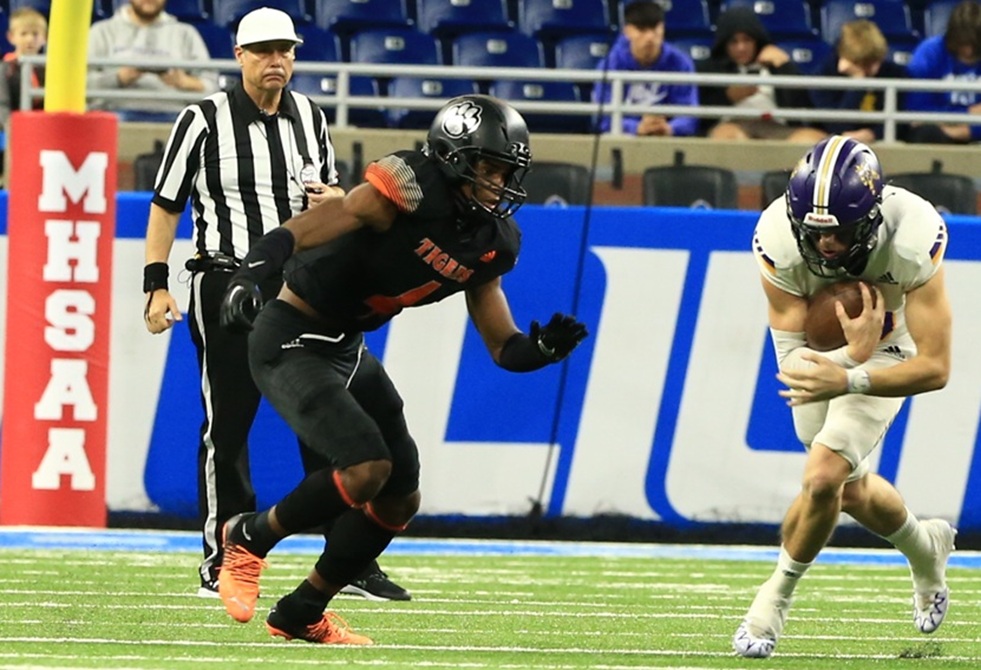
PHOTO Official Bob Czech, top left, monitors the action during the 2022 11-Player Division 1 Football Final at Ford Field.