


Committees Fail Critical Issues
June 7, 2013
Typically, each sport committee meets once each year for three to five hours, during which time it considers proposals that come from schools, leagues and the state’s coaches association for the sport; and the proposals most often deal with allowing more regular-season events and more qualifiers to the MHSAA postseason tournament.
Occasionally there is a proposal that might improve sportsmanship. But much more often the proposals would increase conflicts between academics and athletics and/or strain overstressed local budgets. And almost never is there a proposal that would address the health and safety of participants (the Wrestling Committee has been an occasional exception and the Competitive Cheer Committee is a routine exception).
While coaches associations must shoulder some of the blame because they’ve brought MHSAA committees “trivial” topics, at least in comparison to the tougher health and safety topics, much of the cause of MHSAA committee ineffectiveness is that the committees don’t meet long enough or often enough to research serious problems and develop well-thought-out solutions. That is forgivable because it is difficult to get commitments from busy people all across Michigan to be absent from their regular jobs and travel dozens or even hundreds of miles, and to do so multiple times each year – which is what it takes to more fully understand complex problems and more carefully construct solutions. Meetings have to be few and they have to be efficient.
However, facing the worst publicity football has seen since the mid-1970s, we knew we had to supplement the football committee process. We did so by appointing a special Football Task Force of optimum size and experienced, representative makeup to meet on however many occasions are necessary during 2013 to accomplish three purposes:
- Review practice policies to improve acclimatization of players and reduce head trauma.
- Review competition rules to reduce head trauma and the frequency of the sport’s most injurious game situations.
- Develop promotions that extol the value of football to students, schools and communities and the safety record of school-based football.
The promotional efforts have begun to be rolled out; game rule modifications are being investigated; and four proposals for changing football practice policies have been prepared. They will be the topic of our next posting.
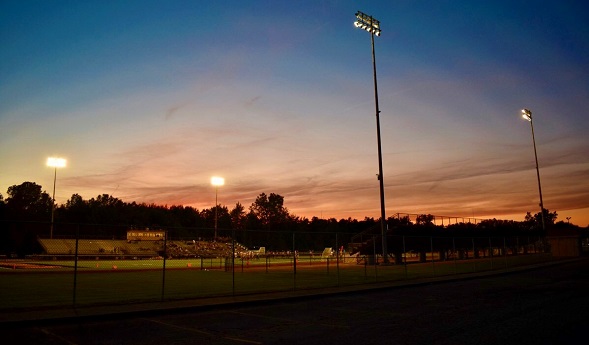
Football to Move to Spring for 2020-21
August 14, 2020
By Geoff Kimmerly
Second Half editor
The Representative Council of the Michigan High School Athletic Association today announced it will move the 2020 Fall football season to Spring 2021, due to football’s higher risk for spreading COVID-19, with the rest of Fall sports proceeding as scheduled.
The football season switch was made based on consultation with state health department officials and after surveying MHSAA member high schools on their progress and preferences after the first four days of practice. Football is considered a high-risk sport for potential spread of the COVID-19 virus because of its level of player-to-player contact.
A total of 34,219 student-athletes played football at MHSAA member schools during the 2019 season. A total of 520 11-player teams and 83 8-player teams were anticipated during late summer to play football this fall season.
“At the end of the day, we did everything we could to find a path forward for football this fall,” MHSAA Executive Director Mark Uyl said. “But while continuing to connect with the Governor’s office, state health department officials, our member schools’ personnel and the Council, there is just too much uncertainty and too many unknowns to play football this fall.
“No one is willing to take the risk of COVID being passed on because of a high-risk sport. Decisions have to be made on our other sports as well, but none of those carry the same close, consistent, and face-to-face contact as football.”
The MHSAA announced July 17 it would proceed this school year with its traditional calendar beginning with Fall sports but with enhanced precautions to help limit the spread of COVID-19. At that time, the MHSAA also stated it would move football, and other Fall sports seasons, to the spring of 2021 if they were deemed unsafe to proceed when originally scheduled. Football was allowed to begin practice, with helmets but no other padding, on Aug. 10.
Volleyball and soccer are considered moderate-risk for virus spread, while cross country, golf, tennis and swimming & diving are considered low-risk. Cross Country, Lower Peninsula girls golf and boys tennis and Upper Peninsula girls tennis began practice Aug. 12; golf and tennis teams may begin competing Aug. 19, and cross country teams may begin competing Aug. 21.
Volleyball, boys soccer and Lower Peninsula girls swimming & diving also began practice Aug. 12, and competition guidelines for those sports will be announced Aug. 19. Schools in regions under Phase 4 of the MI Safe Start Plan remain unable to play volleyball or swim/dive indoors due to governmental restrictions. Further guidance from Governor Gretchen Whitmer’s office is expected in the near future regarding these indoor facilities.
Details for the spring football season including a specific schedule and format will be announced over the next few months. The MHSAA will be working to limit overlap of spring football and the traditional Spring sport seasons.
“While this is tremendously disappointing, we will do everything possible to provide the best possible experience in the spring while adding football into the calendar,” Uyl said.
The MHSAA is a private, not-for-profit corporation of voluntary membership by more than 1,500 public and private senior high schools and junior high/middle schools which exists to develop common rules for athletic eligibility and competition. No government funds or tax dollars support the MHSAA, which was the first such association nationally to not accept membership dues or tournament entry fees from schools. Member schools which enforce these rules are permitted to participate in MHSAA tournaments, which attract more than 1.4 million spectators each year.
PHOTO by Robert Batzloff.