

Drive for Detroit: Week 4 in Review
September 24, 2013
By Geoff Kimmerly
Second Half editor
Just when we thought we'd figured out a few things about how this MHSAA football season might unfold ... we found out we don't know that much yet.
Upsets ruled Week 4. Of course, the teams that won probably don't see their victories that way. And in two months, some of what we consider surprises now might not be considered stunners any longer.
But check out how the unexpected played a major role as we began the second third of this fall's slate.
West Michigan
Lowell 31, Muskegon 20
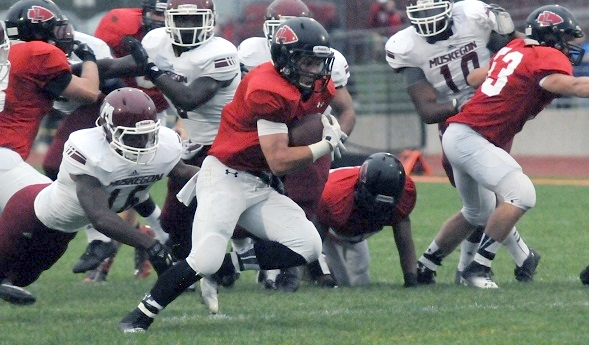
Many were so caught up in Muskegon’s 45-0 win over Rockford two weeks ago that they likely didn’t give Lowell (4-0) a shot at catching the Big Reds (3-1). But Kyler Shurlow is fast becoming the next Red Arrows quarterback star, and he came up big in his team’s biggest game of the regular season. Click to read more from the Grand Rapids Press.
Also noted:
Comstock Park 27, Allendale 25: The Falcons (3-1) have pushed Comstock Park to the brink the last two seasons, but the Panthers (4-0) survived again after a five-point win in their 2012 matchup.
Muskegon Reeths-Puffer 14, East Kentwood 7: Reeths-Puffer (3-1) hasn’t made the playoffs since 2007, but is ascending after avenging last season’s 35-points loss to East Kentwood (2-2) to also equal its number of wins for the entire season.
Zeeland East 27, Grand Rapids Forest Hills Central 25: The undefeated Chix (4-0) had to survive a second straight game against Forest Hills Central (2-2) decided by four points or fewer.
Reed City 22, Newaygo 14: Make that 24 straight regular-season wins for the Coyotes (4-0), who by beating solid Newaygo (3-1) look even better to push it to 29.
Upper Peninsula
Escanaba 35, Marquette 14
This one was not just significant but probably shocking to fans who pay close attention to Upper Peninsula’s biggest schools. Escanaba entered 0-3 and Marquette 3-0, but the Eskymos made it three straight over the Redmen. Click to read more from the Escanaba Daily Press.
Also noted:
L'Anse 21, Hancock 20: The Purple Hornets (3-1) have one of the highest playoff point averages of any team expected to make the Division 8 playoffs, but Hancock (1-3) must win out to gain an automatic bid.
Negaunee 36, Iron Mountain 8: The Miners are 4-0 for the second straight season, but the Mountaineers (1-3) face their toughest start since 1990.
Norway 36, Manistique 34: Norway (2-2) is a win from equaling last season’s total after beating a 2012 playoff qualifier in Manistique (0-4).
Lake Linden-Hubbell 22, Bessemer 20: The Lakes (2-2) earned a shot at staying in the Great Western Conference title hunt, while dealing a blow to repeat hopes of Bessemer (3-1).
Mid-Michigan
Holt 31, Lansing Everett 21
Just when it looked like Holt (2-2) wouldn’t factor in the Capital Area Activities Conference Blue race this season, the Rams beat the reigning champion and presumed favorite by scoring more points in one game than Everett (3-1) had given up in its other three games combined. Click to read more from the Lansing State Journal.
Also noted:
Fowler 42, Bath 22: The Eagles (3-1) have outscored three opponents by a combined 106-50 since falling 40-0 to Mendon on opening night; Fowler also has beaten the Bees (2-2) in 24 straight.
Pinckney 20, Howell 10: Seeking their first winning record and playoff berth since 2001, the Pirates (3-1) are halfway there and off to their best start since that season; Howell remains in good shape at 3-1 as well.
Eaton Rapids 17, Jackson Northwest 7: The Greyhounds (3-1) have tied their most wins for a season since 1997, although Northwest (2-2) can’t be too frustrated with its most victories for a season since 2009.
Springport 18, Reading 13: The Spartans (3-1) lent Big 8 Conference leaders Jonesville and Homer a hand by downing last season’s champ, Reading (2-2).
Lower Up North
Standish-Sterling 27, Whittemore-Prescott 20
Standish-Sterling (4-0) continued its best start since 2008 with a late stand as Whittemore-Prescott (3-1) also played to remain perfect on the season. The Cardinals had won both games since the series was restarted after previously coming to close after the 1985 season. Click to read more from the Bay City Times.
Also noted:
Kinglsey 31, Frankfort 20: The Stags (3-1) set up next week’s rematch with reigning Northwest Conference champion Maple City Glen Lake by edging Frankfort (2-2) for the third time in four seasons.
Cheboygan 42, Ludington 14: The Chiefs moved to 3-1 for the second straight season by dealing a first loss this fall to Ludington (3-1), which remains off to its best start since 2004.
Mancelona 22, Central Lake 18: These teams combined to go 17-5 in 2012, and Mancelona (2-2) got back on the right foot by also pushing Central Lake to 2-2 and claiming the M-88 Trophy.
Traverse City St. Francis 34, Grayling 14: The Gladiators (3-1) ended Grayling’s 12-game regular-season winning streak and made it 10 of 11 over the Vikings (3-1).
Southwest and Border
Parchment 44, Constantine 26
Parchment has had only one playoff season over the last decade and not a lot of wins to be this excited about. The Panthers (2-2) hadn’t beaten Constantine (2-2) since the latter joined the Kalamazoo Valley Association in 2008, but Clay Wilkey averaged more than 20 yards per carry in leading Parchment to the big upset. Read more from the Kalamazoo Gazette.
Also noted:
Portage Central 38, Stevensville Lakeshore 28: This makes Portage Central (4-0) one the favorites in the Southwestern Michigan Activities Conference West, while leaving Lakeshore (2-2) to battle back from its worst start since 2004.
St. Joseph 17, Portage Northern 10: St. Joseph (4-0) is that other favorite in the SMAC West, thanks to a defense that is giving up 12 points per game and held the Huskies (3-1) to a season low.
Niles Brandywine 26, Bridgman 18: The Bobcats (4-0) made the playoffs last season for the first time since 2002 and haven’t slowed down, although Bridgman (2-2) gave them their toughest game to date.
Plainwell 44, Otsego 17: The Trojans (4-0) just keep rolling despite playing three 2012 playoff teams over their first four games; Otsego has little room for error at 2-2 and with tough opponents waiting in Weeks 8 and 9.
Greater Detroit and Southeast
Southfield 20, Oak Park 12
The Bluejays have arrived among the elite in the Detroit area. That seemed a pretty good bet after a four-point loss to Detroit Cass Tech during Week 1, but Southfield (3-1) took another big step by handing Oak Park (3-1) its first loss and shutting down a Knights offense averaging nearly 32 points per game entering the weekend. Click to read more from the Detroit Free Press.
Also noted:
Rochester Hills Stoney Creek 36, Lake Orion 7: Last season was the only other time during its 12-year history that Stoney Creek (4-0) had played powerful Lake Orion (3-1), and this one looked a lot different than that 35-point loss.
Birmingham Brother Rice 26, Warren DeLaSalle 24: Of a number of key Catholic League games, this one is the most telling; Brother Rice (4-0) might be the favorite again, but DeLaSalle (2-2) should push the other contenders as well.
Pontiac Notre Dame Prep 28, Flint Powers Catholic 2: Few statewide are surging early like the Fighting Irish (4-0), who have outscored opponents by a combined 172-10. Powers (2-2) hadn’t scored fewer than 14 points before this game.
Saline 35, Ann Arbor Pioneer 3: Saline tied for the Southeastern Conference Red title last season and missed winning outright by a one-point loss to Pioneer (2-2); this time, the Hornets (4-0) might not be slowed.
Bay and Thumb
Midland 51, Saginaw Arthur Hill 21
Much has been discussed, and rightly so, about Arthur Hill’s resurgence this season. But it appears the Saginaw Valley Association North still belongs to Midland (4-0), which showed it in a big way. The reigning league champ put up its season high points total against a Lumberjacks team that had started 3-0 and not given up more than 18 points in a game. Click to read more from the Saginaw News.
Also noted:
Mount Pleasant 35, Midland Dow 28: The Oilers’ two-win season of 2012 is fast becoming a distant memory, with this win over Dow (3-1) putting Mount Pleasant (3-1) in a tie for first in the SVA North.
Elkton-Pigeon-Bay Port 27, Unionville-Sebewaing 0: Hard to believe the Lakers (4-0) haven’t made the playoffs since 2009, but they’ve now won as many games as in all of 2012. Beating USA (3-1) also sets Laker up for a Greater Thumb Conference West showdown with Reese that could decide the title.
Peck 61, Lawrence 38: These are two of the top 8-player teams in the state, with Peck (4-0) now owning the highest playoff point average and Lawrence (2-1) looking like a playoff lock as well in its first season after making the move.
Richmond 42, Almont 35 (2 OT): Make Richmond (3-1) the favorite now in the Blue Water Area Conference after beating both Almont (3-1) and Croswell-Lexington.
Trophy Games
Each week the MHSAA highlights trophy games around the state. Here are a few in addition to the one mentioned above:
Little Brown Jug: Union City vs. Athens. These two play for a trophy that originated in 1947. Final: Union City 33, Athens 14.
Little Brown Jug: Homer vs. Concord. Like their Big Eight Conference colleagues mentioned just above, these two play for a similar prize. Final: Homer 44, Concord 6.
The Axe: Munising vs. Newberry. This newer traveling award originated in 2004. Final: Munising 28, Newberry 27.
Rocket-Rebel Trophy: Wyoming Kelloggsville vs. Wyoming Lee. These crosstown rivals both also play in the O-K Silver. Final: Kelloggsville 47, Lee 6.
Battle for Butch: Beaverton vs. Gladwin. These Jack Pine Conference rivals play for a stuffed dog stitched together in 1937. Final: Gladwin 48, Beaverton 14.
Holton-Hesperia Trophy: Holton vs. Hesperia. These two have been foes in various leagues going back half a century. Final: Hesperia 40, Holton 19.
PHOTO: Lowell ran past Muskegon 31-20 in a face-off of two of the most highly-regarded teams in the state. (Click to see more from High School Sports Scene.)
Drive for Detroit: Playoff Week 1 Review
October 30, 2017
By Geoff Kimmerly
Second Half editor
A couple massive upsets and an MHSAA record. Not a bad way to kick off the 2017 Football Playoffs.
 Those are just a few of the many highlights from this weekend’s first rounds – Pre-District in 11-player and Pre-Regional in 8-player – and we’ve mentioned many more in our “Drive for Detroit” report below powered by MI Student Aid.
Read on for some from each division that especially stuck out from the first of our five-week run.
11-Player Division 1
Holland West Ottawa 33, Grandville 29
On a night that saw three teams lose Week 9 rematches they won the first time, West Ottawa (9-1) held on to down the Bulldogs (6-4) for the second straight week by scoring the winning points with less than a minute to play. West Ottawa had beaten Grandville 34-18 two weeks ago to claim the Ottawa-Kent Conference Red title outright; now the Panthers take on another league foe in Rockford. Click for more from the Holland Sentinel.
Also noted:
Rockford 36, Grand Ledge 0 – The Rams (7-3) hit the road and won their playoff opener for the 15th straight season, this time over the Capital Area Activities Conference Blue champion Comets (8-2).
Detroit Catholic Central 24, Livonia Stevenson 7 – The Shamrocks (6-4) made the playoffs as an at-large qualifier, but get a chance to win a third straight District title after downing another at-large team in Stevenson (5-5).
Canton 42, Saline 14 – The Chiefs (9-1) avenged last year’s District Final loss to the Hornets (7-2) as these two met in the postseason for the fourth straight.
West Bloomfield 31, Bloomfield Hills 6 – The Lakers’ most recent loss was by four points Week 2 to Bloomfield Hills (6-4), now avenged as West Bloomfield moved to 8-2 on the season.
11-Player Division 2
Flushing 20, Lowell 14
This season got even sweeter for the Raiders as they moved on to the District Final by handing Lowell (6-4) its earliest playoff exit since 1999. Flushing (8-2) now has as many wins as the last two seasons combined; the Raiders finished 4-5 in both 2015 and 2016. They scored with just more than three minutes to play Friday to break a 14-14 tie. Click for more from the Flint Journal.
Also noted:
Traverse City Central 21, Midland 13 – The Trojans (7-3) drove south and came back with a win over the Saginaw Valley League Blue champ Chemics (8-2), earning the opportunity to see rival Traverse City West again this week.
Ypsilanti Lincoln 14, Brownstown Woodhaven 7 – In its fourth playoff game ever, Lincoln (8-2) earned its first playoff victory by ending a seven-game winning streak for the Warriors (7-3).
Birmingham Brother Rice 24, Birmingham Groves 21 (3OT) – This thriller included a blocked field goal attempt to stay alive and made field goal to win, both by the Warriors (7-3), to avenge last year’s playoff loss to Groves (7-3).
Livonia Franklin 35, Walled Lake Western 28 (OT) – The Patriots (8-2) ran their winning streak to six straight by outlasting the reigning Division 2 runner-up Warriors (8-2).
11-Player Division 3
Cedar Springs 41, East Grand Rapids 40
On a night of upsets, this one sent the loudest boom across the state. The Pioneers (9-1), coming off their first perfect regular season since their Division 3 championship year of 2010, trailed throughout the first half before taking a lead early in the second. Cedar Springs (7-3) went ahead again and stopped a two-point conversion attempt after East Grand Rapids’ last score to secure the win. Click for more from WOODTV8.
??EARLY UPSET ALERT??
Cedar Springs leads undefeated East Grand Rapids 14-0, 6:40 1st Q. #frenzy8 @woodtv pic.twitter.com/O29Hl9sYAK— Luke Stier (@LukeStier) October 27, 2017
Also noted:
Zeeland West 42, Zeeland East 27 – For the second time in six years, West (7-3) took a loss from East (9-0) during the regular season (in this case Week 9) but came back to end the previously-undefeated Chix’ playoff run in the first round.
DeWitt 42, Grand Rapids Christian 10 – The Panthers (9-1) also got a revenge win after suffering their only loss this season on opening night to the Eagles (7-3).
Haslett 31, Parma Western 29 – The Vikings (8-2) continued their best season since 2006 thanks to a last-minute field goal by Nate Magnusson; at 6-4, Parma Western did tie its best record since 1986.
Redford Thurston 26, Romulus 0 – A loss in Week 6 to eventual champion Romulus (6-4) cost Thurston the Western Wayne Athletic Conference Blue title, but the Eagles (7-3) will get to play for a District championship instead.
11-Player Division 4
Three Rivers 20, Vicksburg 10
In another case of sudden revenge, Three Rivers bounced back from a Week 9 loss to the Bulldogs (7-3) that cost the Wildcats a share of the Wolverine B Conference title. The 20-point swing Friday kept Three Rivers (8-2) alive with its most wins since 2012 and earned it a rematch with Wolverine champ Edwardsburg; the Wildcats beat the Eddies in Week 7. Click for more from JoeInsider.com.
Also noted:
Williamston 34, Lake Fenton 14 – The Hornets (6-4) came back from a seven-point Week 9 loss to the Blue Devils (8-2) with their first playoff wins since 2012.
Wyoming Kelloggsville 49, Wyoming Godwin Heights 7 – After downing their rivals by only one in Week 6, the Rockets (10-0) broke away; Godwin (7-3) should still celebrate its best finish since 1989.
Grand Rapids Catholic Central 32, Hudsonville Unity Christian 26 – The reigning champion Cougars (10-0) survived one of their few scares of the season to eliminate Unity Christian (6-4) in a rematch of last year’s Semifinal.
Plainwell 24, Grand Rapids South Christian 13 – The Trojans (8-2) reached eight wins for the third time in five years but after going only 4-5 a year ago, ending the season for a South Christian team that improved two wins to 7-3 this fall.
11-Player Division 5
Frankenmuth 31, Almont 28
A seemingly high number of games enjoyed dramatic finishes to start the playoffs – but this one might have taken the prize. After trailing by 18 heading into the fourth quarter, Almont (7-3) took a 28-24 lead with 16 seconds to play. But Hunter Schluckebier brought back his second kickoff return for a touchdown on the night, this one 84 yards to give the Eagles (10-0) the lead again with two seconds left. Click for more from the Saginaw News.
Also noted:
Grant 28, Newaygo 14 – The Tigers (7-3) equaled their most wins since 2010 by avenging a Week 8 loss to the Lions (7-3), who won the first meeting by 14.
Carrollton 25, Freeland 6 – The best season for Carrollton (7-3) since 2012 got even better with this avenging of a Week 8 loss to the Falcons (6-4), who won the first meeting by 17.
Ida 22, Detroit Denby 20 – The Bluestreaks (8-2) have bounced back from seeing their league title hopes dashed and downed one of the best from the Detroit Public School League in Denby (6-3).
Algonac 20, Ann Arbor Gabriel Richard 3 – The Blue Water Area Conference champ Muskrats (9-1) moved to 6-2 in the playoffs over the last three years by ending the best season for the Fighting Irish (7-3) since 2014.
11-Player Division 6
Maple City Glen Lake 28, Boyne City 7
It was easy to glance at this Division 6 District and anticipate a rematch between Boyne City (9-1) and Traverse City St. Francis, who decided the Northern Michigan Football League Legends championship in Week 9. But reigning Division 6 runner-up Glen Lake (7-2) won the Leaders division this fall after a rough nonleague start and now gets a chance to avenge a Week 2 loss to the Gladiators. Click for more from the Traverse City Record-Eagle.
Also noted:
Houghton Lake 20, Harrison 16 – After falling to Harrison (6-4) by two in Week 7, the Bobcats (7-3) came back to ensure their best record since 2005.
Laingsburg 7, Montrose 0 – The Wolfpack (8-2) got to eight wins for the third straight season with the game’s lone points against the Rams (7-3).
Blissfield 13, Napoleon 7 – The Royals (6-4) emerged from third place in the Lenawee County Athletic Association to hand a season-ending loss to Cascades Conference co-champion Napoleon (7-3).
Detroit Central 41, Clinton Township Clintondale 12 – The Trail Blazers (8-2) have their most wins since 2010 and will play for a second straight District title after ending a nice bounce-back season for the Dragons, who went from 4-5 in 2016 to 7-3.
11-Player Division 7
St. Louis 13, Beaverton 12
First St. Louis made the playoffs this month for the first time, and now this: The Sharks (6-4) also have their first playoff win and their most victories total in one season since 1995, thanks to a late touchdown that secured this opener. Beaverton (8-2) also enjoyed a historic season, its winningest since 1970. Click for more from the Mount Pleasant Morning Sun.
Also noted:
Ishpeming Westwood 30, Elk Rapids 0 – Westwood (9-1) extended its record for wins in a season with this one over Elk Rapids (7-3) its first in the playoffs since 2009; the Elks can celebrate a great run after going a combined 2-15 over 2015-16.
Reading 21, Union City 20 – Reading (8-2) hung on in a rematch after first defeating Union City (7-3) by 24 in Week 6.
Monroe St. Mary Catholic Central 45, Addison 28 – St. Mary’s first playoff win since 2014 pushed the Falcons to 6-4 after a 1-3 start; Cascade Conference co-champ Addison (7-3) finished its most successful season since 2007.
Riverview Gabriel Richard 22, Rochester Hills Lutheran Northwest 21 – The Pioneers (9-1) also set a program record for wins while ending a perfect run for Lutheran Northwest (9-1).
11-Player Division 8
Climax-Scotts 84, Fulton 62
Part of the fun of this record-setting result was watching the score climb. The Pirates (7-3) led 35-34 at halftime, but Climax-Scotts (8-2) took a 62-49 advantage into the fourth quarter. Total, the 146 points set an MHSAA record for a game in which the losing team scored at least 40. Click for more from the Battle Creek Enquirer.
Halftime: Fulton 35, Climax-Scotts 34 pic.twitter.com/18m0PwS4l1
— Nick Buckley (@NickJBuckley) October 28, 2017
Also noted:
Hillman 15, AuGres-Sims 6 – The Tigers (6-4) opened 0-3 but now have avenged one of those defeats, in the process handing AuGres-Sims (8-1) its only loss.
Harbor Beach 30, Ubly 22 – The Pirates defeated the rival Bearcats (7-3) for the second time in three weeks, moving to 9-1 with an eighth straight victory.
Petersburg-Summerfield 14, Morenci 6 – The Bulldogs (7-3) swung the score 20 points after falling 40-28 to Morenci (6-4) in Week 9.
Clarkston Everest Collegiate 26, Waterford Our Lady 21 – The Mountaineers (8-2) ran their streak against rival Our Lady to four straight after also downing the Lakers (6-3) in Week 7 to clinch the first share of the Detroit Catholic League Intersectional 2 title.
8-Player Division 1
Lawrence 24, Camden-Frontier 20
The Cedar Springs win is tough to beat, but this was a massive upset as well. Camden-Frontier (9-1) entered with the second-highest playoff point average in Division 1, and only one opponent had come closer than 26 of catching the Redskins this fall. Lawrence (5-5) was the only team to make the playoffs with a sub-.500 record – but the 2014 champion is moving on. Click for more from the Hillsdale Daily News.
Also noted:
Cedarville 20, Rudyard 0 – Ten weeks later the result was more or less the same, as Cedarville (8-2) handed Rudyard (7-3) a second loss after they first met opening night.
Suttons Bay 38, Wyoming Tri-unity Christian 24 – After not being able to finish last season’s schedule in 11-player, Suttons Bay (7-3) has found a home and downed Tri-unity (6-4) after it made the Semifinals in 2016.
Morrice 58, Kingston 28 – A month ago, Kingston (7-3) stunned the Orioles (9-1) the week after they handed Deckerville its lone loss; now Morrice gets to see Deckerville again after the two ended up splitting the North Central Thumb League Stars title.
8-Player Division 2
Engadine 38, Rapid River 28
Chalk up a major win for the eastern Upper Peninsula. Engadine (8-2) was surrounded in this Regional by three strong teams from the powerful Western Eight Conference, but now has a chance to come out as the winner after eliminating the WEC champion Rockets (7-3). Click for more from the Escanaba Daily Press.
Also noted:
Crystal Falls Forest Park 20, Powers North Central 6 – The Trojans (8-2) handed North Central a loss for the second time this season, eliminating the two-time reigning champion after the Jets (6-3) had won five straight.
Bay City All Saints 44, Marion 42 – The Cougars (7-3) bounced back from two straight losses to end the regular season to take down the West Michigan D League champ Eagles (7-2).
Flint International Academy 36, Battle Creek St. Philip 24 – The Phoenix (8-2) earned its first playoff win and sit 14-5 in two seasons as a program; St. Philip finished 5-5, returning to the playoffs after missing a year ago.
Second Half’s weekly “Drive for Detroit” previews and reviews are powered by MI Student Aid, a part of the Student Financial Services Bureau located within the Michigan Department of Treasury. MI Student Aid encourages students to pursue postsecondary education by providing access to student financial resources and information, including various student financial assistance programs to help make college more affordable for Michigan students. MI Student Aid administers the state’s 529 savings programs (MET/MESP) and eight additional aid programs within its Student Scholarships and Grants division. Click for more information and connect with MI Student Aid on Facebook and Twitter @mistudentaid.
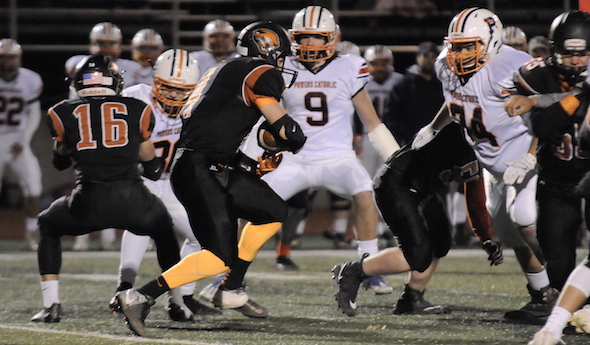
PHOTO: Alma and Flint Powers Catholic played into overtime Friday before the Panthers emerged with a 20-14 win in Division 4. (Click to see more from HighSchoolSportsScene.com.)