

Finals Preview: Champs' Stories Unfold
November 26, 2013
By Geoff Kimmerly
Second Half editor
If you're looking for a few good stories to finish off this high school football season, make sure you're glued to this weekend's MHSAA 11-Player Finals at Ford Field.
Ithaca will attempt to win a fourth straight MHSAA title and re-tie the nation's longest winning streak of 56. The Yellowjackets are one of nine teams back from the 2012 Finals, and one of four reigning champions playing to repeat.
The Division 2 and Division 7 Finals are rematches from last fall and carry plenty of intrigue; Brother Rice just edged Muskegon in Division 2 last season and Ishpeming stunned at least a few by beating to-that-point unstoppable Detroit Loyola in Division 7. DeWitt, Clinton and Clarkston are seeking their first titles, with the latter two heading to the Finals for the first time.
The Division 8,4,6 and 2 games are Friday, with the odd-numbered divisions playing Saturday. All four Friday games will be broadcast live on Fox Sports Detroit's Plus channel (check cable/satellite box listings for your specific channel), with Saturday's games live on Fox Sports Detroit's main station. Audio broadcasts will be available on the MHSAA Network website. Tickets cost $10 and are good for all four games on one day. Click for a full schedule.
Here’s a look at all 16 finalists. (Rankings were voted upon by The Associated Press’ media panel.)

Division 1
CLARKSTON
Record/rank: 12-1, No. 4
Coach: Kurt Richardson, 27th season (202-78)
League finish: First in Oakland Activities Association Red
Finals history: Has never appeared in an MHSAA Final.
Best wins: 56-28 over Rochester Adams in the Regional Final, 30-27 over Oxford in the District Semifinal, 20-10 over Division 2 No. 6 Southfield.
Players to watch: QB D.J. Zezula, 6-0/185, jr. (2,156 yards/17 TDs passing); RB Ian Eriksen, 5-11/190, sr. (1,410 yards/25 TDs rushing); K/P Shane Hynes, 5-10/150, sr. (56-56 XP, long FG 46); WR/DB Tim Cason, 6-2/190, sr. (747 yards/6 TDs receiving); OL/DL Nick Matich, 6-3/297, sr.; OT/DT David Beedle, 6-5/285, sr.
Outlook: Clarkston’s strong football tradition now will include an appearance at the MHSAA Finals thanks to a playoff run that included avenging its lone loss, on opening night, to Rochester Adams. This is the third time the Wolves have won 12 games under Richardson, who also has led them to three straight league and two straight District titles and has coached in the program since 1977. A number of players are committed to continue at the Division I college level: Eriksen for Eastern Michigan, Beedle at Michigan State, Cason at Purdue, Matich at Western Michigan and Hynes to kick for Kent State. He’s made five field goals of 34 yards or longer this fall.
DETROIT CATHOLIC CENTRAL
Record/rank: 11-2, No. 6
Coach: Tom Mach, 38th season (340-82)
League finish: Second in Detroit Catholic League Central.
Finals history: 10 championships (most recent 2009), five runner-up finishes.
Best wins: 35-14 over No. 9 Northville in the District Semifinal, 28-0 over No. 1 Detroit Cass Tech in the Semifinal, 20-14 over Division 2 honorable mention Warren DeLaSalle.
Players to watch: QB/DB Sean Birney, 6-1/175, sr. (769 yards/11 TDs passing); RB/DB/K Zach Bock, 6-0/190, sr. (721 yards/5 TDs rushing, 255 yards/4 TDs receiving); RB/LB Connor Holton, 6-0/200, sr. (1,040 yards/11 TDs rushing); FB/DE Dyaln Roney, 6-2/230, sr. (579 yards/11 TDs rushing); DT Christopher Okoye, 6-6/320, sr.
Outlook: The Shamrocks are back in the Division 1 Final for the third straight year after finally dispatching of Detroit Cass Tech – the team that beat DCC in the last two championship games. Most of the team’s playmakers have been in those roles this season for the first time, but they and a solid defense has come through when it counted most in four wins by 10 points or fewer – including a one-point nail-biter over Temperance Bedford in the Regional Final. Roney, and standout defensive end, has committed to play at Navy in 2014. DCC’s only losses this season were to Birmingham Brother Rice, which will play for the Division 2 title.
 Division 2
BIRMINGHAM BROTHER RICE
Record/rank: 13-0, No. 1
Coach: Al Fracassa, 45th season (384-98-2)
League finish: First in Detroit Catholic League Central
Finals history: Eight championships (most recent 2012), four runner-up finishes.
Best wins: 43-20 over No. 10 Martin Luther King in the Semifinal, 26-24 over honorable mention Warren DeLaSalle, 28-21 and 20-7 over Division 1 No. 6 Detroit Catholic Central.
Players to watch: QB Alex Malzone, 6-3/200, jr. (2,525 yards/21 TDs passing); C Sage Baltrusaitis, 6-1/260, sr.; DB/K Jason Alessi (6-1/180) sr. (54-55 XP/15 FG); RB Brian Walker, 5-9/225, sr. (817 yards/14 TDs rushing); WR Corey Lacanaria, 5-9/180, sr. (991 yards/7 TDs receiving).
Outlook: Some stars change, many stay the same for Brother Rice, which is seeking its third straight MHSAA title. Alessi, a safety and special teams standout (three return touchdowns this fall) scored the game-winning TD in last season's Final on a cross-field lateral during a return, while Walker and senior Shon Powell are back as the top runners and Malzone and Lacanaria have continued as one of the state’s top passing combinations. But this will be the last game for the brightest star in Brother Rice history – Fracassa will retire after the game.
MUSKEGON
Record/rank: 12-1, No 32
Coach: Shane Fairfield, fourth season (40-10)
League finish: First in O-K Black
Finals history: Five MHSAA titles (most recent 2008), one runner-up finish.
Best wins: 28-21 over No. 2 Lowell in the District Final, 24-7 over No. 9 Midland in the Regional Final, 41-35 over No. 8 Portage Central in the Quarterfinal, 35-13 over Division 3 No. 3 Grand Rapids Christian, 45-0 over Division 1 No. 3 Rockford.
Players to watch: RB Javauntae Thomas, 5-11/210, sr. (926 yards/9 TDs rushing); OL Malik King, 6-4/275, sr.; QB/DB Deshaun Thrower, 6-2/200, sr. (1,706 yards/27 TDs rushing, 1,110 yards/12 TDs passing); DL Kenny Finley, 6-3/285, sr.
Outlook: The Big Reds no doubt have been looking forward to this rematch after falling to Brother Rice by a score in last season’s championship game. Muskegon has been successful in its other revenge games this season, beating Lowell in the District Final after falling to the Red Arrows 31-20 in Week 4 and Zeeland East 54-0 after falling to the Chix by a point in 2012. Thrower came on in relief during last season’s championship game second half and nearly led Muskegon to the victory; he’s been nearly impossible to stop this season. Finley has committed to Western Michigan and King to Ball State for 2014.
 Division 3
DEWITT
Record/rank: 13-0, No. 1
Coach: Rob Zimmerman, 15th season (149-34)
League finish: First in Capital Area Activities Conference Red
Finals history: Four runner-up finishes (most recent 2004)
Best wins: 28-16 over No. 4 Mount Pleasant, 43-7 over honorable mention Ionia, 21-20 over No. 7 St. Clair in the Semifinal, 13-7 over Division 5 No. 2 Portland.
Players to watch: QB Jake Johnson, 6-2/188, jr. (1,736 yards/28 TDs passing, 527 yards/1 TD rushing); RB Ben Heinritz, 5-11/200, jr. (1,353 yards/17 TDs rushing); WR/DB Chris Ruby, 5-10/181 sr. (950 yards/14 TDs receiving); LB Zach Deak, 5-8/182, sr.; WR Josh Borta, 6-3/177, sr. (651 yards/14 TDs receiving).
Outlook: The Panthers are back in the Finals for the first time since finishing a three-year streak from 2002-04 and seeking their first championship. Offense has been the calling card most seasons under crafty quarterback guru Zimmerman and has been strong again this fall – but the defense also has been on task with four shutouts and five more games giving up only on score in each. Johnson is the latest star quarterback, but while he was injured part of this season senior Jacob Heath stepped in and threw for 726 yards and nine touchdowns.
ZEELAND WEST
Record/rank: 12-1, No. 2
Coach: John Shillito, ninth season (84-21)
League finish: First in O-K Green
Finals history: Two MHSAA titles (most recent 2011).
Best wins: 48-35 over No. 3 Grand Rapids Christian in the District Final, 62-27 over No. 4 Mount Pleasant in the Regional Final, 44-28 over Division 4 honorable mention Detroit Country Day.
Players to watch: QB Casey Brinks, 5-10/165, soph. (636 yards/5 TDs rushing, 587 yards/10 TDs passing); DB Grant Postma, 5-10/165, sr. (9 interceptions); RB/DB Danny Bauder, 5-9/185, sr. (1,652 yards/27 TDs rushing, 383 yards/7 TDs receiving); TE/NG Jordan VanDort, 6-5/300, sr.
Outlook: Zeeland West has won championships in 2011 and 2006 under Shillito, one of the most revered offensive coaches in the state. The Dux have run for an astounding 5,159 yards this season. VanDort, who has committed to play at Western Michigan next fall, is a two-way starter and a force in the wing-T offense and middle of West’s defense. The Dux did avenge that lone loss, to Zeeland East in Week 2, by beating the Chix 44-13 in their playoff opener.
 Division 4
GRAND RAPIDS SOUTH CHRISTIAN
Record/rank: 12-1, No. 1
Coach: Mark Tamminga, fifth season (35-19)
League finish: First in O-K Gold
Finals history: Two MHSAA titles (most recent 2012), three runner-up finishes.
Best wins: 34-14 over No. 8 Allendale in the District Final, 35-19 over No. 9 Battle Creek Pennfield in the Regional Final, 20-6 over No. 5 Comstock Park in the Semifinal, 34-17 over Division 5 finalist Grand Rapids West Catholic.
Players to watch: QB Jon Wassink, 6-2/190, jr. (2,802/22 TDs passing, 1,094 yards/22 TDs rushing); RB/DB Geff Plasman, 5-10/180, jr. (1,152 yards/15 TDs rushing); WR/DB Eric VanVoorst, 6-3/180, jr. (956 yards/9 TDs receiving); LB David Boomsma, 6-2/180, sr.
Outlook: Since opening the season with a 28-point loss to reigning Division 3 champion Grand Rapids Christian, the Sailors have won all but one game by multiple scores. Wassink had led in a big way after missing last season’s championship game victory with an injury. Boomsma was the team’s second-leading tackler in that win over Detroit Country Day and is the leading tackler this fall for a defense that’s given up a combined 44 points in four playoff wins.
MARINE CITY
Record/rank: 12-1, No. 5 in Division 5
Coach: Rob Glodich, second season (20-3)
League finish: Second in Macomb Area Conference Gold
Finals history: Division 4 champion 2007, Division 4 runner-up 2011.
Best wins: 35-22 over Marysville in the District Semifinal, 35-21 over Richmond in the District Final, 33-28 over honorable mention Detroit Country Day in the Regional Final, 12-7 over No. 4 Sexton in the Semifinal.
Players to watch: S/WR Pete Patsalis, 6-0/180 sr. (982 yards receiving); RB/S Jarrett Mathison, 5-10/175, jr.; (1,160 yards rushing, 537 yards receiving); QB Alex Merchant, 6-0/181, jr. (1,338 yards/15 TDs passing); RB Tait Sapienza, 5-9/160, sr. (1,272 yards rushing).
Outlook: Marine City was ranked in Division 5 by The Associated Press for the regular season before moving into Division 4 when the playoff field was determined. This will be the team’s third championship game appearance in seven seasons and comes after it fell to Richmond in a playoff opener in 2012. The team’s only loss this fall was 43-33 to eventual Division 3 Semifinalist St. Clair. Marine City has rumbled to 3,285 yards rushing this season with its top two leading rushers each averaging at least 7.5 yards per carry.
 Division 5
GRAND RAPIDS WEST CATHOLIC
Record/rank: 9-4, unranked
Coach: Dan Rohn, seventh season (72-17)
League finish: Tied for first in O-K Bronze
Finals history: Division 5 champion 2010, two runner-up finishes.
Best wins: 27-14 over No. 2 Portland in the District Semifinal, 35-17 over No. 7 Olivet in the Regional Final, 35-0 over No. 6 Livonia Clarenceville in the Semifinal.
Players to watch: QB Travis Russell, 6-2/185, jr. (2,274 yards/20 TDs passing, 555 yards/9 TDs rushing); RB/DB Andy Corey, 5-9/180, sr. (894 yards/15 TDs rushing); WR Drake Wooten, 6-1/180, sr. (738 yards/7 TDs receiving); RB Lasavian Majewski, 5-8/185, jr. (941 yards/9 TDs rushing); TE/DE Mitchell Stanitzek, 6-5/235, sr. (278 yards/7 TDs receiving).
Outlook: Just like last season, West Catholic started slowly but has made it all the way to the Finals despite entering the playoffs unranked – and this time just got in at 5-4. Once in the field, a group of veterans took over, led by Russell and Corey, the top offensive players on last season’s team. This fall’s slow start certainly can be viewed as relative: West Catholic opened with three losses, but they all came to teams that ended up making Semifinals last weekend including reigning Division 4 champion Grand Rapids South Christian.
MENOMINEE
Record/rank: 13-0, No. 1
Coach: Joe Noha, second season (24-2)
League finish: First in Great Northern U.P. Conference
Finals history: Three MHSAA titles (most recent 2007).
Best wins: 59-28 over No. 3 Muskegon Oakridge in the Semifinal, 49-27 over Standish-Sterling in the Regional Final, 42-13 over honorable mention Kingsford, 40-21 over Division 8 No. 3 Harbor Beach.
Players to watch: QB/DE Justin Brilinski, 6-0/180, jr. (1,200 yards/14 TDs rushing, 1,461 yards/16 TDs passing); RB/DB Devon Harris, 5-11/165, sr. (673 yards/11 TDs rushing, 252 yards/5 TDs passing, 771 yards/10 TDs receiving); RB/DE James Brown, 6-2/197, sr. (1,035 yards/29 TDs rushing).
Outlook: Menominee has become a semi-regular at the MHSAA Finals with its three titles over the last 15 seasons, but this is its first trip without longtime coach Ken Hofer, who retired after 2011. But Noha certainly knows how to bring a team to Detroit after serving as an assistant for 19 seasons before taking over the program. Menominee hasn’t scored fewer than 40 points since opening night and won its league games by a combined 193-26 in a conference featuring most of the biggest schools in the Upper Peninsula.
 Division 6
CLINTON
Record/rank: 13-0, No. 4
Coach: Scott McNitt, 29th season (174-108-1)
League finish: First in the Tri-County Conference
Finals history: Has never appeared in an MHSAA Final.
Best wins: 39-14 over No. 8 Grass Lake in the Regional Final, 47-28 over Constantine in the Regional Final, 49-3 over No. 9 Shelby in the Semifinal, 33-8 over Ottawa Lake Whiteford.
Players to watch: QB/DB T.J. Baker, 6-1/180, sr. (719 yards/17 TDs rushing, 1,874 yards/23 TDs passing); WR/LB Mathew Sexton, 6-0/170, soph. (500 yards/8 TDs rushing, 1,059 yards/15 TDs receiving); RB/DB Collin Poore, 5-9/160, jr. (1,599 yards/18 TDs, 281 yards/4 TDs receiving); RB/LB Brett Tschirhart, 6-0/205, jr. (556 yards/13 TDs rushing).
Outlook: It’s somewhat shocking to look back and see three straight 1-8 seasons for Clinton from 2002-04, given the team’s 14 playoff appearances total under McNitt and 22-1 record over the last two seasons. This will be the team’s first trip to the MHSAA Finals, and he’s bringing a number of offensive weapons who combined have gained 5,700 yards this fall. The defense has stepped up its game giving up a combined 51 points over four postseason games and just 57 points over its last six wins.
ITHACA
Record/rank: 13-0, No. 1
Coach: Terry Hessbrook, 10th season (100-17)
League finish: First in Tri-Valley Conference West
Finals history: MHSAA Division 6 champion 2012, 2011 and 2010.
Best wins: 42-7 over Maple City Glen Lake in the District Final, 62-34 over No. 7 Negaunee in the Regional Final, 21-20 over No. 3 Montrose in the Semifinal.
Players to watch: QB Travis Smith, 6-3/200, sr. (3,031 yards/38 TDs passing, 503 yards/9 TDs rushing); WR/DB Logan Hessbrook, 6-3/200, sr. (1,169 yards/18 TDs receiving); RB/LB Bryan Shaw, 5-11/225, sr. (981 yards/21 TDs rushing); WR/DB Josh Hafner, 6-2/175, sr. (725 yards/8 TDs receiving).
Outlook: Ithaca has taken turns with a team in Iowa this season holding the nation’s longest winning streak and can tie for it again with a 56th straight win Friday. Smith, who will sign with Toledo this winter, has set an MHSAA career record with 100 touchdown passes over the last three seasons while completing 68 percent of his throws total. Those generally are the biggest headliners, but don’t forget the defense – it’s notched five shutouts and allowed four more opponents to score only once. Nose guard Jonah Loomis and linebackers Rickey King, Dallas Reeser and Jace Demenov all have at least 100 tackles this fall.
 Division 7
DETROIT LOYOLA
Record/rank: 13-0, No. 2
Coach: John Callahan, fifth season (51-9)
League finish: First in Detroit Catholic League AA
Finals history: MHSAA runner-up 2012.
Best wins: 52-7 over No. 10 Homer in the Semifinal, 50-7 over honorable mention Southfield Christian in the Regional Final, 20-14 over Division 4 honorable mention Detroit Country Day, 30-21 over Division 5 honorable mention Ann Arbor Gabriel Richard.
Players to watch: RB Marvin Campbell, 5-10/190, jr. (1,453 yards/18 TDs); RB Mideyin Wilson, 5-10/175, jr. (775 yards/10 TDs); SE/DB Keith Graves, 6-1/175, sr.; OT KaJohn Armstong, 6-4/280, sr.
Outlook: Loyola graduated a 2,000-yard rusher after last season – and has equaled the team that earned the program's first championship game berth. The team moved up among bigger schools in the Catholic League and won that division this fall, and has outscored its playoff opponents by a combined 205-14. Callahan has led Loyola to four straight league and three straight District titles. The offensive line remains sizable, averaging 244 pounds across the front led by Armstrong at left tackle.
ISHPEMING
Record/rank: 13-0, No. 1
Coach: Jeff Olson, 22nd season (157-78)
League finish: First in Mid-Peninsula Conference
Finals history: Three MHSAA titles (most recent 2012), one runner-up finish.
Best wins: 34-0 over No. 4 Iron River West Iron County in the District Final, 28-13 over No. 5 Lake City in the Regional Final, 44-10 over Harbor Beach in the Semifinal, 28-24 over Division 6 No. 7 Negaunee.
Players to watch: QB/P Alex Briones, 6-2/215, sr. (1,451 yards/19 TDs passing); WR/LB Mitch Laurin, 6-0/208, sr.; OL/DE Jake Quayle, 5-11/195, sr.; DE/FB Adam Prisk, 5-11/180, sr.; DB Tyrus Millimaki, 5-7/150, sr.
Outlook: The Hematites are not only defending champions but at Ford Field for the third time in four seasons. Although many of last fall’s stars graduated, Briones is an all-state quarterback and also has run for more than 1,000 yards in guiding his team back to Detroit. Like Loyola, Ishpeming has dominated in the postseason beating its four opponents by a combined 156-23 after cruising through the regular season with only rival Negaunee getting within 35 points.
 Division 8
BEAL CITY
Record/rank: 13-0, No. 1
Coach: Lou Rau, 13th season (144-29)
League finish: First in Highland Conference
Finals history: Two MHSAA titles (most recent 2009), four runner-up finishes.
Best wins: 55-0 over No. 10 St. Ignace in the Regional Final, 34-18 over No. 5 Crystal Falls Forest Park in the Semifinal, 48-0 over Division 5 honorable mention Clare, 42-35 (OT) over Division 7 No. 5 Lake City.
Players to watch: RB/LB Ty Rollin, 5-8/180, jr. (1,189 yards/24 TDs rushing, 322 yards/3 TDs receiving); RB/DE Hayden Huber, 6-0/175, sr. (888 yards/19 TDs rushing); QB/DB Kurt Gross, 6-0/165, sr. (1,626 yards/23 TDs passing); TE/DE Ryan Tilmann, 6-3/180, sr. (651/12 TDs receiving).
Outlook: The Aggies have stormed back after falling to Harbor Beach in last season’s Final, with their 725 points second-most in MHSAA history and keyed by a determined senior class. Beal City has scored more than 70 points three times and more than 60 three times as well, with Forest Park and Lake City the only opponents to put up much of a challenge – the Aggies shut out seven teams. Rau, who took over the program in 2000, has led it to eight seasons of at least 10 wins and playoff berths every fall of his tenure.
MUSKEGON CATHOLIC CENTRAL
Record/rank: 11-2, No. 6
Coach: Steve Czerwon, first season (11-2)
League finish: Does not play in a league.
Finals history: Eight MHSAA titles (most recent 2008), three runner-up finishes.
Best wins: 42-0 over No. 8 Fowler in the District Final, 28-12 over No. 2 Mendon in the Regional Final, 45-14 over No. 4 New Lothrop in the Semifinal.
Players to watch: QB Nick Holt, 6-0/185, jr. (777 yards/10 TDs passing, 1,078 yards/22 TDs rushing); RB Tommy Scott, 5-8/160, jr. (755 yards/9 TDs rushing, 4 TDs receiving); RB Alex Lewandoski, 5-11/185, sr. (1,129 yards/21 TDs).
Outlook: Muskegon Catholic is back in the Finals under first-year coach Czerwon, who played in the program before graduating in 1995 and has been an assistant the last 10 seasons. The Crusaders fell to a rare losing season in 2010 but have been building back since, winning 29 and losing only eight over the last three seasons heading into Friday. Muskegon Catholic opened 0-2 this fall but against much larger opponents Muskegon Mona Shores and Grand Rapids Catholic Central, and the Crusaders have given up only a combined 75 points during the 11-game winning streak.
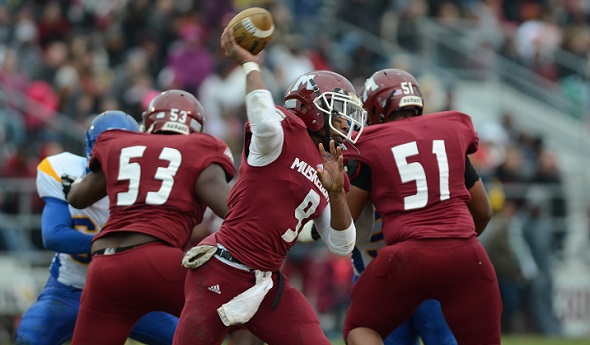
PHOTO: Muskegon quarterback Deshaun Thrower prepares to launch a pass during his team's playoff win over Midland. (Click to see more from HighSchoolSportsScene.com.)
Nightmare Ends with Shanks' Dream Finish
December 6, 2017
By Tom Kendra
Special for Second Half
The media were fixated on La’Darius Jefferson, and who can blame them?
 The senior quarterback validated his recent selection as the MLive statewide Football Player of the Year by rushing 32 times for 245 yards and all four of Muskegon’s touchdowns in a 28-10 victory over Farmington Hills Harrison in the MHSAA Division 3 Final on Nov. 25 at Ford Field. He followed that up by giving the dejected Harrison players a classy postgame pep talk.
If it wasn’t Jefferson, the cameras were focused on eighth-year Muskegon head coach Shane Fairfield, who overcame four losses in the title game by finally taking the final step and hoisting the championship trophy,
But the best story coming out of Muskegon’s recently-won title belonged to senior cornerback Willie “Bo” Shanks – a tale that started with heartbreak, which morphed into an ongoing nightmare, which had to be confronted and converted into motivation, then mixed in with relentless hard work before finally culminating with redemption. Sweet redemption.
“It felt great; it felt right,” said Shanks, the soft-spoken leader of the Big Reds’ secondary. “I guess the lesson in my story is that with focus and hard work, you can overcome anything.”
The heartbreak occurred one year ago, when Shanks was playing cornerback on the final play in Muskegon’s heartbreaking 2016 Division 3 Final 29-28 loss to Orchard Lake St. Mary’s. Shanks was running with receiver Ky’ren Cunningham, who abruptly turned in at the goal line. Before Shanks could react, the ball was in Cunningham’s arms on the ground in the end zone with six seconds showing on the clock, courtesy of a perfectly-timed pass from quarterback Caden Prieskorn.
 Even though player after player, coach after coach, fan after fan, and family member after family member pointed out that it wasn’t just one play which cost Muskegon the championship, Shanks couldn’t shake it off.
"I think about it every play," the soft-spoken Shanks said earlier this season. "I think about it every day in practice. I think about it every time we go out and play a game. I even think about it when I`m asleep. I have nightmares about it, so it just motivates me a lot to not let it happen again."
Fairfield decided right away that the best way to deal with the pain of that loss was to bring it out in the open – confront it and then work to overcome it.
“We got beat with six seconds left, so everything ever since has been six more reps, six more sprints, six more drills,” said Shanks, a 6-foot-2, 180-pound senior who is also a starting guard on Muskegon’s basketball team, which opens its season Friday at home against Rockford.
The hard work by Shanks and fellow seniors Clinton Jefferson and Marvin Harwell and junior Lamarion Sherrill turned Muskegon’s perceived Achilles heel – pass defense – into a strength.
In both of Muskegon’s losses in 2016, against visiting Chicago Lincolnshire Stevenson (38-35) in Week 2 and the Final against St. Mary’s, the Big Reds were torched through the air. Led by Shanks in the secondary, the Big Reds fielded a defense for the first time in years this fall that was equally good against the run and the pass – with only Muskegon Mona Shores having even a modicum of success passing.
“He was our solid rock all year back in the secondary,” Fairfield said of Shanks, who is now hoping to play defensive back at the college level.
 Shanks had his individual highlight in the Regional championship game against DeWitt on Nov. 10 at Grand Haven, when he intercepted three passes (including one he took back for a touchdown) as Muskegon rolled to a shocking 49-0 victory. Those three interceptions gave him 10 for the season, breaking the school record of eight held by three players, including ex-Southern Cal standout and NFL player Ronald Johnson.
If the story ended right there, it would have been a much happier ending than most ever get in the sports world. Sports Illustrated and others have told countless stories of wayward kickers, not to mention recognizable figures like Bill Buckner and Steve Bartman, who never quite recovered from a single play during a game.
But this story had a perfect ending not only for Shanks, but for the Muskegon football program as well.
After dispatching overmatched Battle Creek-Harper Creek, 42-0, in the Semifinals, Muskegon returned to the familiar confines of Ford Field, almost one year to the day of its last-second defeat.
No worries this time around. When the scoreboard clock reached :06 this year, the Big Reds were comfortably in celebration mode.
6, 5, 4, 3, 2, 1 …0.
For Jefferson, Fairfield and the entire Muskegon football family, it was a dream come true.
And for one Big Red in particular, it also was a nightmare vanquished.
 Tom Kendra worked 23 years at The Muskegon Chronicle, including five as assistant sports editor and the final six as sports editor through 2011. E-mail him at [email protected] with story ideas for Muskegon, Oceana, Mason, Lake, Oceola, Mecosta and Newaygo counties.
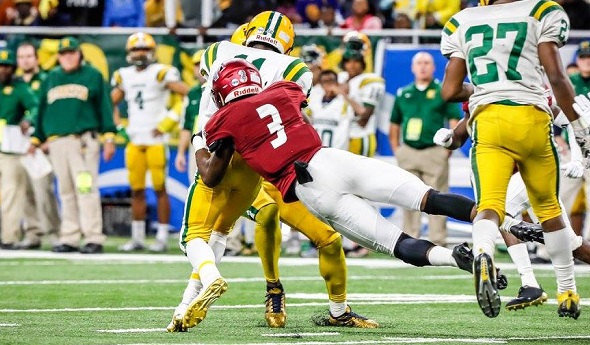
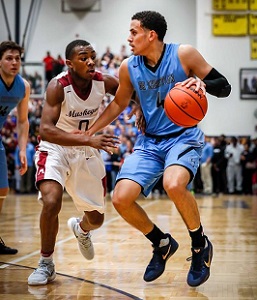
PHOTOS: (Top) Muskegon senior cornerback Willie Shanks tackles Farmington Hills Harrison receiver Joe Stevens during the Division 3 Final. (Middle) Shanks defends Grand Rapids Christian's Duane Washington during last year's Class A Regional at Grand Haven. Muskegon entered the game undefeated, before falling to the Eagles. (Below) Muskegon football coach Shane Fairfield, left, and Muskegon basketball coach and athletic director Keith Guy pose with the Class A District championship trophy after the Big Reds defeated Zeeland West this fall. Fairfield and Guy sharing great athletes like Shanks has put Muskegon’s programs among the state's elite in both football and basketball. (Photos by Tim Reilly.)