

A Game for Every Fan: Playoffs Week 3
November 12, 2015
By Geoff Kimmerly
Second Half editor
Through the rain, and fog, and in some places up north a few flakes of snow, we see the MHSAA Football Finals finally approaching – even if predicting which teams will be playing is still no easy task.
Plenty of opponents facing off this weekend have seen each other at this late date before. For a handful of others, this has been a wild first-time ride.
Here’s a look at what might be the most intriguing of this weekend’s 11-player Regional Finals, plus a longer glance at both 8-player Semifinals. All games are tonight unless noted.
Division 1
Detroit Cass Tech (9-2) at Macomb Dakota (9-2)
It’s hard to believe Macomb Dakota hasn’t played in an MHSAA championship game since 2007, but the 2010 and previously-undefeated 2013 teams both saw their seasons end in Regional Finals against Cass Tech. The Technicians, led by standout quarterback Rodney Hall, have lost only to Detroit Martin Luther King this season, twice. They are playing to make a third straight Semifinal – and get a shot at getting back to the championship game for the first time since 2012.
Other Regional Finals: Rockford (8-3) at Grand Ledge (11-0), Detroit Catholic Central (9-2) at Romeo (10-1), Canton (9-2) at Saline (10-0).
Division 2
Muskegon (9-2) at Lowell (10-1)
Muskegon’s path has been such that every week’s game has been one of the state’s most anticipated. After eliminating previously undefeated Traverse City Central and Muskegon Mona Shores in the District, the Big Reds must hit the road again to take on a Lowell team that is only two three-point losses from perfection. Not that this is an unfamiliar position for either program – although they didn’t meet last year, Lowell and Muskegon ran across each other in the playoffs six straight seasons from 2008-13.
Other Regional Finals: Midland Dow (10-1) at Walled Lake Western (11-0), Livonia Franklin (8-3) at Berkley (9-2), Detroit East English (9-2) at Detroit Martin Luther King (11-0), Saturday.
Division 3
Coldwater (11-0) at St. Joseph (10-1)
This trip into uncharted waters keeps getting longer for the Cardinals, who won their first playoff game ever two weeks ago. Although this level of the tournament is new, St. Joseph isn’t a completely unfamiliar opponent – the Bears beat Coldwater on opening night 2013. St. Joseph has downed league champions three of its last four games and is seeking its first Regional title since 2007.
Other Regional Finals: Chelsea (10-1) at Allen Park (10-1), East Grand Rapids (8-3) at Mount Pleasant (9-2), Saturday; St. Johns (8-3) at Orchard Lake St. Mary’s (9-1), Saturday.
Division 4
Flint Powers Catholic (9-2) at Richmond (10-1)
The first game between these schools features two programs looking to get over the Regional hump. Powers has fallen in two Regional Finals in three seasons since winning Division 5 in 2011. Richmond lost in the Regional Final last year after falling in District Finals both of the two seasons prior; the Blue Devils are trying to make their first Semifinal since 2003. After winning its playoff games by a combined eight points, Richmond will have to contend with a Chargers defense that hasn’t given up a point in these playoffs and has six shutouts total in 11 games.
Other Regional Finals: Remus Chippewa Hills (9-2) at Ada Forest Hills Eastern (10-1), Hudsonville Unity Christian (8-3) at Zeeland West (11-0), Milan (9-2) at Detroit Country Day (10-1), Saturday.
Division 5
Grand Rapids West Catholic (9-2) at Menominee (11-0), Saturday
This has become an annual game at some stage of the playoffs. Saturday will mark the sixth straight postseason meeting between these two, including Semifinals last season, 2010 and 2012 and the 2013 Division 5 Final. The Maroons usually can take advantage of opponents not familiar with their single-wing offense, but West Catholic should be plenty familiar; what Menominee can boast this time is its most impressive defense since the back-to-back undefeated seasons of 2006 and 2007.
Other Regional Finals: Lansing Catholic (10-1) at Freeland (11-0), Buchanan (11-0) at Ida (11-0), Algonac (10-1) at River Rouge (10-1).
Division 6
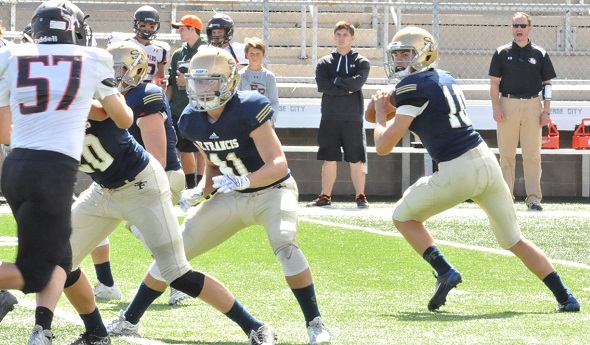
Boyne City (10-1) at Traverse City St. Francis (11-0)
The first battle between these rivals this season wasn’t much of one by the end, with St. from running back Malik Smith, and fumbled three times – which makes it feel like this rematch will be much closer if the Ramblers keep mistakes to a minimum. It’s fair to say St. Francis creates its own opportunities, though; the Gladiators have five shutouts in 11 games.
Other Regional Finals: Laingsburg (8-3) at Ithaca (11-0), Jackson Lumen Christi (8-3) at Clinton (11-0), Constantine (7-4) at Grand Rapids NorthPointe Christian (11-0), Saturday.
Division 7
Sandusky (11-0) at New Lothrop (11-0)
Sandusky is stacking accomplishments like no football team at the school before. The Redskins have more than nine wins for the first time and won a District title for the first time, and now will take on the powerhouse Hornets for the first time. Few teams in Michigan have put together a run over the last six seasons like New Lothrop, which is 65-5 during that span. But the Hornets have been stopped short of the MHSAA championship game all of those seasons, and surely would like a first Finals appearance since 2006 to add to its recent local dominance.
Other Regional Finals: Cassopolis (9-2) at Pewamo-Westphalia (11-0), Dansville (10-1) at Detroit Loyola (9-2), McBain (8-3) at Ishpeming (10-0).
Division 8
Crystal Falls Forest Park (7-3) at St. Ignace (10-1)
In pursuit of its third Regional title in five seasons – and really, in pursuit of its first MHSAA Final appearance since 1985 – St. Ignace has shown well against the toughest competition of its season. Three of the last four games, all four against playoff teams, have been decided by eight points or fewer, and the Saints came back from a second trip to rival Johannesburg-Lewiston last week with a second win over the Cardinals. Forest Park has no losses left to avenge after winning rematches the last two weeks against the two in-state teams it fell to during the regular season. But the Trojans did fall to St. Ignace in their last meeting, a 2011 Regional Final.
Other Regional Finals: Ottawa Lake Whiteford (9-2) at Climax-Scotts (11-0), Saturday; Muskegon Catholic Central (8-2) at Frankfort (9-2), Saturday; Saginaw Michigan Lutheran Seminary (10-1) at Waterford Our Lady (11-0), Saturday.
8-Player
Cedarville (9-2) at Powers North Central (11-0)
North Central is led by a talented quarterback making the entire state take notice – junior Jason Whitens is up to 41 touchdown passes without an interception to go with his 10 scores on the ground, and junior running back Bobby Kleiman has run for 17 touchdowns and caught 14 of Whitens’ scoring tosses. But Cedarville doesn’t give up too many scores. The Trojans handed Owendale-Gagetown and Posen their only losses of the season the last two weeks, giving up only 48 points total over those two games – a respectable total in the wide-open 8-player format.
Deckerville (10-1) vs. Battle Creek St. Philip (11-0), Saturday at Battle Creek Central
St. Philip got past rival Lawrence one final time last week, but the path to Legacy Field remains blocked by another past champion. Deckerville avenged its lone loss of the season by doubling up Morrice last week and has run over opponents for nearly 3,400 yards, with senior Jared Philpot and juniors Austin Fritch and Brandon Pattullo combining for 2,300 yards and 37 touchdowns on the ground. The Eagles have thrown only 48 times, but St. Philip is much more balanced. The Tigers have nearly the same rushing and passing yardage totals this season – within 77 yards – with senior Brendan Gausselin throwing 35 touchdown passes and senior Brayden Darr running for 23 scores and catching 14 touchdown passes.
PHOTO: Traverse City St. Francis, here against Elk Rapids, is 11-0 for the first time since its undefeated season of 2009. (Photo courtesy of St. Francis athletic department.)

2017 Football Finals Protocols Announced
November 20, 2017
By Geoff Kimmerly
Second Half editor
To provide for the convenience and safety of spectators attending the Michigan High School Athletic Association 11-Player Football Finals – presented by the Michigan National Guard – at Ford Field in Detroit, Nov. 24 and 25, attendees are being advised of a variety of items related to transportation and security – including policies regulating types of bags allowed into the stadium.
Parking will be available in Ford Field facilities and lots to the east and north of the stadium and costs $6. A map identifying the designated Ford Field lots (4, 5 and 6) and parking deck can be found on the Football page of the MHSAA Website at http://www.mhsaa.com/sports/football. (There also are a number of privately-operated parking facilities close to Ford Field, but their pricing may differ.)
Fans also are advised that the consumption of alcohol is prohibited in Ford Field parking facilities and lots. Tailgating, including the setting up and use of grilling equipment, is allowed only in Lot 5.
Gates A, B and G will be available for public entrance during the event. Ticket sales will begin near Gates A and G at 8 a.m. each day, and the building will open its doors to spectators at 9 a.m. Tickets must be paid for in cash only.
Tickets are priced at $10 and allow a fan to see all four games in a single day. Spectators leaving the stadium will be required to purchase another ticket for re-entry. Infants able to be held in arms will be admitted without charge for this event. There will not be a public Will Call window.
Upon arrival in the building, fans will find their designated seating areas on the South side of the field if their team is the designated home team for their contest and on the North side for the designated visiting team. Home teams this weekend are West Bloomfield, Warren DeLaSalle, Muskegon, Grand Rapids Catholic Central, Saginaw Swan Valley, Ithaca, Pewamo-Westphalia and Saginaw Nouvel. Brightly lit video boards above the seating areas will display the names of the participating teams each day, and fans should sit on the side of the stadium where they see their school’s name. For general fans, the entire lower bowl of Ford Field will be open for the event.
Security measures also will be in place to help assure spectator safety. Fans will be subject to metal detector screening, and Ford Field personnel reserve the right to request patrons open their coats, bags and other item-carrying vessels for visual inspection and deny entrance to individuals who do not cooperate. Spectators should remove cell phones, cameras, keys and other large metal objects before passing through the metal detectors, but do not need to remove belts, coins, wallets or watches and other jewelry.
Items which fans will be prohibited from bringing into the building include, but are not limited to, the following:
• Purses larger than a clutch bag, coolers, briefcases, backpacks, cinch bags, grocery & paper bags, duffle bags, luggage of any kind, computer and camera bags and large camera cases.
• Aerosol cans (hairspray, mace, pepper spray, etc.)
• Animals (except service animals to aid guests with disabilities)
• Balloons (air or helium)
• Balls (beach balls, footballs, etc.)
• Banners or large flags
• Cameras with lenses longer than five inches. Selfie Sticks also are prohibited.
• Decals, stickers, confetti or glitter
• Drones and/or remote controlled aircraft.
• Electronic equipment including laptop computers, video recorders (hand-held video cameras are allowed), tripods and wearable video cameras including Go Pros.
• Fireworks
• Food, beverages or liquids (cans, bottles, boxes, flasks, etc.)
• Illegal substances
• Knives, pocket knives, box cutters, scissors, etc.
• Laser pointers
• Markers (permanent) and/or paint
• Noisemaking devices (bells, horns, kazoos, whistles, etc.)
• Objects that can be used as missiles or projectiles (sticks, bats, clubs, Frisbees, etc.)
• Seat cushions
• Strollers and infant car seats or carriers
• Umbrellas (large size)
• Weapons
• Wrapped gifts
The following items will be permitted after inspection:
• Small bags, purses and fanny packs that do not exceed 8½ inches by 14 inches by 10 inches. An exception will be made for medically necessary items after proper inspection at a gate designated for this purpose.
• Diaper bags (only if accompanied by a child)
• Binoculars and binoculars cases
• Cameras and small camera cases (lenses may not measure longer than five inches, and no tripods or extension cords)
• Small radios (no larger than the size of a football and used with an earpiece)
• Small, compact umbrellas (must be placed securely under seat)
• Posters and signs without poles or sticks, or larger than what one person can hold.
The complete list of prohibited items can be found on the Ford Field Web site – http://www.fordfield.com – at the bottom of the web page under Stadium Info, Ford Field Event Policies. Prohibited items that are discovered during security inspections at stadium entrances must either be returned to the owner's vehicle or discarded. Items will not be held for later pickup.
Fans are reminded that all image taking (still and video) may be only for personal, non-commercial use.