

A Hero Comes Home to Vassar
October 17, 2012
By Alex Leveille and Tyler Langley
Vassar High School seniors
(Editor's note: Nothing short of incredible describes the story of U.S. Army Staff Sergeant Travis Mills. He is continuing a successful recovery from losing all four limbs after stepping on an improvised explosive device while on patrol in April during his third tour of duty in Afghanistan. His story turned a national spotlight on Vassar, a town of 2,700 people located in Michigan's thumb. Mills was an athletic standout for the Vulcans before graduating in 2005, and returned for Homecoming earlier this month. Vassar seniors Alex Leveille and Tyler Langley give us the story and explain its impact from a student point of view.)
Homecoming is about many things to high school students. But this year it got a whole lot bigger when word got out that Travis Mills, paratrooper of the 82nd Airborne, was coming home.
When the students at Vassar learned that Travis was coming back for Homecoming, everyone was excited to see him. A couple of students said they were really happy they would finally be able to meet the hero they heard all about.
“Seeing and meeting Travis was a really neat experience for me personally, so I can only imagine the effect he had on the community," said Vassar football player Brik Rupprecht, one of the team captains this fall. "When Travis showed up, you could really feel the positive energy coming from the crowd, supporting him, and the positive attitude Travis brought with him. When it came to the game, we just gave it our best for him. He told us he wanted to see a win, and that’s what we gave him. (Vassar defeated Unionville-Sebewaing that night 22-16.)”
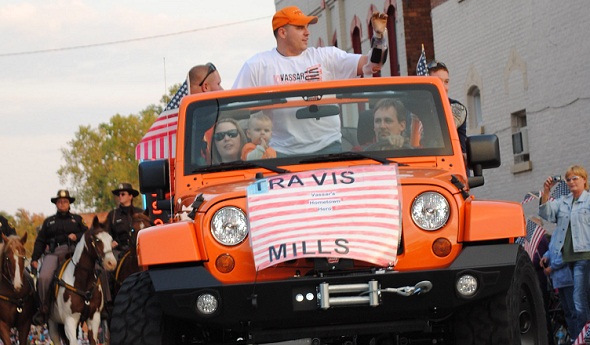
Many things were changed to accommodate Travis’s homecoming. The Homecoming parade, of which Travis was the grand marshal, was moved to Thursday, Oct. 4 instead of Friday before the game. It was followed by a bonfire at which Travis spoke to a crowd of more than 3,000 people, thanking them for everything they have done for him and his family.
On that Friday, the day’s events included a block party sponsored by many local businesses plus Pepsi and Frito-Lay. This was a chance for the community to come together to celebrate Vassar’s Homecoming, as well as welcome Travis home. The pregame festivities included a ceremony to thank all of the area’s veterans, including Travis.
Travis then took center stage before the game to again express his sincere thanks for the community’s love and support throughout his recovery. The community continued that support with various gifts to Travis and his family to further show their love for them.
He then led a special coin toss during which both Vassar and Unionville-Sebewaing players lined up intermixed on both 45 yard-lines to show their united support for Travis. He also spoke to the Vassar team before the game, encouraging them to "play every down like it’s your last, because you never know when it’s going to be your last.”

With Travis coming back to Vassar, our town was put in the spotlight of national news, which was something new to almost all of the students in Vassar. They all had different opinions about it too. Some didn’t like the thought of being in the eye of the country, but others did. Draven Muller, a sophomore and junior varsity football player, said it was a cool thought to be recognized nationally as a town and to be associated with a hero like Travis.
Jim Baker, a former paratrooper himself and teacher at Vassar High School, said, “Travis Mills is a true representative of what a paratrooper is all about. He makes me proud that I was a member of the 82nd Airborne Division.”
Vassar Chief of Police Ben Guile said he remembers Travis when he was in high school. “Only a person like Travis would have been able to survive something like this, and be as positive as he is," Guile said. "He is very charismatic, and him coming back home to thank the community is one of the best things he could have done. This town loves him, and I never have felt any more positive energy at a parade than the one that Travis led.”
Travis came back the following Friday, Oct. 12, to speak to the students at Vassar High School. Travis, being the upbeat guy he is, kept the crowd awake and laughing the entire assembly, cracking jokes and telling the crowd about his experiences in the Afghanistan war.
He also offered advice on high school and college experiences and talked about his plans after getting out of Walter Reed Medical Center, where he's undergoing occupational therapy.
As he put it, “Hopefully the Army will want me back after I’m done at Walter Reed. I might not be able to do all of the physical stuff anymore, but I still have everything they taught me in my head.”
He also plans to go back to college and get a degree in teaching, and hopefully become a teacher and a football coach some day.
Having Travis home was great for the community and the area. He is an all-around great guy and can uplift anyone’s spirits.
Click on links below for Mills' web site and some of the national coverage of his recovery and return home.
TravisMills.org - Fox News - USA Today - Detroit News - Saginaw News
PHOTOS: (Top) Travis Mills served as the grand marshal of Vassar's Homecoming parade Oct. 5. (Middle) Mills returned to his former high school Friday to tell students about his experiences in Afghanistan. (Top photo by Vassar High senior Sarah McKenney; middle photo by English and journalism teacher Jamie Strauss.)

Week 5 Football Playoff Listing
September 18, 2012
Here is a list of Michigan High School Athletic Association football playing schools, displaying their win-loss records and playoff averages through the fourth week of the season.
Schools on this list are in enrollment order. An asterisk (*) beside a record indicates that a team has eight or fewer games scheduled. A carrot (^) beside a school’s name indicates that a team is one win away from playoff qualification.
Those schools with 11-player teams with six or more wins playing nine-game schedules, or five or more wins playing eight games or fewer, will qualify for the MHSAA Football Playoffs beginning Oct. 26-27. Schools with 5-4, 4-3 or 4-4 records may qualify if the number of potential qualifiers by win total does not reach the 256 mark. Schools with six or more wins playing nine-game schedules or five or more wins playing eight games or fewer may be subtracted from the field based on playoff average if the number of potential qualifiers exceeds the 256 mark.
Once the 256 qualifying schools are determined, they will be divided by enrollment groups into eight equal divisions of 32 schools, and then drawn into regions of eight teams each and districts of four teams each.
Those schools with 8-player teams will be ranked by playoff average at season’s end, and the top 16 programs will be drawn into regions of eight teams each for the playoff in that division, which also begins Oct. 26-27.
To review a list of all football playoff schools, individual school playoff point details and to report errors, visit the Football page of the MHSAA Website.
The announcement of the qualifiers and first round pairings for both the 11 and 8-player playoffs will take place on Oct. 21 on the Selection Sunday Show on FOX Sports Detroit at 7 p.m. The playoff qualifiers and pairings will be posted to the MHSAA Website following the Selection Sunday Show.
----------------------------------------------------------------------------------------------------------------------------
11-Player Playoff Listing
1. Utica Eisenhower, 2772, 3-1, 72.500
2. Sterling Heights Stevenson, 2766, 3-1, 68.500
3. Clarkston, 2721, 4-0, 90.000
4. Macomb Dakota, 2608, 3-1, 72.500
5. Lake Orion, 2565, 4-0, 90.000
6. Troy, 2502, 3-1, 70.500
7. Clinton Township Chippewa Valley, 2462, 3-1, 74.250
8. Dearborn Fordson, 2442, 3-1, 76.250
9. Holland West Ottawa, 2262, 3-1, 66.500
10. Detroit Cass Tech, 2200, 4-0, 92.000
11. Canton, 2166, 3-1, 62.750
12. Monroe, 2154, 4-0, 82.000
13. Plymouth, 2050, 3-1, 62.750
14. Salem, 2039, 4-0, 88.000
15. Livonia Stevenson, 2005, 4-0, 92.000
16. Hartland, 1932, 4-0, 88.000
17. Warren Mott, 1879, 4-0, 84.000
18. Livonia Churchill, 1877, 4-0, 94.000
19. Walled Lake Central, 1857, 3-1, 64.750
20. Saline, 1849, 3-1, 62.250
21. Grandville, 1846, 3-1, 64.750
22. Flint Carman-Ainsworth, 1772, 4-0, 82.000
23. Grand Ledge, 1743, 3-1, 64.250
24. Rochester, 1725, 3-1, 68.750
25. Traverse City West, 1720, 3-1, 62.250
26. White Lake Lakeland, 1700, 3-1, 64.250
27. Davison, 1664, 3-1, 64.750
28. Grosse Pointe South, 1648, 3-1, 70.500
29. Temperance Bedford, 1581, 3-1, 58.750
30. Brownstown Woodhaven, 1520, 3-1, 64.750
31. Ypsilanti Lincoln, 1520, 3-1, 66.750
32. Midland, 1485, 4-0, 94.000
33. Port Huron, 1473, 3-1, 66.500
34. Traverse City Central, 1429, 3-1, 64.000
35. Oak Park, 1391, 4-0, 94.000
36. Lansing Everett, 1359, 4-0, 96.000
37. Birmingham Seaholm, 1349, 3-1, 62.500
38. Garden City, 1344, 3-1, 64.250
39. Portage Central, 1340, 3-1, 66.750
40. Muskegon Mona Shores, 1337, 3-1, 52.750
41. Birmingham Brother Rice, 1336, 3-1, 70.750
42. Portage Northern, 1328, 3-1, 70.750
43. Caledonia, 1308, 4-0, 90.000
44. Wyandotte Roosevelt, 1304, 4-0, 78.000
45. Farmington Hills Harrison, 1302, 3-1, 68.250
46. Farmington, 1278, 4-0, 90.000
47. Grand Rapids Forest Hills Central, 1278, 3-1, 64.750
48. Taylor Truman, 1253, 4-0, 88.000
49. Swartz Creek, 1223, 4-0, 90.000
50. Fenton, 1202, 3-1, 60.750
51. Grand Rapids Northview, 1180, 3-1, 62.000
52. Lowell, 1177, 3-1, 66.750
53. Bay City Western, 1171, 4-0, 72.000
54. Gibraltar Carlson, 1160, 4-0, 78.000
55. Muskegon, 1144, 4-0, 98.000
56. East Lansing, 1142, 4-0, 76.000
57. Mattawan, 1124, 4-0, 82.000
58. Marquette*, 1112, 3-1, 68.250
59. Redford Thurston, 1088, 3-1, 52.500
60. Auburn Hills Avondale, 1080, 4-0, 82.000
61. St. Johns, 1068, 4-0, 82.000
62. Zeeland East, 1067, 4-0, 88.000
63. Detroit East English, 1030, 3-1, 60.750
64. Lansing Waverly, 1011, 3-1, 54.750
65. St. Joseph, 974, 3-1, 58.500
66. Mason, 969, 4-0, 76.000
67. Milan, 959, 4-0, 78.000
68. Grand Rapids Christian, 954, 3-1, 68.750
69. Cedar Springs, 950, 3-1, 50.250
70. DeWitt, 931, 3-1, 62.750
71. Fruitport, 929, 4-0, 76.000
72. Orchard Lake St. Mary's, 926, 3-1, 66.750
73. Bloomfield Hills Lahser, 925, 4-0, 78.000
74. Linden, 923, 4-0, 92.000
75. Niles, 920, 3-1, 66.750
76. Hazel Park, 909, 3-1, 58.750
77. Stevensville Lakeshore, 906, 4-0, 94.000
78. St. Clair, 901, 4-0, 74.000
79. Tecumseh, 887, 4-0, 82.000
80. Carleton Airport, 868, 3-1, 60.500
81. Detroit Central Collegiate, 868, 3-1, 60.250
82. Hastings, 850, 3-1, 54.750
83. Plainwell, 832, 3-1, 62.750
84. Cadillac, 820, 4-0, 80.000
85. Madison Heights Lamphere, 814, 3-1, 60.750
86. Edwardsburg, 805, 3-1, 52.500
87. North Branch, 803, 3-1, 56.500
88. Hamilton, 801, 4-0, 80.000
89. Marysville, 794, 4-0, 84.000
90. Three Rivers, 760, 3-1, 52.500
91. Goodrich, 748, 3-1, 56.500
92. Dearborn Heights Robichaud, 720, 4-0, 82.000
93. Big Rapids, 706, 3-1, 48.750
94. Croswell-Lexington, 704, 4-0, 82.000
95. St. Clair Shores South Lake, 704, 3-1, 62.500
96. Pontiac Notre Dame Prep, 701, 4-0, 78.000
97. Otsego, 698, 3-1, 54.500
98. Detroit Country Day, 685, 3-1, 66.250
99. Comstock Park, 678, 3-1, 60.000
100. Grand Rapids Catholic Central, 674, 4-0, 76.000
101. Grand Rapids South Christian, 660, 3-1, 56.500
102. Battle Creek Pennfield, 656, 4-0, 56.000
103. Grosse Ile, 649, 3-1, 52.750
104. Saginaw Swan Valley, 642, 4-0, 72.000
105. Paw Paw, 639, 4-0, 68.000
106. Allendale, 636, 3-1, 66.500
107. Williamston, 636, 3-1, 56.750
108. Cheboygan, 631, 3-1, 58.500
109. Marine City, 629, 3-1, 66.250
110. Alma, 614, 3-1, 60.750
111. Saginaw Valley Lutheran, 608, 3-1, 36.750
112. Dowagiac, 605, 4-0, 74.000
113. Livonia Clarenceville, 597, 3-1, 57.417
114. Clawson, 582, 3-1, 46.500
115. Remus Chippewa Hills, 581, 3-1, 50.500
116. Essexville Garber, 572, 3-1, 54.500
117. Clinton Township Clintondale, 570, 4-0, 78.000
118. Lake Fenton, 564, 3-1, 54.500
119. Freeland, 561, 3-1, 54.500
120. Kingsford, 559, 3-1, 50.750
121. Portland, 555, 4-0, 72.000
122. Flint Powers Catholic, 542, 4-0, 78.000
123. Menominee, 539, 4-0, 82.000
124. Macomb Lutheran North, 537, 4-0, 74.000
125. Hopkins, 531, 4-0, 64.000
126. Detroit University Prep, 528, 4-0, 72.667
127. Grayling, 516, 4-0, 66.000
128. Ann Arbor Gabriel Richard, 515, 3-1, 48.750
129. Allen Park Cabrini, 512, 3-1, 42.750
130. Olivet, 509, 3-1, 48.750
131. Frankenmuth, 507, 4-0, 72.000
132. Newaygo, 507, 3-1, 54.750
133. Ida, 503, 4-0, 64.000
134. River Rouge, 495, 4-0, 66.667
135. Carrollton, 492, 4-0, 56.000
136. Lansing Catholic, 487, 3-1, 52.500
137. Reed City, 480, 4-0, 70.000
138. Muskegon Oakridge, 474, 4-0, 68.000
139. Kingsley, 473, 3-1, 40.250
140. Jackson Lumen Christi, 472, 4-0, 74.000
141. Buchanan, 467, 3-1, 50.500
142. Leslie, 467, 4-0, 66.000
143. Roscommon, 461, 3-1, 46.750
144. Kalkaska, 459, 3-1, 38.750
145. Millington*, 459, 3-1, 58.750
146. Warren Michigan Collegiate, 446, 4-0, 66.000
147. Boyne City, 437, 4-0, 66.000
148. Monroe St. Mary Catholic Central, 437, 3-1, 52.500
149. Negaunee, 433, 4-0, 66.000
150. Beaverton, 422, 3-1, 40.250
151. Hemlock, 421, 3-1, 56.750
152. Shelby, 417, 4-0, 78.000
153. Vassar, 416, 4-0, 50.000
154. Clinton, 413, 4-0, 68.000
155. Maple City Glen Lake, 409, 4-0, 54.000
156. Michigan Center, 406, 4-0, 64.000
157. Manchester, 404, 3-1, 44.750
158. Ithaca, 402, 4-0, 76.000
159. Montrose Hill-McCloy, 400, 3-1, 58.750
160. Niles Brandywine, 396, 3-1, 38.917
161. Grass Lake, 395, 3-1, 48.750
162. Hillsdale, 391, 4-0, 70.000
163. Madison Heights Madison, 391, 3-1, 58.000
164. Ecorse, 390, 3-1, 42.500
165. Montague, 390, 3-1, 50.750
166. Sanford Meridian, 388, 3-1, 48.250
167. Saranac, 383, 3-1, 50.250
168. Constantine, 371, 3-1, 44.750
169. Grandville Calvin Christian, 371, 3-1, 46.750
170. Watervliet, 369, 4-0, 48.000
171. Schoolcraft, 366, 4-0, 68.000
172. Byron Area, 364, 3-1, 40.750
173. Reese, 350, 4-0, 54.000
174. Union City, 350, 4-0, 54.000
175. Burton Bendle, 348, 3-1, 40.750
176. Pellston, 347, 4-0, 32.000
177. Saginaw Nouvel, 344, 3-1, 64.750
178. Carson City-Crystal, 337, 3-1, 34.250
179. Hartford, 337, 4-0, 62.667
180. Marlette, 336, 4-0, 56.000
181. Whittemore-Prescott, 328, 3-1, 40.750
182. Lawton, 317, 4-0, 60.000
183. Lake City, 316, 4-0, 48.000
184. Pewamo-Westphalia, 316, 3-1, 46.500
185. Hesperia, 309, 3-1, 38.500
186. Ishpeming, 307, 4-0, 62.000
187. Unionville-Sebewaing, 303, 3-1, 38.500
188. Evart, 302, 3-1, 34.750
189. Homer, 302, 3-1, 36.750
190. Detroit Loyola, 298, 4-0, 76.000
191. Lincoln Alcona, 292, 3-1, 30.500
192. Genesee, 288, 3-1, 34.000
193. Mancelona, 288, 4-0, 50.000
194. Royal Oak Shrine Catholic, 284, 3-1, 56.750
195. Grosse Pointe Woods University Liggett, 283, 3-1, 36.500
196. Reading, 283, 3-1, 38.500
197. Decatur, 277, 4-0, 50.000
198. Gobles, 271, 3-1, 38.750
199. Ottawa Lake Whiteford, 268, 3-1, 40.750
200. Waterford Our Lady, 263, 4-0, 64.000
201. Newberry, 260, 3-1, 26.750
202. Mayville, 258, 3-1, 50.500
203. Melvindale Academy for Business & Tech, 254, 3-1, 52.500
204. Marcellus, 249, 4-0, 44.000
205. Harbor Beach, 245, 3-1, 38.750
206. Vestaburg, 242, 3-1, 36.500
207. Coleman, 239, 3-1, 38.250
208. New Lothrop, 237, 4-0, 64.000
209. Bessemer*, 233, 3-1, 38.750
210. L'Anse, 233, 4-0, 54.000
211. Petersburg-Summerfield, 232, 3-1, 40.750
212. Atlanta, 224, 3-1, 30.917
213. Mendon, 216, 4-0, 50.000
214. Beal City, 213, 4-0, 68.000
215. Pittsford, 213, 3-1, 36.250
216. Morenci, 207, 3-1, 40.000
217. St. Ignace La Salle, 207, 4-0, 46.000
218. Pickford, 197, 4-0, 48.000
219. Onaway, 194, 4-0, 38.000
220. Powers North Central, 194, 3-1, 26.250
221. Fowler, 186, 3-1, 48.750
222. Climax-Scotts, 183, 4-0, 44.000
223. Morrice, 171, 4-0, 48.000
224. St. Joseph Lake Michigan Catholic*, 171, 3-0, 46.667
225. Colon, 164, 3-1, 30.750
226. Crystal Falls Forest Park, 164, 4-0, 48.000
227. Mt. Pleasant Sacred Heart, 121, 3-1, 42.750
228. Iron Mountain North Dickinson*^, 112, 4-0, 54.000
229. Ashley, 99, 3-1, 28.500
---------------------------------------------------------------------------------
8-Player Playoff Listing
1. Deckerville, 194, 3-1, 36.750
2. Battle Creek St. Philip, 182, 3-1, 34.750
3. Kingston, 175, 3-1, 30.500
4. Cedarville, 169, 4-0, 45.333
5. Peck, 156, 4-0, 40.000
6. Eben Junction Superior Central, 132, 4-0, 42.000
7. Rapid River, 115, 4-0, 34.000
8. Portland St. Patrick, 104, 4-0, 46.000
9. Owendale-Gagetown, 60, 3-1, 32.250