

Ice Man: Skyline's Copp sets football records, leaves legacy
October 27, 2011
Eventually, Andrew Copp may be best-known as a hockey star. His spot on the USA under-18 national team development program squad marks him as one of the top players his age in the country.
But he’ll be remembered as one of Ann Arbor Skyline’s first standout athletes for another sport he simply couldn’t give up.
Bittersweet and heart-breaking are how Copp described the end of this football season. The MHSAA playoffs begin this weekend, and he hoped to be a part -- a possibility that was likely closer than Skyline’s 3-6 record might imply, given four of those losses were by four or fewer points. And that’s not the worst part. Even if Skyline had earned a berth, Copp would’ve been forced to watch after breaking his right collarbone in multiple spots three weeks ago.
Still, there will be plenty to remember fondly for the first quarterback in his school’s four-year history. Two MHSAA records and his school’s first varsity football wins will top the list, even as the combination of football and the injury will force Copp the miss the first half of his USA team’s season.
“It means a lot, starting something new and trying to put your stamp on it,” Copp said. “As the quarterback, it’s a lot of weight on your shoulders to start something that 10, 20 years down the road people are going look at.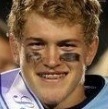
“Last year, when I got offered to play (USA) but had to quit football after the first game, I couldn’t do it. I just couldn’t quit on the team.”
That kind of leadership was “worth its weight in gold” for a school and program only just getting started, Skyline athletic director John Young said.
Copp likely would’ve attended Ann Arbor Pioneer -- like both of his parents had -- had Skyline not opened in fall 2008.
The Eagles’ football program started that first fall, but didn’t field a varsity team until 2010. Copp was the quarterback all four years until his he was injured on a run during the first quarter of his team’s Week 7 game against Temperance Bedford.
Two weeks earlier, against Ann Arbor Pioneer, Copp had thrown for an MHSAA record 557 yards and record-tying seven touchdowns. In six games this fall plus a few minutes of that seventh, Copp completed 96 of 156 passes for 1,732 yards and 27 touchdowns. Those season touchdown passes also qualify for an MHSAA record book listing, as do the 31 completions that led to his record-setting numbers against Pioneer.
“Obviously, I can’t throw for 557 yards without my line doing a great job, my receivers catching balls and making plays. And probably the most unsung heroes on our team are the running backs, who were blocking for me,” Copp said. “I just remember everything going our way, almost like a recess football game.”
But it took some flexibility from USA hockey and a tough decision by Copp to make it possible. Usually, USA players aren’t allowed to play other sports, Copp said, but he was granted that exception. He joined USA hockey after his junior football season, and this summer started that team’s workouts at 8 a.m. before then moving on to workouts and film study for football. This fall, after his five classes at Skyline to start the day, he’d work out for hockey from 1:30-4 p.m. every week Monday through Wednesday, then start football practice at 4:30. All while remaining a strong student and adhering to a hockey-imposed 9 p.m. curfew.
Ironically, the 6-foot, 185-pound Copp joined the football team to become more physical for hockey on the advice of his father Andy, a successful youth hockey coach. Andrew has seen some similarities between the two sports -- as a hockey center he also controls play. Hockey helped Copp be ready for a fast pace of play and developed the quick decision-making necessary to thrive at quarterback.
His football mind helped him help the Eagles when he could no longer lead them on the field. “He had surgery on Tuesday, missed Wednesday, and was back at practice the next day,” Skyline coach Rodrek Jones said. “That was the same day my offensive coordinator was not able to come to practice, and (Copp) called the entire practice for me. He stayed very focused.”
Copp still can’t carry his backpack around school, but hopes to play hockey by January. He is almost assured of an outstanding college hockey opportunity, and Jones thinks he has the ability to play college football as well. Young said Copp, along with receiver Jordan Woods (committed to Purdue) and volleyball player Maggie Halloran (committed to Michigan State), has put Skyline on the map. Despite the tough end this fall, it’s a legacy Copp is glad to leave for those who come after him.
“He’s one of the most popular kids in school, on the Homecoming king court ... a typical All-American kid,” Young said. “I’m extremely happy for him. I was disappointed he broke his collarbone, because he was on track for a more spectacular year. But he helped, along with other players, to elevate their play this year.”
PHOTO
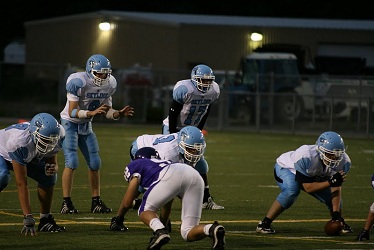
Skyline quarterback Andrew Copp (9) takes a snap against Ann Arbor Pioneer on Sept. 23. Copp threw for an MHSAA-record 557 yards and a record-tying seven touchdowns in a 52-49 loss. (Photo courtesy of Jeff Lepley. Head shot by Pete Draugalis.)

Drive for Detroit: Week 6 in Review
October 8, 2013
By Geoff Kimmerly
Second Half editor
A handful of undefeated teams ended perfect seasons for others during Week 6, and a number of league races began to clear up as we finished the second third of the football regular season.
But we'll assume no team celebrated its win with more relief than the team that hadn't won in quite a while.
We don't often point to a lack of success, but Lincoln Park deserves a shout for its perseverance over the last eight seasons. The Railsplitters sit 1-5 thanks to their first win last week since the second week of 2006.
You do the math, but keep in mind the streak included four losses by five points or fewer. Lincoln Park clearly earned some fans statewide as it battled on, and they'll surely be rooting for that next win to come soon as well.
For the rest of Week 6 results of most significance all over the state, read on.
West Michigan
Shelby 22, Muskegon Oakridge 19
Thanks in part to a trick play-turned-touchdown with 25 seconds to play, Shelby ended Oakridge’s 18-game regular-season winning streak and a personal four-game losing streak against its West Michigan Conference rival. Shelby (6-0) still has a few tough games left on the league schedule, and Oakridge (5-1) will be hoping for an upset so it can claim a share of the title. Click to read more from the Muskegon Chronicle.
Also noted:
Lowell 42, East Grand Rapids 39 (4 OT): This is one of those games that draws statewide eyes, and was decided in extra periods after East Grand Rapids (3-3) cut a halftime deficit before Lowell (6-0) prevailed.
Muskegon Reeths-Puffer 46, Zeeland East 26: The Reeths-Puffer revival continues, with the Rockets now 5-1 – they won a combined 10 games from 2008-12 – and their win over Zeeland East (5-1) was one of their most impressive of the last decade.
Grand Rapids South Christian 35, Grand Rapids Catholic Central 29 (OT): Losing to GRCC and finished second in the O-K Gold to the Cougars (3-3) was one of South Christian’s few disappointments during its Division 4 championship season of 2012; the Sailors (5-1) look strong to claim the league title this time.
Grandville Calvin Christian 17, Hopkins 16: This turned the O-K Silver into a three-team race, with these two and NorthPointe Christian all tied for first with two league games to play (but none against each other). Calvin Christian improved to 3-3 overall and Hopkins fell to 4-2.
Lower Up North
Lincoln Alcona 63, Oscoda 10
Lincoln Alcona moved to the North Star League this fall. So far, so good. The Tigers claimed their first league title ever with this Battle of F41 trophy game win, and at 6-0 qualified for the playoffs for the second straight season – and fourth time ever. Click to read more from the Bay City Times.
Also noted:
Grayling 48, Elk Rapids 28: The Elks (4-2) were major obstacles Grayling (5-1) needed to overcome to continue surging in the Lake Michigan Conference.
Indian River Inland Lakes 56, Central Lake 30: Inland Lakes (4-2) equaled its win totals of each of the last four seasons; Central Lake fell to 2-4.
Petoskey 42, Traverse City Central 37: Neither is likely to still contend in the Big North Conference this season, but this likely will end up a key result as both are 3-3 overall.
Lake City 46, McBain 0: Wow. Lake City (6-0) has given up just six points this season, and also shut out a McBain team that at 4-2 will push for a playoff spot.
Upper Peninsula
Crystal Falls Forest Park 43, Felch North Dickinson 20
These small-school powers have faced off at least once every season (and multiple times when they've also met in the playoffs) since 1992. Forest Park (6-0) entered in first place in the Great Western Conference, and North Dickinson (5-1) is the same in the Mid-Eastern Conference. Although this helps neither’s league chances, it does give Forest Park a 16-11 edge in their 27 recent meetings. Click to read more from the Iron County Reporter.
Also noted:
Iron River West Iron County 41, Calumet 0: The Copper Kings (0-6) are having a are down season, but West Iron (6-0) appears to be building one of its best.
Marquette 24, Kingsford 0: Marquette (5-1) kept pace just one win back of Great Northern UP Conference leader Menominee with another impressive win, this one over the frequently-contending Flivvers (4-2).
Rapid River 45, Cedarville 28: Few teams have had Cedarville’s number during the three seasons of 8-player football, and only Rapid River (6-0) has beaten the Trojans (5-1) the last two seasons.
Engadine 36, Posen 20: Engadine (1-5) has had a tough couple seasons, but beating solid Posen (4-2) is something the Vikings surely enjoyed.
Greater Detroit and Southeast
Milan 21, Monroe St. Mary Catholic Central 14
Make that 15 straight regular-season wins for Milan (6-0) and a strong edge moving forward as it attempts to claim a second straight Huron League championship. To beat its toughest competition this season, Milan had to hold off St. Mary (5-1) after jumping out to a 14-0 lead. Click to read more from the Monroe Evening News.
Also noted:
Waterford Our Lady 21, Royal Oak Shrine 14: The Lakers (4-2) have now won four straight and have a one-game lead in the Catholic League Intersectional after handing a first loss this season to Shrine (5-1).
Manchester 29, Grass Lake 18: The Warriors (5-1) were one of two teams challenging first-place Manchester (5-1) atop the Cascades Conference; the other, Michigan Center, comes up in Week 8.
Ida 36, Hudson 28 (OT): The Bluestreaks (5-1) took a strong step toward their first Lenawee County Athletic Association championship since sharing the title in 1997 by outlasting the formerly first-place Tigers (5-1).
St. Clair 36, Marysville 13: This left St. Clair (6-0) and Marine City as the lone undefeated teams in the Macomb Area Conference Gold, with Marysville (4-2) now a game back in the league standings.
Bay and Thumb
Marlette 36, Vassar 35
Marlette (6-0) has had some solid teams over the last decade, but never one that has come out of the gate like this one. Marlette has scored at least 35 points in every game and just edged a Vassar team (3-3) contending for a playoff spot. MHSAA Student Advisory Council member Connor Thomas caught three touchdown passes for the Raiders. Click to read more from the Tuscola Advertiser.
Also noted:
Frankenmuth 21, Millington 6: The Eagles (5-1) have beaten their rivals two straight seasons and can clinch a share of the Tri-Valley Conference East title this week. Millington (4-2) must hope for a loss and then beat second-place North Branch to stay in the hunt.
Davison 35, Flint Powers Catholic 17: Ended is the rough start for Davison (3-3), which has won three straight to potentially set up a Week 9 matchup with Flint Carman-Ainsworth for the Saginaw Valley Association South title. Powers is 3-3 with losses to teams that are combined 12-6 this fall.
Fenton 30, Lapeer East 7: The Tigers (6-0) are making space atop the Flint Metro League standings, pushing the Eagles (3-3) back to fourth with Lapeer West and Swartz Creek still tied for second.
Saginaw Heritage 21, Saginaw Arthur Hill 8: These teams appear to be moving different directions – Arthur Hill (3-3) has lost three straight, and Heritage (4-2) has won its last three.
Southwest and Border
Schoolcraft 28, Battle Creek Pennfield 22
It’s possible some considered Schoolcraft (5-1) out of the Kalamazoo Valley Association race after it fell to Olivet in Week 3. Not so fast. The reigning champion is just a game back and now will be rooting for Pennfield (5-1) – which also is tied for second place and faces first-place Olivet this week. The Eagles also must face Constantine in Week 8, another matchup we’ll surely be watching. Click to read more from the Kalamazoo Gazette.
Also noted:
Climax-Scotts 21, Pittsford 14: Climax-Scotts (6-0) has won six straight over the Wildcats (4-2), but they haven’t come easily; this was the fourth straight decided by eight points or fewer.
Bridgman 22, Cassopolis 21: This also has turned into a close one of late, with Bridgman (4-2) also beating Cassopolis (3-3) last season by only three points.
Lawton 33, Hartford 22: The Blue Devils (6-0) kept pace with Watervliet in the ultra-competitive Southwestern Athletic Conference South, with Hartford (3-3) now looking to win out to make the playoffs for the fourth straight season.
Lawrence 53, Deckerville 38: The move to 8-player continues to look great for Lawrence (4-1 in 8-player, 5-1 overall), which looks like a title contender after beating last season’s MHSAA champion Deckerville (3-3).
Mid-Michigan
Homer 40, Jonesville 12
Homer moved to 6-0, and in the process earned its first playoff appearance since 2006 and got within one more win of claiming at least a share of its first Big 8 Conference title since 2005. Jonesville fell to 5-1, but still looks strong to make the postseason for the second straight. Click to read more from the Jackson Citizen-Patriot.
Also noted:
Lansing Sexton 48, Holt 7: No team since Chelsea on opening night has come closer than 21 points to the Big Reds (6-0), who handed Holt (3-3) its first loss since Week 2.
Lansing Everett 25, East Lansing 17: This left Everett (5-1) with Grand Ledge and Holt as one of three teams one game back of Sexton in the Capital Area Activities Conference Blue, but the only one of the three still to face the Big Reds; East Lansing (3-3) has dropped two straight and faces Sexton this week.
Jackson Lumen Christi 35, Mason 0: This should sew up the CAAC Gold title for the Titans (6-0), with Mason (4-2) still looking great to qualify for the playoffs.
Portland 43, Williamston 22: This gave Portland (6-0) at least a share of the CAAC White title, with Williamston (4-2) and Lansing Catholic a game back and facing each other this week.
Trophy games
Each week, the MHSAA highlights trophy games around the state. Here are a few in addition to the one mentioned above:
County Line Trophy: Bath vs. Laingsburg. These two renewed this rivalry in 1986 and have played annually since, with the Bees last weekend ending a two-game losing streak to their rival. Final: Bath 20, Laingsburg 19.
Old US 131 Trophy: Big Rapids vs. Morley-Stanwood. Big Rapids has followed up three straight losses to this rival with two straight wins. Final: Big Rapids 30, Morley-Stanwood 9.
Friendship Trophy: Coopersville vs. Sparta. These two have played every season since 1966, most recently as members of the O-K Blue. Final: Sparta 41, Coopersville 14.
Hinker Bell Game: Escanaba vs. Menominee. These two continue to face off annually in a game that recalls this trophy although it disappeared a number of years ago. Final: Menominee 44, Escanaba 0.
PHOTO: Lowell (on offense) needed four overtimes to hold off East Grand Rapids on the Pioneers' Homecoming night.