

Menominee's Man Among Maroons
June 28, 2012
Ken Hofer walked high school football sidelines as a head coach for nearly a half-century. That, in itself, is an incredible accomplishment.
But Menominee's recently-retired and legendary coach packed plenty of success into his 48 seasons, a tenure that began in his hometown of Stephenson.
- Hofer is retiring with a record of 342-136-3 and after three straight nine-win seasons.
- His teams have made the MHSAA playoffs at the ends of the last 16.
- The Maroons won 29 straight games from 2006-2008, with back-to-back 14-0 finishes in 2006 and 2007.
- His teams won three MHSAA championships, in those two perfect seasons and in 1998.
- In three of the last six seasons, his offense scored more than 500 points.
"His impact has been felt for generations, and his legacy will continue to inspire students into the future," Menominee superintendent Erik Bergh wrote when Hofer made his announcement.
Click to read our Q&A with the longtime Maroons coach, who stepped down earlier this month.
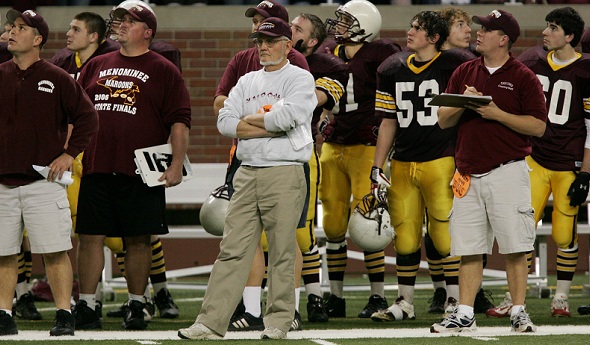
PHOTO: Ken Hofer, center in gray sweatshirt, coached Menominee to a 41-6 win over Madison Heights Madison in the 2006 Division 5 Final at Ford Field.
Highlight Reel: East Lansing's Faymous Tyra
August 29, 2012
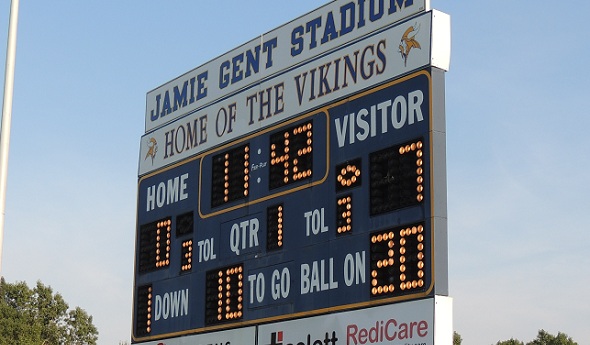
East Lansing's Faymous Tyra helped the Trojans light up the Haslett scoreboard quickly in Friday's season opener by taking the first kickoff of 2012 back to the Vikings' 2-yard line.
See that clip here -- and help us show everyone your favorite highlights from any sport.
Have a highlight or two we all should see? Email the mp4 file to Geoff Kimmerly at [email protected], along with a brief explanation of who is on the clip, when it took place, where and the final score of the contest. We'll produce them and post them on our Second Half "Videos" page. Or point us to a video clip already posted on YouTube, and we'll give a home here as well.
Here's Tyra's kickoff return, which is already making him a little "faymous" around the Greater Lansing area.