


MHSA(Q&)A: Detroit Lions rookie Chris Greenwood
May 25, 2012
 By Brian Spencer
Second Half
Five years ago, Chris Greenwood was No. 28 for the Detroit Martin Luther King football team, a key contributor for a Crusaders as they finished 7-3 and made the playoffs.
These days, he's a national sports story.
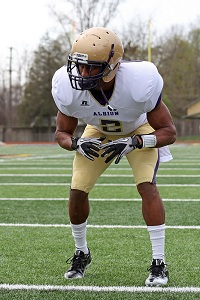
Greenwood, a 6-foot-1, 193-pound cornerback, is attempting the rare jump from Division III college football to the NFL. A standout at Albion College, he was selected in the fifth round of last month's NFL draft by the Detroit Lions.
His round-trip travels from his hometown and back again also included a stop at Northwood University. Greenwood played his final three college seasons for the Britons, last fall being named the Michigan Intercollegiate Athletic Association Defensive Player of the Year.
What is your favorite high school memory?
Winning the city championship senior year at Ford Field.
Were there any life/football lessons that you learned in high school that you’ve carried with you through college and now to the league?
Work hard; don’t let anything distract you. You are capable of doing anything that you put your mind to, and then some.
What is the biggest transition you’ve seen from DIII football at Albion to the Lions?
The talent difference I’ve had to get acclimated to, as well as technique. Technique has a much heavier emphasis now. I’ve also noticed a difference in speed and different terminology. For example, simple names for coverages have changed.
If you could trade places with anyone in the world right now, who would it be?
Nobody! I feel like I am in the best position possible. I’m living the dream.
What advice would you give to aspiring athletes who want to make the jump from high school to college? College to professional?
Never give up. Don’t ever quit. Don’t let anybody tell you that you can’t do something. If you work hard and have the ability, they will find you.
 What wide receiver tested you most to get to where you are at today?
My older brother (Doug Greenwood); growing up he was always stronger. We used to play, just him and I. He was pretty good. I had to figure out what way I was going to cover him because he was that much faster and stronger. This all took place just in the backyard or the park.
Would you say that your past at a Division III college has helped or hurt you more in the transition from college to professional ball?
It didn’t hurt, as far as what I have to do and what I’m doing now (in practice or off the field), but I feel like it affected my draft position. I could have gotten more exposure at bigger schools. At this point none of that matters; I’m glad to be where I am. Very happy.
Who was your favorite football player growing up?
Charles Woodson (former University of Michigan and current Green Bay Packers cornerback)
Is Donald Driver (Packers WR) more or less intimidating now that he has won "Dancing with the Stars?" If asked, would you be on "Dancing with the Stars?"
No way, he is not more intimidating because of that. If I were asked to do that, I wouldn’t right now. Maybe later on in my career I would do that, but right now I've got to stay focused.
PHOTOS courtesy of Albion College. Note about the interviewer: Brian Spencer is an MHSAA intern this summer, and was an Albion College football teammate of Greenwood's the last three seasons.

Committees Fail Critical Issues
June 7, 2013
Typically, each sport committee meets once each year for three to five hours, during which time it considers proposals that come from schools, leagues and the state’s coaches association for the sport; and the proposals most often deal with allowing more regular-season events and more qualifiers to the MHSAA postseason tournament.
Occasionally there is a proposal that might improve sportsmanship. But much more often the proposals would increase conflicts between academics and athletics and/or strain overstressed local budgets. And almost never is there a proposal that would address the health and safety of participants (the Wrestling Committee has been an occasional exception and the Competitive Cheer Committee is a routine exception).
While coaches associations must shoulder some of the blame because they’ve brought MHSAA committees “trivial” topics, at least in comparison to the tougher health and safety topics, much of the cause of MHSAA committee ineffectiveness is that the committees don’t meet long enough or often enough to research serious problems and develop well-thought-out solutions. That is forgivable because it is difficult to get commitments from busy people all across Michigan to be absent from their regular jobs and travel dozens or even hundreds of miles, and to do so multiple times each year – which is what it takes to more fully understand complex problems and more carefully construct solutions. Meetings have to be few and they have to be efficient.
However, facing the worst publicity football has seen since the mid-1970s, we knew we had to supplement the football committee process. We did so by appointing a special Football Task Force of optimum size and experienced, representative makeup to meet on however many occasions are necessary during 2013 to accomplish three purposes:
- Review practice policies to improve acclimatization of players and reduce head trauma.
- Review competition rules to reduce head trauma and the frequency of the sport’s most injurious game situations.
- Develop promotions that extol the value of football to students, schools and communities and the safety record of school-based football.
The promotional efforts have begun to be rolled out; game rule modifications are being investigated; and four proposals for changing football practice policies have been prepared. They will be the topic of our next posting.