


Playoff Proposal Pauses
May 10, 2013
During the MHSAA Football Finals at Ford Field last November, I was approached by representatives of the Michigan High School Football Coaches Association with a request to have the MHSAA’s computing capabilities crunch the numbers for a concept that a couple of the coaches association’s members had for revising the MHSAA Football Playoff point system.
Within a few weeks the MHSAA hosted a meeting that brought together the coaches who introduced the concept with our numbers crunchers; and within a few days our staff had outlined the principles, revised the point system and retrofitted it to show how the system would have affected the 2012 playoffs.
There was initial excitement that we might be onto something, but that brief infatuation began to wane as we dug deeper and discussed the plan more widely.
The key ingredients of the proposal are (1) that a school would gain playoff points for every game its opponent wins, whether or not that school defeated that opponent, and (2) that the number of automatic qualifiers would be reduced in favor of a larger group of additional qualifiers based on a revised playoff points system that would favor schools which schedule larger and more successful opponents.
In spite of our staff’s helpfulness in bringing this proposal forward, we’ve lost optimism that it will accomplish what is hoped. Rather than making regular-season scheduling easier, it could make it harder as the “six-wins-and-in” mindset is replaced by the even worse “seven-wins-and-in” mindset. And any system that ignores a minimum number of wins and relies entirely on playoff points is even less fair than the current system to schools in the less densely populated areas of Michigan.
From our retrofitting of the proposed concept to the 2012 season, we know that teams with 6-3 records would be displaced in the playoffs by teams with 4-5 records, which is certain to go down badly and be difficult to explain to those communities. The revised point system would make it even more difficult than the current system for schools in less populated areas to find opponents of the size and strength to generate high playoff point averages without these schools driving 100, 200, 300 or more miles, one way, several times each season. For individual schools and some entire leagues, this will make football scheduling tougher, not easier. It is likely to add stress to those league affiliations, and to football scheduling generally.
In any event, there is no need to rush to 2013 or 2014 a proposal that’s called “Enhanced Strength of Schedule System” because schedules are 99 percent set for 2013 and nearly so for 2014. Even if adopted today, few schedules would be impacted before 2015. If a change like this one is to be implemented, schools must have ample notice, and our technology department must have enough time to program the new point system and then test it through an entire season.
The Representative Council acted wisely on May 6 when it paused the progress of this proposal. Some elements of it may be discussed at the MHSAA’s scheduled meetings this summer and fall.
8 is More than Enough
December 16, 2011
Carsonville-Port Sanilac has been all in since the beginning of 8-player football as an MHSAA sport three seasons ago.
Rapid River made the switch just this season.
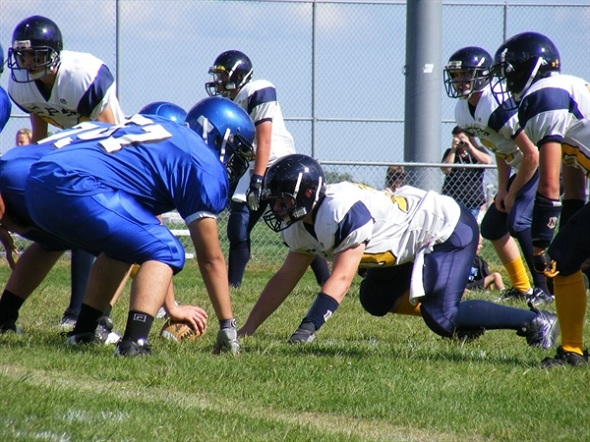
But heading into tonight's first-ever MHSAA Final for the sport, both programs can claim similar rewards from embracing this adjusted version of the state's most popular high school sport.
Despite small enrollments, they can still play the game. And although they've struggled at times in recent years, both teams are winning -- and reaping all of the community support and good vibes that come with success.
Both 11-1, Carsonville-Port Sanilac and Rapid River kick off for the championship at 7 p.m. at Northern Michigan's Superior Dome.
"We can't be happier to have the opportunity to play (8-player) this year. The added success has really brought our team together, and I hope it ends on a good note," Rapid River coach Steve Ostrenga said. "It's great for the kids and great for the community. You always talk about hard work. But when we were 1-8 ... the kids who have been through those tough times, I think they appreciate it more."
Both teams can value that statement.
Rapid River won one game each of the last two seasons and hadn't reached the playoffs since 2002. The school has roughly 120 students now -- 40-50 fewer than when it was having its last run of success near the end of the 1990s.
Carsonville-Port Sanilac went 0-9 before leading the charge into 8-player football in 2009. Although the Tigers had made the playoffs as recently as 2005, winning seasons for the team had been few and far between. But Carsonville-Port Sanilac went undefeated a year ago and beat Bellaire in an unofficial state "championship" game that matched the Tigers -- winners of the Mid-Michigan 8-man Football League -- against the winners of the Bridge-Alliance 8-man Conference.
"It's changed the whole culture of the school," said C-PS coach Tim Brabant, who is in his second season running the program and graduated from the school in 2006. "At first, a lot of people didn't buy into it. But as we went undefeated last year, and with what we've done this year, we've gotten complete community support and a buy-in across the board."
Recently, that's included 240 people showing up at last week's pancake breakfast to raise money for this weekend's trip to Marquette. Tigers supports also filled two fan buses headed to NMU.
Both coaches also listed a similar adjustment teams that play 8-player football must make: Strong open-field tackling is a must.
Although the field is only 40 yards wide -- instead of the usual 53 -- having six fewer players on the field opens up the offense significantly. Rapid River has scored more than 60 points four times and Carsonville-Port Sanilac put up 70 and 91 in games this fall. Both average 51 points per contest. Ostrenga grew up in Menominee -- known for its single wing offense that doesn't use a quarterback -- but has embraced a spread passing attack that allows for opportunities all over the field.
Both teams suffered their only losses when their quarterbacks were injured briefly in September. Depth always is an issue when numbers are low.
That said, success in this version of the game has planted some roots for the future. C-PS had 50 players out for elementary teams this fall and hopes to have enough down the road for a full junior varsity. Rapid River thinks the move to 8-player will help it sustain the program despite enrollment losses of the last few years.
And the historical context of tonight's game is not lost on either team.
"They understand that. We were the first team in the state of Michigan to have a full 8-man roster," Brabant said. "A lot of people thought we were crazy. These kids understand what's at stake."
(Photo courtesy of Carsonville-Port Sanilac football program)