


Playoff Proposal Pauses
May 10, 2013
During the MHSAA Football Finals at Ford Field last November, I was approached by representatives of the Michigan High School Football Coaches Association with a request to have the MHSAA’s computing capabilities crunch the numbers for a concept that a couple of the coaches association’s members had for revising the MHSAA Football Playoff point system.
Within a few weeks the MHSAA hosted a meeting that brought together the coaches who introduced the concept with our numbers crunchers; and within a few days our staff had outlined the principles, revised the point system and retrofitted it to show how the system would have affected the 2012 playoffs.
There was initial excitement that we might be onto something, but that brief infatuation began to wane as we dug deeper and discussed the plan more widely.
The key ingredients of the proposal are (1) that a school would gain playoff points for every game its opponent wins, whether or not that school defeated that opponent, and (2) that the number of automatic qualifiers would be reduced in favor of a larger group of additional qualifiers based on a revised playoff points system that would favor schools which schedule larger and more successful opponents.
In spite of our staff’s helpfulness in bringing this proposal forward, we’ve lost optimism that it will accomplish what is hoped. Rather than making regular-season scheduling easier, it could make it harder as the “six-wins-and-in” mindset is replaced by the even worse “seven-wins-and-in” mindset. And any system that ignores a minimum number of wins and relies entirely on playoff points is even less fair than the current system to schools in the less densely populated areas of Michigan.
From our retrofitting of the proposed concept to the 2012 season, we know that teams with 6-3 records would be displaced in the playoffs by teams with 4-5 records, which is certain to go down badly and be difficult to explain to those communities. The revised point system would make it even more difficult than the current system for schools in less populated areas to find opponents of the size and strength to generate high playoff point averages without these schools driving 100, 200, 300 or more miles, one way, several times each season. For individual schools and some entire leagues, this will make football scheduling tougher, not easier. It is likely to add stress to those league affiliations, and to football scheduling generally.
In any event, there is no need to rush to 2013 or 2014 a proposal that’s called “Enhanced Strength of Schedule System” because schedules are 99 percent set for 2013 and nearly so for 2014. Even if adopted today, few schedules would be impacted before 2015. If a change like this one is to be implemented, schools must have ample notice, and our technology department must have enough time to program the new point system and then test it through an entire season.
The Representative Council acted wisely on May 6 when it paused the progress of this proposal. Some elements of it may be discussed at the MHSAA’s scheduled meetings this summer and fall.
1st & Goal: Playoff Week 2 in Review
November 9, 2020
By Geoff Kimmerly
Second Half editor
We’ll blame this season’s delayed start for taking a few more weeks to uncover some under-the-radar gems this football season.
But this weekend’s second-round 11-player District and 8-player Regional games allowed us to unearth a few more teams that have taken special advantage of the opportunity to get back on the field this fall.
You’ll spot them in our weekly review below (Eastpointe! Evart!), and they all don’t begin with the letter E (even if Essexville Garber does as well).
Historical context is based in part on data at Michigan-football.com.
11-Player
Division 1
HEADLINER Grand Blanc 42, Clarkston 35 The indications that Grand Blanc (7-1) might be on the verge of a special run have come to fruition as the Bobcats (7-1) outpaced previously-undefeated Clarkston. Their 42 points were double what the Wolves (7-1) had given up in a game this season. The win earned Grand Blanc a rematch this week with Davison, which dealt the Bobcats their lone loss. Click for more from the Flint Journal and see highlights below from State Champs Sports Network.
Last night, @GB_Bobcat_FB upset @ClarkstonWolves to advance to the District Finals.#StateChamps | @LawrenceTechU pic.twitter.com/3G1OvIDKZL
— STATE CHAMPS! Michigan (@statechampsmich) November 7, 2020
District Digest Holt 43, Grand Ledge 36 As the Rams (4-3) mourned the death of former longtime coach Mike Smith, they avenged a one-point loss two weeks earlier to the rival Comets (5-3). Rochester Hills Stoney Creek 28, Clinton Township Chippewa Valley 21 The Cougars (7-0) earned their first District Final berth, going ahead of the Big Reds (3-4) for good with a fourth-quarter score. Rockford 42, Hudsonville 7 These Ottawa-Kent Conference Red rivals missed out on playing each other during the regular season, but after the wait the Rams (6-0) ran their winning streak over the Eagles (5-3) to six. Romeo 15, Macomb Dakota 14 The Bulldogs (4-4) turned a six-point loss in Week 8 into a one-point win to reach the District Finals for the first time since 2016 and end Dakota’s season at 6-2.
Division 2
HEADLINER Muskegon Mona Shores 28, Grand Rapids Forest Hills Central 25 The reigning Division 2 champion Sailors (8-0) received their biggest scare of the season, holding on as these teams met in the playoffs for the third time in four seasons. Forest Hills Central (6-2) led by as many as 10 points. Click for more from the Muskegon Chronicle and see highlights below from FOX 17.
Mona Shores holds off a late push by Forest Hills Central, set to host Caledonia in next week's district final. https://t.co/cy7R3syTqL
— FOX 17 Blitz (@FOX17Blitz) November 7, 2020
District Digest Midland 31, Midland Dow 15 The Chemics (8-0) made it two wins in three weeks over their rival, although Dow (5-3) cut the margin from 26 to 16 in the rematch. Oak Park 27, Detroit U-D Jesuit 21 Few have made a new season of the playoffs more than Oak Park (2-6), which upped its postseason scoring to a combined 62 points after scoring 45 during the regular season. Caledonia 55, Lowell 38 The Fighting Scots (4-4) have found their stride as well over the last three weeks, as they’ve won their last three games since finishing up the O-K Red schedule. North Farmington 44, Fenton 28 The Raiders (5-3) earned their first District title berth and scored their season-high points for the second-straight week while handing Fenton (7-1) its only loss.
Division 3
HEADLINER Eastpointe 57, Warren Fitzgerald 0 From 2011-18, Eastpointe (formerly East Detroit) won at most four games in a season. With this win, the Shamrocks moved to 8-0 this fall and earned their first District Final berth, and the shutout was their sixth this fall. Fitzgerald (5-3) had averaged 41 points per game. Click for more from the Macomb Daily.
District Digest Marquette 21, Mount Pleasant 14 The Redmen (7-1) have tied their winningest season since 2010 and will play in a District Final for the first time since that fall as well after holding the Oilers (6-2) to their fewest points this season. Chelsea 49, South Lyon East 44 The Bulldogs (8-0) are 9-2 in the playoffs over the last three seasons, with now six wins by seven points or fewer after this challenge by the Cougars (5-3). River Rouge 38, Riverview 20 The Panthers (6-1) will play for their sixth District title in seven seasons thanks in part to locking down an offense that had scored 44.5 points per game during a 7-0 start. Detroit Martin Luther King 42, Marysville 17 After a pair of losses to title contenders to close the regular season, King (5-3) is back in stride especially defensively; Marysville (6-2) was averaging nearly 35 points per game entering this contest.
Division 4
HEADLINER Detroit Country Day 21, Pontiac Notre Dame Prep 14 The Irish (6-2) already had pushed Country Day to its closest win, a 10-0 Yellowjackets victory in Week 6. But Country Day (5-2) – the reigning Division 4 runner-up – prevailed this time with a fourth-quarter comeback to return to the District Finals. Click for more from the Oakland Press.
District Digest Paw Paw 24, Hastings 22 The Saxons (6-2) were one of the best stories of the regular season with their first winning record since 2012. But Paw Paw (6-2) has bounced back from two losses to contenders at the end of the regular season by earning a third-straight District Finals trip. Battle Creek Pennfield 63, Marshall 42 One of the highest-scoring games of the season saw Pennfield (5-3) match its winningest season since 2013. The Panthers had missed out on their annual regular-season meeting with the Redhawks (3-5) but avenged last year’s 35-point loss. Ortonville Brandon 33, Goodrich 6 The Blackhawks (7-1) claimed their second win over Goodrich (6-2) after the first eventually decided the Flint Metro League Stars title. North Branch 35, Croswell-Lexington 6 Similar story with this rematch, as the Broncos (8-0) had previously defeated the Pioneers (6-2) in the game that went on to decide the Blue Water Area Conference championship.
Division 5
HEADLINER Olivet 28, Kalamazoo United 14 The Eagles (7-1) have played in the postseason 13 years in row. After five straight first-round losses – including three by seven points or fewer – Olivet will return to the District Finals. Kalamazoo United (6-2) was averaging 44 points per game, but the Eagles still haven’t allowed an opponent to score more than 17. Click for more from JoeInsider.com.
District Digest Grand Rapids Catholic Central 41, Belding 6 The reigning Division 4 champion Cougars (7-0) are well on their way again; they held the Black Knights (6-2) 37 points below their average. Howard City Tri Country 40, Grant 21 The Vikings (4-4) opened this season with a one-point loss to Grant (3-4), but by winning the rematch will play in a District Final for the first time since 2004. Frankenmuth 28, Almont 0 The Eagles (9-0) will play in a District Final for the ninth-straight season after shutting out the reigning Division 5 runner-up Raiders (3-3). Essexville Garber 21, Saginaw Swan Valley 14 The Dukes (7-1) are headed to their first District Final since 2013, adding a second win this season over Swan Valley (4-4) after two defeats to the Vikings in 2019.
Division 6
HEADLINER Montague 50, Clare 7 The Wildcats continued their playoff dominance of the last four years, claiming this matchup of undefeated league champions to advance to the District Finals for the fifth time in six seasons. Montague (8-0) of course was impressive on offense, but perhaps more so on the other side of the ball as Clare (7-1) entered the game scoring 50 points per game. Click for more from the Muskegon Chronicle and see highlights below from MI Sports Now.
The D6 district semi-final was the battle of perfect records between Clare and Montague. https://t.co/2xf8Vnlcux
— MISportsNow (@MISportsNow) November 8, 2020
District Digest Clinton 42, Erie Mason 24 These two switched leagues before this fall, Erie Mason (7-1) going on to win the Tri-County Conference title and Clinton (7-1) finishing second in the Lenawee County Athletic Association after they played in the opposite leagues for years prior. Boyne City 29, Maple City Glen Lake (OT) After losing to the reigning Division 6 runner-up 22-6 in their season opener, Boyne City (6-2) held on to avenge as the Lakers (5-3) went for the win after their overtime touchdown. Calumet 29, Menominee 14 The Copper Kings (4-3) made it two playoff wins in a row over Menominee (4-3) after they also met in a District Final in 2019. Negaunee 42, Ishpeming Westwood 14 These two were supposed to meet in a regular-season finale that was canceled, but two weeks later Negaunee (5-3) broke a three-game losing streak against the league rival Patriots (5-2).
Division 7
HEADLINER Evart 34, McBain 31 We see these every year, and they make high school football like no other level. Six weeks ago, McBain defeated Evart 52-16. The Wildcats (6-2) haven’t lost again and will play this weekend in their first District Final since 2012. The Ramblers had given up a total of 55 points this season before Evart’s latest 34. Click for more from the Cadillac News.
Evart handed previously unbeaten McBain a 34-31 loss in a Division 7 district semifinal on Friday.https://t.co/6ChjxaXQbh pic.twitter.com/CticffwwFG
— MISportsNow (@MISportsNow) November 7, 2020
District Digest Oscoda 33, Beaverton 27 The Owls (8-0) have won eight games for the third straight season and now earned the opportunity to play in a District Final for the first time since 2000. Beaverton finished 6-2, its defeats by a combined 11 points. Cass City 14, Sandusky 12 (OT) This was as good as expected from two undefeated teams, with Cass City (8-0) moving on with an overtime conversion stop as Sandusky (7-1) attempted to tie. Madison Heights Bishop Foley 34, Detroit Central 30 The Ventures (7-1) have won two playoff games by a total of seven points to put themselves in a District Final for the first time since 2013. Lawton 21, Homer 19 Lawton (7-1) moved to 17-2 over the last two seasons and earned a rematch this week with Schoolcraft, which defeated the Blue Devils in Week 8.
Division 8
HEADLINER Bark River-Harris 22, West Iron County 6 The Broncos (5-2) quietly have won five straight with a defense that’s held all but one opponent to 20 or fewer points. (That other opponent is Iron Mountain, up next.) They didn’t get to face West Iron County (7-1) in scheduled league play this fall because of the late season start, but took this opportunity to break a two-game losing streak against the Wyakins (7-1). Click for more from the Escanaba Daily Press.
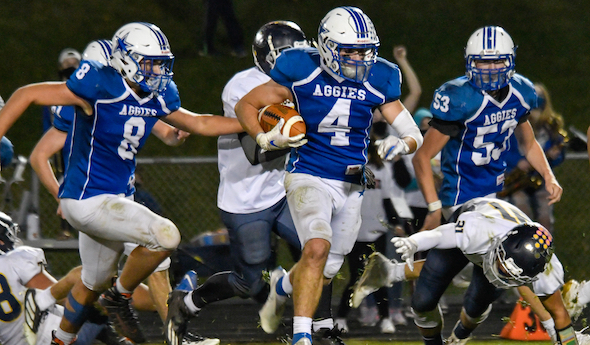
District Digest Beal City 31, Breckenridge 19 The Aggies (7-1) gradually broke away from the Huskies (6-2) to return to the District Finals for the second-straight season. Ubly 20, Unionville-Besewing 14 (OT) The Bearcats (6-2) ran their winning streak over USA (5-3) to seven after the teams previously missed out on their league game that was to open this fall. Petersburg Summerfield 29, Detroit Southeastern 20 The Bulldogs (3-5) have enjoyed the majority of their success this season over the last weeks, and this was a stunner as Southeastern (6-2) was scoring nearly 42 points per game. Royal Oak Shrine 28, Auburn Hills Oakland Christian 19 The Knights (6-2) will be playing for a third District title in five seasons after ending the Lancers’ run at 6-2.
8-Player
Division 1
HEADLINER Adrian Lenawee Christian 78, Mayville 14 How strong might the Cougars be? Both of these teams entered unbeaten, but Lenawee Christian (8-0) actually upped its scoring average three more points to 56 ppg with the win. Regardless, take nothing away from the Wildcats (7-1), who put together their winningest season since 1987. Click for more from the Adrian Daily Telegram.
Regional Roundup Morrice 38, Merrill 20 Awaiting Lenawee Christian this week will be the Orioles (8-0), who held Merrill (6-2) to its season low and scored the most the Vandals gave up this fall. Marcellus 26, Lawrence 22 The Wildcats (5-2) tied their most wins in a season since 2012 by completing a two-game sweep of the Tigers (6-2), with those victories by a combined 10 points. Indian River Inland Lakes 46, Pellston 18 This win gave the Bulldogs (7-1) as many this season as the last five years combined and came against a Pellston team that was undefeated and had allowed only one opponent to come within 20 points. Suttons Bay 44 Whittemore-Prescott 0 After winning their first meeting 39-20, the Norsemen (8-0) were even better this time posting their fourth shutout to end the season for the Cardinals (5-3).
Division 2
HEADLINER Cedarville 28, Rapid River 20 Only one Division 2 game was decided by fewer than 20 points this week, but this met expectations as Cedarville (7-1) added to a 32-20 win over the Rockets (6-2) from Week 6. The Trojans have reached the Regional Finals six of the last seven seasons. Click for more from MI Sports Now.
Regional Roundup Marion 51, Hillman 16 The Eagles (7-1) are undefeated since opening weekend and returning to the Regional Finals for the first time since 1996 after avenging last year’s playoff loss to the Tigers (3-5). Kinde North Huron 34, Peck 14 The Warriors (7-1) have won eight straight over Peck (4-4) and with this victory reached the Regional Finals for the third time in four years. Hale 44, Brethren 8 At 7-1, Hale is enjoying its best season since 1999, with this win over the Bobcats (5-3) its most impressive yet. Mount Pleasant Sacred Heart 51, Bay City All Saints 12 Only two weeks ago the Irish (7-1) edged All Saints (4-3) by eight points, but apparently picked up a few things to help them advance to the Regional Finals for the first time in three seasons of 8-player.
PHOTO: Beal City (on offense) moved on in Division 8 with a 31-19 win over Breckenridge. (Click to see more from HighSchoolSportsScene.com.)