


Sold Out
December 13, 2016
We are sometimes criticized for limiting the scope of school sports – for restricting long-distance travel and prohibiting national tournaments; but there is no question that we are doing the correct thing by protecting school sports from the excesses and abuses that characterize major college sports.
Across the spectrum of intercollegiate athletics, but especially in Division I football and basketball, there exists an insatiable “keep-up-with-the-Joneses” appetite.
Universities are building increasingly extravagant facilities. They are sending their “students” into increasingly expansive scheduling. But it’s never enough.
There is always another university somewhere building a bigger stadium, a fancier press box or more palatial dressing rooms, practice facilities and coaches quarters.
So-called “students” are sent across the US and beyond to play on any day at any time in order to generate revenue to keep feeding the beast.
The Big Ten knows it’s wrong, admits it, but schedules football games on Friday nights to attract larger rights fees from television.
Feeling used or abused, some of the athletes of Northwestern and then at the University of Wisconsin, talk of creating a union to protect themselves from the obvious, rampant exploitation.
And then occasionally, some college coaches dare to suggest that high schools are wrong to have regulations that reject the road that colleges have traveled, a road that has distanced athletics very far from academics in intercollegiate sports.
The intercollegiate model is not and must not be the interscholastic model. We who are sold out for educational athletics have nothing good to learn from those who have sold out for broadcast revenue.
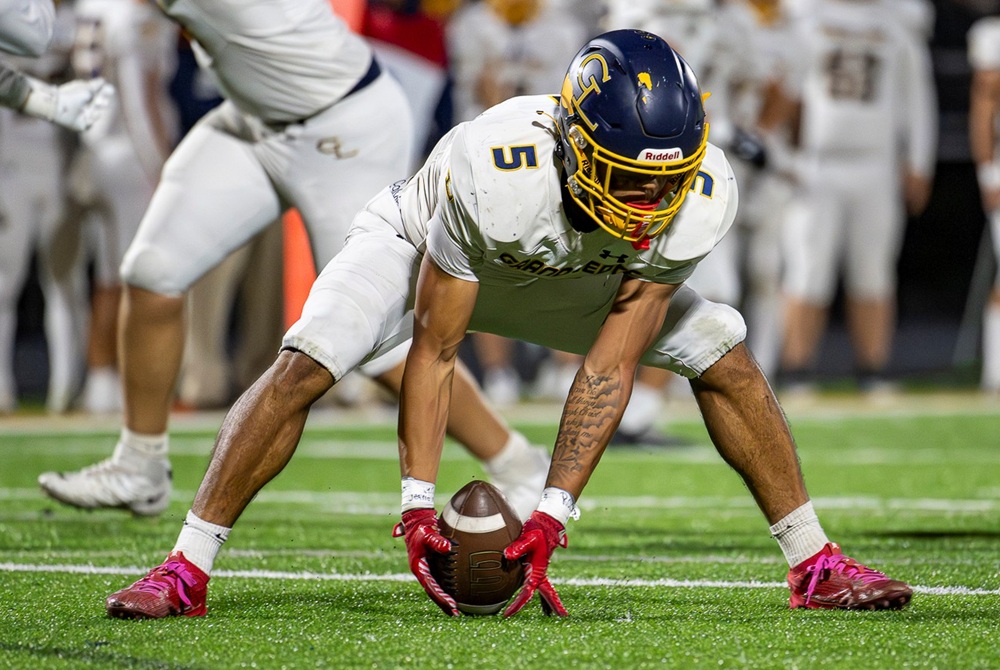
Be the Referee: Fumble Out of Bounds
By
Paige Winne
MHSAA Director of Brand Management
August 25, 2026
Be The Referee is a series of short messages designed to help educate people on the rules of different sports, to help them better understand the art of officiating, and to recruit officials.
Below is this week's segment – Fumble Out of Bounds - Listen
We are on the football field today, where the offense has the ball on their own 20-yard line. It’s 3rd-and 10. They run a draw play, with the running back gaining nine yards before fumbling at the 29 yard-line.
The fumbled ball goes forward to the 35-yard line before another offensive player recovers. Where should the ball be marked?
Because the ball was recovered in-bounds, it’s first down for the offense at the point of recovery, the 35-yard line.
If the ball had rolled out of bounds at the 35-yard line, before anyone could recover it, it would have been brought back to the spot of the fumble – the 29-yard line – making it 4th-and-1 for the offense.
(Photo by Larry Arreguin/Team Arreguin Photos.)