

Talking Practice: Texas, Illinois Revise Policies
December 20, 2013
By Rob Kaminski
MHSAA benchmarks editor
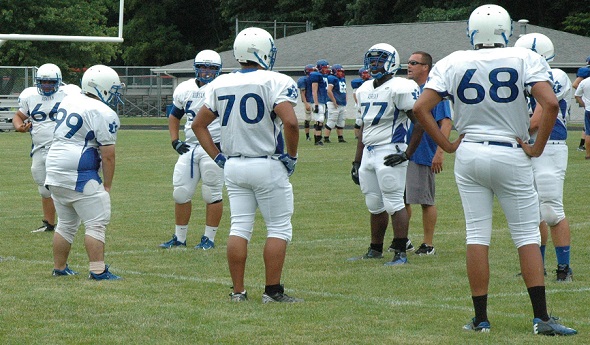
Coaches and players in Texas and Illinois adapted to new football practice limitations this fall, with the Texas policy focusing on contact, and the Illinois regulation emphasizing length of preseason practices.
Following are the main changes those states put in place heading into the 2013-14 season:
The University Interscholastic League, which governs school sports in Texas, put into writing that, “During the regular season and postseason, no football player is allowed to participate in more than ninety (90) minutes of full contact practice per week,” effective with the first day of practice this fall.
The complete policy follows:
For the purposes of the of rule, "full contact" is defined as football drills or live game simulations where "live action" occurs. Live action, as defined by USA Football, is contact at game speed where players execute full tackles at a competitive pace taking players to the ground. A team may continue to dress in full pads for practice, but may only participate in live action drills and game time simulations no more than ninety minutes per athlete per week. It is assumed that when players are in shells (shorts, shoulder pads, and helmets) no live action drills or simulations will occur. This rule is intended to limit live action drills and simulations and not the number of practices a team may participate in full pads. A team may participate in "air," "bags," "wrap," and "thud" drills and simulations at any point. These contact levels are defined below:
• Air - Players should run unopposed without bags or any opposition
• Bags - activity is executed against a bag, shield or pad to allow for a soft-contact surface, with or without the resistance of a teammate or coach standing behind the bag.
• Wrap - Drills run at full speed until contact, which is above the waist with the players remaining on their feet.
• Thud - Same as wrap but tempo is competitive with no pre-determined winner and the players are not tackling to the ground.
 The rule came to the UIL Legislative Council as a recommendation from the UIL Medical Advisory Committee, a permanent advisory committee to the Legislative Council which meets twice each year to discuss and review safety policies for UIL participants. The committee, which is made up of leading medical professionals in various specialties and includes representatives from the Texas High School Coaches Association, the Texas Girls Coaches Association, and the Texas State Athletic Trainer Association, unanimously recommended this limitation in full-contact football practice.
The rule formulates into a formal policy the existing actions of the majority of coaches across Texas, and most coaches have had to make few adjustments, if any. In fact, according to a story on statesman.com, the proposal caused more of an uproar on social media than from coaches.
“It’s not going to affect us in anyway,” Vandegrift HS coach Drew Sanders said in the story. “Most good coaches were way below that 90-minute amount already. Prior to legislation we still monitored it ourselves – the only change is now we have to keep up a log more publicly.”
Illinois put standards in place for its first 14 days of football practices, known as the state’s Preseason Football Acclimatization Practice Period. At the core of the policy is a three-hour practice limit for the first five days, during which teams can also conduct a one-hour walk-through.
 Teams must observe a minimum two hours rest between the practices and walk-throughs. Players may wear helmets only on the first two days, then helmets and shoulder pads for the next three. From days seven through 14 of the acclimatization period, schools may practice for a maximum of five hours per day, as long as that day is followed by a three-hour day, or an off day. During the five-hour days, no session can last more than three hours and must include a two-hour break between practices. Full pads may be worn for the final seven dates leading up to the first contest.
“This policy was the result of a collaborative effort between the IHSA Sports Medicine Advisory Committee and the Football Advisory Committee,” said SMAC committee member and University of Illinois Associate Professor of Orthopedic Surgery Dr. Preston M. Wolin. “The guidelines are based on the most recent scientific evidence, as well as the expertise of the coaches who will help implement them. Both committees believe the guidelines represent a significant positive contribution to the health of our athletes.”
“This new policy undoubtedly changes the way we, as coaches, approach preseason practice,” said Metamora HS coach Pat Ryan, who is a member of the FAC and a past President of the Illinois High School Football Coaches Association. “Coaches have to get more creative with when and how they schedule practices, as well what they do with their time. The proposals were strongly supported by both committees. It is a crucial final step to the process of being able to effectively prepare our teams in a safe manner. Change is always difficult, but the game is changing and we need to adapt to continue to put the safety of our players first.”
The IHSA offered multiple interactive online webinar meetings for high school coaches leading up to the start of practice where questions were answered, along with further clarifications on the policy and the science behind it.
“I think most coaches understood that changes were on the horizon,” said IHSA Executive Director Marty Hickman. “We wanted to be in a position to give our coaches as much information as possible to make sure they are comfortable with the new policy. Their input will be critical moving forward as we develop educational materials, like a best practices presentation. I commend our committees on a policy that is supported by medical experts, football coaches and school administrators.”
A Game for Every Fan: 11-Player Finals
November 25, 2014
By Geoff Kimmerly
Second Half editor
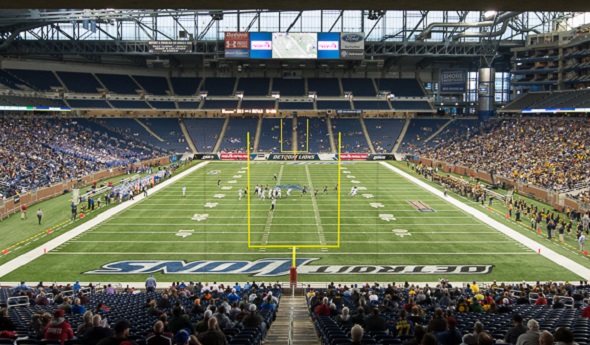
This weekend, the MHSAA 11-player Football Finals will celebrate a decade of calling Detroit's Ford Field home.
And these eight games over two days should provide a draw for every fan as we wave good-bye to another memorable season.
Like a favorite? Clarkston (Division 1), Grand Rapids West Catholic (5), Ithaca (6), Ishpeming (7) and Muskegon Catholic Central (8) are all reigning champions playing to repeat.
Intrigued by history? Ithaca is going for its 70th straight win and an opportunity to challenge the MHSAA record of 72 next fall.
Hungry for a rematch? Ishpeming and Detroit Loyola will meet in the Division 7 Final for the third straight season. The Hematites won the first two meetings.
Ready to root on a rookie? Saline, Muskegon Mona Shores and Lansing Sexton will all make their championship game debuts.
The Division 8, 2, 6 and 4 games are Friday, with the odd-numbered divisions playing Saturday. Tickets cost $10 and are good for all four games on one day. Click for a full schedule.
The first two Friday games will be broadcast live on Fox Sports Detroit’s primary channel (check cable/satellite box listings for your specific channel) with the Division 6 game on FSD’s Plus channel and the Division 4 game tape delayed at 10:30 p.m. on FSD primary. Both will be available live on FoxSportsDetroit.com. Saturday's games are all live on Fox Sports Detroit's main station. Audio broadcasts will be available on the MHSAA Network website.
Here’s a look at all 16 finalists. (Rankings were voted upon by The Associated Press’ media panel. Statistics are current unless noted.)
 Division 1
CLARKSTON
Record/rank: 13-0, No. 1
Coach: Kurt Richardson, 28th season (217-77)
League finish: First in Oakland Activities Association Red
Finals history: Division 1 champion 2013.
Best wins: 24-21 over No. 8 Macomb Dakota, 55-41 over No. 5 West Bloomfield, 23-20 over No. 4 Lapeer in District Final, 35-13 over No. 6 East Kentwood in Semifinal.
Players to watch: QB D.J. Zezula, 6-0/190, sr. (2,022 yards/20 TDs passing, 804 yards/13 TDs rushing); WR/DB Austin Egler, 6-3/200, sr. (420 yards/6 TDs receiving, 3 interceptions); RB Nolan Eriksen, 5-8/188, jr. (1,448 yards/20 TDs rushing); LB/TE Jack McKillop, 6-1/220, sr. (96 tackles), OT/OLB Cole Chewins, 6-7/235, sr.
Outlook: The Wolves have turned last season’s run to a first MHSAA championship into a 26-game winning streak that included this fall four wins over other top-10 ranked teams. Zezula also quarterbacked last season’s championship run, and Chewins – who moved to tackle this fall after an injury to the starter on the left side – is a Division I college recruit at linebacker and tight end. He and McKillop help key a defense that’s tightened to give up 15.8 points per game during the playoffs and only 17.3 per game for the season.
SALINE
Record/rank: 12-1, No. 7
Coach: Joe Palka, third season (31-5)
League finish: First in Southeastern Conference Red
Finals history: Has never played in an MHSAA Final.
Best wins: 42-35 over honorable mention Canton in Regional Final, 30-15 over No. 2 Detroit Cass Tech in Semifinal.
Players to watch: RB Kevin Gross, 5-11/200, sr. (604 yards/13 TDs rushing); QB Josh Jackson, 6-2/195 jr. (701 yards/9 TDs rushing, 1,626 yards/16 TDs passing); QB Trent Theisen, 5-11/180, sr. (1,038 yards/13 TDs passing, 234 yards/5 TDs rushing); FL Jeb Palka, 5-10/140, jr. (865 yards/9 TDs receiving), DB Tyrone Miller, 6-1/180, sr.
Outlook: Saline is two games deeper than during any playoff run in its history after making its first Semifinal appearance last week. While the league schedule didn’t provide too many obstacles this fall, the Hornets took on (and fell 31-28) to Division 2 finalist Muskegon Mona Shores on opening night and have continued to raise their performance to that level during the postseason – including locking down a Detroit Cass Tech offense that was averaging 34 points per game. Saline has two quarterbacks who could start for most – Jackson and Theisen have combined for 2,664 yards passing, 935 rushing and 29 touchdown passes.
 Division 2
MUSKEGON MONA SHORES
Record/rank: 12-1, No. 3
Coach: Matt Koziak, fourth season (24-17)
League finish: First in Ottawa-Kent Conference Black
Finals history: Has never played in an MHSAA Final.
Best wins: 40-7 and 42-14 (District Semifinal) over No. 4 Caledonia, 41-14 over No. 2 Midland Dow in District Final, 48-27 over No. 6 Muskegon, 25-24 over honorable mention Farmington Hills Harrison in semifinal, 31-28 over Division 1 No. 7 Saline.
Players to watch: QB Tyree Jackson, 6-5/210, sr. (2,235 yards/23 TDs passing, 825 yards/14 TDs rushing); RB/LB DeOntay Moffet, 5-9/205, sr. (1,439 yards/19 TDs rushing); WR/DB Matt Schuiteman, 6-2/180, sr. (879 yards/7 TDs receiving).
Outlook: Mona Shores also is making its longest playoff run after reaching the postseason for the first time only a year ago. Jackson, who has committed to the University of Buffalo, has been a main cog in the Sailors' rise – but left the Semifinal with an injury. With him and Moffet in the backfield, Mona Shores has run for more than 3,000 yards as a team – while the defense has given up only 52 points total in four playoff games against top competition.
WARREN DELASALLE
Record/rank: 10-3, honorable mention
Coach: Paul Verska, 13th season (99-49-0)
League finish: Third in Detroit Catholic League Central
Finals history: Division 2 runner-up 2006 and 2008.
Best wins: 26-21 over No. 1 Birmingham Brother Rice in Regional Final, 31-7 over Southfield in Semifinal, 21-14 over Detroit East English in District Final.
Players to watch: QB/DB Joey Garbarino, 6-2/210, sr. (1,098 yards/10 TDs passing, 441 yards/8 TDs rushing); RB/DB Allen Stritzinger, 6-0/178, soph. (1,183 yards/19 TDs rushing); OL/DL Khary Harris, 6-3/234, sr.; OL/DE Mike Danna, 6-3/233, sr.
Outlook: After opening 3-0 against out-of-state opponents, DeLaSalle lost its first three games in-state – but none by more than seven points, and the Pilots avenged that first loss to Brother Rice. DeLaSalle is giving up only 10 points per game during this seven-game winning streak, with Harris and Danna dominating up front. In addition to taking DeLaSalle to the Finals twice, Verska also coached Ann Arbor Huron to the 1997 Class AA championship game.
 Division 3
MUSKEGON
Record/rank: 12-1, No. 6 in Division 2
Coach: Shane Fairfield, fifth season (52-12)
League finish: Second in O-K Black
Finals history: Five MHSAA titles (most recent 2008), two runner-up finishes.
Best wins: 20-0 over No. 1 Zeeland West in Semifinal, 37-7 over No. 7 East Grand Rapids, 29-21 over honorable mention Grand Rapids Christian, 27-14 over No. 8 Cedar Springs in District Final, 42-7 over honorable mention Petoskey in Regional Final.
Players to watch: RB Caleb Washington, 5-8/180, sr. (1,556 yards/15 TDs rushing); DB/WR Alezay Coleman, 5-10/175, sr. (194 yards/1 TD receiving); WR Joeviair Kennedy, 6-3/205, sr. (381 yards/5 TDs receiving); QB Shawn Pfenning, 5-11/185, sr. (1,381 yards/14 TDs passing, 466 yards/14 TDs rushing); LB Taran Smith, 6-1/205, sr.
Outlook: Muskegon’s two runner-up finishes came the last two seasons in Division 2, but the Big Reds moved into Division 3 for this fall’s playoffs – and after falling to Brother Rice in those Finals has drawn another Catholic League power in St. Mary’s. Kennedy and Coleman were among standouts last season as well – Kennedy the team’s leading receiver in the 38-21 loss to Rice and Coleman the leading tackler that game – but they are just two from an athletic group that runs and stops the run especially well.
ORCHARD LAKE ST. MARY’S
Record/rank: 11-2, No. 5
Coach: George Porritt, 26th season (232-66)
League finish: Second in Detroit Catholic League Central
Finals history: Five MHSAA titles (most recent 2011), six runner-up finishes.
Best wins: 14-10 over Division 2 honorable mention Warren DeLaSalle, 51-3 over New Boston Huron in Semifinal, 21-19 over Southfield.
Players to watch: RB/P/K Brandon Adams, 5-11/185, jr. (1,339 yards/16 TDs rushing), RB/LB Justin Myrick, 5-10/180, jr. (1,044 yards/12 TDs rushing), DB/WR Tyson Smith, 5-11/180, sr. (308 yards/4 TDs receiving, 8 interceptions/1 TD return), DE/OT Jared Mosley, 6-2/240, sr.; DB/RB Ross Moore, 5-9/175, sr.
Outlook: The Eaglets are back in the Finals for the fifth time in six seasons and after missing the playoffs in 2013. This St. Mary’s team has a similar look to its 2012 Division 3 runner-up in that it features a group of standout running backs – joining Adams and Myrick is another junior, Pierce Bauer (646 yards/11 TDs rushing. The all-junior backfield is completed by quarterback Brandon Tabone, who has thrown 14 touchdown passes and makes plays to break up the run-heavy attack. Both losses were to Brother Rice – the latter coming down to the end in the Catholic League Prep Bowl.
 Division 4
GRAND RAPIDS SOUTH CHRISTIAN
Record/rank: 11-2, No. 4
Coach: Mark Tamminga, sixth season (47-22)
League finish: First in O-K Gold
Finals history: Two MHSAA titles (most recent 2012), four runner-up finishes.
Best wins: 49-14 over honorable mention Whitehall in Regional Final, 50-48 over Division 3 (Division 4 for playoffs) No. 9 Edwardsburg in Semifinal, 33-30 (OT) and 58-34 (District Final) over Hudsonville Unity Christian.
Players to watch: QB Jon Wassink, 6-2/190, sr. (1,210 yards/17 TDs rushing, 2,315/25 TDs passing); RB/DB Geff Plasman, 5-10/180, sr. (1,220 yards/22 TDs rushing); LB/WR Sam Heyboer, 6-4/210, sr. (103 tackles); DB/RB Dylan Brink, 5-11/195 jr. (112 tackles).
Outlook: South Christian is back in the Final for the third straight season, having won in 2012 and fallen to Marine City a year ago. Wassink, who has committed to Western Michigan University, was injured for the 2012 championship game and surely would like to cap his accomplished career by leading the Sailors to a title. They’ve scored 523 points this season – but a combined 192 in the four playoff wins. The losses came during the first weeks of the season to Division 2 Caledonia and Division 3 Grand Rapids Christian.
LANSING SEXTON
Record/rank: 13-0, No. 2
Coach: Daniel Boggan III, 13th season (95-45)
League finish: First in Capital Area Activities Conference Blue
Finals history: Has never appeared in an MHSAA Final.
Best wins: 41-20 over No. 1 Saginaw Swan Valley in District Final, 35-7 over No. 5 Richmond in Regional Final, 35-26 over Detroit East English, 21-12 over Lansing Everett.
Players to watch: RB/LB Avonte’ Bell, 6-1/228, sr. (1,306 yards/16 TDs rushing); QB/DB Malik Mack, 5-9/175, sr. (1,503 yards/19 TDs passing, 471 yards/8 TDs rushing); RB JaVon Wray, 5-6/175, sr. (1,488 yards/19 TDs rushing); WR/LB Rayshawn Wilborn, 6-4/195, sr. (757 yards/12 TDs receiving, 3 interceptions).
Outlook: A roster with 20 seniors has brought the Big Reds to the MHSAA Finals for the first time, with a number of those seniors on varsity for three seasons and four in the cases of Bell and lineman Shain Shannon. Stopping Sexton is difficult because of the number of offensive options with Bell and Wray running the ball and Mack able to take off as well if he doesn't find Wilborn, who has committed to Central Michigan University, or senior Randye Parker. That athleticism plays well on both sides of the ball – the Big Reds have given up only 144 points despite playing a schedule loaded with large Class A schools.
 Division 5
GRAND RAPIDS WEST CATHOLIC
Record/rank: 13-0, No. 1
Coach: Dan Rohn, eighth season (86-17)
League finish: First in O-K Blue
Finals history: Division 5 champion 2013 and 2010, two runner-up finishes.
Best wins: 42-24 over No. 3 Menominee in Semifinal, 48-12 over No. 9 Hopkins in District Final, 56-28 over honorable mention Reed City in Regional final, 31-0 over No. 7 Muskegon Oakridge.
Players to watch: QB Travis Russell, 6-2/180, sr. (2,365 yards/35 TDs passing, 1,334 yards/20 TDs rushing); TE/DE Bryce Witham, 6-4/240, sr. (764 yards/16 TDs receiving); WR Conner Nemmers, 6-1/175, jr. (702 yards/9 TDs receiving); OL/DL Drew Doyle, 6-1/235, sr.
Outlook: West Catholic has built quite a run with this its third straight Finals appearance and fourth in five years, and with a chance to win its third title in that time. But a win Saturday would complete the Falcons’ first 14-0 season. Russell has thrown for more than 4,500 yards and 37 touchdowns and run for more than 2,000 yards over the last two seasons, and he has a dominating target in sizable tight end Witham.
LANSING CATHOLIC
Record/rank: 13-0, No. 4
Coach: Jim Ahern, sixth season (55-13)
League finish: First in CAAC White
Finals history: Class C champion 1985, Division 5 runner-up 2011.
Best wins: 21-14 over No. 5 Almont in Semifinal, 27-22 over Division 6 No. 6 Monroe St. Mary Catholic Central, 28-0 over Eaton Rapids.
Players to watch: QB Tony Poljan, 6-7/230, jr. (2,537 yards/32 TDs passing, 953 yards/22 TDs rushing, 89 tackles); RB Tony Palmer, 5-11/175, jr. (836 yards/14 TDs rushing, 866 yards/8 TDs receiving); LB/RB Moses Kone, 5-11/195, sr. (96 tackles/9.5 sacks); WR/DB Zac Baker, 6-0/170, sr. (758 yards/7 TDs receiving, 49 tackles/13 interceptions); LB/RB Ben Rashid, 5-10/175, jr. (101 tackles).
Outlook: Poljan stands tall – literally – among offensive standouts statewide; combined he’s been part of 54 rushing and passing touchdowns. And Palmer has scored 22 times with more than 1,700 total yards – both filling in well the tradition under Ahern, who built Ithaca’s program on a high-scoring offense and took the Cougars to Ford Field with the same three years ago. But don’t sleep on a opportunistic defense giving up 12 points per game – Lansing Catholic has 30 interceptions and has recovered 15 fumbles.
 Division 6
MONROE ST. MARY CATHOLIC CENTRAL
Record/rank: 12-1, No. 6
Coach: Jack Giarmo, 17th season (143-54)
League finish: First in Huron League
Finals history: Class B champion 1991, three runner-up finishes.
Best wins: 50-15 over No. 3 Clinton in District Final, 27-26 over No. 2 Jackson Lumen Christi in Semifinal, 40-7 over New Boston Huron.
Players to watch: RB/DB Justin Carrabino, 5-8/160, jr. (1,380 yards/15 TDs rushing, 243 yards/5 TDs receiving); QB/DB Bryce Windham, 6-1/160, sr. (865 yards/15 TDs passing, 171 yards/4 TDs rushing); TE/DB Travis Vuich, 6-4/180, sr. (499 yards/9 TDs receiving); RB/LB John Lako, 6-2/200, sr. (1,048 yards/16 TDs rushing).
Outlook: St. Mary is back in the Finals for the first time since finishing a run of three runner-up finishes between 2005-10 – the last coming against Ithaca in the first of four straight title wins for the Yellowjackets. Defenses know what’s coming but still haven’t had much success stopping it; senior Mitchell Lamour has added another 841 yards and 12 touchdowns rushing to the two 1,000-yard seasons of his backfield mates. The Falcons only loss was by five in Week 9 to Division 5 finalist Lansing Catholic.
ITHACA
Record/rank: 13-0, No. 1
Coach: Terry Hessbrook, 11th season (114-17)
League finish: First in Tri-Valley Conference West
Finals history: Division 6 champions 2010, 2011, 2012, 2013.
Best wins: 20-16 over No. 5 Boyne City in Semifinal, 41-27 over No. 10 Madison Heights Madison in Regional Final, 35-0 over No. 8 Millington in District Final, 33-14 over Division 8 No. 9 (Division 7 for playoffs) Saginaw Michigan Lutheran Seminary.
Players to watch: QB/DB Jacob Smith, 6-1/170, jr. (1,979 yards/26 TDs passing, 1,298 yards/19 TDs rushing); WR/DB Spence DeMull, 6-3/165, jr. (1,080 yards/15 TD receiving); WR/DL Jonah Loomis, 5-9/170, jr. (100 yards/5 TDs rushing, 134 tackles); OL/OLB Jace Demenov, 6-0/205, jr. (154 tackles).
Outlook: Ithaca’s winning streak stands at 69 games, the longest active streak nationally among 11-player football teams. A win this weekend also would make the Yellowjackets the 12th in MHSAA history to win five football titles. They trailed Madison heading into the fourth quarter and held off Boyne City in the final seconds last week – and if they finish with another victory, they should make a run next fall at the MHSAA consecutive wins record of 72. Ithaca has only six seniors.
 Division 7
DETROIT LOYOLA
Record/rank: 13-0, No. 2
Coach: John Callahan, sixth season (64-10)
League finish: First in Detroit Catholic League AA
Finals history: Division 7 runners-up 2012 and 2013.
Best wins: 60-26 over No. 3 New Lothrop in Regional Final, 41-21 over Pewamo-Westphalia in Semifinal, 46-18 over Detroit Country Day.
Players to watch: RB/LB Marvin Campbell, 5-10/196, sr. (1,817 yards/30 TDs rushing); LB/TE Darryl Clemons, 6-2/228, sr. (68 tackles); LB/FB Paul Engram, 5-11/236, sr. (68 tackles); OL/DL Devon Hayes, 6-2/315, sr.; RB/CB Mideyin Wilson, 5-10/185, sr. (1,013 yards/15 TDs rushing).
Outlook: Loyola’s recently-annual Finals matchup with Ishpeming has become arguably the best long-distance rivalry in Michigan; the Bulldogs are seeking their first championship after falling to the Hematites by six in 2012 and 10 a year ago. Campbell is finishing a career that’s included 3,936 yards and 53 touchdowns on the ground, and he’s averaging an amazing 10 yards per carry this fall. He and Wilson again run behind a massive offensive line going 305-238-275-240-315 pounds from left tackle to right.
ISHPEMING
Record/rank: 12-0, No. 1
Coach: Jeff Olson, 23rd season (169-78)
League finish: First in Mid-Peninsula Conference
Finals history: Four MHSAA titles (most recent 2013), one runner-up finish.
Best wins: 22-13 over No. 7 Traverse City St. Francis in Regional Final, 20-7 over No. 9 Iron River West Iron County in District Final, 22-18 over Division 8 No. 9 (Division 7 for playoffs) Saginaw Michigan Lutheran Seminary in Semifinal, 20-0 over Division 8 No. 7 Beal City.
Players to watch: QB/DB Ozzy Corp, 6-5/190, jr. (606 yards/6 TDs passing, 731 yards/15 TDs rushing, 4 interceptions defensively); RB/DB Ozzy Hakkarinen, 6-0/205, sr. (611 yards/7 TDs rushing, 5 interceptions); LB/FL Dominic Suardini, 5-8/175, sr. (474 yards/7 TDs rushing); OL/DE Dan Thornton, 5-10/175, sr. (Statistics through regular season.)
Outlook: Most fans outside Ishpeming and its league may not recognize the names leading the charge back to Ford Field this weekend – the Hematites graduated the majority of players who carried them to back-to-back championships. But this group quickly has begun its own legacy continuing a winning streak that now stretches 33 games. Hakkarinen left the Semifinal with an injury and Corp picked up the slack finishing with 198 yards rushing; he may need to answer similarly but has proven more than capable, as has a defense giving up only 8.7 points per game.
 Division 8
MUNISING
Record/rank: 12-1, No. 8
Coach: Jeff Seaberg, 10th season (43-53)
League finish: First in Mid-Eastern Conference
Finals history: Class C champion 1980.
Best wins: 10-7 over No. 7 Beal City in Semifinal, 43-14 over No. 4 Crystal Falls Forest Park in Regional Final, 24-6 over No. 3 St. Ignace in District Final.
Players to watch: RB/LB Garrett Blank, 6-1/205, sr. (2,071 yards/29 TDs rushing); WR/DB Andy Cooper, 6-4/175, sr. (410 yards/7 TDs receiving, 6 interceptions); OL/DL Jason Lindbeck, 6-8/250, sr.; OL/DL Ian McInnis, 6-2/270, jr.; QB/DB Austin Kelto, 5-10/175, sr. (977 yards/18 TDs passing, 303 yards/8 TDs rushing).
Outlook: Munising has done just about everything possible so far during its best season in more than three decades. The lone loss came on opening night to Division 7 No. 9 Iron River West Iron County, and the Mustangs have given up only 57 points since and 85 total this fall. The program has five winning seasons over the last 20, but three over the last four years. A strong group of 10 seniors has played a major role in bringing the program back to its first championship game since its coach, Seaberg, was a junior on the team.
MUSKEGON CATHOLIC CENTRAL
Record/rank: 13-0, No. 1
Coach: Steve Czerwon, second season (25-2)
League finish: First in Lakes 8 Conference
Finals history: Nine MHSAA titles (most recent 2013), three runner-up finishes.
Best wins: 42-6 over No. 2 Harbor Beach in Semifinal, 48-7 over No. 6 Mendon in Regional Final, 42-0 over No. 5 Fowler in District Final, 30-0 over Detroit Country Day.
Players to watch: RB/DB Tommy Scott, 5-8/180, sr. (1,944 yards/31 TDs rushing); QB/DB Nicholas Holt, 6-0/185, sr. (859 yards/15 TDs rushing, 438 yards/9 TDs passing); TE/LB Lamar Jordan III, 6-0/200, sr.; OL/DL Jaeden MacPherson, 6-3/245, sr.; K Griffin Seymour, 5-8/140, sr. (80 extra points in 83 attempts, 3-5 field goals).
Outlook: The Crusaders have more than met expectations that they’d dominate again this season after returning Scott, Holt and Seymour among a number of contributors to last year’s run. Holt’s numbers might look low, but he’s missed most of the last seven games with an injury. Junior Christian Martinez has filled in well in his absence, and the defense is combining with Holt to pick up any remaining slack – MCC is giving up a mere 121 yards per game.
PHOTO: Ford Field has been home to the MHSAA 11-player Football Finals since 2005.