

Thank Roosevelt for Football Weekends
December 20, 2013
By Rob Kaminski
MHSAA benchmarks editor
The next time you find yourself immersed in a tense crosstown football rivalry on a Friday night followed by a Saturday pilgrimage to the nearest college campus and a Sunday afternoon with a remote and your favorite snacks and beverages, take a moment to consider what the weekend would be like if it weren’t for Teddy Roosevelt.
The man who became our 26th President shortly after the turn of the 20th Century following the assassination of William McKinley in 1901 was a football fan like you. Maybe more so.
Today’s game of football has reached a critical crossroads. Player size and speed have increased across the board. Savage use of equipment as weapons rather than protective gear has been glorified on television networks and social media. Leaders of the game at all levels have recognized the need for change, employing new rules and widespread educational efforts to aid in preserving the sport.
History, as they say, is repeating itself.
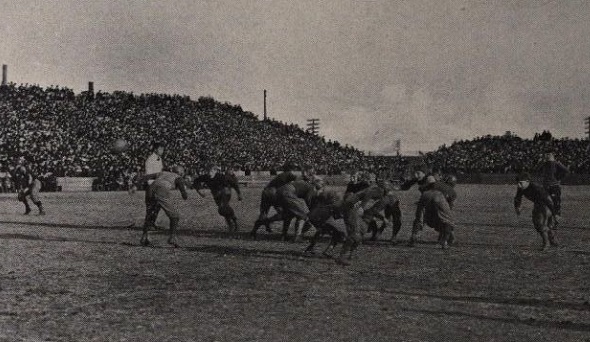
In an ironic twist, it was Roosevelt who saved the then-brutally violent game of football from itself more than 100 years ago. Yes, the same “Rough and Ready Teddy” who led the charge up San Juan Hill during the Spanish-American War and often sparred in the boxing ring while in office from 1901-09 opined that football was becoming so gruesome that he delivered an ultimatum: clean up the game or it would be outlawed.
The Chicago Tribune reported that in 1904 alone, there were 18 football deaths and 159 serious injuries, mostly among prep school players. Football deaths suffered by younger players were reported on a nearly weekly basis, as outraged citizens called on colleges and high schools to banish football outright.
In stepped Roosevelt, who called head coaches and representatives from Harvard, Yale and Princeton – college powers at the time – to the White House in 1905 urging them to eliminate excessive violence and set an example of fair play for the rest of the country. When the casualties actually rose by one during the ensuing season, Roosevelt reacted with greater resolve and convened leading football authorities for the purpose of authoring drastic rules changes. What emerged was an intercollegiate conference which was the predecessor of the NCAA.
Among the most effective changes for the 1906 season were the legalization of the forward pass, the elimination of mass formations, and the creation of a neutral zone. Football fatalities fell to 11 in each of the next two seasons, and severe injuries fell drastically.
Thanks to the introduction of protective equipment and ever-evolving rules changes, football during the 100-plus years to follow has become an exponentially safer game. Yet, the game’s leaders always will need to adjust and react to scrutiny that comes with the territory.
So, as the game once again undergoes rules modifications in the name of safety, give a tip of the cap to President Roosevelt while you enjoy college bowl season and the NFL playoffs and begin to think ahead to the first high school practice of 2014.
Drive for Detroit: Week 8 Review
October 15, 2018
By Geoff Kimmerly
Second Half editor
The first snow has fallen in northern Michigan, leaves are dropping there and everywhere else, and 171 teams have secured spots in this season’s MHSAA Football Playoffs.
 All of those things go hand in hand this time of year, and Week 8 played its part in deciding league champions all over the state and setting up other teams to continue into the postseason when this coming weekend is done.
In the Detroit area alone we could’ve highlighted a second five games, with Clinton Township Chippewa Valley and Grosse Ile’s outright league titles, West Bloomfield and Royal Oak Shrine’s upsets and Garden City’s continued bounce-back success. But take a look below at 45 other results that were of special significance as we roll into the final days of the regular season.
“Drive for Detroit” is powered by MI Student Aid.
Bay & Thumb
HEADLINER: Mount Pleasant 14, Midland Dow 10 The Oilers (8-0) locked up a share of the Saginaw Valley Red championship, coming back from a 10-point deficit and holding Dow (5-3) scoreless during the second half. Mount Pleasant can make it an outright title this week against Saginaw Heritage, while the Chargers take on Midland with both teams needing a win to make the playoffs automatically. Click for more from the Mount Pleasant Morning Sun and see below for highlights from WJRT.
Mt. Pleasant comes back from a 10-0 deficit to Midland Dow to remain undefeated! @MP_StudentSec @Dowathletics https://t.co/j6px6CstzP
— ABC12WJRT (@ABC12WJRT) October 13, 2018
Also of note: Port Huron Northern 26, Roseville 14 After finishing Macomb Area Conference Gold runner-up the last two seasons, Northern (7-1) claimed this season’s MAC Blue title in this winner-take-all championship game. Roseville (5-3) takes on Eastpointe this week hoping to qualify for the playoffs.
Remember this one: Harbor Beach 20, Sandusky 0 The Pirates (7-1) trailed first-place Sandusky (7-1) by a win heading into the Greater Thumb Conference East finale, but emerged with a shared championship to follow up last season’s outright title.
More shoutouts: Fenton 41, Swartz Creek 10 The reigning Flint Metro League champ can’t win an eighth straight title, but the Tigers (6-2) made this race interesting still by dropping former lone leader Swartz Creek (6-2) into a three-way tie for first with a game to play. Cass City 42, Reese 7 The Red Hawks (7-1) completed an outright GTC West title run, their first outright league championship since 1972 (as reported by the Huron Daily Tribune).
Greater Detroit
HEADLINER: Detroit Catholic Central 10, Warren DeLaSalle 7 The Shamrocks (6-2) finished a topsy-turvy two weeks with a share of the Detroit Catholic League Central title. DCC was upset by Orchard Lake St. Mary’s in Week 7 but came back to edge the Pilots (6-2) – who settled for a share of the title as well but can avenge this defeat in this week’s Prep Bowl A/B championship game. Click for more from the Observer & Eccentric.
Also of note: Birmingham Seaholm 21, Farmington 0 The Maples (7-1) clinched the Oakland Activities Association Blue title outright by shutting out the second-place Falcons (6-2), a massive turnaround from last season’s 1-8 finish and four straight sub-.500 seasons.
Remember this one: South Lyon 29, Walled Lake Western 19 The Lions (8-0) are another huge success story after going 1-8 a year ago. They claimed the outright Lakes Valley Conference title with this win over last season’s co-champion Western (5-3).
More shoutouts: Warren Woods-Tower 26, St. Clair Shores Lake Shore 12 The Titans (8-0) completed a perfect run to an outright MAC Gold title in this winner-take-all matchup with Lake Shore (6-2). Warren Michigan Collegiate 34, Harper Woods Chandler Park 32 (OT) The Cougars (8-0) needed every last point to secure the Charter School Conference title against former co-leader Chandler Park (3-4).
Mid-Michigan
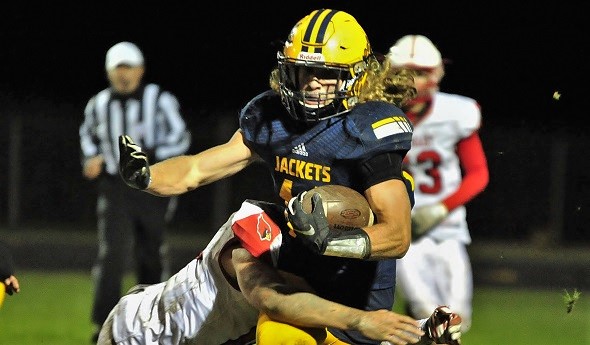
HEADLINER: Ithaca 20, Saginaw Michigan Lutheran Seminary 9 Over the last six seasons, only MLS also in 2016 has given Ithaca this good of a game in Tri-Valley Conference West play. But the Yellowjackets (7-1) hung on for their 63rd straight league win and the outright title, while the Cardinals (6-2) look even more like a dangerous playoff team likely in Division 8. Click for more from the Mount Pleasant Morning Sun.
Also of note: Haslett 35, Goodrich 0 The Vikings (7-1) added an impressive win to their league title share in the Capital Area Activities Conference Red, downing the Genesee Area Conference Red champion Martians (5-3).
Remember this one: Okemos 30, Holt 20 The Chiefs (6-2) have upped their win total three straight seasons and with five straight victories this fall clinched their first playoff berth since 2014.
More shoutouts: DeWitt 39, St. Joseph 10 The Panthers (8-0) have dominated again this regular season, with this win over Southwestern Michigan Athletic Conference West co-leader St. Joseph (5-3) certainly worth noting. Williamston 34, Lake Fenton 28 Also a CAAC Red co-champ, Williamston (7-1) has shown plenty of grit winning four games by seven points or fewer, including this one over the Blue Devils (4-4) after splitting a pair of meetings with them a year ago.
Northern Lower Peninsula
HEADLINER: Traverse City West 17, Gaylord 16 (OT) How much of a difference can one play make? In this case, it kept reigning Big North Conference champion West in first place with a week to play when a loss in this game would’ve created a three-team jam atop the standings. The Titans (6-2) stopped on a two-point conversion to hand the Blue Devils (5-3) their second straight one-point defeat. Click for more from the Traverse City Record-Eagle.
Also of note: Lake City 14, Kent City 7 The Highland Conference champ Trojans (8-0) aren’t resting on that success, and took on Kent City (7-1) in one of three matchups of undefeated teams across the state last week. Lake City set itself up to play this week for a second straight undefeated regular season.
Remember this one: Benzie Central 36, Boyne City 34 The Huskies (5-3) have gone from shutting their season down in September two years ago, to winning one game last season to now being on the cusp of making the playoffs for the first time since 2011.
More shoutouts: Elk Rapids 30, Harbor Springs 14 The Elks (6-2) locked up a playoff berth for the second straight season against another of the area’s best in the playoff-bound Rams (6-2). Johannesburg-Lewiston 66, Newberry 18 The Cardinals (7-1) claimed a share of the Northern Michigan Football League Legacy title, their first league championship since 2009.
Southeast & Border
HEADLINER: Reading 50, Springport 14 Springport put up the most points given up by Reading this season. That the Rangers have given up only 33 total this fall is just one of many indications of how thoroughly they’ve dominated. This win gave Reading (8-0) a second straight Big 8 Conference title, with Springport (7-1) also entering the night tied for first but finishing second. Click for more from the Hillsdale Daily News.
Also of note: Saline 28, Monroe 6 This was another of a series of winner-take-all league title deciders this week, and the Hornets (7-1) did so in the Southeastern Conference Red for the fifth straight season. The second-place Trojans (6-2) will join them in the playoffs for the first time since 2015.
Remember this one: Dexter 48, Ypsilanti Lincoln 42 The Dreadnaughts (6-2) surely will never forget it. They clinched their first playoff berth in program history, the latest highlight from a season that got rolling when they broke a 33-game losing streak in Week 2. Lincoln (4-4) must beat Milan this week to hope for an at-large postseason bid.
More shoutouts: Brooklyn Columbia Central 30, Hillsdale 27 Much can be decided with both teams facing tough Week 9 matchups, but for now the Golden Eagles and Hornets both stand 7-1 overall and tied for first in the Lenawee County Athletic Association. Ottawa Lake Whiteford 48, Clinton 6 The Bobcats (8-0) clinched a share of the Tri-County Conference championship with their 22nd straight win and 35th in 36 games – this one even more impressive with Clinton (6-2) running second in the league this fall.
Southwest Corridor
HEADLINER: Kalamazoo Central 28, Stevensville Lakeshore 6 The Maroon Giants (5-3) have set themselves up with an opportunity this week to both win the Southwestern Michigan Athletic Conference East title and clinch a playoff berth, the latter for the first time since 2004. Central also put Lakeshore (4-4) in a position where it must win this week to hope for an at-large bid and continue a 21-season playoff streak. Click for more from JoeInsider.com.
Also of note: Berrien Springs 40, Olivet 21 The Shamrocks (7-1) earned arguably their most impressive win of the season, or at least the last month, doubling up the Greater Lansing Activities Conference champion Eagles (7-1).
Remember this one: Portage Central 21, Mattawan 14 (OT) This result sets up a lot of narrative for Week 9. The Mustangs (6-2) are in a three-way tie for first in the SMAC West and put themselves in position to share the title with one other team – the other leaders Portage Northern and St. Joseph play each other this week – while Mattawan (5-3) takes on Lakeshore with playoffs on the line for both.
More shoutouts: Kalamazoo United 58, Constantine 44 United (8-0) withstood its second test in two weeks to set up a Southwestern Athletic Conference Valley championship game this week against Schoolcraft. Constantine (6-2) is on pace for its best offensive output since 2013 and could be a threat in the playoffs. White Pigeon 16, Decatur 14 The Chiefs (6-2) locked up their first playoff berth since 2009 and after three straight 4-5 finishes.
Upper Peninsula
HEADLINER: Marquette 21, Gladstone 14 The Redmen (4-4) locked up a share of the Great Northern Conference championship, their first since 2011, and earned a chance to play for more. Marquette must beat Menominee this week to hope for an at-large playoff bid; Gladstone (3-5) is going to fall outside of the postseason with three losses by eight or fewer points. Click for more from the Marquette Mining Journal.
Also of note: Escanaba 38, Traverse City Central 21 The Eskymos (6-2) will only claim a share of the GNC title this week with a win over Kingsford and a Marquette loss, but Escanaba has the Upper Peninsula’s most impressive resume against downstate competition. Add this win over the Trojans (6-2) to notable victories over Petoskey and Detroit Loyola.
Remember this one: Iron River West Iron County 12, Gwinn 6 The Wykons (6-2), who just missed a trip to Ford Field last season, locked up another opportunity to make a run while putting Gwinn (5-3) in a must-win spot this week.
More shoutouts: Negaunee 36, Houghton 16 The Miners (5-3) have rebounded for an 0-2 start to put themselves in position to clinch a playoff spot this week after missing the postseason a year ago. Iron Mountain 31, L’Anse 7 The Mountaineers (6-2) are headed back to the playoffs after finishing 1-8 last season.
West Michigan
HEADLINER: Muskegon 55, Muskegon Mona Shores 35 The Big Reds (9-0) led by only six heading into the fourth quarter, but scored 14 unanswered points in the fourth to clinch a share of the Ottawa-Kent Conference Black title. Senior quarterback Cameron Martinez ran for 352 yards and six touchdowns, including a 44-yarder for the final score of the night as the Big Reds ran their winning streak over Shores (7-1) to three. Click for more from the Muskegon Chronicle and see highlights below from State Champs Sports Network.
??VIDEO: Check out the highlights of the Muskegon (@OnMuskegon) vs. Mona Shores from last night pic.twitter.com/442MIf8p2L
— STATE CHAMPS! (@statechampsnet) October 13, 2018
Also of note: Grand Rapids Christian 24, East Grand Rapids 21 The Eagles (6-2) broke a two-game losing streak against the Pioneers (5-3) and in the process forced a tie between the two for first in the O-K Gold with a game to play.
Remember this one: Grand Rapids Catholic Central 24, Grand Rapids West Catholic 14 This matchup of reigning MHSAA champions (GRCC in Division 4, West Catholic Division 5) again determined at least a share of the O-K Blue title, with the Cougars (7-1) repeating and putting West Catholic (4-4) in a must-win scenario to add to a 15-year playoff streak.
More shoutouts: Reed City 50, Newaygo 7 The Coyotes (8-0) locked up the outright Central State Activities Association Gold title, their eighth straight league championship, after Newaygo (5-3) entered the game with an opportunity to force a share. Zeeland East 48, Zeeland West 34 The Chix (7-1) secured a share of the O-K Green title for the second straight season, and after West (6-2) entered the night with a chance to create a three-team tie atop the league standings.
8-Player
HEADLINER: AuGres-Sims 68, Posen 12 The Wolverines (8-0) locked up the Midwest Central Michigan Conference East title outright by sending Posen (6-2) to third place, and with a win this week will own a second straight unbeaten regular season – last season’s in 11-player and this one in 8. See highlights below from WBKB.
Check out The 5th Down’s highlights from week 8 ?? https://t.co/YEdt97jxbD #MHSAA pic.twitter.com/4eafoS3GIE
— WBKBSports (@WBKBSports) October 13, 2018
Also of note: Engadine 30, Rapid River 12 Four of seven teams in the Great Lakes Conference East are at least 5-3, and Engadine (7-1) held onto a chance of sharing the league title while Rapid River (5-3) remains in the playoff hunt.
Remember this one: Kingston 37, Peck 8 These longtime rivals didn’t play last season, but this win did break Kingston’s five-game losing streak to the Pirates that began when both moved to 8-player in 2011.
More shoutouts: Portland St. Patrick 28, Tekonsha 26 The reigning 8-Player Division 2 runner-up Shamrocks (4-4) needed a boost after three straight losses, and got it with this win over Southern Central Athletic Association B champion Tekonsha (5-3). Suttons Bay 13, Onekama 8 The Norsemen (7-1) reached seven wins for the second straight season, while Onekama (6-2) has taken two painful defeats this fall by a combined seven points.
Second Half’s weekly “Drive for Detroit” previews and reviews are powered by MI Student Aid, a part of the Student Financial Services Bureau located within the Michigan Department of Treasury. MI Student Aid encourages students to pursue postsecondary education by providing access to student financial resources and information, including various student financial assistance programs to help make college more affordable for Michigan students. MI Student Aid administers the state’s 529 savings programs (MET/MESP) and eight additional aid programs within its Student Scholarships and Grants division. Click for more information and connect with MI Student Aid on Facebook and Twitter @mistudentaid.
PHOTO: Ithaca clinched an outright Tri-Valley Conference West championship with a 20-9 win over Saginaw Michigan Lutheran Seminary. (Click for more from HighSchoolSportsScene.com.)