

Breslin Bound: 2024-25 Girls Report Week 11
By
Geoff Kimmerly
MHSAA.com senior editor
February 17, 2025
The final basketball bracket reveal of the MHSAA winter season is coming up Sunday, when Girls Basketball District pairings will be announced. For the first time, all teams in every District will be seeded based on Michigan Power Ratings (MPR).

MPR is calculated using wins and losses for games played between teams entered into the MHSAA Tournament. Scores of games, margin of victory and location of games are not included in the MPR formula. The final MPR number is 25 percent of the team's winning percentage, plus 50 percent of its opponent's winning percentage, plus 25 percent of its opponent's opponent's winning percentage – the total rewarding both success and strength of schedule.
A number of league championship deciders will take place this week, as will a handful of nonleague matchups of potential MHSAA Finals contenders as they tune up for March.
“Breslin Bound” is powered by MI Student Aid and based on results and schedules posted for each school at MHSAA.com.
Week in Review
The countdown of last week’s five most intriguing results:
1. Belleville 62, Wayne Memorial 38 Two weeks after suffering its only loss this season, to Wayne (14-6), Belleville (18-1) stormed back to set up a possible shared title in the Kensington Lakes Activities Association East with one league game to play for both.
2. Haslett 80, Detroit Country Day 52 The Vikings (15-2) avenged a 20-point loss from last season to the Yellowjackets (14-5) as both look forward to MHSAA Tournament aspirations in March.
3. Yale 36, Sandusky 19 Both of these teams are closing in on league titles, and maybe more as Yale (18-1) handed Sandusky (16-1) its only loss and they will go separate ways for the postseason.
4. East Jordan 54, Gaylord St. Mary 42 The Red Devils (15-4) shuffled the Ski Valley Conference standings a bit with St. Mary (15-2) and Indian River Inland Lakes now both with just one league loss and East Jordan with two and three league games to play.
5. Midland 62, Flint Powers Catholic 46 The Chemics (16-1) remain one game ahead of Saginaw Heritage in the Saginaw Valley League after Heritage also defeated Powers (12-5) on Friday.
Watch List
With an eye toward March, here are two teams in each division making sparks:
DIVISION 1
Clarkston (13-6) The Wolves are one win away from clinching the Oakland Activities Association Red title, one spot ahead of reigning Division 1 champion West Bloomfield in the standings thanks in part to a 48-41 win over the Lakers on Jan. 31. Clarkston has won nine of its last 10 games, its only defeat during that time to Orchard Lake St. Mary’s (14-3), and with a win over OAA Blue leader Auburn Hills Avondale (15-3) during the run. The Wolves will be ready for high-level competition next month with losses as well this season to Flint Powers (12-5), Hartland (15-4), Ann Arbor Father Gabriel Richard (18-1), Country Day (14-5) and Detroit Edison (12-3).
Orchard Lake St. Mary’s (14-3) The Eaglets claimed their second-straight league championship, sharing the title in the Catholic High School League Central West division after winning the AA a year ago. They split with co-champion Farmington Hills Mercy (13-4), winning the first meeting and losing the second, and their other defeats were similarly strong against FGR and Country Day. Wins over Livonia Stevenson (15-5) and Clarkston (see above) also pop off the page, and OLSM can carry some significant momentum into the postseason with a good result Feb. 27 at Frankenmuth (16-3).
DIVISION 2
Haslett (15-2) The Vikings opened this season with a loss to Division 1 contender Rockford (19-1), but have fallen only one more time since, to Division 1 DeWitt (17-1). Add those to last week’s win over Country Day and a perfect run through the Capital Area Activities Conference Red so far, and the Vikings have steadily raised their profile again after finishing second in the league but then winning a District title a year ago. The most impressive CAAC Red win was 67-56 over second-place St. Johns (15-3), with the rematch coming up Friday. Haslett also closes the regular season with possible Regional Semifinal opponent Parma Western (17-1), although to see Western a second time Haslett must first navigate a District that includes Wixom St. Catherine (15-3).
Vicksburg (16-2) Back-to-back losses to Paw Paw (14-3) and Niles Brandywine (17-0) as January turned to February have been just a momentary detour as Vicksburg has clinched at least a share of the Wolverine Conference title, the Bulldogs’ third straight. They reached the Division 1 Quarterfinals a year ago and have continued to impress again, winning the first meeting with Paw Paw and earning other notable victories over Stevensville Lakeshore (12-3) and Coldwater (12-6) among others. Vicksburg can clinch the league title outright against Edwardsburg on Friday and should be the favorite in its District that also includes Marshall (13-5) but three sub-.500 teams.
DIVISION 3
Bronson (15-2) A 51-32 win over Concord on Feb. 4 has Bronson in position to share the Big 8 Conference title with the Yellow Jackets (16-4), who won the first meting 49-46 on Jan. 3. That would be a jump from finishing third in the league and 16-7 overall a season ago, and the only other loss this time was to undefeated Brandywine. Games against Division 1 Sturgis (11-7) and Division 2 Buchanan (10-8) should provide some additional prep as Bronson prepares to host a District that will include Southwest 10 Conference leader Centreville (12-4) and Quincy (10-7), which Bronson has defeated twice.
Grass Lake (15-3) Grass Lake has clinched a share of the Cascades Conference East title, its seventh-straight league championship, and jumped from No. 15 to 12 to No. 6 in statewide Division 3 MPR over the last three weeks. The Warriors are on a 12-game winning streak that’s included pairs of victories over Michigan Center (15-2) and Leslie (13-5) and handing Division 1 Detroit Renaissance (18-1) its only loss. The run kicked off after a 3-3 start that included losses to Chelsea (14-2), Country Day and Jackson Lumen Christi (12-5) – and Grass Lake could see Lumen again in the District the Warriors will be hosting.
DIVISION 4
Clarkston Everest Collegiate (13-2) After finishing as a league runner-up the last two seasons, Everest has won its first championship since 2012-13 with a perfect run through the CHSL Intersectional 1. The only losses this season were to Division 2 Warren Regina and Wixom St. Catherine, and all of the Mountaineers’ wins have come by at least 15 points. Everest will face two of its toughest opponents to close the regular season, Division 3 Rochester Hills Northwest (13-4) and Division 2 Pontiac Notre Dame Prep (12-5), both next week.
Mount Pleasant Sacred Heart (13-0) A 40-37 win over St. Charles last week kept Sacred Heart undefeated and atop the Mid-State Activities Conference alone after finishing a regular-season sweep of the second-place Bulldogs. A league title would be Sacred Heart’s first since 2019-20 and follow last year’s run to the Quarterfinals. The Irish will fit six league games into the next two weeks, including matchups with third-place Fulton (11-6), fourth-place Merrill (10-6) and fifth-place Breckenridge (9-6). Sacred Heart also had a notable two-point opening win this season over Beaverton (12-5).
Can’t-Miss Contests
Be on the lookout for results of these games coming up:
Tuesday – Rockford (19-1) at Frankenmuth (16-3) – These Divisions 1 and 2 powers, respectively, meet again with Rockford having taken last year’s matchup 67-44.
Thursday – Detroit Renaissance (18-1) at Ann Arbor Father Gabriel Richard (18-1) – The annual Operation Friendship game between Detroit Public School League and Catholic High School League tournament champions also matches up contenders statewide in Divisions 1 and 2, respectively.
Thursday – Yale (18-1) at Armada (15-1) – At least a share of the Blue Water Area Conference title could be decided with Yale a game ahead in the standings after downing Armada 69-62 on Jan. 28.
Friday – Detroit Edison (12-3) at Belleville (18-1) – Two more potential favorites in Divisions 2 and 1, respectively, will meet again after Edison won last year’s matchup 57-46.
Friday – Utica Eisenhower (18-1) at Utica Ford (17-1) – Eisenhower has a one-game lead going into this Macomb Area Conference Red finale after handing Ford its lone defeat, 64-49 on Jan. 28.
MHSAA.com's weekly “Breslin Bound” previews and reviews are powered by MI Student Aid, a division within the Department of Lifelong Education, Advancement, and Potential (MiLEAP). MI Student Aid encourages students to pursue postsecondary education by providing access to student financial resources and information. MI Student Aid administers the state’s scholarship and grant programs that help make college Accessible, Affordable and Attainable for you. Connect with MI Student Aid at www.michigan.gov/mistudentaid and find more information on Facebook and Twitter @mistudentaid.
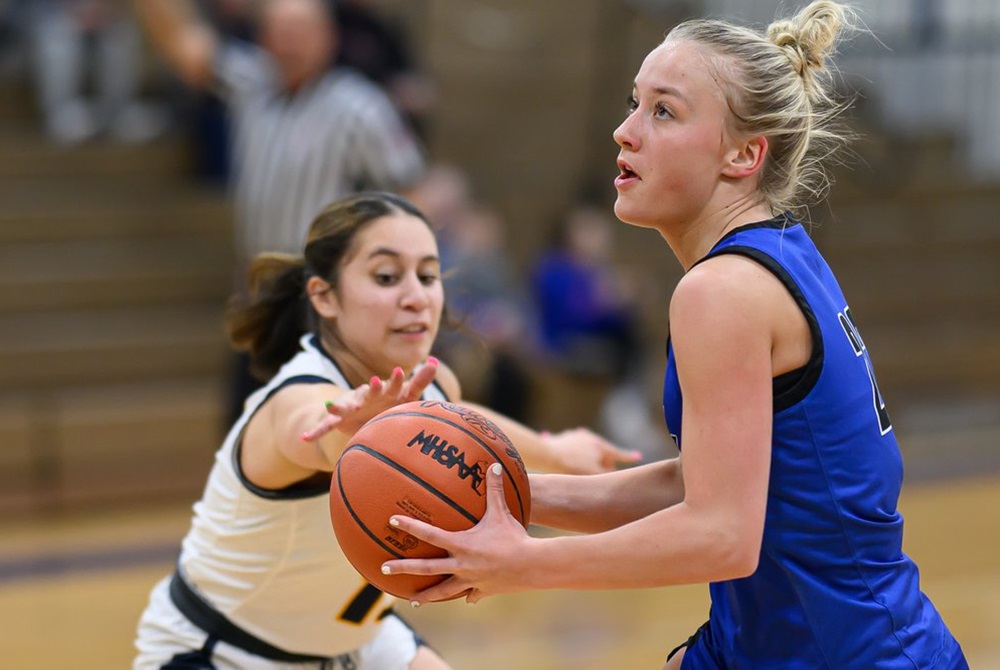
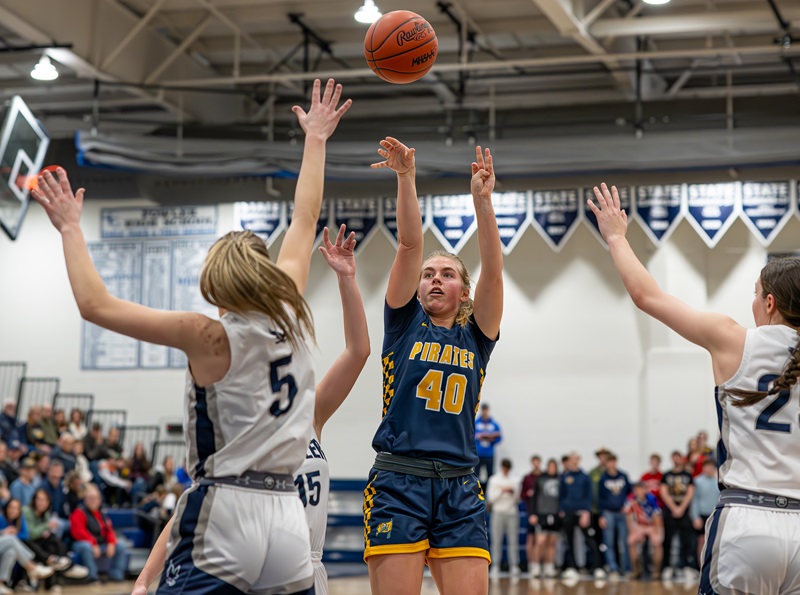
PHOTOS (Top) Oscoda’s Kingsley Backstrom (22) drives to the basket during her team’s 59-26 win over Saginaw Valley Lutheran on Feb. 11. (Middle) Pewamo-Westphalia’s Alonna Thelen (40) puts up a jumper during her team’s 59-53 victory over Fowler on Feb. 5. (Oscoda/Valley Lutheran photo by Kolleth Photo. P-W/Fowler photo by Team Arreguin Photos.)
Breslin Bound: Girls Report Week 2
December 12, 2016
By Geoff Kimmerly
Second Half editor
Michigan’s best generally spend the first few weeks of basketball season testing themselves against other elites, including possible opponents for when the games matter much more in a few months.
 That’s certainly been the case this winter, and last week especially in Class A, as we look back at some of those telling matchups and preview more to watch this weekend in our second Breslin Bound Girls Report – powered by MI Student Aid.
Week in Review
The countdown of last week’s five most intriguing results:
Farmington Hills Mercy 44, Bloomfield Hills Marian 43 – Any meeting between these Detroit Catholic League Central rivals is bound to be one of the best in the state that night, and this evened the recent score some as Marian took two of three from Mercy last winter.
Bloomfield Hills Marian 37, Waterford Kettering 34 (OT) – Marian remains the gauge in Class A with both that loss above and another earlier to Canton, and this win over always-strong Kettering to go with an earlier victory over reigning MHSAA champion Warren Cousino.
Canton 50, Ann Arbor Huron 47 (OT) – Huron, a quarterfinalist a year ago, is another Class A team that’s lined up some tough early opponents; Canton added a second straight three-point win after beating Marian by the same margin.
DeWitt 59, East Lansing 58 – These annually are two of best in Class A in Lansing and statewide, and the Panthers came back to make it five straight over the Trojans.
Sault Ste. Marie 51, St. Ignace 44 – The Blue Devils beat their Straits Area Conference rival by 15 and lost by 26 last season, and will try for the sweep again this season with the next matchup versus the likely Class C contender set for Jan. 26.
Watch List
With an eye toward March, here are two teams in each class making sparks:
CLASS A
East Kentwood (3-1) – The Falcons were a solid 14-9 a year ago, but already have avenged three of those losses be beating Grand Rapids Christian (after losing to the Eagles in a District Final in March) and this week with wins over Grand Rapids South Christian and Forest Hills Central.
Okemos (3-0) – The Chieftains are 3-0 for the first time since 2008-09, thanks in part to a 63-35 win over Lansing Eastern on Friday keyed by standout sophomore Laya Hartman's 31 points after an earlier one-point win over Haslett.
CLASS B
Alma (2-0) – The Panthers already are on pace to improve on last season’s 11-11 finish after avenging a loss to Ionia in their opener and then two losses last season to Saginaw Swan Valley with a 34-30 win over the Vikings on Thursday.
Buchanan (1-0) – The Bucks are only one game in, but have a huge win; their 32-27 victory over Niles Brandywine on Thursday broke a 14-game losing streak to their rival and after two 20-point defeats by the Bobcats in 2015-16.
CLASS C
Bath (3-1) – The Bees had lost nine of their last 10 against Pewamo-Westphalia before Wednesday’s 48-36 win over the Pirates; the lone defeat this winter was to undefeated Class A Howell.
Galesburg-Augusta (3-0) – The Rams tied for second in the Southwestern Athletic Conference Valley last season with a split against eventual champion Kalamazoo Hackett, but earned the early step this time with a 33-25 win over the Fighting Irish to go with a 20-point win over Martin (13-7 last season).
CLASS D
Mount Pleasant Sacred Heart (3-0) – The reigning Class D runner-up surely will miss powerful center Averi Gamble, but defensively is holding strong giving up 10, 36 and 17 points, respectively, in its three games so far.
Pickford (3-0) – The Panthers’ wins are by 12, 22 and 15 points, respectively, as the team looks to build on last season’s District title.
Can't-Miss Contests
Be on the lookout for results of these games coming up:
Friday: DeWitt (4-0) at St. Johns (1-3) – Despite a slow start for 2015-16 Class A semifinalist St. Johns, these two combined with Haslett and Lansing Waverly should make the Capital Area Activities Conference Red again one of the strongest leagues statewide.
Friday: Canton (3-0) at Northville (1-1) – This will be a rematch of last season’s Class A District Final, a 44-38 win by the Mustangs.
Friday: Millington (2-1) at Frankenmuth (3-1) – The Eagles’ 97-game Tri-Valley Conference East winning streak is on the line against the third-place team from last season.
Saturday: Midland Dow (3-0) vs. Ypsilanti Arbor Prep (5-0) at Detroit Edison – Both have aspirations of finishing the season at the Breslin Center, Dow in Class A and Arbor Prep in B after winning Class C last season; this is part of the Best of Michigan Classic at Detroit Edison.
Saturday: Williamston (3-0) vs. Port Huron Northern (3-0) at Detroit Edison – This is another Best of Michigan Classic matchup of Breslin hopefuls, with Williamston looking to follow last year’s boys team in Class B and Northern building on last year’s Class A Quarterfinal run.
Second Half’s weekly “Breslin Bound” reports are powered by MI Student Aid, a part of the Student Financial Services Bureau located within the Michigan Department of Treasury. MI Student Aid encourages students to pursue postsecondary education by providing access to student financial resources and information, including various student financial assistance programs to help make college more affordable for Michigan students. MI Student Aid administers the state’s 529 savings programs (MET/MESP) and eight additional aid programs within its Student Scholarships and Grants division. Click for more information and connect with MI Student Aid on Facebook and Twitter @mistudentaid.
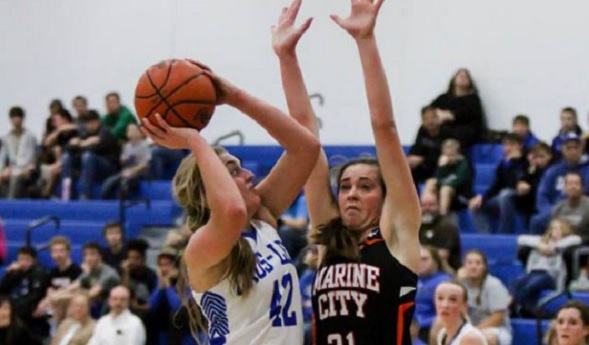
PHOTO: Marine City is another 3-0 team after starting out the season with a 10-point win over Croswell-Lexington. (Click for more from Varsity Monthly.)