

Breslin Bound: 2025-26 Girls District Preview
By
Geoff Kimmerly
MHSAA.com senior editor
March 2, 2026
This month's girls basketball championships will once again cap the MHSAA winter tournament schedule, and nearly 670 teams will play in Districts this week with dreams of finishing this three-week run on the season's final day.

We always switch up our “Breslin Bound” format once the MHSAA Tournament starts, as last week’s most intriguing results below are followed this time by glances at three District brackets of note in each division. Host sites are bolded, and teams playing in those brackets are listed by seed as determined by Michigan Power Ratings (MPR).
Everything you could want to know this week about tickets, brackets and more can be found on the Girls Basketball page. To watch any of several games online, visit the NFHS Network.
“Breslin Bound” is powered by MI Student Aid and based on results and schedules posted for each school at MHSAA.com.
Week in Review
The countdown of last week’s five most intriguing results:
1. Howell 59, Belleville 51 The Highlanders (21-1) claimed the overall Kensington Lakes Activities Association title by handing reigning Division 1 champion Belleville (21-1) its first loss since Feb. 1, 2025, breaking the Tigers’ 35-game winning streak.
2. Grand Rapids South Christian 52, Rockford 50 The Sailors (22-0) capped a perfect regular-season run by handing the Rams (20-2) their first defeat since Dec. 16.
3. Morenci 39, Blissfield 38 The Tri-County Conference champions Bulldogs completed a 21-1 regular season by edging the Lenawee County Athletic Association-winning Royals (18-3).
4. Negaunee 41, Gladstone 36 Negaunee also capped its regular season at 21-1 by finishing a series sweep of Gladstone (18-4) in a matchup of two more league champs and arguably the best teams in the Upper Peninsula.
5. Beaverton 53, Standish-Sterling 29 Four days after defeating Standish-Sterling (17-4) by 11 in league play, the Beavers (19-2) claimed the overall Jack Pine Conference title by winning this rematch as well.
Districts at a Glance
These could be among our most competitive brackets. Host sites are in bold, and teams are listed by seed:
DIVISION 1
Midland
1. Midland (17-5), 2. Mount Pleasant (16-6), 3. Midland Dow (14-8), 4. Bay City Western (12-10), 5. Bay City Central (1-21).
This bracket includes the entire Saginaw Valley League North except for champion Saginaw Heritage. Midland finished second to the Hawks, a game back, with Mount Pleasant third although those two split their series, the Chemics winning 44-29 on Jan. 9 and the Oilers taking the rematch 48-41 on Feb. 10. Dow lost twice to both of those teams but only by a point to Mount Pleasant the second time.
Muskegon Mona Shores
1. Rockford (20-2), 2. Muskegon (19-2), 3. Cedar Springs (16-5), 4. Greenville (16-6), 5. Muskegon Mona Shores (12-10), 6. Muskegon Reeths-Puffer (12-9).
The Rams were Division 1 runners-up last season and have reached at least the Semifinals the last four year. But Muskegon is one of only two teams to defeat Rockford this winter, 58-51 on Dec. 16, and has made an eight-win jump from a year ago. This bracket also includes the River Cities Alliance champion (Cedar Springs) and runner-up (Greenville) among six teams all with winning records.
Utica Eisenhower
1. Utica Eisenhower (19-2), 2. Rochester Hills Stoney Creek (18-4), 3. Romeo (16-6), 4. Rochester (10-11), 5. Utica (4-18).
The District bracket is headlined by a pair of league champions – Eisenhower from the Macomb Area Conference Red and Stoney Creek after sharing the Oakland Activities Association Red title. But MAC White runner-up Romeo also is an intriguing contender despite a Dec. 19 loss to Eisenhower, 50-32, and Rochester defeated Stoney Creek 48-29 in their rematch just nine days ago. Eisenhower did also end the regular season with an impressive 50-44 win over Saginaw Valley League South champion Flint Powers Catholic.
DIVISION 2
Non-Traditional (top line hosts)
1. Negaunee (21-1), 2. Kingsford (15-5), 3. Gladstone (18-4), 4. Houghton (16-6), 5. Escanaba (2-17).
There’s an argument to be made that Negaunee and Gladstone – the respective champions of the Western Peninsula Athletic Conference and Great Northern Conference – have been the best in the Upper Peninsula this season. But the top four teams in this bracket are so close statistically that in the week since Districts were seeded Houghton has moved up to second in MPR and Kingsford down to fourth. Negaunee finished a regular-season sweep of Gladstone on Thursday, but last year did the same and Gladstone downed the Miners for the District title. Houghton finished second in the West PAC, and Kingsford was runner-up in the GNC – and Houghton defeated the Flivvers 40-36 on Feb. 19.
Cadillac
1. Big Rapids (17-4), 2. Fremont (19-3), 3. Cadillac (13-8), 4. Ludington (14-8), 5. Reed City (12-10), 6. Newaygo (12-9).
This rare bracket with six teams with winning records seems full of possibilities. Big Rapids, Newaygo and Reed City were the top three teams in the Central State Activities Association Red, respectively, while Ludington and Fremont shared the West Michigan Conference Lakes title and Cadillac is coming off a third-place finish in the Big North Conference. Cadillac defeated Ludington 44-31 on Feb. 9, which will be notable if both reach Friday. But any number of scenarios could play out, including a rematch of those Lakes champs after Fremont won their first meeting by 12 but Ludington won the second by a point in double overtime.
Grand Rapids Kenowa Hills
1. Grand Rapids Covenant Christian (21-0), 2. Grand Rapids West Catholic (16-5), 3. Allendale (10-12), 4. Grand Rapids Kenowa Hills (9-13), 5. Wyoming Lee (1-17).
The intrigue of this bracket centers on the expected championship matchup between the top seeds. Covenant Christian has nine wins over opponents with at least 14 this winter, including league champs Cedar Springs, Big Rapids, Kalamazoo Christian, Shelby and Holland Christian. West Catholic – the Division 2 runner-up last year – finished second in the Ottawa-Kent Conference Gold to undefeated South Christian but has its share of wins over league champs as well, downing Parma Western, Saginaw Heritage, Tecumseh, Frankenmuth and Grand Rapids Catholic Central.
DIVISION 3
Kalamazoo Hackett Catholic Prep
1. Kalamazoo Christian (16-4), 2. Kalamazoo Hackett Catholic Prep (18-4), 3. Lawton (13-8), 4. Comstock (1-21).
Kalamazoo Christian finished one game ahead of Hackett in winning the Southwestern Athletic Conference Valley title, claiming their Jan. 23 meeting by 32 points – but losing the rematch by one last Tuesday. Still, that was the Comets’ first defeat in over a month, breaking an eight-game winning streak. Similarly, that win was part of an 11-game winning streak for the Irish that ended with a loss to Hopkins on Friday. Lawton is another intriguing contender; it’s won seven of its last eight games, with defeats by only one to K-Christian in the midst and two to Hackett before starting the run.
Napoleon
1. Jackson Lumen Christi (18-3), 2. Grass Lake (20-2), 3. Hanover-Horton (17-5), 4. Springport (8-12), 5. Napoleon (5-17), 6. East Jackson (4-18).
The Titans capped their regular season with a 58-56 win over Beaverton (19-3) on Saturday and just as impressively lost to Rockford by only five last Tuesday. They reached the Quarterfinals last season having defeated Grass Lake in the District Final. Grass Lake fell in its regular-season finale to another Division 1 power, Wayne Memorial, by six points, but that was the Warriors’ first defeat since losing to Rockford on Dec. 13. Grass Lake had a big win over Hanover-Horton to start January, but the Comets’ only other losses were two apiece to Brooklyn Columbia Central (18-4) and Division 2 Michigan Center (19-3).
Ovid-Elsie
1. Pewamo-Westphalia (20-2), 2. Hemlock (20-2), 3. Ovid-Elsie (15-6), 4. Ithaca (12-10), 5. St. Louis (11-11), 6. Chesaning (10-11).
A pair of league champions with significant tournament experience anchor both sides of this bracket, with the Central Michigan Athletic Conference’s Pirates having lost to only Division 1 Saginaw Heritage (16-6) and Division 2 Flint Powers Catholic (19-3), and the Tri-Valley Conference Blue’s Huskies fell only to Division 1 Midland Dow (14-8) and Division 2 Freeland (16-6). P-W and Hemlock both won District titles last season. Ovid-Elsie has won at least 18 games the last four seasons and will get to that number again with a championship this week. The Marauders played a good handful of Division 1 and 2 teams as well this season and finished second in the Mid-Michigan Activities Conference.
DIVISION 4
Hale
1. Mio (18-4), 2. Au Gres-Sims (19-3), 3. Hale (14-5), 4. Fairview (4-12), 5. Whittemore-Prescott (2-12).
The expected District Final in this bracket would be the third matchup this season between Au Gres-Sims and Mio, which played each other twice over four days in mid-February with Au Gres winning the first by seven and Mio the rematch by four. That led to their sharing the North Star League Little Dipper title. Placing third was Hale, which is a combined 31-11 over the last two seasons and took Au Gres to overtime in their first meeting this winter.
Ishpeming
1. Ishpeming (18-3), 2. Munising (16-5), 3. Cooks Big Bay de Noc (18-2), 4. Eben Junction Superior Central (5-12), 5. Rapid River (5-16).
The Hematites are only two seasons removed from winning the Division 4 title, and they’ve looked to be in similar form most of this season with losses to only Division 2 Negaunee (21-1), Gladstone (18-4) and Houghton (16-6). Ishpeming also defeat Munising significantly in their lone regular-season matchup Feb. 16, but the Mustangs have won three straight District titles and know what it takes as well at this time of year. Big Bay de Noc is intriguing and takes on Munising on Wednesday. The Black Bears won the Northern Lights League and have totaled at least 16 victories four straight seasons.
Saginaw Michigan Lutheran Seminary
1. Saginaw Michigan Lutheran Seminary (16-6), 2. St. Charles (17-5), 3. Bay City All Saints (14-7), 4. Merrill (15-7), 5. Saginaw Arts & Sciences (10-10), 6. Saginaw Nouvel Catholic Central (4-18).
St. Charles and Merrill finished first and second, respectively, in the Mid-State Activities Conference East, while MLS was runner-up to Hemlock in the TVC Blue and All Saints won the Big Thumb Conference Red title. MLS opened this season with a 53-44 win over St. Charles, defeated All Saints 60-51 on Jan. 29 and Merrill 54-34 a week later, and may have to see two of those again with Merrill playing SASA tonight on their side of the bracket and St. Charles and All Saints possible Friday opponents.
MHSAA.com's weekly “Breslin Bound” reports are powered by MI Student Aid, a division within the Department of Lifelong Education, Advancement, and Potential (MiLEAP). MI Student Aid encourages students to pursue postsecondary education by providing access to student financial resources and information. MI Student Aid administers the state’s scholarship and grant programs that help make college Accessible, Affordable and Attainable for you. Click to connect with MI Student Aid and find more information on Facebook and X @mistudentaid.
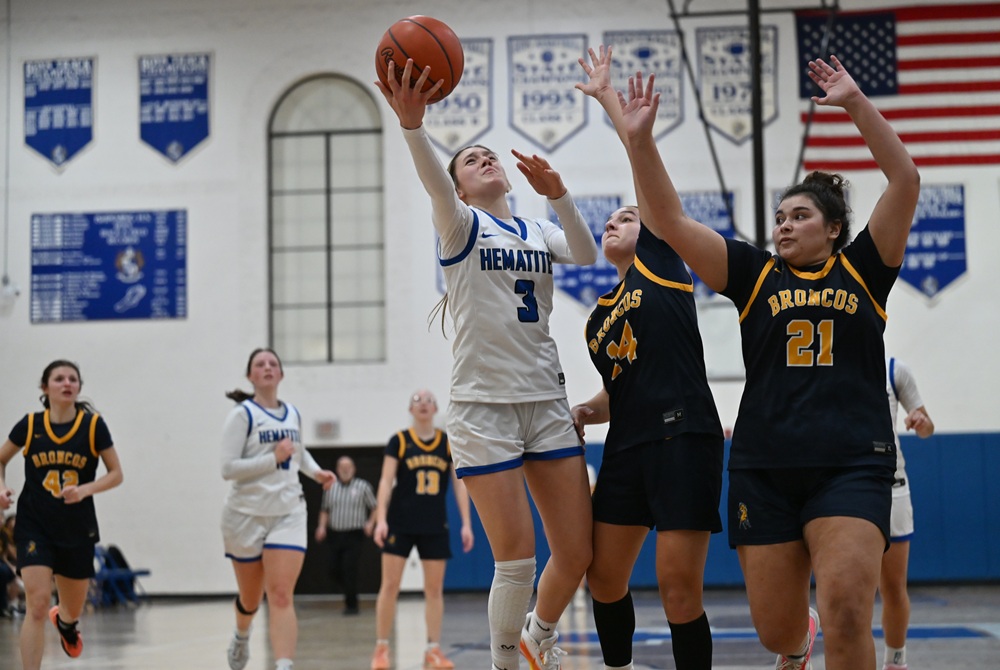
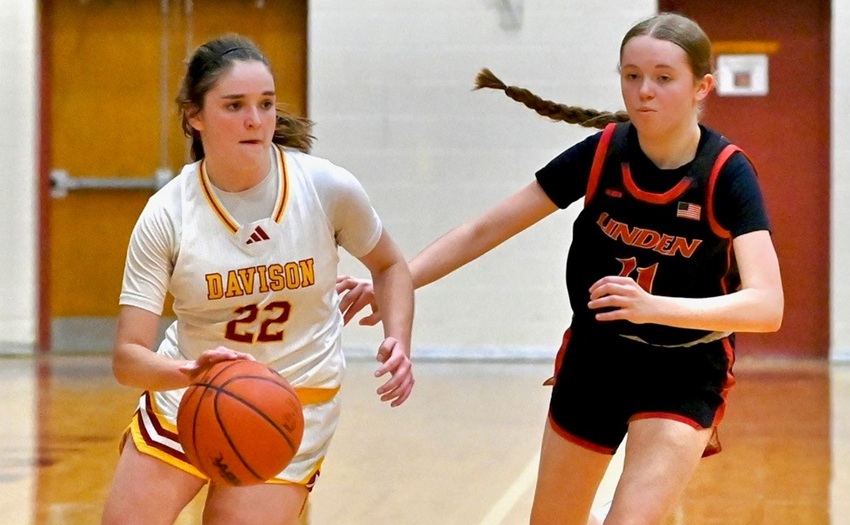
PHOTOS (Top) Ishpeming's Jenessa Eagle is defended by Bark River-Harris's Emma Zawada (14) and Melinah Cortez (21) during the Hematites’ 77-45 victory last Tuesday. (Middle) Davison’s Samantha Beller (22) works to get past her Linden defender during the Cardinals’ 49-33 victory also Tuesday. (Ishpeming/Bark River-Harris photo by Cara Kamps. Davison/Linden photo by Terry Lyons.)
Breslin Bound: Girls District Preview
February 29, 2016
By Geoff Kimmerly
Second Half editor
The girls basketball season starts over for every MHSAA team today as 128 Districts tip off all over the state.
Below is a look at four teams from each class that look good to be in the hunt when the final 16 converge on East Lansing in three weeks. Follow all of the scores and brackets in real time at MHSAA.com, and click for a glance at every team with three or fewer losses heading into the postseason.
Class A
Detroit Martin Luther King (17-1) – The Crusaders are annually in this conversation and defeated reigning champion Bloomfield Hills Marian last week to add a little more to the momentum. The only loss was in December to Detroit Renaissance, and King came back to beat Renaissance 68-66 in the Detroit Public School League Tournament championship game. King made the Class A Semifinals last season before falling the Marian.
Flushing (18-2) – It’s been a strong follow-up to last season’s 24-1 finish. After opening this season with losses to Saginaw Heritage and Midland Dow, Flushing hasn’t experienced defeat again – but has celebrated some significant victories including over Renaissance, Flint Carman-Ainsworth (15-5) and Class C Flint Hamady (18-1).
Saginaw Heritage (19-1) – The Hawks looked like strong favorites before losing sophomore forward Jaela Richardson to a season-ending knee injury two weeks ago, and then taking their only loss to Midland Dow right after. But Heritage has bounced back with four straight wins including over Carman-Ainsworth last week and still has plenty of talent and the experience of beating Flushing, Country Day, Dow (17-3) and making last season’s run to the Class A Semifinals.
Southfield Lathrup (17-3) – A loss or two more than the other favorites doesn’t mean much, considering the defeats came to Bay City John Glenn, Grand Rapids Catholic Central and Detroit Country Day, all mentioned among Class B favorites below. The Chargers have 10 wins against teams with at least 13 victories, and finished 21-2 last season losing to Marian during the Regional.
Class B
Bay City John Glenn (19-1) – Aside from a three-point loss to Ypsilanti Arbor Prep on Feb. 6, John Glenn has been unstoppable with only two more games in single digits (wins over Southfield Lathrup and Class C Saginaw Nouvel). Most of the Bobcats' toughest games came nonleague at the beginning of the year, but they finished up last week with Class A Saginaw Arthur Hill and a 13-point win over Nouvel (after beating the Panthers by only four Dec. 16).
Detroit Country Day (18-1) – The Yellowjackets have beaten their usual slate of strong teams including Arbor Prep, Haslett, Detroit Renaissance, Midland Dow and Marysville. The only loss was to Saginaw Heritage on Dec. 29, and the reigning Class B champions bounced back for a perfect 2016 so far.
Grand Rapids Catholic Central (17-2) – The Cougars closed the regular season by avenging an earlier loss to Grand Rapids South Christian, earning a shared Ottawa-Kent Conference Gold championship with the Sailors. GRCC also fell to Class A Grand Rapids Christian, but has 10 wins over Class A schools, including 69-62 over Southfield-Lathrup on Dec. 12.
Marshall (19-1) – One more win would give Marshall its second straight and third in four seasons with at least 20 victories, and the slate was anything but easy. After falling to Williamston (17-3) in their opener, the Redhawks rattled off 11 wins against teams with 10 or more victories, including Otsego (17-3), Battle Creek Harper Creek (15-5) twice and Class A Jackson Northwest (18-2) also twice to win a strong Interstate 8 Athletic Conference.
Class C
Calumet (20-0) – The reigning Class C champion has done two better, at least during the regular season, finishing undefeated by sweeping Class B Houghton – which beat Calumet twice a year ago. Total, the Copper Kings have 12 wins against teams with at least 10 victories, and only Houghton and Hancock (16-4) have come within single digits of catching them. Calumet starts District play tonight against Hancock on Hancock’s home floor.
Gobles (20-0) – The Tigers haven’t lost a regular-season game since Feb. 21, 2013, and made the Class C Semifinals in 2014 thanks in part to a strong group of now-seniors looking to return next month in their final try. Among the most impressive wins this fall were a sweep of Saugatuck (16-4) and a 10-point win over Class B Otsego.
Napoleon (20-0) – The Pirates took another step after last season’s 13-win and District title season by running through a Cascades Conference that had three more teams win at least 12 games. Napoleon hasn’t had a single-digit game since beating Manchester in overtime Dec. 15, and also picked up a nice win last week over Class B Brooklyn Columbia Central (17-3).
Ypsilanti Arbor Prep (18-2) – Arbor Prep gets the slight edge on Traverse City St. Francis as the only team not undefeated to be mentioned here because of a slightly tougher schedule (although the Gladiators’ was quite strong as well). Arbor Prep’s only losses were to Class A Ann Arbor Huron (15-4) and Country Day (18-1). And the Gators have six wins over Class A teams including Marian, plus beat Bay City John Glenn 50-47 on Feb. 6.
Class D
Bark River-Harris (19-1) – The Broncos have followed up last season’s 18-2 regular-season finish by going one win better, and now hope to build on that District title from a year ago. The only loss came to Munising – the team that eliminated Bark River-Harris in last season’s Regional Semifinal – and only two weeks ago. But the Broncos do have seven wins over teams with at least 11 victories, including beating Stephenson (18-2) in their only meeting and Crystal Falls Forest Park (16-4) twice.
Mount Pleasant Sacred Heart (18-1) – The Irish are seeking their second Class D championship in three seasons and have one of the top post players regardless of class in Averi Gamble. Sacred Heart plays Big Rapids Crossroads Academy (18-1) on Wednesday, but beat Crossroads 54-24 on Jan. 4 and owns impressive wins over Class C Beaverton, Morley Stanwood and Carson City-Crystal with the only loss to Saginaw Nouvel.
Newberry (19-1) – The Indians already are six wins better than last season, when they went out of the tournament in their first District game. Newberry also is on one of the strongest surges in the state thanks in large part to a 54-50 win over Class C contender St. Ignace on Feb. 18 that gave the Indians the Straits Area Conference title to go with an outright championship in the Eastern Upper Peninsula Conference. Newberry also swept Class B Sault Ste. Marie (15-5).
Pittsford (20-0) – After suffering its only loss last season, and in overtime, to St. Ignace in the Class D Final, Pittsford is the likely favorite after another dominating run. While the Wildcats played mostly Class D teams over a 16-game league schedule in the Southern Central Athletic Association, they also posted solid wins over Class A Belleville and Class C Manchester – and had only one game in single digits, a 71-62 win over Class C Grass Lake on Dec. 8.
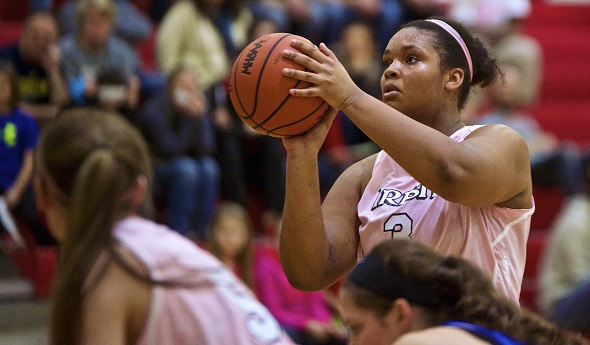
PHOTO: Mount Pleasant Sacred Heart’s Averi Gamble, here attempting a free throw, will lead one of the top teams in Class D into the tournament for the final time. (Click to see more at HighSchoolSportsScene.com.)