

Breslin Bound: Girls District Preview
March 2, 2015
By Geoff Kimmerly
Second Half editor
The first games of the MHSAA Girls Basketball Tournament tip off Monday evening, a restart for every team after three months of grinding toward these final three weeks of the season.
To kick off Districts, this week's Breslin Bound report looks at five teams in each class that have made some of the biggest waves throughout this winter.
Click to “track the tournament,” with results as we receive them and interactive brackets.
CLASS A
Bloomfield Hills Marian (19-1) – The reigning Class A champion remains undefeated against Michigan competition; its lone loss was Jan. 17 to Chicago Whitney Young, which finished its season 27-2. The Mustangs handed Detroit Martin Luther King its only loss, 50-49 in Thursday’s Operation Friendship game, and also own wins over Farmington Hills Mercy, Flint Powers Catholic, Benton Harbor and Class C contender Ypsilanti Arbor Prep.
Detroit Martin Luther King (19-1) – As noted above, King didn’t fall this season until Thursday against Marian, and then by only one point – giving the Crusaders only two regular-season losses total over the last three winters. King earned a 25-point win during holiday break over Port Huron Northern, now 17-3, and continued to build strength through a perfect Detroit Public School League run.
Flushing (20-0) – The Raiders opened strong with wins over eventual league champions Flint Powers Catholic and Midland Dow and kept on cruising to improve significantly on last season’s 13-9 finish. Flushing added another big victory last week – 50-48 in overtime over Saginaw Heritage, which is 17-3 – and should enjoy that momentum heading into the tournament.
Marquette (20-0) – The Redettes built on a great 19-3 finish a year ago to end up even better this regular season. In addition to again winning the Great Northern Upper Peninsula Conference title, Marquette shined against strong competition from downstate, beating Brighton (16-4) and Traverse City West (17-3) during the first month.
Southfield Lathrup (19-1) – Only a two-point loss to Toledo Rogers (Ohio) on Dec. 13 has kept the Chargers from a perfect record. Lathrup sandwiched that loss with impressive wins over the PSL’s Detroit Cass Tech and Renaissance during the first two weeks and have since added impressive victories over Arbor Prep (17-3), Southfield (18-2) and Grosse Pointe South (16-4).
CLASS B
Midland Bullock Creek (20-0) – The Lancers have added to their two straight MHSAA Semifinals runs with a perfect regular season keyed by a trio of 1,000-point scoring seniors in Halee Nieman, Ellie Juengel and Hannah Heldt (read more from the Midland Daily News). Bullock Creek dominated a Tri-Valley Conference Central with six teams that have at least 10 wins, plus won its crossovers against Frankenmuth and Ithaca – both are 18-2.
Grand Rapids Catholic Central (18-2) – The Cougars earned a share of the Ottawa-Kent Conference title on Feb. 20 with a 22-point win over Wayland that avenged an earlier double-overtime loss to their league rival. The only other loss was to Arbor Prep – which came at the end of a two-week run that featured impressive wins over Sparta (18-2) and Class A Grand Rapids Christian (16-4) by 37 points.
Plainwell (20-0) – The Trojans’ perfect run has included three wins over Class A opponents and a Wolverine Conference East championship after they tied for second in the league last season. Plainwell has won six straight by double digits including over Paw Paw and Otsego – the two teams that each beat the Trojans twice during last season’s 18-4 finish.
Spring Lake (20-0) – The Lakers jumped from 13-8 last season to win the Lakes 8 Activities Conference title outright and 17 games by double figures. Spring Lake was 7-15 only two seasons ago, but this winter won 10 games against teams that sit .500 or better.
Wayland (19-1) – The Wildcats split the O-K Gold with Grand Rapids Catholic Central (see above). But Wayland bounced back with two big wins last week and still should carry some confidence from an early slate of victories over Class A Grand Rapids Christian (16-4), Caledonia (14-6) and Wyoming (16-4) and then a one-point win over GRCC on Jan. 23.
CLASS C
Blissfield (19-1): The Royals closed the regular season with a 47-41 win last week over Tri-County Conference runner-up Britton Deerfield, also tonight’s District opponent. Blissfield split the Lenawee County Activities Association championship with Class B Brooklyn Columbia Central, which also gave Blissfield its only loss this season. It may been two months ago, but the Royals also picked up a nice win over Class D contender St. Ignace, 46-33.
Gobles (20-0) – The Tigers, MHSAA semifinalists last season – cruised through their second straight perfect regular season. Gobles won the Southwestern Athletic Conference South title, then beat North champion Decatur 51-35 in their crossover game. Gobles also added a nice one-point victory last week over Class B Otsego, runner-up in the Wolverine Conference East.
Laingsburg (20-0) – The Wolfpack have improved from 13 to 15 to 20 wins over the last three seasons, winning a Central Michigan Athletic Conference with another strong Class C contender in Pewamo-Westphalia (17-3) and a Class D hopeful in Portland St. Patrick (14-6). Laingsburg also added a nice pair of wins over Class B Durand (13-7) in the season opener and Perry (15-5) near the midpoint.
Niles Brandywine (19-1) – The Bobcats' only loss this season was to 17-win Class A Kalamazoo Central, and that came in double overtime. Brandywine won seven games over teams with at least 13 wins this winter and went 7-1 against Class A and Class B opponents.
Ypsilanti Arbor Prep (17-3) – Arbor Prep’s list of wins this winter provide plenty of confidence the team will eclipse last season’s Quarterfinal run: 59-55 over Grand Rapids Catholic Central, 52-39 over Flint Powers Catholic, 54-39 over Detroit Country Day, to name a few. The losses were to Class A Southfield Lathrup, Marian (both mentioned above) and Ann Arbor Huron (18-2).
CLASS D
Bellaire (19-1) – The Eagles won the Ski Valley Conference despite splitting with rival Johannesburg-Lewiston, a Class C team that's 18-2. One win this week will give Bellaire more than 20 for the second straight season, with 10 this winter coming against teams above .500.
Frankfort (18-1) – An MHSAA quarterfinalist a year ago, Frankfort has continued its stellar play with five wins over Class B teams and four over Class C this winter – the only loss was to Class B Portland during holiday break. The Panthers finished perfect in the Northwest Conference, sweeping runner-up Maple City Glen Lake, a Class C team that sits 14-6.
Mount Pleasant Sacred Heart (16-4) – The Irish, last season’s Class D champion, should be more than prepared for another run featuring some of last season’s heroes – center Averi Gamble and guard Riley Terwilliger among them – and after playing only three Class D opponents during the regular season. The losses were to Class C Carson City-Crystal (18-2) twice, Morley Stanwood (16-4) and Saginaw Nouvel (14-6) – and two Class D wins were over Gaylord St. Mary (16-4) and Big Rapids Crossroads Academy (19-1).
Pittsford (20-0) – The Wildcats finished their second straight perfect regular season as the only undefeated team in Class D. In addition to winning the Southern Central Athletic Association East title for the second straight season, Pittsford added wins against solid Class C teams Sand Creek (14-6), Manchester (17-3) and Britton Deerfield (16-4) and held opponents to fewer than 20 points in 10 victories.
St. Ignace (15-5) – The Saints are another team with a few more losses but expectations of being around at the end of the Class D tournament after winning Class D in 2013 and finishing runner-up in Class C last winter. They opened with a loss to Class A Brighton and all of their losses were to larger schools with between 12-16 wins this winter. All but four of St. Ignace’s games were against teams that finished with at least 11 wins.
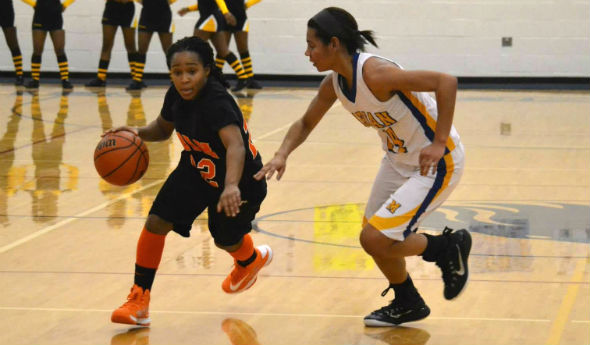
PHOTO: Class A contenders Bloomfield Hills Marian and Detroit Martin Luther King met last week in a regular-season finale; Marian prevailed 50-49. (Photo courtesy of the Detroit Public School League.)
Breslin Bound: Girls Report Week 12
February 22, 2016
By Geoff Kimmerly
Second Half editor
One week remains in the girls basketball regular season, and contenders are gearing up for District tournaments that begin a week from today.
Most weeks during the season, we check in with four teams from each class that have been especially impressive. After a bit of a hiatus, here’s a look at 16 more to remember when the tournament begins.
Class A
Allen Park (16-2) – After finishing second to Brownstown Woodhaven a season ago, Allen Park clinched the Downriver League championship Friday with a 56-20 win over Taylor Truman. The Jaguars’ only losses were to Woodhaven in their second meeting and Plymouth in the season opener.
Bloomfield Hills Marian (13-6) – The Mustangs have rebuilt quite a bit after winning last season’s Class A title, and finished only third in the Detroit Catholic League Central. But they beat second-place Warren Regina in the semifinal and then rival and league champion Farmington Hills Mercy 48-29 in Sunday’s A-B league tournament final.
Detroit Martin Luther King (16-1) – The Crusaders came back from their only loss this season – 68-65 to Renaissance on Dec. 17 – to beat Renaissance 68-66 and win their fifth straight Detroit Public School League Tournament title. King previously won the PSL East Division 1 title this winter.
Dexter (17-1) – The Dreadnaughts finished a perfect run in the Southeastern Conference White last week, defeating Ypsilanti Community 37-28, to win the league title outright after sharing the championship with Chelsea last season.
Class B
Bay City John Glenn (17-1) – The Bobcats bounced back from their lone loss this season, 50-47 two weeks ago to Ypsilanti Arbor Prep, to put 40-point wins on Tawas and Pinconning over the last two weeks and finish a dominating run through the North East Michigan Conference.
Detroit Country Day (18-1) – Since falling to Saginaw Heritage on Dec. 29, Country Day has won 14 straight. The slate has an argument for the state’s most impressive – wins over Detroit Renaissance, Haslett, Southfield-Lathrup and Ypsilanti Arbor Prep are among the brightest highlights.
Fruitport (17-1) – The Trojans haven’t fallen since Dec. 11 to Spring Lake and secured a share of the Lakes 8 Conference championship with a 46-19 win over Muskegon Catholic Central on Friday. Fruitport finished only fourth in the league a year ago.
Marysville (15-2) – The Vikings have won 13 straight since falling to Country Day on Dec. 17 and 12 straight league games to again claim the Macomb Area Conference Gold title outright after sharing the championship with Center Line last season.
Class C
Johannesburg-Lewiston (17-1) – The Cardinals wrapped up a share of the Ski Valley Conference title with a 60-57 win over Onaway on Thursday and can claim it outright by beating Pellston on Tuesday. They finished second to Bellaire last season, but split with Bellaire this winter.
Morley Stanwood (17-2) – The Mohawks claimed a share of the Central State Activities Association Silver title Friday with a 60-34 win over Holton, but they’ll need to beat reigning champion Kent City this week to win the title outright. Morley Stanwood was second last season but beat Kent City 55-41 in their first meeting, Jan. 22.
Negaunee (14-4) – The Miners can finish a perfect run through the Mid-Peninsula Athletic Conference with a win over Ishpeming this week, and also avenge one of their losses, to Marquette on Dec. 15. Negaunee tied for fourth in the league and finished only 9-13 a year ago.
Sandusky (16-2) – The second-place Redskins will need help in the Greater Thumb Conference East title race from third-place Brown City – which plays league leader Marlette this week in the final GTC game for those teams. But Sandusky’s only losses this season were to Marlette, by 12 and seven points.
Class D
Climax-Scotts (17-2) – The league-leading Panthers finished a season sweep last week of rival Battle Creek St. Philip, beating the Tigers 42-39 after finishing second to St. Philip in the Southern Central Athletic Association West a year ago.
Crystal Falls Forest Park (16-3) – The Trojans hold a half-win lead on Bark River-Harris in the Skyline Central Conference West standings thanks to Munising’s recent upset of the former league leader; Forest Park must beat Bark River-Harris this week to clinch the title after losing 51-25 in their first meeting Dec. 4.
Gaylord St. Mary (16-3) – Despite finishing second to Johannesburg-Lewiston in the Ski Valley Conference, the Snowbirds should be optimistic heading into the tournament riding five straight wins and with their only losses by a combined four points to the Cardinals.
Mendon (15-3) – The Hornets clinched the Berrien-Cass-St. Joseph Conference Blue title outright with a 46-27 win over Cassopolis on Friday and are already two wins better than last year’s team, which finished third in the old BCS East.
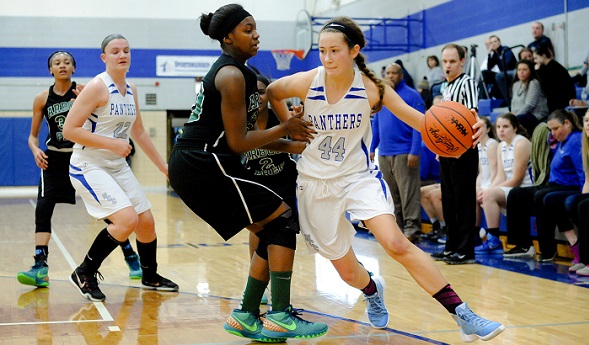
PHOTO: Ypsilanti Arbor Prep and Saginaw Nouvel are two teams expected to contend when the MHSAA Tournament begins next week. (Click for more from HighSchoolSportsScene.com.)