

Class C-D Preview: Pursuing perfection
March 18, 2015
By Geoff Kimmerly
Second Half editor
A pair of undefeated teams from Class C and D will play for their first MHSAA girls basketball championships this weekend.
Laingsburg, in Class C, and Class D Pittsford also won their first Regional titles on the way and are joined by two others hoping to reach championship games Saturday at Michigan State University’s Breslin Center for the first time in their programs’ histories.
But standing in the way are a three-time champ in Class C and three teams with a combined nine titles seeking to win again in Class D.
All four Class C and D Semifinals will be played Thursday, with all four championship games Saturday.
Semifinals - Thursday
Class C
Calumet (22-2) vs Laingsburg (26-0), 1 p.m.
Ypsilanti Arbor Prep (22-3) vs Flint Hamady (25-1), 2:50 p.m.
Class D
Pittsford (25-0) vs Waterford Our Lady (12-12), 6 p.m.
Frankfort (24-1) vs St. Ignace (20-5), 7:50 p.m.
Finals - Saturday
Class A - Noon
Class B - 6 pm
Class C - 4 pm
Class D - 10 am
Tickets cost $8 per pair of Semifinals and $10 per two-game Finals session. All Semifinals will be streamed live on MHSAA.TV on a pay-per-view basis. All four Finals will be broadcast live on Fox Sports Detroit, the Class D, A and C title games on FOX Sports Detroit's primary channel and the Class B game on FOX Sports Detroit-PLUS. Free radio broadcasts of all weekend games will be available on MHSAANetwork.com.
And now, a look at the semifinalists in Class C and D. Click on the name of the school to see that team’s full schedule and results from this season. (Statistics are through teams' Regional Finals.)
Class C
CALUMET
Record/rank: 22-2, unranked.
League finish: Second in Western Peninsula Athletic Conference.
Coach: Jeff Twardzik, first season (22-2).
Championship history: Has not played in an MHSAA Final.
Best wins: 43-37, 53-36 and 45-37 (District Final) over Hancock, 46-23 over Tawas in the Quarterfinal.
Players to watch: Lexie Rowe, 5-5 sr. G (11 ppg, 2.7 spg); Ellen Twardzik, 5-10 sr. C (9.3 ppg, 6.0 rpg).
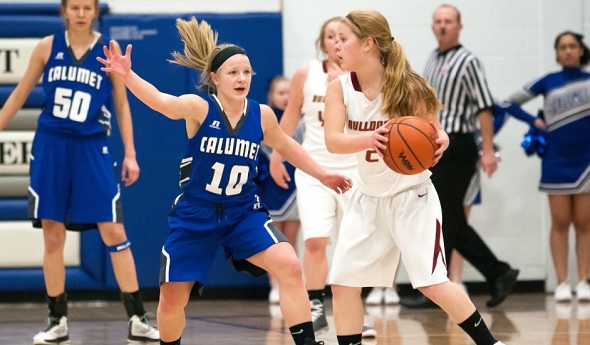
Outlook: Calumet is making its first Semifinal appearance after playing in its first Quarterfinal since 1977. The Copper Kings are only a pair of losses to Class B and league rival Houghton from a perfect record. Seven seniors lead a veteran group, with four in the starting lineup. Junior Clara Loukus adds 7.6 points and 3.1 assists per game. Twardzik took over the varsity after previously leading the junior varsity to a 38-0 mark.
FLINT HAMADY
Record/rank: 25-1, No. 5.
League finish: First in Genesee Area Conference Blue.
Coach: Keith Smith, 13th season (292-38).
Championship history: Three MHSAA titles (most recent Class C 2010), one runner-up finish.
Best wins: 44-42 over No. 10 Saginaw Nouvel in the Quarterfinal, 42-26 over honorable mention Sandusky in the Regional Semifinal, 45-33 over honorable mention Flint Beecher in the District Final, 54-29 and 44-32 over Class D No. 9 Morrice.
Players to watch: Jalisha Terry, 5-7 jr. G; Aaliah Hill, 5-9 sr. C (statistics not provided).
Outlook: Hamady is back at the Semifinals for the first time since 2011 after winning back-to-back championships in 2009 and 2010. The Hawks again cruised through the GAC Blue for their sixth league title in seven seasons, and fell only to Class B semifinalist Detroit Country Day. Terry is a three-year varsity player at the point and one of the state’s top juniors, and she and Hill are surrounded by three underclassmen in the starting lineup with another freshman playing a key role off the bench.
LAINGSBURG
Record/rank: 26-0, No. 1.
League finish: First in Central Michigan Athletic Conference.
Coach: Doug Hurst, third season (55-15).
Championship history: Has never played in an MHSAA Final.
Best wins: 33-26 over No. 2 Niles Brandywine in the Quarterfinal, 40-29 over Morley Stanwood in the Regional Final, 33-24 over Kent City in the Regional Semifinal, 28-17 over No. 10 Carson City-Crystal in the District Final, 32-26 (District opener), 36-33 and 39-29 over Pewamo-Westphalia.
Players to watch: Lindsey Smith, 5-7 jr. F (11.2 ppg, 2.4 spg, 41 3-pointers); Julia Angst, 5-4 jr. G (8.0 ppg, 2.8 apg).
Outlook: Although Laingsburg has had nice seasons playing in a league that includes multiple previous MHSAA champions, this clearly has been the Wolfpack’s best run. The juniors above are the leading scorers but surrounded by three seniors in a starting lineup that is balanced not just in putting points on the board but rebounding and defensively as well – four players have between 54-64 steals and seven have grabbed at least 50 rebounds.
YPSILANTI ARBOR PREP
Record/rank: 22-3, tied for No. 3.
League finish: Does not play in a league.
Coach: Rod Wells, fourth season (78-14).
Championship history: Has not played in an MHSAA Final.
Best wins: 59-39 over No. 8 Grosse Pointe Woods University Liggett in the Regional Final, 58-38 over No. 6 Blissfield in the Regional Semifinal, 59-55 over Class B No. 3 Grand Rapids Catholic Central, 54-39 over Class B No. 6 Detroit Country Day.
Players to watch: Nastassja Chambers, 5-9 jr. G (15.3 ppg, 2.1 apg, 3.7 spg); Karlee Morris, 5-11 sr. F (8.1 ppg, 5.5 rpg, 2.4 spg).
Outlook: Arbor Prep won Regional titles the last two seasons – it fell to eventual champion Eaton Rapids in last season’s Class B Quarterfinal – and is tested against some of the biggest and best in Michigan with losses to Class A Southfield-Lathrup, Ann Arbor Huron and Bloomfield Hills Marian. Five players score at least six points per game, with senior guard Payton Sims adding eight points per and making 44 3-pointers heading into the week.
Class D
FRANKFORT
Record/rank: 24-1, No. 1.
League finish: First in Northwest Conference.
Coach: Tim Reznich, 13th season (236-72).
Championship history: Class D champions 2006 and 2005.
Best wins: 49-42 over No. 7 Mount Pleasant Sacred Heart in the Quarterfinal, 52-30 over No. 3 Bellaire in the Regional Final, 61-38 over St. Joseph Michigan Lutheran.
Players to watch: Mackenna Kelly, 5-10 jr. G (17.1 ppg, 7.1 rpg, 3.0 apg, 2.3 spg); Cecelia Schmitt, 5-10 soph. G (13.5 ppg, 4.0 rpg).
Outlook: Frankfort emerged from a 10-11 record only two seasons ago to go a combined 47-3 over the last two – and knocked off reigning champion Sacred Heart to reach its first Finals weekend since winning the back-to-back titles. The only loss was in December to Portland, a Class B District finalist. Kelly and Schmitt are strong shooters – Schmitt better than 50 percent from 3-point range – and Kelly gets plenty of rebounding help from seniors Shayla Soto (9.1 ppg, 6.0 rpg, 2.1 apg) and Madison Stefanski (4.3 ppg, 5.6 rpg).
PITTSFORD
Record/rank: 25-0, No. 2.
League finish: First in Southern Central Athletic Association East.
Coach: Chris Hodos, third season (63-7).
Championship history: Has never played in an MHSAA Final.
Best wins: 65-20 over No. 9 Morrice in the Regional Final, 50-45 over St. Joseph Michigan Lutheran in the Quarterfinal, 47-39 over Manchester.
Players to watch: Maddie Clark, 5-9 soph. F (19.4 ppg, 10 rpg, 4.0 spg, 1.4 bpg); Jaycie Burger, 5-9 soph. G (17.9 ppg, 6.5 apg, 3.9 spg).
Outlook: Pittsford has gotten here in part with an incredible defensive effort. The Wildcats are giving up an average of 27.6 points per game during the postseason and total have kept opponents under 30 points 18 times this winter. Only four of 13 players are upperclassmen, making this potentially the first of a few impressive runs to come.
ST. IGNACE
Record/rank: 20-5, No. 6.
League finish: First in Straits Area Conference.
Coach: Dorene Ingalls, 16th season (335-65).
Championship history: Four MHSAA titles (most recent Class D 2013), three runner-up finishes.
Best wins: 66-51 over No. 10 Crystal Falls Forest Park in the Quarterfinal, 81-51 over Hillman in the Regional Final, 55-40 over Cedarville, 52-48 and 56-35 over Sault Ste. Marie.
Players to watch: Margo Brown, 5-7 sr. G (13.8 ppg, 3.2 apg, 3.4 spg, 51 3-pointers); Abbey Ostman, 5-9 jr. G/F (16.6 ppg, 8.2 rpg, 3.8 apg, 4.0 spg).
Outlook: Class C or D matters not to the Saints; they’ve made six straight Finals weekends and played in two straight championship games, finishing as runner-up in Class C a year ago. Ostman and Smith also started last season and 6-0 senior center Sarah Smith played the most minutes off the bench in the Final; she’s averaging 8.2 points and 8.6 rebounds per game. St. Ignace has won 10 straight since falling to Class A Gaylord on Feb. 2, and all five of its losses were to bigger schools.
WATERFORD OUR LADY
Record/rank: 12-12, unranked.
League finish: Third in Detroit Catholic League East.
Coach: Steve Robak, eighth season (147-52).
Championship history: Three MHSAA titles (most recent 2012), one runner-up finish.
Best wins: 38-35 over honorable mention Birmingham Roeper in the Regional Semifinal, 39-36 over Kingston in the Quarterfinal, 46-44 over Allen Park Inter-City Baptist in the Regional Final.
Players to watch: Tiffany Senerius, 5-8 fr. G (10.4 ppg, 5.4 rpg); Alex Troy, 5-6 jr. G (10.1 ppg, 7.6 rpg, 2.8 apg).
Outlook: Our Lady is in the rare situation as a surprise at the Finals – the Lakers won three straight titles and then finished runner-up from 2010-13 before falling to 8-13 a year ago. They’ve been revived with two freshmen starters and a sophomore in the playing group to go with three junior starters. This weekend will continue to provide valuable experience for a lineup that has gone 8-4 over its last 12 games.
PHOTO: Clara Loukus (10) stands in the way of a Hancock ball handler during Calumet's District championship win. (Photo courtesy of Calumet High School.)
Breslin Bound: Girls District Preview
February 29, 2016
By Geoff Kimmerly
Second Half editor
The girls basketball season starts over for every MHSAA team today as 128 Districts tip off all over the state.
Below is a look at four teams from each class that look good to be in the hunt when the final 16 converge on East Lansing in three weeks. Follow all of the scores and brackets in real time at MHSAA.com, and click for a glance at every team with three or fewer losses heading into the postseason.
Class A
Detroit Martin Luther King (17-1) – The Crusaders are annually in this conversation and defeated reigning champion Bloomfield Hills Marian last week to add a little more to the momentum. The only loss was in December to Detroit Renaissance, and King came back to beat Renaissance 68-66 in the Detroit Public School League Tournament championship game. King made the Class A Semifinals last season before falling the Marian.
Flushing (18-2) – It’s been a strong follow-up to last season’s 24-1 finish. After opening this season with losses to Saginaw Heritage and Midland Dow, Flushing hasn’t experienced defeat again – but has celebrated some significant victories including over Renaissance, Flint Carman-Ainsworth (15-5) and Class C Flint Hamady (18-1).
Saginaw Heritage (19-1) – The Hawks looked like strong favorites before losing sophomore forward Jaela Richardson to a season-ending knee injury two weeks ago, and then taking their only loss to Midland Dow right after. But Heritage has bounced back with four straight wins including over Carman-Ainsworth last week and still has plenty of talent and the experience of beating Flushing, Country Day, Dow (17-3) and making last season’s run to the Class A Semifinals.
Southfield Lathrup (17-3) – A loss or two more than the other favorites doesn’t mean much, considering the defeats came to Bay City John Glenn, Grand Rapids Catholic Central and Detroit Country Day, all mentioned among Class B favorites below. The Chargers have 10 wins against teams with at least 13 victories, and finished 21-2 last season losing to Marian during the Regional.
Class B
Bay City John Glenn (19-1) – Aside from a three-point loss to Ypsilanti Arbor Prep on Feb. 6, John Glenn has been unstoppable with only two more games in single digits (wins over Southfield Lathrup and Class C Saginaw Nouvel). Most of the Bobcats' toughest games came nonleague at the beginning of the year, but they finished up last week with Class A Saginaw Arthur Hill and a 13-point win over Nouvel (after beating the Panthers by only four Dec. 16).
Detroit Country Day (18-1) – The Yellowjackets have beaten their usual slate of strong teams including Arbor Prep, Haslett, Detroit Renaissance, Midland Dow and Marysville. The only loss was to Saginaw Heritage on Dec. 29, and the reigning Class B champions bounced back for a perfect 2016 so far.
Grand Rapids Catholic Central (17-2) – The Cougars closed the regular season by avenging an earlier loss to Grand Rapids South Christian, earning a shared Ottawa-Kent Conference Gold championship with the Sailors. GRCC also fell to Class A Grand Rapids Christian, but has 10 wins over Class A schools, including 69-62 over Southfield-Lathrup on Dec. 12.
Marshall (19-1) – One more win would give Marshall its second straight and third in four seasons with at least 20 victories, and the slate was anything but easy. After falling to Williamston (17-3) in their opener, the Redhawks rattled off 11 wins against teams with 10 or more victories, including Otsego (17-3), Battle Creek Harper Creek (15-5) twice and Class A Jackson Northwest (18-2) also twice to win a strong Interstate 8 Athletic Conference.
Class C
Calumet (20-0) – The reigning Class C champion has done two better, at least during the regular season, finishing undefeated by sweeping Class B Houghton – which beat Calumet twice a year ago. Total, the Copper Kings have 12 wins against teams with at least 10 victories, and only Houghton and Hancock (16-4) have come within single digits of catching them. Calumet starts District play tonight against Hancock on Hancock’s home floor.
Gobles (20-0) – The Tigers haven’t lost a regular-season game since Feb. 21, 2013, and made the Class C Semifinals in 2014 thanks in part to a strong group of now-seniors looking to return next month in their final try. Among the most impressive wins this fall were a sweep of Saugatuck (16-4) and a 10-point win over Class B Otsego.
Napoleon (20-0) – The Pirates took another step after last season’s 13-win and District title season by running through a Cascades Conference that had three more teams win at least 12 games. Napoleon hasn’t had a single-digit game since beating Manchester in overtime Dec. 15, and also picked up a nice win last week over Class B Brooklyn Columbia Central (17-3).
Ypsilanti Arbor Prep (18-2) – Arbor Prep gets the slight edge on Traverse City St. Francis as the only team not undefeated to be mentioned here because of a slightly tougher schedule (although the Gladiators’ was quite strong as well). Arbor Prep’s only losses were to Class A Ann Arbor Huron (15-4) and Country Day (18-1). And the Gators have six wins over Class A teams including Marian, plus beat Bay City John Glenn 50-47 on Feb. 6.
Class D
Bark River-Harris (19-1) – The Broncos have followed up last season’s 18-2 regular-season finish by going one win better, and now hope to build on that District title from a year ago. The only loss came to Munising – the team that eliminated Bark River-Harris in last season’s Regional Semifinal – and only two weeks ago. But the Broncos do have seven wins over teams with at least 11 victories, including beating Stephenson (18-2) in their only meeting and Crystal Falls Forest Park (16-4) twice.
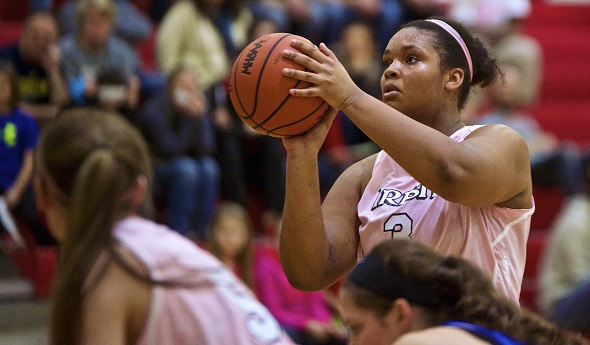
Mount Pleasant Sacred Heart (18-1) – The Irish are seeking their second Class D championship in three seasons and have one of the top post players regardless of class in Averi Gamble. Sacred Heart plays Big Rapids Crossroads Academy (18-1) on Wednesday, but beat Crossroads 54-24 on Jan. 4 and owns impressive wins over Class C Beaverton, Morley Stanwood and Carson City-Crystal with the only loss to Saginaw Nouvel.
Newberry (19-1) – The Indians already are six wins better than last season, when they went out of the tournament in their first District game. Newberry also is on one of the strongest surges in the state thanks in large part to a 54-50 win over Class C contender St. Ignace on Feb. 18 that gave the Indians the Straits Area Conference title to go with an outright championship in the Eastern Upper Peninsula Conference. Newberry also swept Class B Sault Ste. Marie (15-5).
Pittsford (20-0) – After suffering its only loss last season, and in overtime, to St. Ignace in the Class D Final, Pittsford is the likely favorite after another dominating run. While the Wildcats played mostly Class D teams over a 16-game league schedule in the Southern Central Athletic Association, they also posted solid wins over Class A Belleville and Class C Manchester – and had only one game in single digits, a 71-62 win over Class C Grass Lake on Dec. 8.
PHOTO: Mount Pleasant Sacred Heart’s Averi Gamble, here attempting a free throw, will lead one of the top teams in Class D into the tournament for the final time. (Click to see more at HighSchoolSportsScene.com.)