

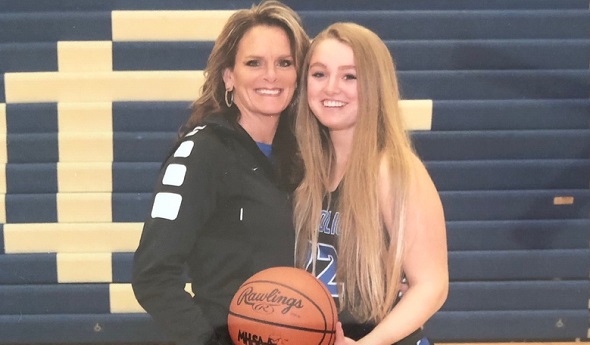
Coach Leads with Same Drive, New Perspective
February 20, 2019
By Steve Vedder
Special for Second Half
Colleen Nagel can only shake her head when one of her former Grand Rapids Catholic Central basketball players offers an observation after dropping by a Cougars practice.
Now in her 30th year of coaching, and first season of her second stint at Catholic Central, the former Colleen Lamoreaux-Tate admits to the subtle changes that three decades on the bench have brought.
Those changes don't include the lessening of competitive fires which still burn bright or the importance of the relationships with the players or teaching of the game.
But make no mistake, there are differences – changes that have only come through self-reflection. Known as one of the most fiery coaches in Grand Rapids, Nagel still has high expectations for her teams. But time, a shuffling of personal priorities and the wisdom of age has changed Nagel, who surpassed the career 360-win total last week.
"I'll have some of my former players stop by, and they say I'm nicer," Nagel laughs. "You get older and slow down, and it's a different kind of time now. I've always said if you can't evolve with time, you need to get out."
A case in point came a couple weeks ago when the Cougars, on the verge of taking charge of the Ottawa-Kent Conference Blue championship race, suffered a crushing one-point loss to Coopersville after inexplicably falling behind by 23 points at the half. The team also dropped a one-point decision to West Catholic after hammering the Falcons by 30 in the teams' first meeting.
Nagel said her reaction to those losses differs from how she would have handled them during her first seven-year coaching stint at Catholic Central. During that tenure, the Cougars went 167-19, including notching arguably the greatest win in Grand Rapids girls basketball history when the Cougars stunned then 10-time (now 13-time) MHSAA Finals champion Detroit Country Day 51-43 in the 2010 Class B championship game.
Instead of driving her teams even harder after such losses, Nagel said she has the wisdom to use them as a teaching tool.
It's all about age and reflection, she said. The combination of a second marriage, a new job outside basketball, the responsibility and joy of coaching her daughter, the experience of three years coaching at Ferris State University and the recognition that teenage athletes and their parents have changed over the years have caused Nagel to take a hard second look at how she coaches.
Nagel said her conclusions may have left her a better coach, but definitely a person who finds herself examining the big picture over her own immediate surroundings.
Which isn't to say the drive to win has passed her by. What she will say is that 30 years after her first bench position as West Catholic's freshmen coach in 1989, the game remains as fun as ever.
"Kids change, and I'm not saying that's a bad thing at all," she said. "I probably don't yell in practice and in the games like I used to. But I've always said you have to evaluate yourself, and I'm absolutely still having fun."
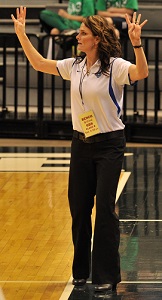 While winning still ranks near the top of her priorities, Nagel said what drives her now – both on the court and off – is the quest for balance. While still possessing a love of coaching, Nagel said family and professional happiness off the court is what she seeks. As for winning, that candle still burns – but it's no longer consuming.
"I will never think winning isn't important. I'll always think my team needs to be in it until the end," she said. "But you can be consumed with things when you should be trying to find a balance in your life. (College) was 24/7 for me, and because of that I began to reflect and I realized life should be a balance. My priority should be my family."
That's probably the No. 1 lesson that came out of coaching three years at Ferris State after leaving Catholic Central in 2012.
"You're always thinking the grass might be greener," Nagel said of making that move.
What she found was the grass wasn't greener. Nagel said the endless fundraising, the long recruiting trail and the year-round duties of a college coach wound up being more than she wanted.
Nagel was content to be out of the game while watching her daughter, Katie, play on the Catholic Central varsity as a freshman a year ago. But when then-coach Trevor Hinshaw decided to devote more time to his family and athletic director duties after going 120-28 in the six seasons after replacing Nagel, she saw an opportunity to return to a familiar post.
She had turned down the job once when she didn't want people thinking Katie had made varsity as a freshman because her mother was the coach. But Nagel couldn't pass on the opportunity when Hinshaw asked again.
"She's such a great competitor, coach and teacher," Hinshaw said of Nagel, who as a member of the search committee recommended Hinshaw for the job after leaving for Ferris State. "The relationship she builds with players is one of the keys why her teams excel on the court. It's the combination of a lot of things which make her a good coach."
Because she recognizes the growth in herself over the last few years, Nagel said she enjoys coaching as much as ever, particularly in the MHSAA Tournament. In addition to the win over Country Day in 2010, Catholic Central had a pair of Class B runner-up finishes in 2009 and 2012. Her 2002 East Grand Rapids team also finished second.
This season’s team is 11-5 overall and tied for first in the O-K Blue, with a chance at another postseason run when Districts begin in two weeks.
"It's the backbone of everything I coach for," she said of the postseason. "I want my teams to be as ready for the tournament like I always did.
"But you can drive yourself crazy in saying, 'This is what we should be doing. How can I create what we need to do?' You evolve with time. I'm not saying I still won't yell at referees or whomever. But like a parent, you should become smarter.
"You need to see that times change. There's still a right way to play – you hustle, have a good attitude and if you knock someone down you pick them up. But you evolve."
PHOTOS: (Top) Colleen Nagel returned to coaching Grand Rapids Catholic Central this season, including her sophomore daughter Katie Tate. (Middle) Nagel guides her team during the 2012 Class B Final. (Top photo courtesy of the Nagel family.)
Breslin Bound: 2021-22 Girls Report Week 9
By
Geoff Kimmerly
MHSAA.com senior editor
January 31, 2022
As February begins, some key dates should be on your girls basketball calendar:

In two weeks, Feb. 14, the MHSAA will announce the formula for drawing this season’s District tournaments.
On Feb. 20, Districts will be posted with the top-two seeded teams on opposite sides of those brackets.
On Feb. 28, those Districts will begin play and the MHSAA Tournament will be underway.
For a more detailed explanation of the seeding process, click here. Otherwise, sit back and enjoy – league tournaments for those playing them begin over the next few weeks, and the rest are rolling into the second runs through conference play with plenty of major matchups anchoring the calendar’s shortest month.
“Breslin Bound” is powered by MI Student Aid and based on results and schedules posted for each school at MHSAA.com.
Week in Review
The countdown of last week’s five most intriguing results:
1. Farmington Hills Mercy 46, Dearborn Divine Child 43 With a week left in the league schedule, the Marlins (11-2) are back tied for first in the Detroit Catholic League Central after a Jan. 11 loss to Divine Child (12-1) had left them chasing the last few weeks.
2. Detroit Cass Tech 62, Detroit Renaissance 61 (OT) The Detroit Public School League schedule also finishes this week, and this shook up the Blue standings as Renaissance (9-2) hadn’t lost in league play.
3. Dexter 43, Saline 39 The Dreadnaughts (10-2) closed the first half of the Southeastern Conference Red schedule in first after handing Saline (11-1) its first loss.
4. Rockford 47, Holland West Ottawa 20 The Rams (12-1) kept pace a game back of leader Hudsonville in the Ottawa-Kent Conference Blue, while also knocking West Ottawa (10-3) out of a tie for first.
5. Escanaba 56, Calumet 50 The Eskymos (7-5) have won five straight and with this victory handed Calumet (11-1) its lone defeat, with a rematch coming up Feb. 11.
Watch List
With an eye toward March, here are two teams in each division making sparks:
Division 1
Macomb L’Anse Creuse North (13-1) The Crusaders have put together four straight winning seasons and are playing for a third-straight league title this winter – plus likely much more. LCN is a combined 31-2 over the last two seasons after reaching the Division 1 Quarterfinals last year, and the only loss this winter came in mid-December to Grosse Pointe North (10-1) – a possible Quarterfinals opponent this March.
Wayne Memorial (11-1) After falling to Division 3 contender Ypsilanti Arbor Prep in its season opener, Wayne Memorial has not been defeated and rarely challenged. The Zebras are in first in the Kensington Lakes Activities Association East and own a 40-point win over the second-place team, and their first win this winter was by 17 over 2021 Division 1 runner-up Detroit Renaissance. Wayne had fallen to Renaissance 75-72 in last year’s Semifinal.
Division 2
Detroit Edison (5-1) The Pioneers are again considered the top team in Michigan regardless of division, with their lone loss in double overtime to Indiana power South Bend Washington on Dec. 11. Edison has had four games canceled, but finally had an opportunity to play a full week and defeated Division 1 East Lansing (8-4) and Parma Western (11-1), to go with an earlier win over reigning Division 1 champion Hudsonville. Edison makes a trip to Illinois this weekend, but has intriguing back-to-back games with Farmington Hills Mercy and Arbor Prep coming up.
Portland (11-1) The reigning Division 2 champion made a couple of loud statements last week, adding the best wins of a big start 45-21 over Division 1 East Lansing and 40-34 over Haslett (10-2). The only loss this winter came to league rival Lansing Catholic by three on Jan. 14 – and the Raiders host the rematch Feb. 18, with dates against Detroit Renaissance and Division 4 contender Fowler also coming up.
Division 3
Bloomingdale (11-1) The Cardinals are lined up well to win at least 15 games for the third season over the last four (and after going 11-4 during last year’s abbreviated winter). They also control their destiny as they look to repeat in the Southwest 10 Conference, thanks to an assist from third-place Mendon, which defeated co-leader Hartford last week. Hartford won the first round against Bloomingdale by six Jan. 11, with the rematch at Hartford in the regular-season finale Feb. 22. Bloomingdale defeated Mendon (10-2) by six Jan. 19.
Brooklyn Columbia Central (10-2) The Golden Eagles moved into first place alone in the Lenawee County Athletic Association last week by completing a season sweep of former co-leader Blissfield (10-4). Columbia Central then hung on to first by avenging its lone league loss with Thursday’s 51-46 win over third-place Onsted (9-5). Next up is last season’s Division 3 champ Grass Lake, and Division 4 contender Adrian Lenawee Christian will provide a solid challenge heading into the playoffs.
Division 4
Bay City All Saints (7-2) The Cougars opened their current four-game winning streak with a 33-28 win over Carsonville-Port Sanilac, the second-place team in the North Central Thumb League Stripes. Thanks to that victory, All Saints leads the division as it looks to add a second title in three seasons; the Cougars were second last year while getting in only seven games total. The team’s two losses this winter were to contenders in the NCTL Stars.
Pickford (7-1) The Pirates finished the first half of the Eastern Upper Peninsula Conference schedule undefeated in league play and won those five games by an average of 27.6 points per. But the most telling result might have been the team’s lone loss; Pickford’s 2018-19 and 2019-20 seasons ended with District losses to St. Ignace, but the Pirates fell only 58-56 to the Saints (11-2) on Jan. 19 and see them again Tuesday.
Can't-Miss Contests
Be on the lookout for results of these games coming up:
Tuesday – Portland St. Patrick (13-0) at Fowler (11-1) – The Central Michigan Athletic Conference title and a top District seed may be on the line as Fowler looks to avenge a 53-49 loss in the first meeting Dec. 17 between these Division 4 contenders.
Wednesday – Lansing Catholic (13-0) at Ypsilanti Arbor Prep (11-0) – The Cougars are No. 5 in Division 2 MPR, and Arbor Prep is No. 1 in Division 3.
Thursday – Traverse City St. Francis (10-3) at Harbor Springs (12-1) – The Gladiators have a half-game lead atop the Lake Michigan Conference thanks to a 54-37 win in these teams’ Jan. 12 meeting.
Friday – Morley Stanwood (11-1) at Kent City (13-0) – Kent City won the Dec. 17 meeting 65-55 and can move within a game of clinching the Central State Activities Association Silver title by completing a sweep.
Friday – Sault Ste. Marie (10-3) at St. Ignace (11-2) – These are considered among the best in Divisions 2 and 3, respectively, and sit tied for first in the Straits Area Conference with St. Ignace winning the Dec. 16 meeting 51-29.
Second Half’s weekly “Breslin Bound” previews and reviews are powered by MI Student Aid, a part of the Office of Postsecondary Financial Planning located within the Michigan Department of Treasury. MI Student Aid encourages students to pursue postsecondary education by providing access to student financial resources and information. MI Student Aid administers the state’s 529 college savings programs (MET/MESP), as well as scholarship and grant programs that help make college Accessible, Affordable and Attainable for you. Connect with MI Student Aid at www.michigan.gov/mistudentaid and find more information on Facebook and Twitter @mistudentaid.
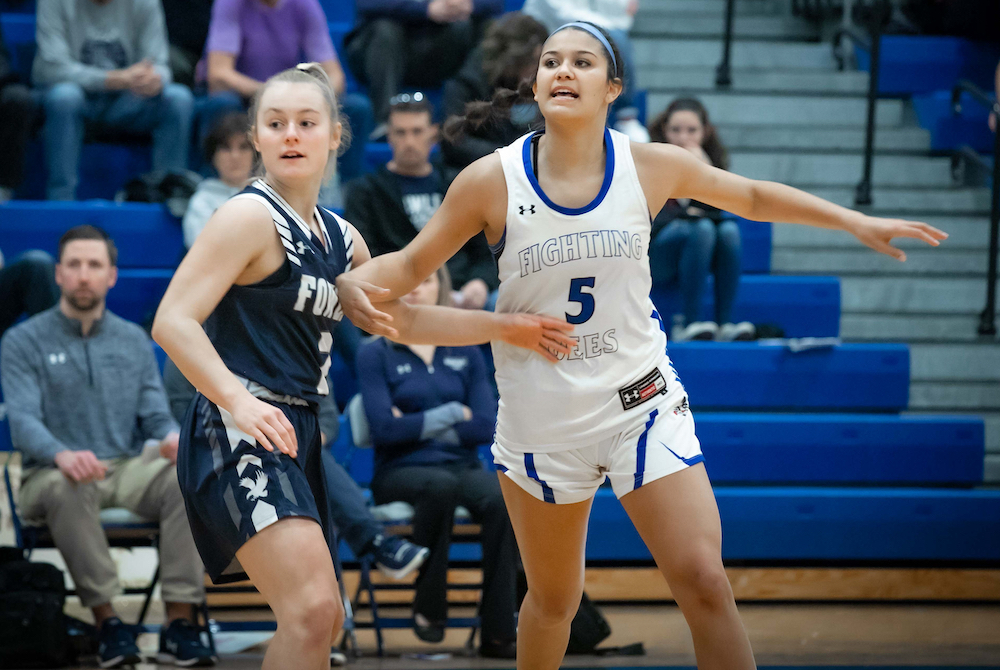
PHOTO Fowler, here against Bath, will face Portland St. Patrick this week in one of the season’s most anticipated rematches. (Photo by Christine McCallister.)