


Girls Basketball Finals Returning to Breslin
September 30, 2019
By Geoff Kimmerly
Second Half editor
The Michigan High School Athletic Association’s Girls Basketball Semifinals and Finals weekend could return to the Breslin Student Events Center as quickly as this upcoming 2019-20 season, with Michigan State University hosting the event this winter and in future seasons when the Spartans women’s basketball team is not selected as an opening-round host for the NCAA Tournament.
Breslin hosted the Girls Basketball Semifinals and Finals from 2004-06 and 2010-17. However, the potential for a conflict with the NCAA Division I Women’s Basketball Tournament led to the MHSAA moving the event for the past two seasons. The NCAA awards top-four seeded teams an opportunity to host the first two rounds of its Division I tournament, and the NCAA event falls almost annually on the traditional dates of the MHSAA girls basketball championship weekend – setting up the possible conflict of both events being scheduled to play at Breslin at the same time.
During an initial three-year contract beginning this winter, Breslin tentatively will be the host of the MHSAA Girls Basketball Semifinals and Finals. If, beginning in 2021, the Spartans are seeded fourth or higher for the NCAA Tournament and selected to host first and second rounds, the MHSAA Girls Semifinals and Finals will be played at Read Fieldhouse’s University Arena on the campus of Western Michigan University. Hope College’s DeVos Fieldhouse in Holland will serve as the alternative site if Breslin is not available in 2020, as Read is hosting the Mid-American Conference Gymnastics Championships during the weekend of the MHSAA Girls Semifinals and Finals.
“We are thankful for the graciousness of all parties involved to allow for this opportunity to bring the Girls Basketball Semifinals and Finals back to the Breslin Center,” MHSAA Executive Director Mark Uyl said. “From the Breslin Center staff, to coach Suzy Merchant and the MSU women’s basketball program, to MSU law enforcement, ticketing and hospitality and then Western Michigan and Hope College and their facilities people for agreeing to reserve their arenas for us in case it’s needed – this agreement happens only because of the immense cooperation by everyone involved.”
The MHSAA Girls Basketball Semifinals will be played this upcoming season March 19-20, 2020, with all four championship games March 21. The NCAA Division I Women’s Basketball Tournament’s opening weekend is March 20-23, with the bracket and seeds to be announced Monday, March 16.
The MHSAA Boys Basketball Semifinals and Finals traditionally are played at the Breslin Center the following weekend, this upcoming season March 26-28. All games for the NCAA Men’s Basketball Tournament are played at neutral sites, and there is no possible conflict between the two events.
Read Fieldhouse, home to Broncos teams including the women’s and men’s basketball programs, unveiled a new basketball court at the start of the 2015-16 season among a variety of improvements to the facility over the last five years. The MHSAA Girls Basketball Finals were played at Read from 1983-85, and WMU also hosted the MHSAA Girls Volleyball Finals from 1996 through the 2007 winter season, the last before the MHSAA season for the sport moved to the fall.
DeVos Fieldhouse, the 2020 provisional site, is home to Hope’s hoops teams among other athletic programs and previously hosted the 2013 NCAA Division III Women’s Basketball Final Four.
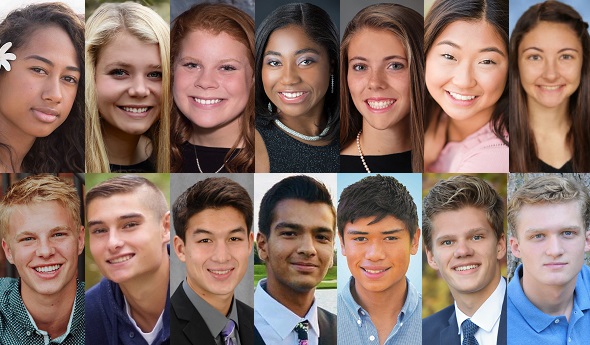
Scholars & Athletes 2018: Class A
By
Geoff Kimmerly
MHSAA.com senior editor
February 19, 2018
By Geoff Kimmerly
Second Half editor
The Michigan High School Athletic Association has selected 14 student-athletes from Class A member schools to receive scholarships through the MHSAA/Farm Bureau Insurance Scholar-Athlete Award program.
 Farm Bureau Insurance, in its 29th year of sponsoring the award, will give $1,000 college scholarships to 32 individuals who represent their member schools in at least one sport in which the Association sponsors a postseason tournament. The first 30 scholarships are awarded proportionately by school classification and the number of student-athletes involved in those classes; also, there are two at-large honorees who can come from any classification.
Students applying for the Scholar-Athlete Award must be carrying at least a 3.5 (on a 4.0 scale) grade-point average and have previously won a letter in a varsity sport in which the Michigan High School Athletic Association sponsors a postseason tournament. Other requirements for the applicants were to show active participation in other school and community activities and produce an essay on the importance of sportsmanship in educational athletics.
Each of the scholarship recipients will be honored at a halftime ceremony during the Class C Boys Basketball Final game March 24 at the Breslin Student Events Center in East Lansing. Commemorative medallions will be given to the finalists in recognition of their accomplishments.
The Class A Scholar-Athlete Award honorees are Talia N. Edmonds, Kalamazoo Central; Anna Fischer, St. Joseph; Kendall Jordan, Rochester; Olivia Perkins, Farmington Hills Harrison; Lauren Sickmiller, Grosse Pointe North; Grace VanArendonk, Muskegon Mona Shores; Megan Worrel, Troy; Danny deForest, Holland West Ottawa; Cole Johnson, Rockford; Paul Cheng McKinley, Okemos; Aditya Middha, Midland Dow; Kobie Mueller, Ann Arbor Huron; David Paquette, Petoskey; and Nicholas Weigle, Grandville.
Overviews of the scholarship recipients of the Class A Scholar-Athlete Award follow. A quote from each recipient's essay also is included:
 Talia Naomi Edmonds, Kalamazoo Central
Played four years of varsity basketball and volleyball and will play her fourth of varsity softball this spring; also participated in subvarsity track & field as a sophomore. Captained all three varsity teams and helped basketball team to three District and one Regional title during her first three seasons. Earned all-league honors in volleyball and softball and all-region in volleyball while her team was named academic all-state. Also is an accomplished beach volleyball player and has trained in budo taijutsu form of martial arts. Participating in second year of National Honor Society, fourth as part of KZOO Leaders and tutors elementary school math students in addition to participating in various volunteer efforts. Served as coach and mentor for middle school volleyball teams. Will attend Michigan State University and study geonomics and molecular genetics.
Essay Quote: “One of the lessons my parents shared with me was to focus on things I can control, and not people, the environment or things I cannot control. These situations have provided me opportunities to educate others through my actions. Often these individuals would speak out of ignorance what I believe to be a display of poor sportsmanship; hopefully by our passion for the game it will facilitate a learning lesson on the common ground of competition.”
 Anna Fischer, St. Joseph
Ran four years of cross country and played four of varsity basketball, and will become the first girl in school history to earn 12 letters when she competes in track & field again this spring. Captained basketball and cross country teams and earned all-state and academic all-state honors in all three sports. Participating in second year of National Honor Society and has been named National Merit Commended Scholar. Earned silver prize in Whirlpool Art Competition, a Kalamazoo Institute of Art design competition scholarship and multiple gold keys and honorable mentions from the national Scholastic Art & Writing Awards. Participating in fourth year of Rotary Interact Club and as part of the International Committee. Selected as one of 10 St. Joseph students to serve on the inaugural Advanced Leadership Council. Will attend the University of Notre Dame and study engineering.
Essay Quote: “Sportsmanship is about embracing the competition – it represents the heart and soul of the game itself. The most rewarding aspect of sporting competitions is to be able to share your passion and demonstrate your hard work against others who have also worked hard to be the best. Acknowledging another’s success, having played fairly and with integrity, is the perfect conclusion to a hard-fought contest.
 Kendall Jordan, Rochester
Competed in varsity swimming & diving for four years and will play her fourth season of varsity lacrosse this spring. Captained both teams and earned academic all-state in both sports. Also earned all-state honors in lacrosse and competed in three MHSAA Swimming & Diving Finals. Participating in third year of National Honor Society and second of National Social Studies Honor Society. Collected 150 pounds of lacrosse gear, clothing and supplies to distribute in Jamaica, where she volunteered as part of Fields of Growth. Organized a meal that fed 130 children as part of Power Company Kids Club of Pontiac, among additional volunteer efforts. Serving as class ambassador and as part of school’s Captains Club. Earned her school’s Falcon of Distinction Award and was a nominee for the Prudential Spirit of Community Award. Will attend Butler University and study health care business and international relations.
Essay Quote: “Sportsmanship is upheld when competitors remember that athletes, coaches and officials are people first. People should be treated with kindness and respect despite any circumstances of a game. Simple acts of sportsmanship promote positive play and increase the chances of respect being reciprocated by whom we compete with and against.”
 Olivia Perkins, Farmington Hills Harrison
Played four seasons of varsity basketball and two of varsity volleyball, and one each of varsity soccer and tennis. Earned all-league and all-county honors in basketball and all-city in volleyball while finishing as a league runner-up in track; also earned league scholar-athlete honors in multiple sports and captained her junior varsity volleyball team. Participating in second year of National Honor Society and earned an academic letter based on high grade-point average. Serving first year in student government as a Senior Board officer and as a freshman played first chair bass in school’s concert orchestra. Participating in first year of Health Occupations Students of America and fourth for Hawk Help peer tutoring program, and has participated four years in Breast Cancer “Race for a Cure.” Created school’s girls basketball camp with proceeds going to team’s boosters and Harrison athletic department. Will attend Cornell University and study biology on a pre-veterinary track.
Essay Quote: “While winning is a marvelous feeling, I’ve grown the most thorough the multitude of losses that I’ve experienced over the years. Losing has allowed me to reflect on myself, and try to come out of a game with new and more developed insight of the team.”
 Lauren Sickmiller, Grosse Pointe North
Ran four years of varsity cross country and will play her fourth of varsity soccer and participate in fourth of track & field this spring. Earned all-league honors in all three sports, all-District in soccer and all-region in cross country and track. Captained cross country team and earned academic all-state in that sport; also earned scholar athlete recognition in all three sports. Participating in second year of National Honor Society and named AP Scholar with Distinction. Carries weighted 4.35 grade-point average and achieved high scores on four Advanced Placement exams. Earned recognition for French speaking ability from local Alliance Française. Participated three years in student government and is in her first as part of Women In Leadership Leading Our World. Participating in second year of Athletic Council and serves as a math tutor. Is unsure where she will attend college but intends to study pre-medical in hopes of becoming an orthopedic surgeon.
Essay Quote: “While many may perceive sportsmanship as merely shaking hands with the opponent and refraining from acting in an obscene manner in games, matches or races, I know it is something much greater. Sportsmanship stems from providing a positive example for teammates and spectators, especially in the face of adversity.”
 Grace VanArendonk, Muskegon Mona Shores
Participated in four years of competitive cheer, four of sideline cheer and four of powerlifting. Captained competitive cheer team two seasons and earned multiple all-state and academic all-state honors, leading team to league, District and Regional titles. Won state championship in powerlifting from Michigan High School Power Lifting Association. Participating in second year of National Honor Society and has served as a cabinet member. Won school’s Argonaut Award with 4.0 grade-point average. Participating in fourth year of choir that was featured on multiple television networks for “World’s Tallest Singing Christmas Tree.” Coached middle school cheer and as part of Mona Shores Youth Club. Participated in church band and Vacation Bible School and contributed during mission trips to Alaska and New Jersey. Will attend either Michigan State University or Western Michigan University and study nursing while participating in a military ROTC program.
Essay Quote: “High school athletics truly is a different type of classroom. There is no letter grade or final exam. The real test comes when an athlete walks off the court, field or mat into the game of life. Every dimension of my life will be influenced by the sportsmanship lessons I have learned and continue to learn in the classroom of high school athletics.”
 Megan Worrel, Troy
Ran three seasons of varsity cross country and will participate in her fourth of varsity track & field; also played two seasons of subvarsity volleyball. Earned all-state and academic all-state in cross country and track & field and captained both teams. Helped cross country team to Lower Peninsula Division 1 championship in the fall and owns multiple school track records. Participating in second year of National Honor Society and third of Project LEAD and She’s the First. Serves as Project LEAD webmaster and She’s the First treasurer, computer club president and was a student government class representative as a freshman. Earned President’s Volunteer Service Bronze Award. Helped DECA team to state championship and international competition medal and Chinese Quiz Bowl team to multiple top placings. Will attend University of Michigan and study computer science.
Essay Quote: “I don’t race against competitors but rather with a community of runners. Instead of facing stress from competition, I know that my herd will support me – I just need to worry about keeping up. Having good sportsmanship creates an atmosphere where the only anxiety is doing our best. This allows for all of us to move forward as a group instead of trying to hold others back.”
 Danny deForest, Holland West Ottawa
Played two seasons of varsity basketball and three of varsity soccer; also played one season of junior varsity lacrosse. Helped basketball team to league and District championships and captained soccer and basketball teams. Earned all-league and all-District recognition in soccer. Serves on MHSAA Student Advisory Council. Participating in second year of National Honor Society and has carried a 4.0 grade-point average for three consecutive years. Serving fourth year as Greater Holland Area Young Life student leader and second as a Peer Assisted Listener mentoring at-risk and special needs students. Volunteered in various other efforts including in community development in Thailand as part of Step Ahead. Served as youth basketball official and trained future referees. Is undecided where he will attend college but intends to study business marketing.
Essay Quote: “Sportsmanship is when an individual has such a deep love for a game that he or she plays in a way to help all members participating experience the same passion. … Being sportsmanlike is important because it has an immense power to positively influence those involved. At that moment I stopped competing just for myself and began using athletics as my way to be a role model.”
 Cole Johnson, Rockford
Ran four years of varsity cross country and will participate in his fourth of track & field this spring; also played two seasons of junior varsity basketball. Earned all-state three times in cross country, leading his team to two MHSAA Lower Peninsula Division 1 championships, and earned seven all-state honors in track & field. Served as captain of both varsity teams. Participating in second year of National Honor Society, and earned academic letters all four years. Serving fourth year on student council and as president, and fourth year with school’s Renaissance Club for which he’s served as organizer of a number of activities. Attended multiple Jostens Renaissance national conferences and is organizing the largest canned food drive in school history. Also participates in his church’s youth group. Will attend University of Michigan and study mechanical engineering.
Essay Quote: “People who share the same passions have so much in common, and running is a clarifying example. Runners push their bodies to the limit, run through the heat and snow and are probably all a little bit crazy. Because of these common bonds, an underlying respect for every single runner is prevalent throughout cross country.”
 Paul Cheng McKinley, Okemos
Ran four years of varsity cross country and will participate in his fourth of track & field this spring. Earned conference championships and all-state honors in both, and also earned academic all-state. Captained both teams for three seasons. Participating in second year of National Honor Society and as president, and named National Merit Scholar semifinalist. Also serving second years on Okemos Student Athlete Advisory Council and Freshman Connect, and as captain of the latter. Plays as trumpet section leader in symphonic wind ensemble. Serving fourth year in school’s A.C.T.I.O.N. volunteer program and served four as a Gifted & Talented youth mentor for community summer writing camp. Tutors in both math and French and served two years as a youth track coach. Is unsure what he will study, but will attend Pomona College in California.
Essay Quote: “Sometimes it’s a ‘My bad,’ murmured after a bumped elbow or a glancing spike nick. Other times it’s a ‘Watch out!’ when running through a particularly hazardous patch of mud and roots. … Hearing those whispers reminds me that the athletes competing against me have put in just as much work as I have and are working just as hard as I am. … Those whispers, exchanged between ragged breaths despite immense fatigue, are the highest level of respect I know in the sport.”
 Aditya Middha, Midland Dow
Played four seasons of varsity tennis, helping his team to the MHSAA Lower Peninsula Division 2 championship in 2016 and runner-up finish in the fall. Earned a Finals No. 1 doubles flight championship as a junior and runner-up finishes at No. 4 singles as a sophomore and No. 1 doubles this past fall. Earned Regional and league championships all four seasons and served as team captain the last two. Also earned all-state honors the last two and all-league the last four. Participating in second year of National Honor Society and as chapter secretary, and fourth year of DECA and as president for club that qualified for international competition multiple times. Earned A.H. Nickless Award of $45,000 including a $20,000 STEM grant for his school, and selected for competitive Michigan State University STEM Scholars research in 2017. Named AP Scholar with Distinction and National Merit Scholar semifinalist. Served as 4-H outdoor camp youth director the last two years and Midland County Youth Leadership segment coordinator for two years. Will attend University of Michigan and study engineering.
Essay Quote: “I’ve learned that sportsmanship is not something that can mastered by studiously analyzing a textbook or listening intently to a lecture. Instead, it is grasped through a multitude of individual experiences in which we learn how to handle not only the actions of ourselves, but of our opponents too.”
 Kobie Mueller, Ann Arbor Huron
Played four seasons of varsity tennis, at No. 2 singles all four, and helped team to the 2016 MHSAA Lower Peninsula Division 1 title. Earned individual all-state honors three times and helped team to four Regional and league championships while also earning four individual titles at both levels. Served as team co-captain in the fall. Participating in second year of National Honor Society. Named National Merit Commended Scholar and AP Scholar with Distinction. Participating in second year of Business Professionals of America club and helped team to state championship and national top-10 finish. Participating in third year of key club and as a math and computer science tutor. Participating in third year of school’s computer science club, and as president, and second year as a workshop director at the Ann Arbor Hands-On Museum. Earned top-10 finish at University of Michigan-Dearborn programming competition. Is undecided where he will attend college, but will study engineering.
Essay Quote: “I remembered thinking to myself that this was what high school athletics is all about: giving your best effort and sharing together with teammates while displaying good sportsmanship. I believe these high school tennis team experiences have helped prepare me to face any challenges ahead with grace and integrity.”
 David Paquette, Petoskey
Participated in four seasons of varsity skiing and two full seasons of varsity soccer after moving up from junior varsity during his sophomore year. Helped his skiing team to MHSAA Division 2 championships his first three seasons and helped the soccer team to three District titles. Earned all-state honors multiple seasons in both sports and served as captain of both teams. Participating in third year of National Honor Society and as a board member, participating in a variety of volunteer efforts. Played in school marching band and steel drum band all four years of high school. Helped marching band to various top finishes including Class A Grand Champion awards all four years and Best Percussion Awards in all competitions all four years; serving as tenor drum line section leader as a senior. Participating in second year of Substance Abuse Free Environment of Northern Michigan and last summer attended Community Anti-Drug Coalitions of America mid-year Youth Leadership Training Conference. Also participating as math/science delegate on Quiz Bowl team for second year. Will attend either University of Michigan or Northwestern University and study computer science and economics.
Essay Quote: “Kids take note. And they happen to be master imitators. Sportsmanship is important because it is impactful not only on how today’s game is played, but also tomorrow’s.”
 Nicholas Weigle, Grandville
Competed four seasons on varsity swimming & diving and water polo teams and will play his third season of varsity lacrosse this spring. Earned all-state honors in swimming and holds school record as part of 200-yard freestyle relay. Served as co-captain of swimming & diving and water polo teams. Participating in second year of National Honor Society and named National Merit Commended Scholar and AP Scholar with Distinction. Earned two academic letters, anticipating a third this spring. Participated in Boy Scouts all four years of high school and earned Eagle Scout rank in 2016 and membership in Order of the Arrow. Also played all four years as part of school’s jazz, symphonic and marching bands. Participated four years in Young Life and as part of church’s youth group including as contributor on three mission trips. Served two years as parks and recreation lifeguard. Will attend Hope College and study pre-medical.
Essay Quote: “Sportsmanship ultimately comes down to treating others fairly and with kindness, whether between rivals battling for the win or teammates supporting each other while competing for limited spots. The situations I have been in where I encountered sportsmanship, or lack thereof, have left an impression on me that will help me make the best decisions going forward.”
Other Class A girls finalists for the Scholar-Athlete Award were: Susannah Deems, East Grand Rapids; Kendall Dillon, Northville; Kelly Ann Giles, East Kentwood; Roan Haines, Northville; Samantha Hild, Holly; Karlyn Kelley, Rochester; Meghan Monaghan, Troy; Anushka Murthy, Okemos; Jenna Norgrove, Rochester; Maria Poortenga, Grand Rapids Christian; Breanna Probst, Grand Rapids Forest Hills Central; Hallie C. Roman, Port Huron Northern; Emily Rooney, Birmingham Seaholm; Tess Scheidel, Middleville Thornapple Kellogg; Julie Smith, Walled Lake Northern; Sarah Van Dyke, Grand Rapids Christian; and Maggie Wood, Battle Creek Lakeview.
Other Class A boys finalists for the Scholar-Athlete Award were: Joseph Corner, Holt; Anthony G. DeKraker, Saline; Aidan Delfuoco, Saline; Ben Forstner, East Grand Rapids; Nathan Frazier, Warren Cousino; Hunter Gandee, Temperance Bedford; Adam Good, Auburn Hills Avondale; Anthony Joseph, DeWitt; Anthony Kim, Grand Blanc; William Marano, Dearborn Edsel Ford; Michael Robert Melaragni, Rochester Hills Stoney Creek; Reagan Miller, Saline; Luke Rambo, Marquette; Nick Seidel, West Bloomfield; Yzrael Silguero, Holland; Emmett Turner, Saline; and Jacob Willemsen, Byron Center.
The Class B scholarship award recipients were announced Feb. 13. Class C and D honorees were announced Feb. 6.
Farm Bureau Insurance of Michigan was founded in 1949 by Michigan farmers who wanted an insurance company that worked as hard as they did. Those values still guide the company today and are a big reason why it is known as Michigan’s Insurance Company, dedicated to protecting the farms, families, and businesses of this great state. Farm Bureau Insurance agents across Michigan provide a full range of insurance services — life, home, auto, farm, business, retirement, Lake Estate®, and more — protecting nearly 500,000 Michigan policyholders.
The MHSAA is a private, not-for-profit corporation of voluntary membership by more than 1,500 public and private senior high schools and junior high/middle schools which exists to develop common rules for athletic eligibility and competition. No government funds or tax dollars support the MHSAA, which was the first such association nationally to not accept membership dues or tournament entry fees from schools. Member schools which enforce these rules are permitted to participate in MHSAA tournaments, which attract more than 1.4 million spectators each year.