


Girls Basketball Finals Returning to Breslin
September 30, 2019
By Geoff Kimmerly
Second Half editor
The Michigan High School Athletic Association’s Girls Basketball Semifinals and Finals weekend could return to the Breslin Student Events Center as quickly as this upcoming 2019-20 season, with Michigan State University hosting the event this winter and in future seasons when the Spartans women’s basketball team is not selected as an opening-round host for the NCAA Tournament.
Breslin hosted the Girls Basketball Semifinals and Finals from 2004-06 and 2010-17. However, the potential for a conflict with the NCAA Division I Women’s Basketball Tournament led to the MHSAA moving the event for the past two seasons. The NCAA awards top-four seeded teams an opportunity to host the first two rounds of its Division I tournament, and the NCAA event falls almost annually on the traditional dates of the MHSAA girls basketball championship weekend – setting up the possible conflict of both events being scheduled to play at Breslin at the same time.
During an initial three-year contract beginning this winter, Breslin tentatively will be the host of the MHSAA Girls Basketball Semifinals and Finals. If, beginning in 2021, the Spartans are seeded fourth or higher for the NCAA Tournament and selected to host first and second rounds, the MHSAA Girls Semifinals and Finals will be played at Read Fieldhouse’s University Arena on the campus of Western Michigan University. Hope College’s DeVos Fieldhouse in Holland will serve as the alternative site if Breslin is not available in 2020, as Read is hosting the Mid-American Conference Gymnastics Championships during the weekend of the MHSAA Girls Semifinals and Finals.
“We are thankful for the graciousness of all parties involved to allow for this opportunity to bring the Girls Basketball Semifinals and Finals back to the Breslin Center,” MHSAA Executive Director Mark Uyl said. “From the Breslin Center staff, to coach Suzy Merchant and the MSU women’s basketball program, to MSU law enforcement, ticketing and hospitality and then Western Michigan and Hope College and their facilities people for agreeing to reserve their arenas for us in case it’s needed – this agreement happens only because of the immense cooperation by everyone involved.”
The MHSAA Girls Basketball Semifinals will be played this upcoming season March 19-20, 2020, with all four championship games March 21. The NCAA Division I Women’s Basketball Tournament’s opening weekend is March 20-23, with the bracket and seeds to be announced Monday, March 16.
The MHSAA Boys Basketball Semifinals and Finals traditionally are played at the Breslin Center the following weekend, this upcoming season March 26-28. All games for the NCAA Men’s Basketball Tournament are played at neutral sites, and there is no possible conflict between the two events.
Read Fieldhouse, home to Broncos teams including the women’s and men’s basketball programs, unveiled a new basketball court at the start of the 2015-16 season among a variety of improvements to the facility over the last five years. The MHSAA Girls Basketball Finals were played at Read from 1983-85, and WMU also hosted the MHSAA Girls Volleyball Finals from 1996 through the 2007 winter season, the last before the MHSAA season for the sport moved to the fall.
DeVos Fieldhouse, the 2020 provisional site, is home to Hope’s hoops teams among other athletic programs and previously hosted the 2013 NCAA Division III Women’s Basketball Final Four.
Countdown to Calvin: Girls Report Week 2
December 12, 2017
By Geoff Kimmerly
Second Half editor
The first weeks of girls basketball season give us an opportunity to watch potential new powers emerge – and we’ve already got some candidates.
 This week’s “Countdown to Calvin” – powered by MI Student Aid – is filled with teams making strong first impressions, starting with the first two victors mentioned in the “Week in Review” below that earned victories over teams that made it to the final weekend of last season.
These reports are based on results and schedules posted for each school at MHSAA.com – to offer corrections, email me at [email protected].
Week in Review
The countdown of last week’s five most intriguing results:
1. Howell 51, Ypsilanti Arbor Prep 41 – The Highlanders moved to 4-0 and broke a 26-game regular-season winning streak for Arbor Prep, which lost last season in the Class B championship game.
2. Coldwater 42, Marshall 30 – Coldwater broke Marshall’s 42-game perfect run during the first three seasons of the Interstate 8 Athletic Conference, and after losing to the 2017 Class B semifinalist Redhawks by 15 and 24 last season.
3. East Lansing 52, DeWitt 51 – East Lansing handed DeWitt a one-point loss for the second straight meeting after doing the same in last season’s Class A District Final; DeWitt won the first meeting last season by a point.
4. Negaunee 74, Houghton 44 – The Miners moved to 4-0 with a big win over a Houghton team that won last year’s meeting by a basket and finished 21-2.
5. Flint Hamady 57, Dearborn Henry Ford Academy 38 – The Hawks are off to their usual strong start, but this one was especially impressive with Henry Ford Academy coming off 19 wins last season.
Watch List
With an eye toward March, here are two teams in each class making sparks:
CLASS A
Battle Creek Harper Creek (3-0) – Harper Creek’s noticeable first week was followed by an important win Friday, 56-53 over Jackson Northwest. The Beavers finished 12-10 overall and fifth in the Interstate 8 Athletic Conference last season, splitting two games with Northwest – which finished runner-up in the league. Harper Creek also opened this season with a win over St. Joseph, 17-5 last winter.
Bay City Western (3-0) – The Warriors improved from 12 to 15 wins over the last two seasons, and made the jump last winter despite an 0-2 start. Two of last December’s defeats were by 10 to Freeland and 19 to Midland; last week Western beat Freeland by two and Midland by seven.
CLASS B
Corunna (2-1) – The Cavaliers did lose to Laingsburg by five to open last week, after also losing to the Wolfpack at the start of 2016-17. But Corunna finished with a 62-57 win over Flint Beecher on Friday and also has a 17-point win so far against Birch Run, last winter’s Tri-Valley Conference East runner-up.
Gladwin (3-0) – The Flying G’s shared last season’s Jack Pine Conference title and already are off to a better start, avenging last winter’s four-point loss to Midland Bullock Creek with a 10-point win last week. Gladwin also has close victories over Farwell and Houghton Lake, the former Farwell’s only loss against three wins.
CLASS C
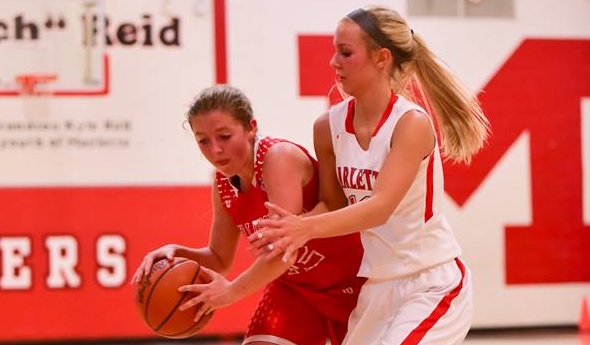
Marlette (3-0) – The Red Raiders play in a tough Greater Thumb Conference East that includes usual powers Sandusky and Harbor Beach, but early returns make it look like they could factor into the mix. Marlette also started 3-0 last year on the way to finishing 10-10, but last week’s 38-33 win over Millington should be a good sign of things to come.
Reese (4-0) – We point out the Rockets every season, and with good reason – they went 20-3 last winter. This opening run has included three wins by double digits including by 14 over Millington and 18 over Frankenmuth, and a five-point win last week against Class A Saginaw Arthur Hill.
CLASS D
Kingston (3-0) – Kingston has held two of its first three opponents to single-digit scoring as it looks to repeat as North Central Thumb League champion. The Cardinals went 18-3 last season and get their first chance at avenging those defeats next week against Sandusky.
Ontonagon (2-0) – The Gladiators are hoping to build off last season’s 9-12 finish after winning 16 games the winter before that. They’re off to the right start; last week’s 45-40 win over Baraga avenged an eight-point loss a year ago.
Can't-Miss Contests
Be on the lookout for results of these games coming up:
Wednesday – Portland St. Patrick (3-0) at Laingsburg (4-0) – The Shamrocks also get undefeated Pewamo-Westphalia on Friday, so this will be the first step toward seeing which of these teams will take the lead in the Central Michigan Athletic Conference.
Friday – Farmington Hills Mercy (4-0) at Bloomfield Hills Marian (3-0) – These two as usual find themselves quickly at the top of the Detroit Catholic League Central; Mercy won the league title and Marian was runner-up last season.
Friday – Flint Hamady (4-0) at Goodrich (3-1) – The only loss this season between these annual Genesee Area Conference powers was Goodrich’s to Arbor Prep two weeks ago; Goodrich was first and Hamady second in the GAC Red last season.
Saturday – Detroit Martin Luther King (0-0) vs. Detroit Country Day (1-1) at Detroit Edison – These two will meet against as part of the Best of Michigan Classic, and most seasons they are in Class A and B, respectively.
Saturday – Ypsilanti Arbor Prep (3-1) vs. Flint Carman-Ainsworth (4-0) at Detroit Edison – These two should find themselves near the top of the first state rankings in Class C and A, respectively, when polls come out next month.
PHOTO: Marlette shut down Millington for a 38-33 victory last week. (Click to see more from Varsity Monthly.)