

Work Molds Lohr Into WSU Wins Leader
By
Paul Costanzo
Special for MHSAA.com
August 5, 2020
When Carrie Lohr was spending weekends in her youth chopping wood with her father or helping clear stones from her the fields of her grandfather’s farm, she wasn’t thinking of how it would help her become a standout athlete or coach. She did think about how she’d rather be swimming in a pool like her friends and classmates.
 But when the Wayne State women’s basketball coach looks back now on her time in Sandusky, it’s those moments that stick out as shaping her.
“I learned the value of hard work,” Lohr, formerly Hickson, said. “I learned the value of earning an allowance. I look back and I was expected to work, and I didn’t know it any other way. Twenty years ago, when I started coaching, I always understood the value of hard work. I was fortunate I have people who have shown me that. That kind of comes back to me more than a particular sport or a particular game or competition. I find myself looking back on how I learned those things with the things that I did.”
Lohr’s hard work helped her become a standout three-sport athlete at Sandusky, an all-conference college basketball player, and now Wayne State’s all-time winningest women’s basketball coach.
The 1989 Sandusky graduate is entering her 10th season with the Warriors with a career record of 148-111. She led Wayne State to NCAA regional finals in 2013 and 2014, and the regional semifinal in 2015. The 2012-13 season featured Wayne State’s first NCAA Tournament victory and its first regional final appearance.
“She definitely had those good leadership qualities and the love of the game,” said Sandusky girls basketball coach Al DeMott, who coached Lohr in the late 1980s. “And she was a hard worker – nobody is going to out-work her. From Day 1, she wasn’t going to let anyone outwork her or get ahead of her. She’s just a great person, and I couldn’t be prouder.”
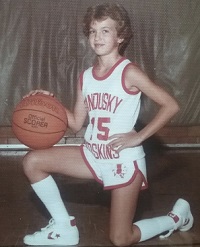
Lohr starred as a point guard for DeMott for two seasons, helping Sandusky reach the Class C Quarterfinals in 1987, where it lost to eventual champion Detroit St. Martin dePorres.
“She used to knock in the 3s, too,” DeMott said. “She hit some big 3s for us in some big games. She was a gamer. She had a smart basketball IQ.”
Lohr played collegiately at St. Clair County Community College (SC4) and the University of Michigan-Dearborn. She was named first-team all-conference, all-region and all-state at SC4, and, unsurprisingly, was a captain at both schools.
 Coaching wasn’t something Lohr considered during her playing days, though.
“I always thought, ‘I could never do this – I could never be a coach. How would I know what to say?’” she said. “But when the buzzer sounds in your last collegiate game and you’re sitting there in the gym and the locker room and reality hit you that it’s over, that was life-changing. It meant so much more to me than I even realized.”
Lohr started her coaching career in 1994 as the freshman girls basketball coach at Richmond, and she quickly fell in love with the profession. Her journey included stints as the freshman girls coach at Port Huron Northern and assistant jobs at SC4 and Oakland University.
While Lohr had found her passion, she still needed to pay the bills.
“I was living my dream (coaching) and following my dream, but reality was hitting me that I may not be able to continue on this path,” Lohr said. “A friend of mine was in medical sales, so I found myself in medical sales for five years. That afforded me to go back into coaching at SC4 as an assistant again, then I got into head coaching.”
She took over the Skippers program in 2002, and had a 166-106 record in nine seasons at her alma mater. It was her first time running a program, and she also became a mother two weeks before her first game with the birth of her daughter Sarah. Carrie was pregnant with her son Eli throughout her entire third season as coach. Lohr said her husband Eric was incredibly supportive, which was crucial to making it work.
She also had an A-list of former coaches to lean on when she needed advice. DeMott is second in MHSAA history with 753 career wins. Lohr’s former travel coach Fred Shaw is a member of the Michigan High School Coaches Association Hall of Fame. And Dave Mann, who has won four MHSAA championships, coached her at U-M Dearborn.
“I really attribute me being in coaching to all of my coaches,” she said. “I always maintained a connection with those individuals. I feel like all three have been a great resource for me. Those times when you’re unsure about something – whether it’s an on-court situation or an off-court situation, I always felt I had three people I could call and seek advice from. I think that’s important to be able to have someone to call and say, ‘I don’t know what to do in this situation.’”
Having played for multiple Hall of Fame-caliber coaches – including the late Paul Jackson, who coached her at SC4 – is also a good way to build a coaching style.
 “You learn from other coaches, but you just step out and create your own path,” Lohr said. “I learned a little bit of something different from all of them. The common denominator is they’re all very positive people, but they’re all competitive. They coach very differently.”
In the spring of 2011, Lohr was hired at Wayne State, and she has turned the Warriors into perennial GLIAC contenders.
“I was just lucky, I think, knowing what I know now about how many people apply for these jobs,” she said. “I feel really fortunate that the athletic director here at Wayne State saw something in me and believed in me. I’m very grateful.”
Her kids have grown into athletes themselves at St. Clair High School. Sarah, a senior, plays volleyball and basketball. She could add tennis in the spring, as well, but wasn’t able to this past year because of the cancellation of seasons due to the coronavirus. Eli, a junior, plays tennis, basketball and baseball.
“When I’m watching my kids, it’s enjoyable to just sit back and watch,” Lohr said. “The things I see in my kids is that I think they’re good teammates, and I think they work hard, and those things are important to me. To watch them compete is fun, but to see those things that maybe don’t show up in a tweet or make a headline, those things are really important.”
They’re also getting to enjoy the experience of playing multiple sports in high school, something Lohr thinks back on fondly from her days in Sandusky.
“I still remember my volleyball coaches, and I still remember my softball coach,” Lohr said. “I had a great experience in being a three-sport athlete. It was demanding, but it’s really unfortunate that a lot of young people aren’t able to experience that. I think there’s a lot of pressure on young people to specialize. I felt like there was a strong culture in Sandusky with all of their sports. To look back on it, it was really a special time for me.”
Made in Michigan 2020
July 31: Neitzel Finds Way Back to High School Hoops - Read
July 28: Nichols Lends Winning Past to West's Present - Read
July 17: Miss Tennis Serving Now as 'Hero Coach' - Read
July 9: Joplin Always Has Known Value of Home - Read
June 24: Fracassa's Remarkable Records Still Rule - Read
June 16: Muskegon Grad Casts "Magic" in HBO Series - Read
 Paul Costanzo served as a sportswriter at The Port Huron Times Herald from 2006-15, including three years as lead sportswriter, and prior to that as sports editor at the Hillsdale Daily News from 2005-06. He can be reached at [email protected] with story ideas for Genesee, Lapeer, St. Clair, Sanilac, Huron, Tuscola, Saginaw, Bay, Arenac, Midland and Gladwin counties.
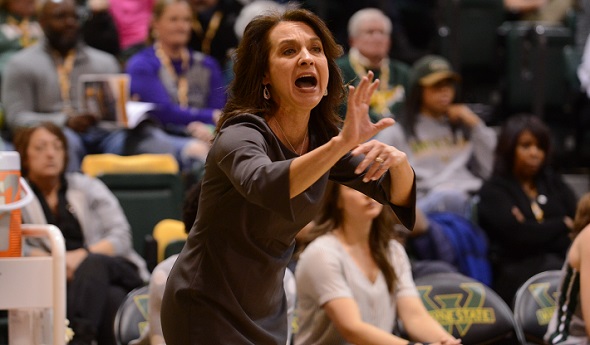
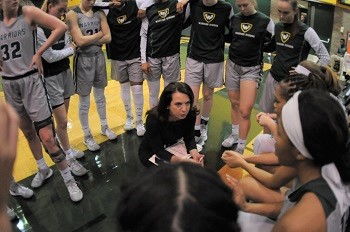
PHOTOS: (Top) Carrie Lohr this winter will enter her 10th season coaching the Wayne State University women’s basketball program. (Middle) Lohr was a standout at Sandusky High during the 1987 and 1988 seasons. (Below) Lohr huddles with her Wayne State players. (Top and below photos courtesy of WSU sports information; Sandusky photo courtesy of Carrie Lohr.)
Breslin Bound: 2021-22 Girls Report Week 9
By
Geoff Kimmerly
MHSAA.com senior editor
January 31, 2022
As February begins, some key dates should be on your girls basketball calendar:

In two weeks, Feb. 14, the MHSAA will announce the formula for drawing this season’s District tournaments.
On Feb. 20, Districts will be posted with the top-two seeded teams on opposite sides of those brackets.
On Feb. 28, those Districts will begin play and the MHSAA Tournament will be underway.
For a more detailed explanation of the seeding process, click here. Otherwise, sit back and enjoy – league tournaments for those playing them begin over the next few weeks, and the rest are rolling into the second runs through conference play with plenty of major matchups anchoring the calendar’s shortest month.
“Breslin Bound” is powered by MI Student Aid and based on results and schedules posted for each school at MHSAA.com.
Week in Review
The countdown of last week’s five most intriguing results:
1. Farmington Hills Mercy 46, Dearborn Divine Child 43 With a week left in the league schedule, the Marlins (11-2) are back tied for first in the Detroit Catholic League Central after a Jan. 11 loss to Divine Child (12-1) had left them chasing the last few weeks.
2. Detroit Cass Tech 62, Detroit Renaissance 61 (OT) The Detroit Public School League schedule also finishes this week, and this shook up the Blue standings as Renaissance (9-2) hadn’t lost in league play.
3. Dexter 43, Saline 39 The Dreadnaughts (10-2) closed the first half of the Southeastern Conference Red schedule in first after handing Saline (11-1) its first loss.
4. Rockford 47, Holland West Ottawa 20 The Rams (12-1) kept pace a game back of leader Hudsonville in the Ottawa-Kent Conference Blue, while also knocking West Ottawa (10-3) out of a tie for first.
5. Escanaba 56, Calumet 50 The Eskymos (7-5) have won five straight and with this victory handed Calumet (11-1) its lone defeat, with a rematch coming up Feb. 11.
Watch List
With an eye toward March, here are two teams in each division making sparks:
Division 1
Macomb L’Anse Creuse North (13-1) The Crusaders have put together four straight winning seasons and are playing for a third-straight league title this winter – plus likely much more. LCN is a combined 31-2 over the last two seasons after reaching the Division 1 Quarterfinals last year, and the only loss this winter came in mid-December to Grosse Pointe North (10-1) – a possible Quarterfinals opponent this March.
Wayne Memorial (11-1) After falling to Division 3 contender Ypsilanti Arbor Prep in its season opener, Wayne Memorial has not been defeated and rarely challenged. The Zebras are in first in the Kensington Lakes Activities Association East and own a 40-point win over the second-place team, and their first win this winter was by 17 over 2021 Division 1 runner-up Detroit Renaissance. Wayne had fallen to Renaissance 75-72 in last year’s Semifinal.
Division 2
Detroit Edison (5-1) The Pioneers are again considered the top team in Michigan regardless of division, with their lone loss in double overtime to Indiana power South Bend Washington on Dec. 11. Edison has had four games canceled, but finally had an opportunity to play a full week and defeated Division 1 East Lansing (8-4) and Parma Western (11-1), to go with an earlier win over reigning Division 1 champion Hudsonville. Edison makes a trip to Illinois this weekend, but has intriguing back-to-back games with Farmington Hills Mercy and Arbor Prep coming up.
Portland (11-1) The reigning Division 2 champion made a couple of loud statements last week, adding the best wins of a big start 45-21 over Division 1 East Lansing and 40-34 over Haslett (10-2). The only loss this winter came to league rival Lansing Catholic by three on Jan. 14 – and the Raiders host the rematch Feb. 18, with dates against Detroit Renaissance and Division 4 contender Fowler also coming up.
Division 3
Bloomingdale (11-1) The Cardinals are lined up well to win at least 15 games for the third season over the last four (and after going 11-4 during last year’s abbreviated winter). They also control their destiny as they look to repeat in the Southwest 10 Conference, thanks to an assist from third-place Mendon, which defeated co-leader Hartford last week. Hartford won the first round against Bloomingdale by six Jan. 11, with the rematch at Hartford in the regular-season finale Feb. 22. Bloomingdale defeated Mendon (10-2) by six Jan. 19.
Brooklyn Columbia Central (10-2) The Golden Eagles moved into first place alone in the Lenawee County Athletic Association last week by completing a season sweep of former co-leader Blissfield (10-4). Columbia Central then hung on to first by avenging its lone league loss with Thursday’s 51-46 win over third-place Onsted (9-5). Next up is last season’s Division 3 champ Grass Lake, and Division 4 contender Adrian Lenawee Christian will provide a solid challenge heading into the playoffs.
Division 4
Bay City All Saints (7-2) The Cougars opened their current four-game winning streak with a 33-28 win over Carsonville-Port Sanilac, the second-place team in the North Central Thumb League Stripes. Thanks to that victory, All Saints leads the division as it looks to add a second title in three seasons; the Cougars were second last year while getting in only seven games total. The team’s two losses this winter were to contenders in the NCTL Stars.
Pickford (7-1) The Pirates finished the first half of the Eastern Upper Peninsula Conference schedule undefeated in league play and won those five games by an average of 27.6 points per. But the most telling result might have been the team’s lone loss; Pickford’s 2018-19 and 2019-20 seasons ended with District losses to St. Ignace, but the Pirates fell only 58-56 to the Saints (11-2) on Jan. 19 and see them again Tuesday.
Can't-Miss Contests
Be on the lookout for results of these games coming up:
Tuesday – Portland St. Patrick (13-0) at Fowler (11-1) – The Central Michigan Athletic Conference title and a top District seed may be on the line as Fowler looks to avenge a 53-49 loss in the first meeting Dec. 17 between these Division 4 contenders.
Wednesday – Lansing Catholic (13-0) at Ypsilanti Arbor Prep (11-0) – The Cougars are No. 5 in Division 2 MPR, and Arbor Prep is No. 1 in Division 3.
Thursday – Traverse City St. Francis (10-3) at Harbor Springs (12-1) – The Gladiators have a half-game lead atop the Lake Michigan Conference thanks to a 54-37 win in these teams’ Jan. 12 meeting.
Friday – Morley Stanwood (11-1) at Kent City (13-0) – Kent City won the Dec. 17 meeting 65-55 and can move within a game of clinching the Central State Activities Association Silver title by completing a sweep.
Friday – Sault Ste. Marie (10-3) at St. Ignace (11-2) – These are considered among the best in Divisions 2 and 3, respectively, and sit tied for first in the Straits Area Conference with St. Ignace winning the Dec. 16 meeting 51-29.
Second Half’s weekly “Breslin Bound” previews and reviews are powered by MI Student Aid, a part of the Office of Postsecondary Financial Planning located within the Michigan Department of Treasury. MI Student Aid encourages students to pursue postsecondary education by providing access to student financial resources and information. MI Student Aid administers the state’s 529 college savings programs (MET/MESP), as well as scholarship and grant programs that help make college Accessible, Affordable and Attainable for you. Connect with MI Student Aid at www.michigan.gov/mistudentaid and find more information on Facebook and Twitter @mistudentaid.
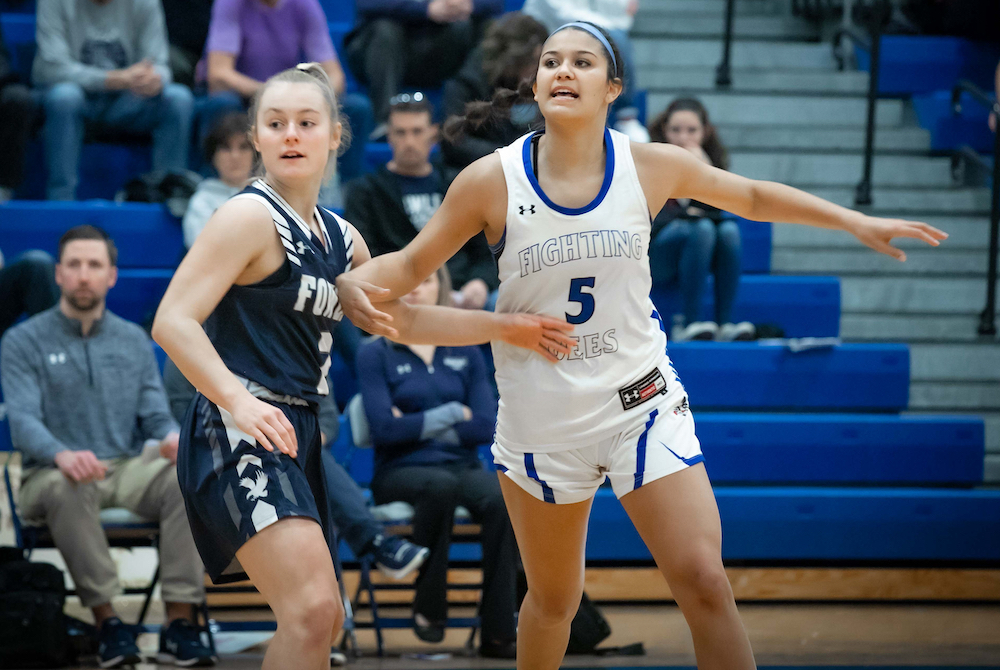
PHOTO Fowler, here against Bath, will face Portland St. Patrick this week in one of the season’s most anticipated rematches. (Photo by Christine McCallister.)