

Be the Referee: Animal Interference
By
Paige Winne
MHSAA Marketing & Social Media Coordinator
September 20, 2023
Be The Referee is a series of short messages designed to help educate people on the rules of different sports, to help them better understand the art of officiating, and to recruit officials.
Below is this week's segment – Animal Interference - Listen
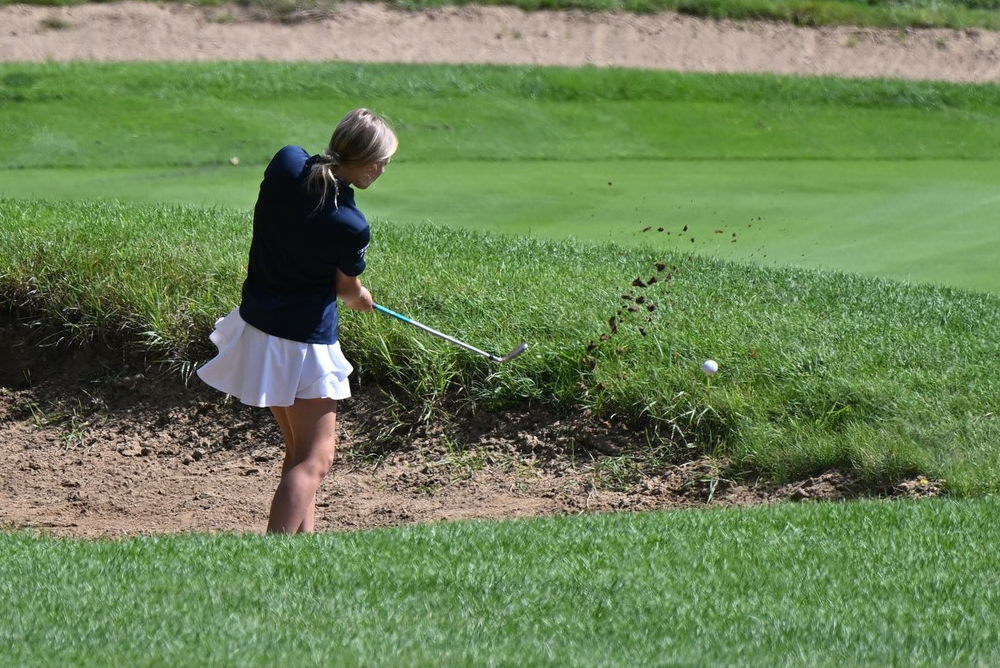
In golf – it’s common to hear about birdies, eagles, maybe even an albatross. Or in my case, a snowman. But what if an actual animal interferes with your ball while in play?
There are two kinds of interference.
The first involves a ball still in motion. If you are putting and a squirrel darts out and stops or redirects your putt, you simply get a do-over from the original spot.
Off the green, if a moving ball is stopped or re-directed, you play the ball from where it ultimately stops.
If your ball is stopped and a seagull picks it up and carries it off – you just replace the ball to its original spot and proceed.
It doesn’t happen often, but now you know how to deal with squirrels and seagulls … in addition to birdies and eagles.
Previous Editions
Sept. 13: Feet Rule on Soccer Throw-In - Listen
Sept. 6: Volleyball Jewelry - Listen
Aug. 30: Football Rules Similarities - Listen
Aug. 23: Football Rules Differences - Listen
(PHOTO by Gary Shook.)
Be the Referee: Vern L. Norris Award
April 30, 2015
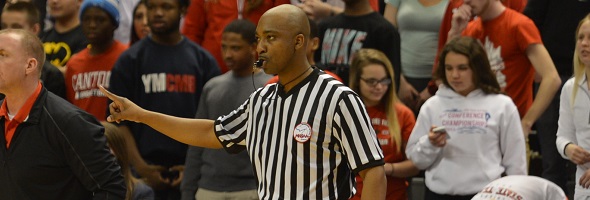
This week, MHSAA assistant director Mark Uyl discusses the MHSAA's highest honor awarded annually to officials.
Be The Referee is a series of short messages designed to help educate people on the rules of different sports, to help them better understand the art of officiating, and to recruit officials.
Below is this week's segment - Vern L. Norris Award - Listen
The Vern Norris Award is the most prestigious award the MHSAA has for officials. The Norris Award, named after former MHSAA Executive Director and long-time official Vern Norris, doesn’t just go to the official of the year. The award is for leaders in the officiating industry, those who have recruited new people into officiating and have been leaders in the areas of training and preparing young new officials.
This year’s winner, right here from the Lansing area, is Sam Davis, a long-time wrestling leader and official, and we could not be more proud of Sam as this year’s winner of the Vern Norris Award.
Past editions
March 23 - Deciding the Game - Listen
March 16 - Block/Charge Call - Listen
March 9 - Dive on the Floor - Listen
March 2 - Primary Areas - Listen
Feb. 23 - Too Much TV - Listen
Feb. 16 - Video Clip Library - Listen
Feb. 9 - Cheer Safety - Listen
Feb. 2 - Basketball PA Announcers - Listen
Jan. 26 - Wrestling Health Concerns - Listen
Jan. 19 - Basketball Physical Contact - Listen
Jan. 12 - Video Review Part 2 - Listen
Dec. 29 - Video Review Part 1 - Listen
Dec. 17 - Registration Part 2 - Listen
Dec. 10 - Registration Part 1 - Listen
Dec. 3 - Legacy Program - Listen
Nov. 26 - Sideline Management - Listen
Nov. 19 - 7-Person Mechanics - Listen
Nov. 12 - Blocking Below the Waist - Listen
Nov. 5 - Tournament Selection - Listen
Oct. 29 - Uncatchable Pass - Listen
Oct. 22 - Preparation for Officials - Listen
Oct. 15 - Automatic First Downs - Listen
Oct. 8 - Officials & Injuries - Listen
Oct. 1 - Overtime - Listen
Sept. 25 - Field Goals - Listen
Sept. 18 - Tackle Box - Listen
Sept. 11 - Pass Interference - Listen
Aug. 25 - Targeting - Listen