


Be the Referee: Simultaneous Wall Touch
By
Paige Winne
MHSAA Director of Brand Management
November 17, 2026
Be The Referee is a series of short messages designed to help educate people on the rules of different sports, to help them better understand the art of officiating, and to recruit officials.
Below is this week's segment – Simultaneous Wall Touch - Listen
Are you familiar with the rules for touching the wall during the breaststroke in high school swimming? Let’s find out.
During a race, a swimmer approaches the wall to finish the breaststroke. The swimmer reaches out with both hands, touching the wall at the same time. However, one hand touches higher on the wall than the other.
Is this a legal finish? Yes, it is.
Under National Federation rules, swimmers competing in the breaststroke must touch the wall with both hands simultaneously. However, the hands do not have to be at the same level.
One hand can be higher than the other, and the touch can occur above, at, or below the water's surface. But if one hand touches the wall before the other, the swimmer is disqualified.
Previous 2026-27 editions
Nov. 10: Illegal Attack - Listen
Nov. 3: Pass Interference - Listen
Oct. 27: Field Hockey Substitutions - Listen
Oct. 20: Foot Save in Volleyball - Listen
Oct. 13: Soccer Advantage - Listen
Oct. 6: Defensive Holding - Listen
Sept. 29: Minimum Number of Volleyball Players - Listen
Sept 22: Soccer Changes - Listen
Sept: 15: Dead Ball Penalty - Listen
Sept. 8: Libero Ejected - Listen
Sept. 1: Soccer Foul After Shot on Goal - Listen
Aug. 25: Fumble Out of Bounds - Listen
Be the Referee: Soccer Overtime
By
Paige Winne
MHSAA Director of Brand Management
October 24, 2023
Be The Referee is a series of short messages designed to help educate people on the rules of different sports, to help them better understand the art of officiating, and to recruit officials.
Below is this week's segment – Soccer Overtime - Listen
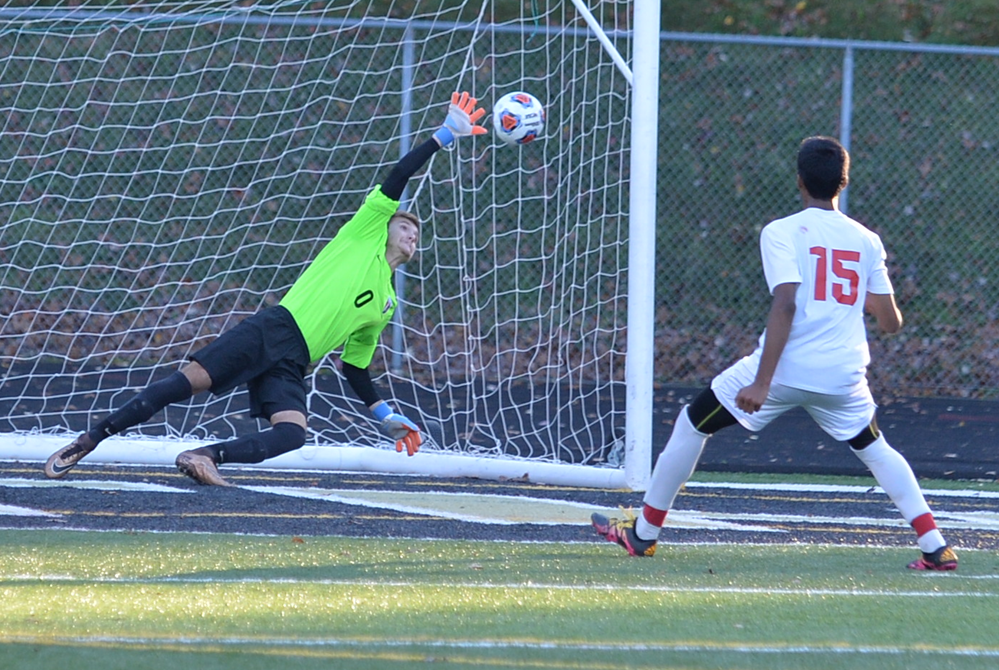
Soccer games in the postseason have one big noticeable difference from the regular season. In the postseason, games cannot end in a tie – so games go to overtime and possibly a shootout.
Here’s how that works:
If the game is tied at the end of regulation, it will go to overtime, which is two 10-minute periods played in its entirety. There is no sudden death or golden goal winner. If there is a winner at the end of the 20 minutes, that team wins and advances to the next round. If there’s still a tie, we move to a shootout.
In the shootout, the teams alternate taking five penalty kicks. If it’s still tied after five kicks, they each kick until the tie is broken.
Previous Editions
Oct. 17: Tennis Spin - Listen
Oct. 10: Blocked Kick - Listen
Oct. 3: Volleyball Double & Lift - Listen
Sept. 26: Registration Process - Listen
Sept. 20: Animal Interference - Listen
Sept. 13: Feet Rule on Soccer Throw-In - Listen
Sept. 6: Volleyball Jewelry - Listen
Aug. 30: Football Rules Similarities - Listen
Aug. 23: Football Rules Differences - Listen