

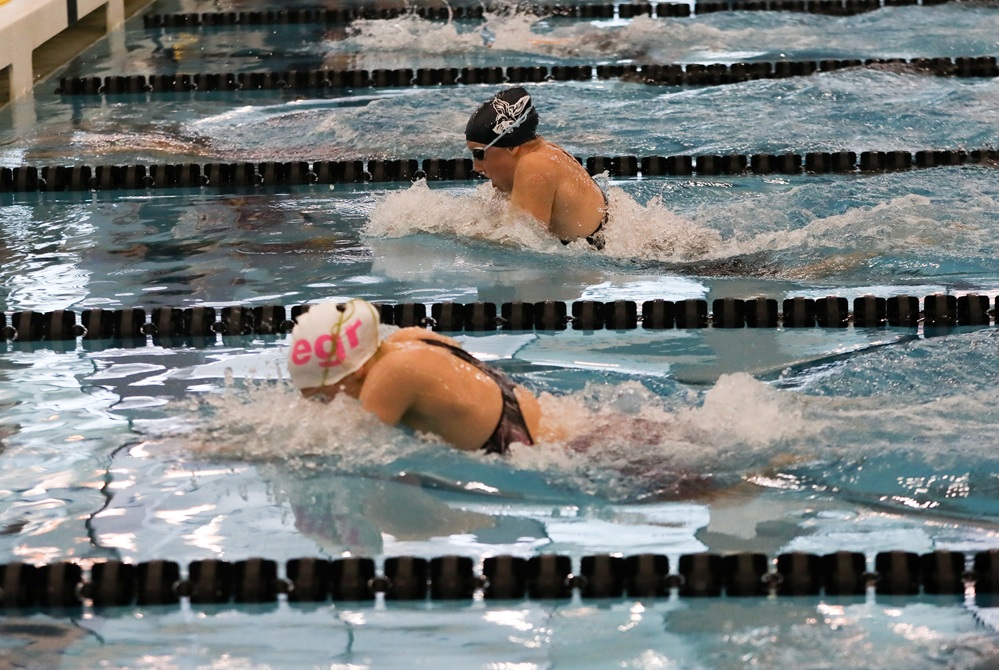
Be the Referee: Simultaneous Wall Touch
By
Paige Winne
MHSAA Director of Brand Management
November 17, 2026
Be The Referee is a series of short messages designed to help educate people on the rules of different sports, to help them better understand the art of officiating, and to recruit officials.
Below is this week's segment – Simultaneous Wall Touch - Listen
Are you familiar with the rules for touching the wall during the breaststroke in high school swimming? Let’s find out.
During a race, a swimmer approaches the wall to finish the breaststroke. The swimmer reaches out with both hands, touching the wall at the same time. However, one hand touches higher on the wall than the other.
Is this a legal finish? Yes, it is.
Under National Federation rules, swimmers competing in the breaststroke must touch the wall with both hands simultaneously. However, the hands do not have to be at the same level.
One hand can be higher than the other, and the touch can occur above, at, or below the water's surface. But if one hand touches the wall before the other, the swimmer is disqualified.
Previous 2026-27 editions
Nov. 10: Illegal Attack - Listen
Nov. 3: Pass Interference - Listen
Oct. 27: Field Hockey Substitutions - Listen
Oct. 20: Foot Save in Volleyball - Listen
Oct. 13: Soccer Advantage - Listen
Oct. 6: Defensive Holding - Listen
Sept. 29: Minimum Number of Volleyball Players - Listen
Sept 22: Soccer Changes - Listen
Sept: 15: Dead Ball Penalty - Listen
Sept. 8: Libero Ejected - Listen
Sept. 1: Soccer Foul After Shot on Goal - Listen
Aug. 25: Fumble Out of Bounds - Listen

Be the Referee: Hockey Equipment
January 24, 2019
This week, MHSAA assistant director Brent Rice discusses the need to monitor the proper wearing of the ice hockey neck guard.
Be The Referee is a series of short messages designed to help educate people on the rules of different sports, to help them better understand the art of officiating, and to recruit officials.
Below is this week's segment – Required Hockey Equipment - Listen
A number of sports require certain equipment be worn, and be worn unaltered. In ice hockey, one such piece of equipment is the neck guard.
This is something not very well understood. And it’s not just that some players try to either not wear the neck guard or alter it – resulting in a team warning if caught – but that upwards of half of the neck guards on the ice on any given night of high school play are actually altered. Common alterations are putting tape around the guards, removing padding and wearing the donut style way below the collar bone.
Coaches, officials, players, parents and administrators have to treat this risk management issue more seriously than they are now to make the game as safe as it can possibly be.
Past editions
January 17: You Make the Call: 10-Second Clock - Listen
January 10: Tripping in Hockey - Listen
January 3: Sliding in Basketball - Listen
December 27: Stalling in Wrestling - Listen
December 20: Basketball: You Make the Call - Listen
December 13: Basketball Uniform Safety - Listen
December 6: Coaching Box Expansion - Listen
November 29: Video Review, Part 2 - Listen
November 22: Video Review, Part 1 - Listen
November 15: You Make the Call - Sleeper Play - Listen
November 8: 7-Person Football Crews - Listen
November 1: Overtime Differences - Listen
October 25: Trickery & Communication - Listen
October 18: Punts & Missed Field Goals - Listen
October 11: What Officials Don't Do - Listen
October 4: Always 1st-and-Goal - Listen
September 27: Unique Kickoff Option - Listen
September 20: Uncatchable Pass - Listen
September 13: Soccer Rules Change - Listen
September 6: You Make the Call: Face Guarding - Listen
August 30: 40-Second Play Clock - Listen
August 23: Football Rules Changes - Listen