

Be the Referee: Simultaneous Wall Touch
By
Paige Winne
MHSAA Director of Brand Management
November 17, 2026
Be The Referee is a series of short messages designed to help educate people on the rules of different sports, to help them better understand the art of officiating, and to recruit officials.
Below is this week's segment – Simultaneous Wall Touch - Listen
Are you familiar with the rules for touching the wall during the breaststroke in high school swimming? Let’s find out.
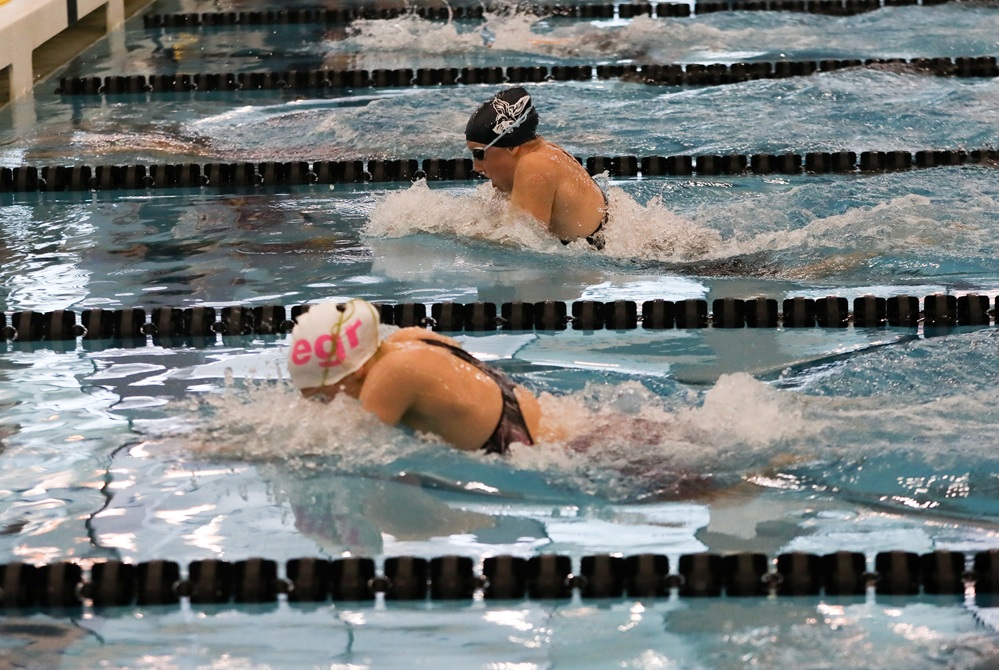
During a race, a swimmer approaches the wall to finish the breaststroke. The swimmer reaches out with both hands, touching the wall at the same time. However, one hand touches higher on the wall than the other.
Is this a legal finish? Yes, it is.
Under National Federation rules, swimmers competing in the breaststroke must touch the wall with both hands simultaneously. However, the hands do not have to be at the same level.
One hand can be higher than the other, and the touch can occur above, at, or below the water's surface. But if one hand touches the wall before the other, the swimmer is disqualified.
Previous 2026-27 editions
Nov. 10: Illegal Attack - Listen
Nov. 3: Pass Interference - Listen
Oct. 27: Field Hockey Substitutions - Listen
Oct. 20: Foot Save in Volleyball - Listen
Oct. 13: Soccer Advantage - Listen
Oct. 6: Defensive Holding - Listen
Sept. 29: Minimum Number of Volleyball Players - Listen
Sept 22: Soccer Changes - Listen
Sept: 15: Dead Ball Penalty - Listen
Sept. 8: Libero Ejected - Listen
Sept. 1: Soccer Foul After Shot on Goal - Listen
Aug. 25: Fumble Out of Bounds - Listen

Be the Referee: Point After Touchdown
October 20, 2016
This week, MHSAA assistant director Mark Uyl explains how high school rules differ from those used by colleges when it comes to what's allowed after extra-point tries.
Be The Referee is a series of short messages designed to help educate people on the rules of different sports, to help them better understand the art of officiating, and to recruit officials.
Below is this week's segment – Point After Touchdown - Listen
For many years at the pro and college levels of football, the P-A-T or the extra point kick, really became a ho-hum play.
Last year in the NFL, they tried to make the play more exciting by moving the kickers back, making it almost the distance of a medium-range field goal.
Under college rules, they allow the other team – the defense, whenever they get the ball – to try to return it all the way to the other end with the ability to score two points.
The next high school game you’re at, know this: that once the defensive team gets possession of the ball on an extra point or try for point, the try is over and the defense cannot score any points.
Past editions
Oct. 13: Untimed Down - Listen
Oct. 6: Soccer Penalty Kick Change - Listen
Sept. 29: Preparation for Officials - Listen
Sept 22: You Make the Call: Returning Kickoffs - Listen
Sept. 15: Concussions - Listen
Sept 8: Equipment Covering the Knees - Listen
Sept. 1: Play Clock Experiment - Listen
Aug. 25: Clipping in the Free Blocking Zone - Listen