

Norris Center Offers Track Athletes 'Perfect' Early-Season Indoor Opportunity
By
John Vrancic
Special for MHSAA.com
April 13, 2022
SAULT STE. MARIE — Weather conditions in early April can sometimes be frightful in the Upper Peninsula.
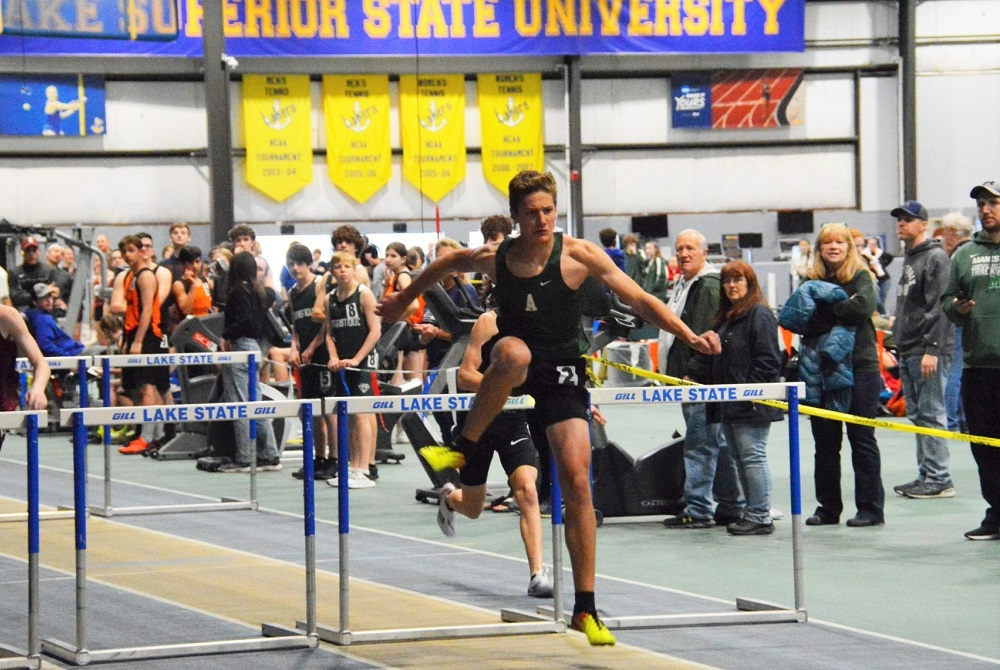
 On a day with snow showers falling outside, eight schools took advantage of an opportunity to compete in Friday’s indoor track & field meet at Lake Superior State University’s Norris Center.
“The first meet of the season is very important to me,” said Alpena senior Madi Szymanski, who plans to run cross country and track at Northern Michigan University. “This gives me a starting base and a better idea of where I’m at. I prefer to run outdoors, but I’m very grateful to be indoors today. Conditions are always perfect inside.”
Szymanski was a triple-winner in the LSSU Large School Yooper Invitational, taking the 800-meter run in 2 minutes, 28.26 seconds, the 1,600 (5:27.83) and helping the Wildcats take the 1,600 relay (4:44.39).
“I’ve been doing indoor meets during the winter,” she said. “I go to Saginaw Valley a lot and have been to Central Michigan and Eastern Michigan, but this is my favorite 200-meter track. I always look forward to coming here. It’s real exciting and my adrenalin is very high. It’s always great to do well in the first races.”
This marked the first of just three indoor meets in the U.P. this season. Many U.P. schools were scheduled to compete in the Michigan Tech Keweenaw Classic on Tuesday in Houghton with another indoor event taking place April 21 at LSSU.
Both Alpena teams were crowned champions, and the two Manistique teams placed fourth.
Manistique junior Grant Mason won the boys 400 in a personal-best 56.88 seconds, and the girls opened with a victory in the 3,200 relay (11:34.36).
“I expected it to be a little harder on a 200 track, but ended up with my best time,” said Mason. “I had a pretty good start. It’s real important to get this meet in. It’s a lot warmer in here. Early-season meets aren’t very easy to find up here. We had some good competition up here today. The downstate schools are ahead of us because they get an opportunity to see some real good competition.”
The Emeralds finished three seconds ahead of the field in the girls 3,200 relay.
“We’re pretty happy with our time,” said sophomore Emma Jones, who led off that relay. “We still have snow on our track. We’ve been working on our handoffs inside which is not the same, especially on a 200-meter track. It feels like you’re going faster. It’s pretty important for us to get this meet in because we haven’t been outside. This is the first time many of us have been in our events this year. It was good to see different competition today. This is definitely pushing us to our new potential.”
Junior Kelsey Muth, who took the baton from Jones, had similar thoughts.
“It was an awesome feeling to win it,” she said. “We went into it not knowing what to expect. That was a real good starting point for us. Emma and I had a real good handoff, but overall we were a little shaky. Our athletic director (Nate Zaremba) has been scheduling meets (we) need to reach the next level. We’re excited about going downstate for the first time. We’re hoping for nice weather down there.”
Jones placed second in the 400 (1:10.14) and Muth was fourth (1:11.64) for the Emeralds, who resume in Friday’s Ram Scram at Harbor Springs.
“I think today was a good first showing,” said Emeralds’ coach Amy Nixon. “In the first meet of the year, you never know what to expect and we had some girls step up. Some of the new girls stepped into events which others couldn’t. We’re proud of them for being willing to do that. Now we know what the girls are capable of doing. It’s fun to compete again.”
The Manistique boys secured fourth place by taking third in the 1,600 relay (4:03.25).
“Overall, the meet went well,” said Emeralds boys coach Cody Kangas. “Some guys did some real good things, and Grant did a great job in the 400.”
 John Vrancic has covered high school sports in the Upper Peninsula since joining the Escanaba Daily Press staff in 1985. He is known most prominently across the peninsula for his extensive coverage of cross country and track & field that frequently appears in newspapers from the Wisconsin border to Lake Huron. He received the James Trethewey Award for Distinguished Service in 2015 from the Upper Peninsula Sportswriters and Sportscasters Association.
PHOTO Athletes took advantage of the opportunity to compete indoors at Friday’s Yooper Invitational at Lake Superior State University. (Photo by Robert Roos/Sault Ste. Marie Evening News.)
Performance: Waverly's Keshaun Harris
May 24, 2019
 Keshaun Harris
Lansing Waverly senior – Track & Field
The reigning Lower Peninsula Division 1 champion in the 300-meter hurdles, Harris put himself in position to challenge for multiple titles at next weekend’s MHSAA Finals with wins in both the 300 (38.71 seconds) and 110 (14.23) at last week’s Regional at East Lansing, earning him the Michigan Army National Guard “Performance of the Week.”
Harris’ winning 300 time was his season best, as was his 14.14 prelim time in the 110. Also an all-league football player during the fall and starting guard in basketball, Harris is among the state’s elite on the track and undefeated in both hurdles races this spring despite getting a slow start after hurting his right ankle in his final basketball game this winter. As noted, he won the LPD1 title in the 300 last season in a personal-record 37.81 seconds and just missed the double finishing seventh hundredths of a second behind East Kentwood’s Job Mayhue in the 110. Harris also finished second in the 110 and third in the 300 at the LPD2 Finals as a sophomore, and qualified for the LPD2 Finals in both races as a freshman, earning seventh place in the 110.
 The 37.81 at last year’s Finals and the 14 flat he ran in the 110 at the 2018 Regional are Waverly school records – which says a lot as the Warriors have produced a number of state contenders over coach David Pike’s 29 seasons leading one of mid-Michigan’s strongest programs. Harris will announce next week where he’ll continue his academic and athletic careers at the collegiate level – he has Division I and II opportunities – and will bring both first-class hurdling skills and a 3.6 GPA with aspirations of studying kinesiology and becoming an athletic trainer.
Coach David Pike said: “Keshaun’s success in the hurdles is due to his focus on getting better every day. He’s always the last one off the track, taking time each day to get the repetitions he needs to become fluent with each motion. The quickness and fluidity of his hurdling action come from years of focused practice. That’s not to say he’s hurdling 365 days a year. In fact, much of his success in track and field comes from his involvement in other sports. Football has helped him develop the strength and toughness needed to run through hurdle contact. Basketball with all of its jumping and rapid changes of direction has helped him become a more explosive and kinesthetically aware athlete. In the end, the bottom line is that Keshaun’s dedication to daily incremental improvement as an athlete has put him in position to compete for the state title in both the high and 300 hurdles.”
Performance Point: “Nobody really knew this but my coach, but I was sick,” Harris said in recalling the Regional. “I was pushing through it, so I just went out there and ran my best races of the season. I was dealing with the flu. .... Before the race I had to hydrate a lot. My body was a little weak. I had to make sure I got my body moving, got in a good warm-up, stayed loose and warm. I just went out there and gave it everything I’ve got and ran my best.”
Remembering runner-up: “(Last year’s 110 Final) has been in the back of my mind since it happened last year. My goal is still to be the state champion in both the 110 and 300. That’s been the goal since I came to Waverly, since I’ve been a freshman. That’s always been the goal, and always been a motivation too. … Last year I wasn’t as good with my form as I am this year. So this year as I go into this last week, I’m just working on form, getting over hurdles and getting back down quick and keeping everything tight.”
 Multi-sport mechanics: “I think (all my sports) work together, because I’m always active doing something. Even in the winter or the summer, I’m always doing something. When track season comes around, I’m already in shape, and I’m already feeling good and strong. (Track has) made me even faster on the court or the field. I’m very elusive. I’m very flexible. So it’s helped me in a lot of areas.”
Looking up, looking ahead: “Aries Merritt, he’s an Olympic champion, and Grant Holloway goes to Florida and he’s another guy I look up to. I also look up to guys I ran against – Kentre Patterson (East Lansing), Noah Caudy (Lake Odessa Lakewood), even Job Mayhue who beat me last year. I still look up to all those guys, figure out what they’re doing and how I can input it into my hurdling. In track, you run against these guys so much. Once they’re gone, you’ve built a relationship with them, so it’s cool.”
Staying in sports: “I just like working with athletes and just being around sports, so I think (trainer) would be the perfect job to do. Actually, at the start of this season I had an ankle injury, I sprained it during my last basketball game, and that had me out for a month. As I worked with the athletic trainer at my school, I developed a love for wanting to become an athletic trainer and wanting to study kinesiology.”
- Geoff Kimmerly, Second Half editor
Every week during the 2018-19 school year, Second Half and the Michigan Army National Guard recognizes a “Performance of the Week" from among the MHSAA's 750 member high schools.
The Michigan Army National Guard provides trained and ready forces in support of the National Military Strategy, and responds as needed to state, local, and regional emergencies to ensure peace, order, and public safety. The Guard adds value to our communities through continuous interaction. National Guard soldiers are part of the local community. Guardsmen typically train one weekend per month and two weeks in the summer. This training maintains readiness when needed, be it either to defend our nation's freedom or protect lives and property of Michigan citizens during a local natural disaster.
Past 2018-19 honorees
May 16: Gabbie Sherman, Millington softball - Read
May 9: Nathan Taylor, Muskegon Mona Shores golf - Read
May 2: Ally Gaunt, New Baltimore Anchor Bay soccer - Read
April 25: Kali Heivilin, Three Rivers softball - Read
March 28: Rickea Jackson, Detroit Edison basketball - Read
March 21: Noah Wiswary, Hudsonville Unity Christian basketball - Read
March 14: Cam Peel, Spring Lake swimming - Read
March 7: Jordan Hamdan, Hudson wrestling - Read
February 28: Kevon Davenport, Detroit Catholic Central wrestling - Read
February 21: Reagan Olli, Gaylord skiing - Read
February 14: Jake Stevenson, Traverse City Bay Reps hockey - Read
February 7: Molly Davis, Midland Dow basketball - Read
January 31: Chris DeRocher, Alpena basketball - Read
January 24: Imari Blond, Flint Kearsley bowling - Read
January 17: William Dunn, Quincy basketball - Read
November 29: Dequan Finn, Detroit Martin Luther King football - Read
November 22: Paige Briggs, Lake Orion volleyball - Read
November 15: Hunter Nowak, Morrice football - Read
November 8: Jon Dougherty, Detroit Country Day soccer - Read
November 1: Jordan Stump, Camden-Frontier volleyball - Read
October 25: Danielle Staskowski, Pontiac Notre Dame Prep golf - Read
October 18: Adam Bruce, Gladstone cross country - Read
October 11: Ericka VanderLende, Rockford cross country - Read
October 4: Kobe Clark, Schoolcraft football - Read
September 27: Jonathan Kliewer, Grand Rapids Forest Hills Northern soccer - Read
September 20: Kiera Lasky, Bronson volleyball - Read
September 13: Judy Rector, Hanover-Horton cross country - Read
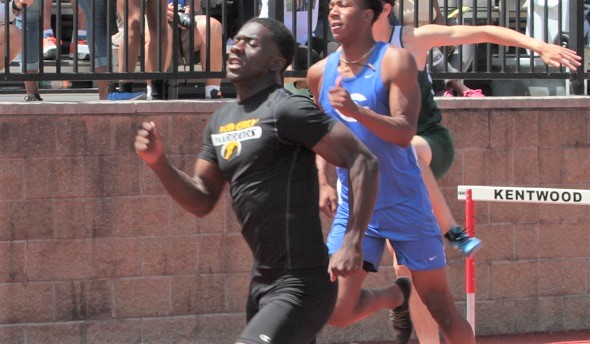
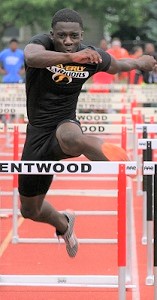
PHOTOS: (Top) Lansing Waverly's Keshaun Harris charges toward the finish during last season's Lower Peninsula Division 1 Final in the 300 hurdles. (Middle) Harris clears a hurdle during the 110 championship race in 2018. (Click to see more from RunMichigan.com.)