

Summerfield Girls Find Their Stride, Claim 1st League Title Since 1990
By
Doug Donnelly
Special for MHSAA.com
May 20, 2026
David Raymond has heard it before.
 “I always laugh because I've definitely gone on the recruiting trail in our hallways and tried to get kids to come out (for track & field), and one of the answers I always get was, ‘I don't even like running.’ I tell them, ‘Great, you'll fit right in because there's a bunch of kids that run track that don't like running.’”
Running track is a little more fun these days, however, at Petersburg Summerfield, where Raymond is the head coach. His Bulldogs recently celebrated winning their first league championship in more than three decades and have a bunch of qualifiers heading into next week’s Lower Peninsula Division 4 Finals.
“When you win, people start talking it up positively within the hallways,” Raymond said. “That helps when you're trying to recruit kids. It's kind of funny how when you win, all of a sudden people are a little bit more interested and want to see what it's all about.”
Raymond is a 1999 Summerfield graduate. He played multiple sports in high school and was part of teams that won District basketball and a Regional track titles his senior year. He was named the Summerfield varsity girls basketball coach at age 23 and eventually switched to become the boys varsity coach. He would coach the Bulldogs for seven seasons, win 100 games, and become the winningest coach in school history before stepping down to spend more time with his family, which includes three daughters.
 Two of those daughters are now on the Summerfield varsity track team. Both are headed to the Finals meet next weekend – Abby in the low hurdles and three relays and Grace in the 800 and three relays.
“I'm very blessed to be able to coach my daughters,” Raymond said.
When Grace was a freshman, she was Summerfield’s only Finals qualifier. This year she and Abby lead a parade of nine Bulldogs who have earned a trip.
Grace set a school record in the 800 at Friday’s Regional and was part of the 3,200 relay with her sister, Makenzie Wolfe and Allison Ost that set a school record and qualified as well.
Grace and Abby are part of the Finals-qualifying 400 relay with Emma Jacob and Sophia Stanger and part of the 1,600 relay with Alice VanCamp and Ost. Abby Zilka (high jump), Ost (1600), Wolfe (3200) and Gabi Myshock (discus) are other qualifiers. Abby will also compete in the low hurdles next weekend.
“Having nine girls qualify for the state meet shows how far the program has come over the last 3-5 years,” Raymond said. “It’s been incredible. The team has come a long way. We’ve had good kids come in, obviously. You need talent in order to be successful, and we have that. The girls have worked hard and put the time in. I am thankful they have been able to put it all together this year.”
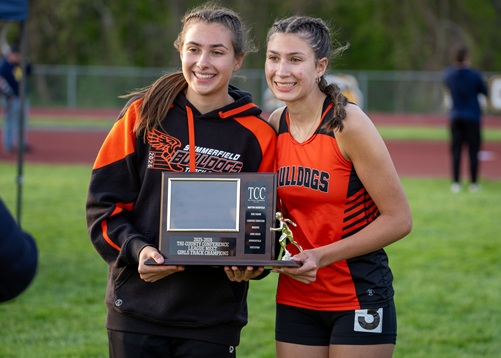
Winning Summerfield’s first girls Tri-County Conference track championship since 1990 was a pleasant surprise.
“Winning a league title was a different experience for us because a lot of times, we kind of knew going into certain meets we didn’t have a chance,” he said. “Our focus has always been Regionals. This year, we had a much different mindset that we were going to try and win it. The hard work paid off. That’s what was so exciting.”
 While he ran on the track team in high school, he didn’t start coaching the sport until about five years ago as an unofficial assistant to the previous head coach, Kelly Thompson. She stepped away from the head coaching role when her son started running in college. He has surrounded himself with several great assistants, he said, including two classmates from high school.
“There was an opening, and it was an opportunity for me to, again, be with my kids a little bit more, and that's kind of how I ended up in the role,” he said. “I learned that track is not a sport where you can coach by yourself; you need quality people around you.”
Raymond decided he wanted to be a teacher and coach in high school.
“I had good coaches growing up,” he said. “Ron Estes was my varsity basketball coach when I decided to go into teaching. I had a number of people like him that influenced me and showed me that teaching can be a great career and, when you get the opportunity, to coach.
“I've obviously loved sports my entire life. At first coaching was a way to be around sports. As you grow older, you start to see the impact that you can have on kids, which is even different than what the impact that you can have on somebody in a classroom is. It's always been an avenue that has allowed me to impact kids in a positive way.”
 Doug Donnelly has served as a news and sports reporter at the Adrian Daily Telegram and the Monroe News for 30 years, including 10 years as city editor in Monroe. He's written a book on high school basketball in Monroe County and compiles record books for various schools in southeast Michigan. He is now publisher and editor of The Blissfield Advance, a weekly newspaper. E-mail him at [email protected] with story ideas for Jackson, Washtenaw, Hillsdale, Lenawee and Monroe counties.
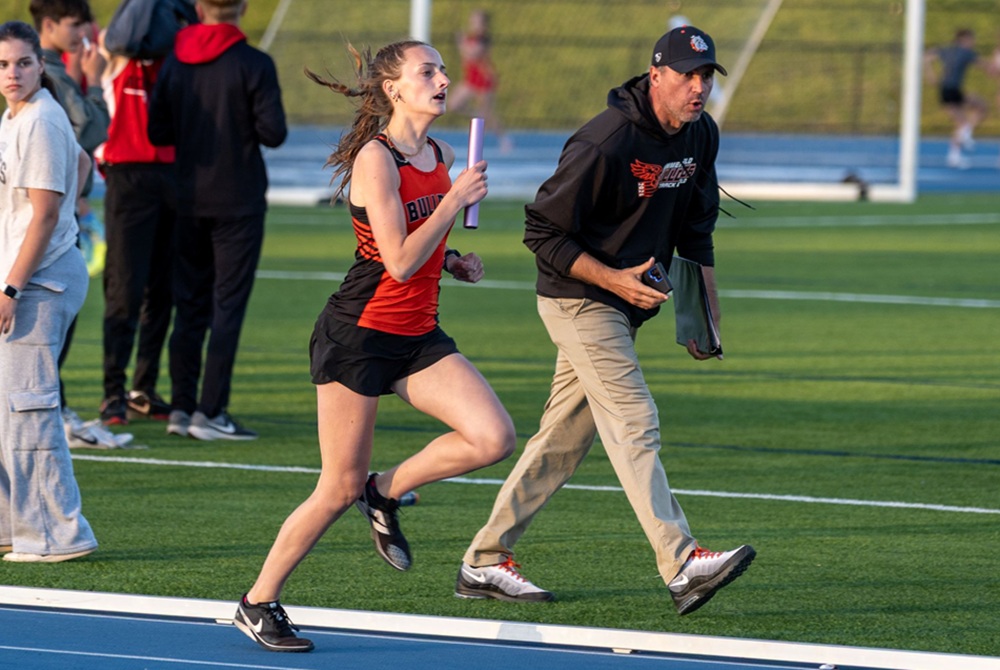
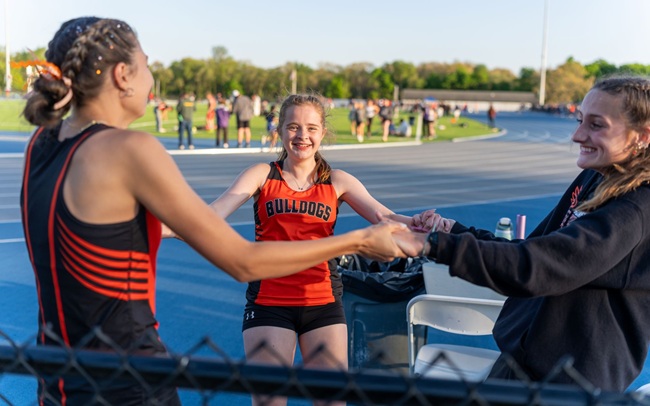
PHOTOS (Top) Petersburg Summerfield coach David Raymond encourages Allison Ost during a relay race this season. (Middle) Summerfield 1,600 relay racers (left to right) Abby Raymond, Alice Van Camp and Ost get together to “Triple A Power Up.” (Below) Grace Raymond (left) and Abby Raymond hold up Summerfield's first league title trophy won since 1990. (Photos by Tom Westrick.)
Yale's Dykstra Wasting No Time Showing Superior Multi-Sport Potential
By
Paul Costanzo
Special for MHSAA.com
March 28, 2024
Sadie Dykstra’s already long list of accomplishments from less than two years of high school – three all-state medals, multiple all-conference awards and a league MVP to name a few – may seem shocking.
 And to most, it justifiably is.
But it’s come as little surprise for those in Yale who saw her grow up and do, well, anything.
“I’ve always known that she’s kind of special,” said Yale boys track coach and Dykstra family friend Brian Bearss. “She was that kid that, when other kids would be playing and learning how to ride their bikes, here comes Sadie and she’s yelling, ‘Look at this,’ and standing on the seat riding the bike. She’s always been exceptional as far as being an athlete.”
Dykstra is entering her sophomore track & field season at Yale and has already established herself as one of the best female athletes in the state. Want to argue against that? Check out this résumé:
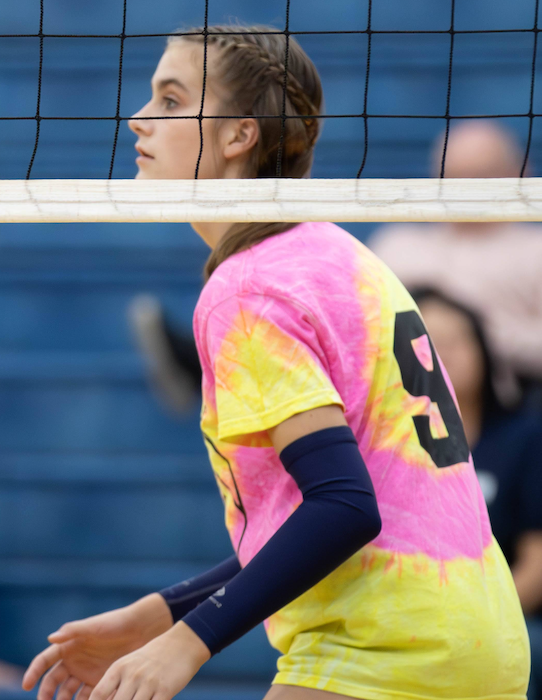
Volleyball: Two years varsity, second-team all-Blue Water Area Conference as a sophomore.
Basketball: Two-time first-team all-BWAC selection, BWAC all-defense and BWAC MVP as a sophomore, BCAM all-state honorable mention as a freshman, sophomore all-state honors still pending.
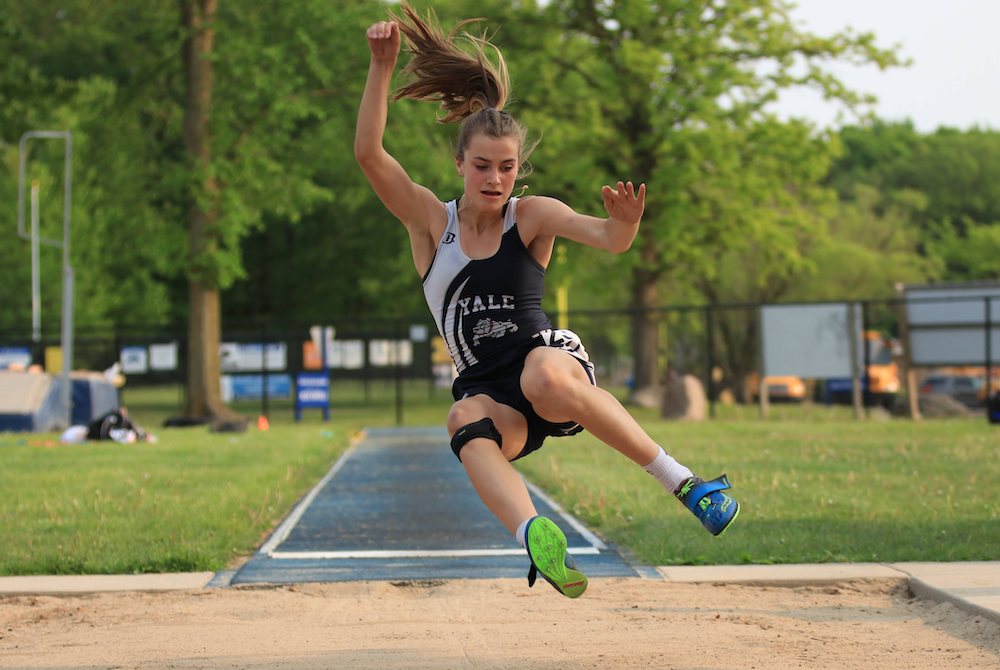
Track: Unbeaten in the BWAC as a freshman with four league titles (long jump, 100 hurdles, 300 hurdles and 1,600 meter relay), three all-state finishes at 2023 Lower Peninsula Division 2 Finals (fourth in long jump, fifth in 100 hurdles, sixth in 300 hurdles).
Again, just a sophomore.
“I can’t believe that I get to coach her,” Yale girls track coach Ashley Garofalo said. “She has a drive and a mindset that I can’t teach somebody. Nobody can teach you to have this. She gives every single thing that she has in every single sport. I think it does help when you’re so good at it. It makes you want to do it more.”
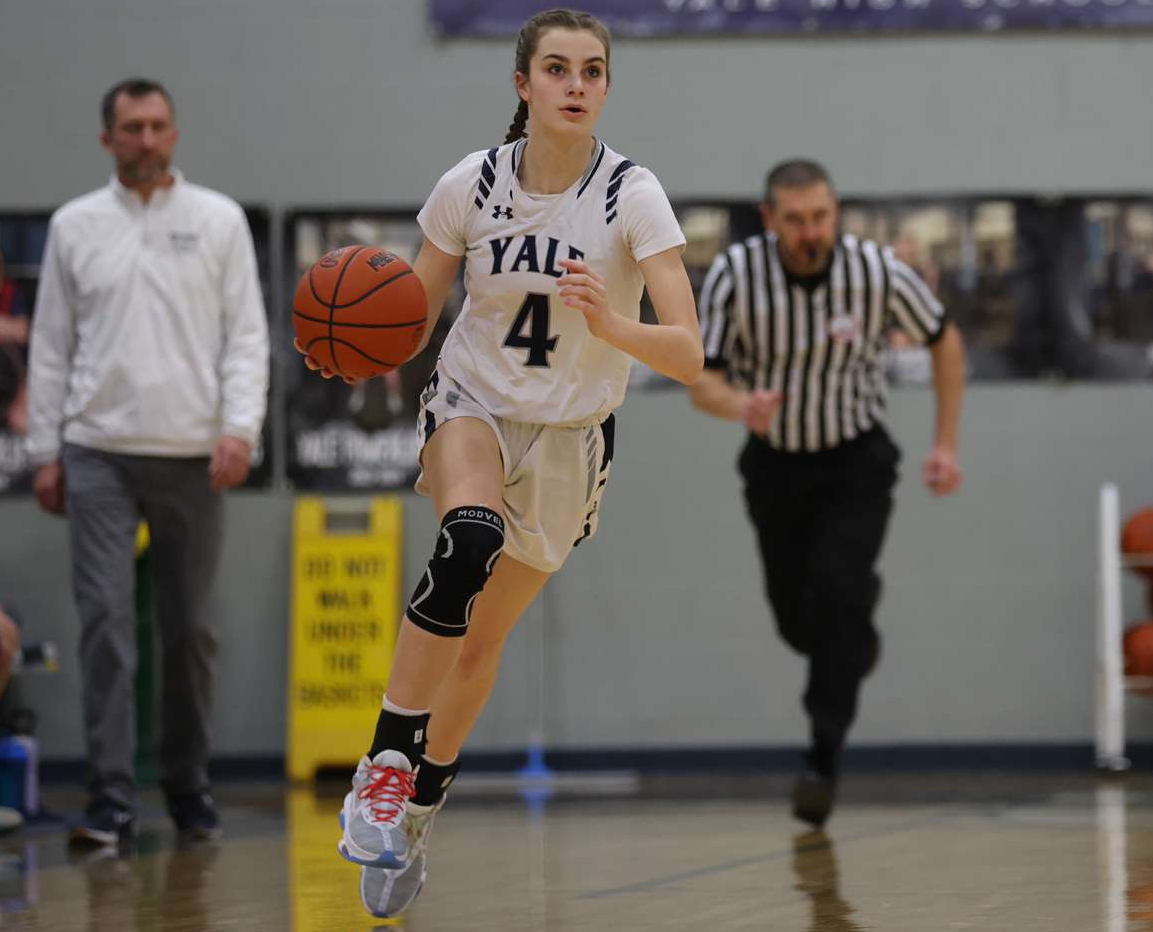 Basketball gets Dykstra’s most attention and it’s the one she’d most like to play at the next level. The 5-foot-11 guard is getting interest already from Division I college programs.
But it wouldn’t be right to say her heart is with one sport or another.
“I enjoy all my sports,” Dykstra said. “I like all my teams. I have a different team for each one, and I get along with all those girls. I think each one, it flows into the next one, and helps strengthen things for my other sports. Volleyball helps my legs for basketball. In basketball, I’m getting in shape for track.”
You don’t have to look far to find where Dykstra gained her love for athletics. Her parents, Kerry and Brad, both played basketball at Calvin College. Kerry graduated as Calvin’s all-time leading scorer in 1999 and is still sixth on the all-time list. She also served as Yale volleyball coach for 10 years, just recently stepping down.
Brad was a two-sport athlete at Calvin, playing baseball as well. He also played baseball at Grand Valley State. He coached basketball at Yale from 2006-10.
“We’re a very sporty family,” Sadie Dykstra said.
So, when it came time to enter high school, there was never a thought of specializing.
“I came in with the mindset of, I’m going to play three sports each season and enjoy them, too,” Dykstra said. “I don’t want to be in them and have them be the most awful things in the universe. I came in with the mindset of enjoying all three sports.”
 While basketball is her current collegiate goal, she did say that competing in basketball and track & field would be something she would consider if given the opportunity. Bearss said Dykstra has Division I potential in track & field, adding that heptathlon could best suit her.
But there are still two more years to figure that out. The next thing for Dykstra to enjoy is track, the sport in which she had the most early success. And while outdoor meets are still a couple weeks away, she’s already locked in.
“She’s just a natural leader, and I think that’s why she’s so disciplined,” Garofalo said. “(Tuesday), I was going over a workout with somebody else, and she just started her warm-ups on her own. She’s not afraid to lead 60 other kids, even though there are juniors and seniors.”
Dykstra has big goals for this spring, mostly based around performance marks. She’s eyeing the Yale school long jump record of 18 feet, 1¾ inches, which is less than an inch longer than her personal best of 18-1. She’d like to move that record closer to 19 feet.
Her 100 hurdle PR (personal record) sits at 15.59 seconds, and she’d like to knock that into the low 15s or even high 14s. For the 300 hurdles, where her PR is 47 seconds, she’d like to get down to 45.
“I have big goals, and I think I can get to them,” she said. “But that’s something for the end of the season to play out and see how that goes.”
Anybody who’s watched her wouldn’t doubt that Dykstra can reach those goals. And that list, along with those accomplishments, continues to grow.
“Last year we went to Ortonville Brandon, and we had really nice weather that day and the competition was really good – a lot of schools there,” Bearss said. “Even with all of those great athletes, you could just kind of see, people are pointing and looking, ‘There’s that girl from Yale.’ They’re taking notice. Every once in a while, you get kids that turn heads like that.”
 Paul Costanzo served as a sportswriter at The Port Huron Times Herald from 2006-15, including three years as lead sportswriter, and prior to that as sports editor at the Hillsdale Daily News from 2005-06. He can be reached at [email protected] with story ideas for Genesee, Lapeer, St. Clair, Sanilac, Huron, Tuscola, Saginaw, Bay, Arenac, Midland and Gladwin counties.
PHOTOS (Top) Yale’s Sadie Dykstra launches into a long jump last spring. (Middle) Dykstra brings the ball upcourt against Armada. (Below) Dykstra stands at the net during volleyball season. (Photos courtesy of the Dykstra family.)