

Thriving with Dual-Sport Athletes, Brandywine Claims 1st Girls Track Regional Title
By
Scott Hassinger
Special for MHSAA.com
June 17, 2026
NILES – Just a few days after the 2025 girls track & field season had ended at Niles Brandywine, Terry Borr and his coaching staff were already looking forward to the start of the 2026 campaign.
 "We had done a really good job at the 2025 Regional meet with the team finishing third. Our only goal that day was simply to qualify as many kids as we could for the state meet," Borr said.
Impressed with the effort put forth at last season’s meet by his Bobcats, Borr and his assistants used that as strong motivation for their athletes to attain high goals this spring.
"As a coaching staff we got together, talked things over and put some things in place with our No. 1 goal this spring being to win a Regional championship," Borr recalled.
Borr knew that wouldn't be an easy task at Brandywine, which like most small schools, must share several athletes with other spring sports teams. Out of 13 athletes on his 2026 track & field roster, eight were dual-sport participants.
Freshman Grace Colbert, junior Lily Gill, senior Karleigh Byrd and sophomore Alison Murray also played tennis.
"I managed to balance both tennis and track by prioritizing both as much as possible,” Byrd said. “Whether that was fitting in both practices and even matches and meets in the same day, that was easy to do because both my coaches are very understanding about each sport and my dedication to both programs.”
Freshman Hailey Smith also competed in softball, and freshmen Laila Wogatzke and Aubrey Burt are soccer players as well.
 "We don't have a lot of practice time with some of these girls. But a lot of them are all just quality athletes and that helped us out a great deal,” Terry Borr said. “Five of these girls have broken over six school records here over the last three years.”
Borr also credits the strong contributions of his assistant coaches Brian McNamara (distance runners), Becky Shafer (throws) and Jeff Miller (hurdles).
"Brian has really worked well with our distance runners. Jeff is our football coach and he worked this spring with some of our hurdlers. Becky does a great job with our throwers too," Borr said.
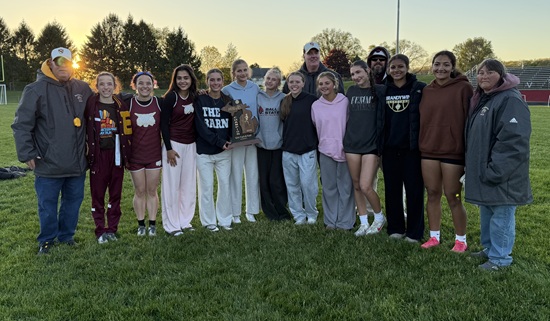
Despite being spread so thin with limited practice time for nearly half the squad, Brandywine accomplished its preseason goal of winning the first Regional championship in girls track. The Bobcats placed first with 97 points to claim the Division 3 Regional at Bangor.
Brandywine scored points in 13 of 17 events to take the top spot and edge Red Arrow (a cooperative of Three Oaks River Valley and New Buffalo) by three points.
"Almost everybody on our team scored for us in the Regional. It really was a team effort,” Borr noted. “A couple weeks before the meet we had the Red Arrow team beating us by three points. So we figured out where we could put kids in different events so we could gain the maximum amount of points.”
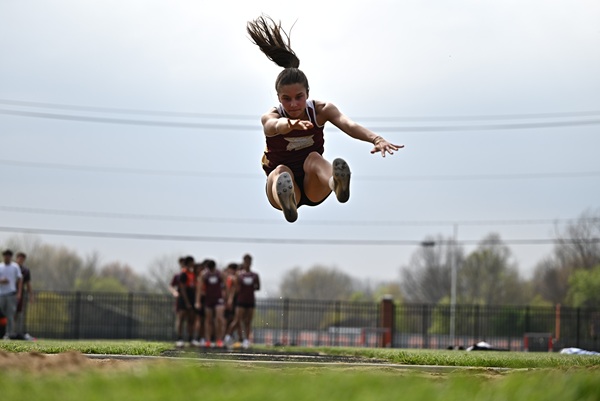
Brandywine junior Mackenna Price was the Regional long jump champion (15-10¼).
"I think what makes me such a good competitor in the long jump is my confidence and ability to set my mind to any distance I believe in. My athleticism helps me by allowing me to push myself to be the best athlete I can be," Price said.
She teamed with Allison Kline, Byrd and freshman Zaya Price for third in the 1,600 relay. She also placed eighth in the 800.
"Makenna's desire to work hard, get better, and improving her speed down the runway all make her a good long jumper. Now she's just working more on the technical aspects to keep improving," Borr said.
 Senior Allison Kline, sophomore Isabella Padron, Burt and freshman Laila Wogatzke took fifth in the 3,200 relay.
Zaya Price earned runner-up in the high jump. Murray placed second for Brandywine in the 1,600 run, fourth in the 3,200 and seventh in the 800.
"This year I succeeded the most in my 1,600. I enjoy that race the most because it takes a lot of mental strength, especially doing multiple events in one day. You really have to push yourself to the limit,” Murray said. “It's fun to watch myself and my mindset as years of running go by. My confidence and positivity are improving.
"I run cross country, and it prepares me well for track because it takes a lot of hard conditioning, like hills, pace workouts, long runs, and more. They are the same kind of workouts that you need to be successful in both sports. Since cross country is a whole 5K, the races in track, like the 800 and 1,600, feel way quicker and easier."
Byrd earned fifth in the 200 and joined Mackenna Price, Zaya Price and junior Lily Gill on the winning 800 relay (1:53.63).
"I think what makes our sprint relays so strong is that we are all so athletic and we have good chemistry. Everyone on our team pushes themselves, and we try our hardest," Zaya Price said.
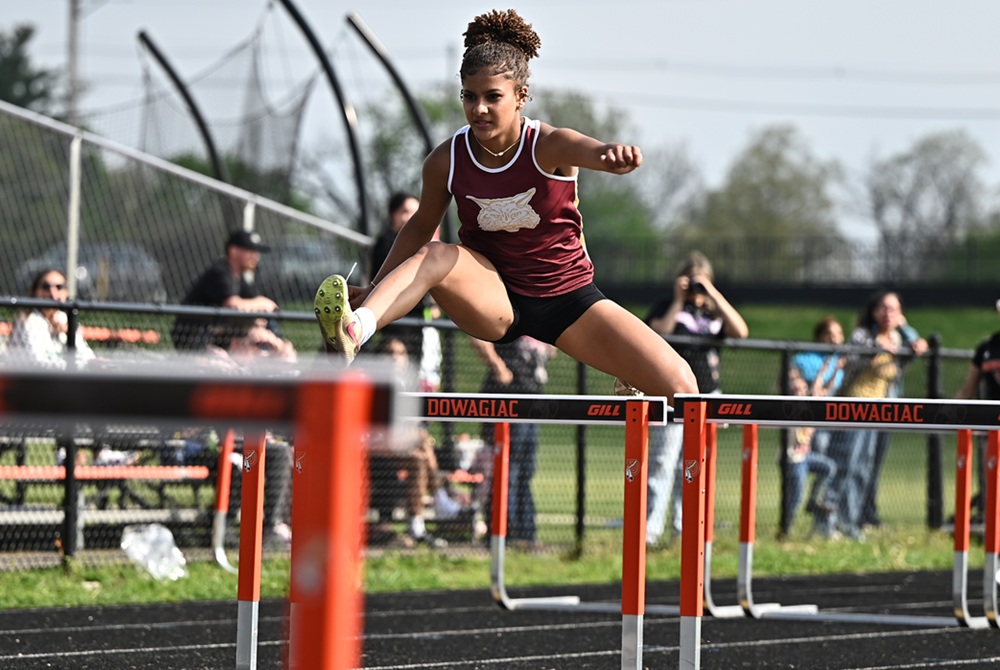
Gill was a Regional champ in the 100-meter hurdles (16.19) and earned second in the 300 hurdles. Colbert took second in the 100 hurdles.
"Lily is a great athlete who has yet to reach her full potential in the hurdles. Her mechanics have improved along with her speed and athleticism. That’s what makes her a great competitor,” Borr said. “We believe that Grace will be an all-stater within the next couple years in the hurdles as well.”
Colbert, Byrd, Zaya Price and Gill swiped second in the 400 relay.
"I enjoy running in the sprint relays because working with a team of really fast girls who work as hard as you is such a fun experience," Byrd said.
Brandywine had two all-state places at the Lower Peninsula Division 3 Finals on May 30 at Kent City. Gill finished sixth in the 100 hurdles, and Zaya Price was sixth in the high jump.
 Scott Hassinger is a contributing sportswriter for Leader Publications and previously served as the sports editor for the Three Rivers Commercial-News from 1994-2022. He can be reached at [email protected] with story ideas for Berrien, Cass, St. Joseph and Branch counties.
PHOTOS (Top) Niles Brandywine junior hurdler Lily Gill attacks a hurdle during one of her races this season. (Middle) Makenna Price sails through the air for Niles Brandywine in the long jump. (Below) The Niles Brandywine girls track & field team and coaching staff pose for a photo with the 2026 Division 3 Regional trophy at Bangor. (Action photos by Tanya Hagen. Team photo provided by the Niles Brandywine athletic department.)
Red Devils Impress as Ironwood Honors Record-Setter with Jim LaBlonde Invitational
By
John Vrancic
Special for MHSAA.com
May 20, 2024
IRONWOOD — The Ironwood track & field teams provided themselves with an opportunity to do a victory lap on a very special Saturday earlier this month.
 Both teams were crowned champions at the first Jim LaBlonde Invitational on May 11 on their 350-meter track during a sunny and mild afternoon.
The Ironwood girls scored 126 points, followed by Hurley, Wis., with 43, Ontonagon 37 and Watersmeet with 13. Ironwood’s boys collected 100 points, followed by Hurley at 84, Ontonagon 32 and Watersmeet with seven in a meet held in honor of the former Luther L. Wright High School star athlete who passed away due to an aneurysm on March 31, 2019.
LaBlonde, who was recently inducted into the school’s Hall of Fame, was an all-Upper Peninsula football player and still holds school records in the 100 and 200-meter dashes from his senior year in 1997.
“This is very special to me personally,” Ironwood coach Cecilia Aho said. “Jim was a great person and athlete. I came to Ironwood from Argentina in December 2003 and know the family very well. I had some good conversations with Jim before he passed. This is a great tribute to him. It turned out to be a beautiful day. We had perfect weather and the kids from all four schools were smiling and having fun.
“Jim was well known in the community, not only as a coach, but as a parent. He was a phenomenal runner and football player.”
LaBlonde played football for three years at Wisconsin-LaCrosse and was on the school’s track team for a year while earning his bachelor’s degree in physical education in 2003.
He was a middle school teacher and coach in the Howard-Suamico District near Green Bay, Wis., at the time of his passing.
“He always asked about what was going on in Ironwood and was a good leader,” Aho said. “He would never turn his back on you when you asked him a question. The kids loved him. I wish I would have had a chance to work with him.”
 Senior Aubrey Smith topped a field of four Ironwood runners in the 1600-meter run in 5 minutes, 55.69 seconds, followed by freshman Iyla Lagalo (6:54.08) and sophomore Aubrey Balduc (7:21.16).
Smith also won the 300 hurdles at 52.43, more than six seconds ahead of the rest of the field.
“It was nice to have everyone here,” Smith said. “It’s nice to have a home meet, especially on a Saturday. I think it’s a fun meet. It’s nice to know everyone here. I think this gives me a little momentum going into our remaining meets.”
Sophomore Emma Wardon was also a double winner for the Red Devils, taking shot put (32-11) and discus (87-0).
Ironwood sophomore Logan Holm took the 110 hurdles (20.17) and 300s (48.05), and Hurley had a triple-winner in junior Jeremiah Wallis, who captured the 100 (12.0), 200 (24.52) and long jump (17-3).
Watersmeet junior Thomas Carson won the 400 (54.06), five days after setting the school record (52.31) while placing second in the Welker Invitational at Ashland, Wis. (52.31).
“I strained my hamstring in Ashland,” he said. “It was a little windy up by the big lake (Superior) and there were a lot of good runners up there. I’m probably about 80-90 (percent), but everything went okay. I just wanted to make sure I didn’t overdo it. This is a nice little meet, especially for a Saturday.”
Ontonagon sophomore Violet Amos took the 200 (28.26) and 400 (1:02.03) and was runner-up to Hurley senior Jaana Aukee on a lean (13.65) in the 100.
“I’ve been in the 27s in the 200, but I’m very happy with my time in the 400” Amos said. “This being a little smaller track was probably a factor because the curves are a little tighter. I prefer to run a 400-meter track, although I like the running surface and competition.
“It’s always fun to come here. Our track is getting resurfaced. I’m looking forward to running on it the next couple years.”
Ontonagon coach Brian Amos said he also enjoys going to Ironwood.
“Ironwood runs a nice meet, and we get a chance to see Hurley,” he added. “It’s always nice to run against somebody different.”
 John Vrancic has covered high school sports in the Upper Peninsula since joining the Escanaba Daily Press staff in 1985. He is known most prominently across the peninsula for his extensive coverage of cross country and track & field that frequently appears in newspapers from the Wisconsin border to Lake Huron. He received the James Trethewey Award for Distinguished Service in 2015 from the Upper Peninsula Sportswriters and Sportscasters Association.
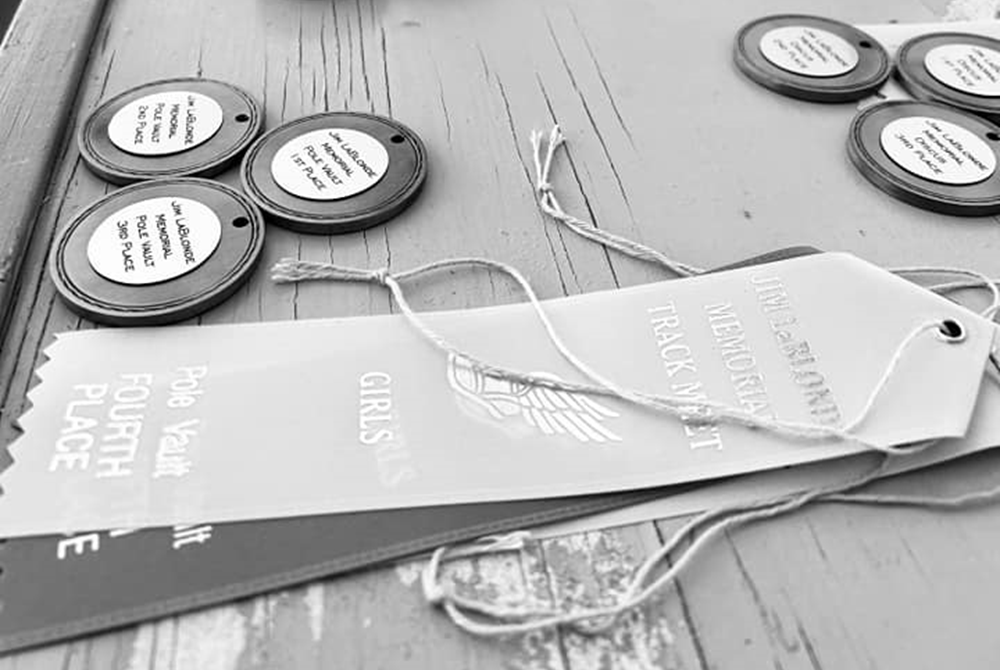
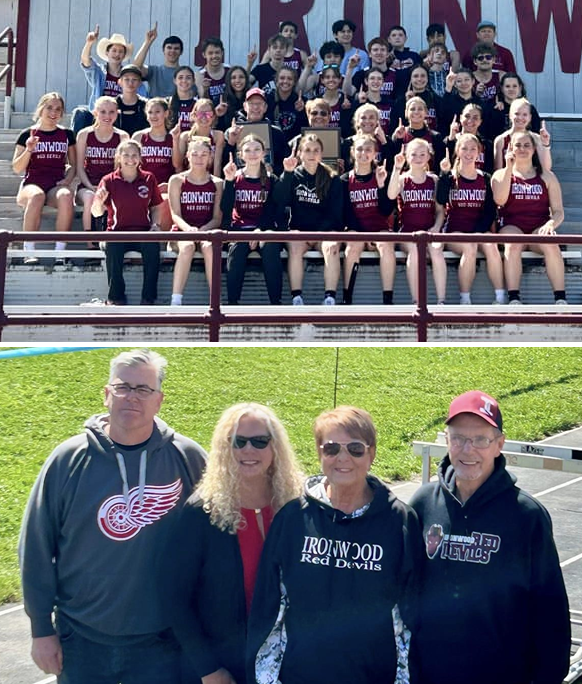
PHOTOS (Top) Ribbons and medals are set out to be awarded during the first Jim LaBlonde Invitational at Ironwood. (Middle) The Ironwood teams take a photo together, at top, after sweeping the meets. Below, from left, LaBlonde’s brother-in-law Dave Lundin, sister Dena Lundin and parents Marlene and Jim LaBlonde attend the meet. (Photos provided by the Ironwood Red Devil Booster Club.)